
And So to Dine.
By S A E Strom
Printed: 1955
Publisher: Frederick Books.London
| Dimensions | 11 × 17 × 1 cm |
|---|---|
| Language |
Language: English
Size (cminches): 11 x 17 x 1
Condition: Very good (See explanation of ratings)
£42.00
Buy Now
Your items

Item information
Description
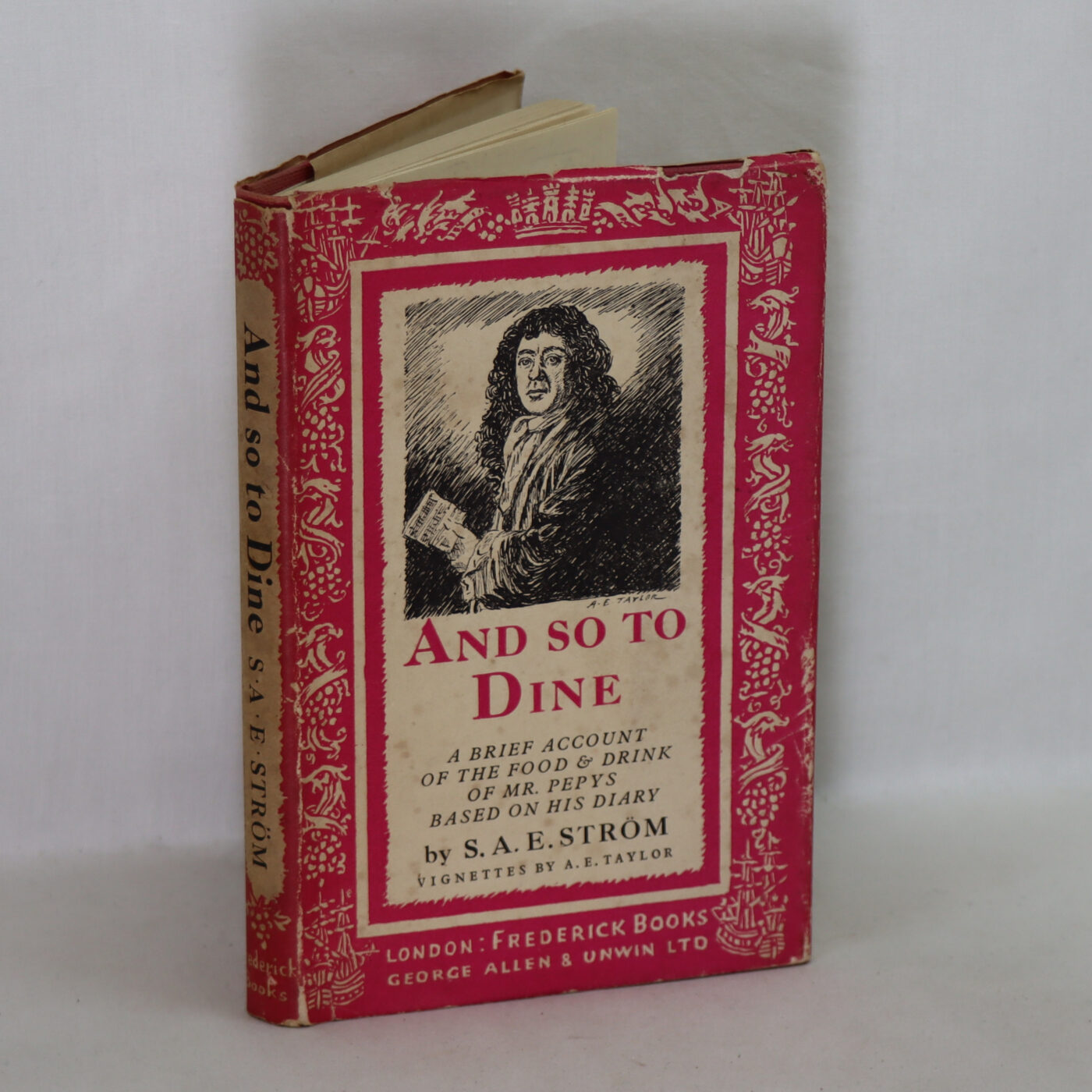
In the original dust jacket. Pink cloth binding with gilt title on the spine and front board.
We provide an in-depth photographic presentation of this item to stimulate your feeling and touch. More traditional book descriptions are immediately available
- Note: This book carries a £5.00 discount to those that subscribe to the F.B.A. mailing list
For conditions, please view our photographs. A nice clean rare copy from the library gathered by the famous Cambridge Don, computer scientist, food and wine connoisseur, Jack Arnold LANG. Jack founded the Midsummer House, Cambridge’s paramount restaurant. This dining experience is hidden amongst the grassy pastures and grazing cattle of Midsummer Common and perched on the banks of the River Cam. The Midsummer House experience is imaginatively curated to delight and amaze, so our surprise set menu changes regularly and is our playground to showcase our reverence for purity of flavour and natural seasonal ingredients.
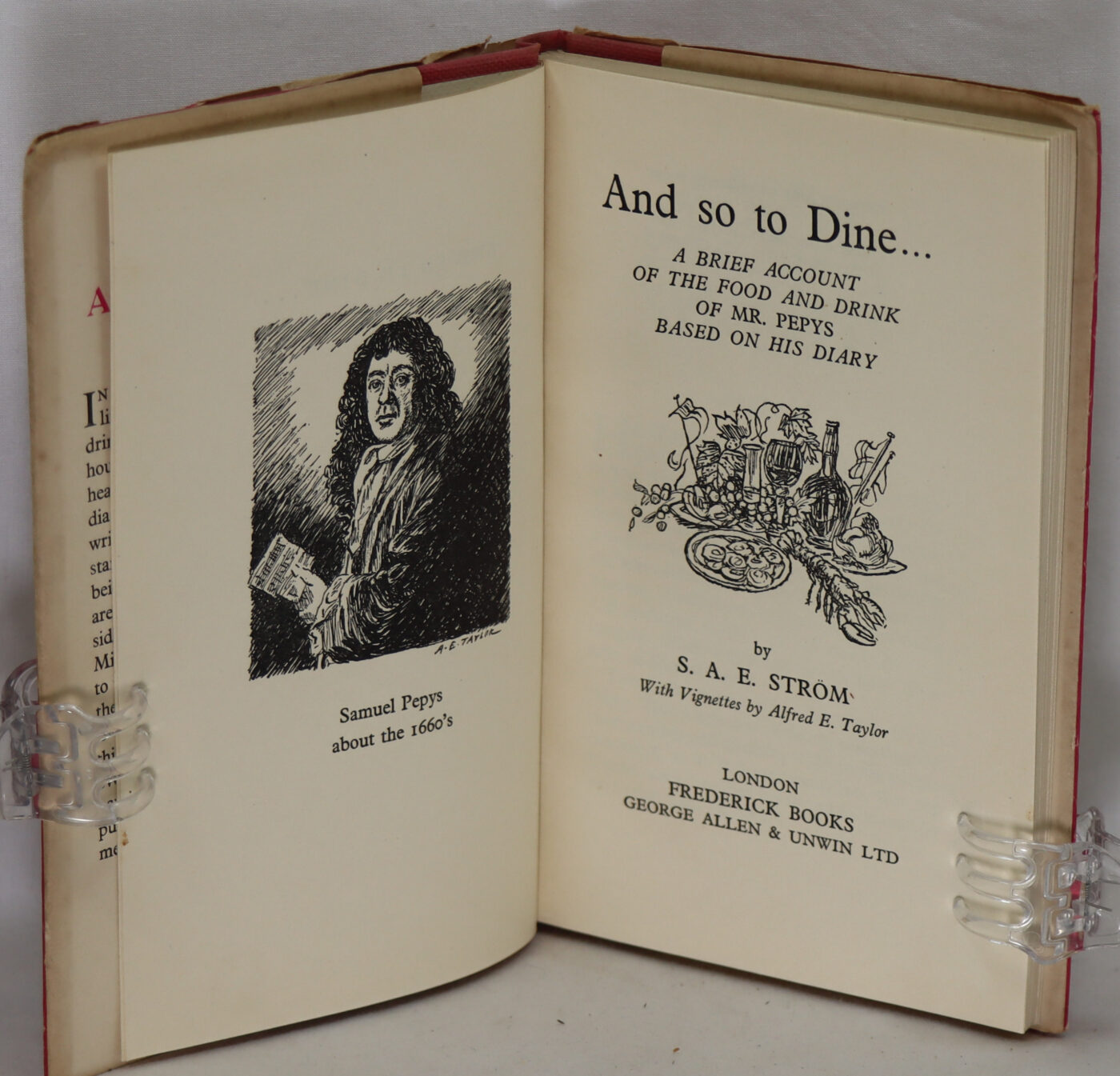
Author and Book: S.A.E. Strom wrote the 1955 book ‘And so to Dine’, which is brief account of the food and drink of Mr. Pepys based upon his diary.
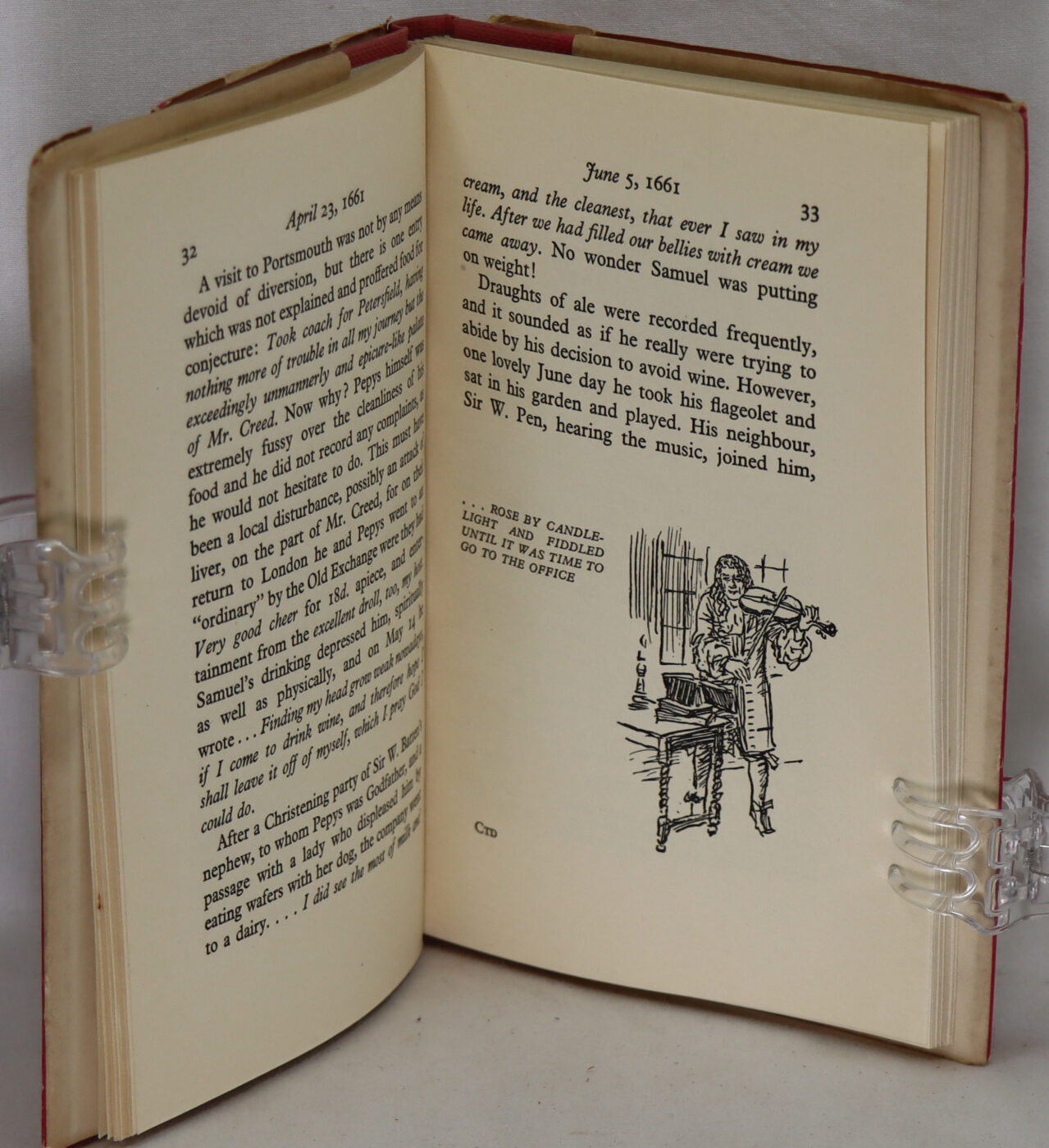
This is a First Edition (1955) published. 99 pages. Illustrative jacket over red cloth. Contains black and white illustrations throughout. Pages remain bright and clear with minimal tanning and foxing.
Samuel Pepys FRS (23 February 1633 – 26 May 1703) was an English writer and Tory politician. He served as an official in the Navy Board and Member of Parliament, but is most remembered today for the diary he kept for almost a decade. Though he had no maritime experience, Pepys rose to be the Chief Secretary to the Admiralty under both Charles II and James II through patronage, diligence, and his talent for administration. His influence and reforms at the English Admiralty were important in the early professionalisation of the Royal Navy.
The detailed private diary that Pepys kept from 1660 until 1669 was first published in the 19th century and is one of the most important primary sources of the Stuart Restoration. It provides a combination of personal revelation and eyewitness accounts of great events, such as the Great Plague of London, the Second Anglo-Dutch War and the Great Fire of London.
Diary: Samuel Pepys’ bookplate. The motto reads ‘Mens cujusque is est Quisque’ – “Mind Makes the Man”.
On 1 January 1660 (“1 January 1659/1660” in contemporary terms), Pepys began to keep a diary. He recorded his daily life for almost 10 years. This record of a decade of Pepys’ life in one and a quarter million words and populated by over 3,000 individuals is often regarded as Britain’s most celebrated diary. Pepys has been called the greatest diarist of all time due to his frankness in writing concerning his own weaknesses and the accuracy with which he records events of daily British life and major events in the 17th century. Pepys wrote about the contemporary court and theatre (including his amorous affairs with the actresses), his household, and major political and social occurrences. Historians have used his diary to gain greater insight and understanding of life in London in the 17th century. Pepys wrote consistently on subjects such as personal finances, the time he got up in the morning, the weather, and what he ate. He wrote at length about his new watch which he was very proud of (and which had an alarm, a new accessory at the time), a country visitor who did not enjoy his time in London because he felt that it was too crowded, and his cat waking him up at one in the morning. Pepys’ diary is one of a very few sources which provides such length in details of everyday life of an upper-middle-class man during the 17th century. The descriptions of the lives of his servants like Jane Birch provide a valuable detailed insight into their lives.
Aside from day-to-day activities, Pepys also commented on the significant and turbulent events of his nation. England was in disarray when he began writing his diary. Oliver Cromwell had died just fifteen months earlier, creating a period of civil unrest and a large power vacuum to be filled. Pepys had been a strong supporter of Cromwell, but he converted to the Royalist cause upon the Protector’s death. He was on the ship that returned Charles II to England to take up his throne and gave first-hand accounts of other significant events from the early years of the Restoration, such as the coronation of Charles II, the Great Plague, the Great Fire of London, and the Anglo–Dutch Wars.
Pepys did not plan on his contemporaries ever seeing his diary, which is evident from the fact that he wrote in shorthand and sometimes in a “code” of various Spanish, French, and Italian words (especially when describing his illicit affairs). However, Pepys often juxtaposed profanities in his native English amidst his “code” of foreign words, a practice which would reveal the details to any casual reader. He did intend for future generations to see the diary, as evidenced by its inclusion in his library and its catalogue before his death along with the shorthand guide he used and the elaborate planning by which he ensured his library survived intact after his death.
Want to know more about this item?
We are happy to answer any questions you may have about this item. In addition, it is also possible to request more photographs if there is something specific you want illustrated.
Ask a question
Related products
Share this Page with a friend
