
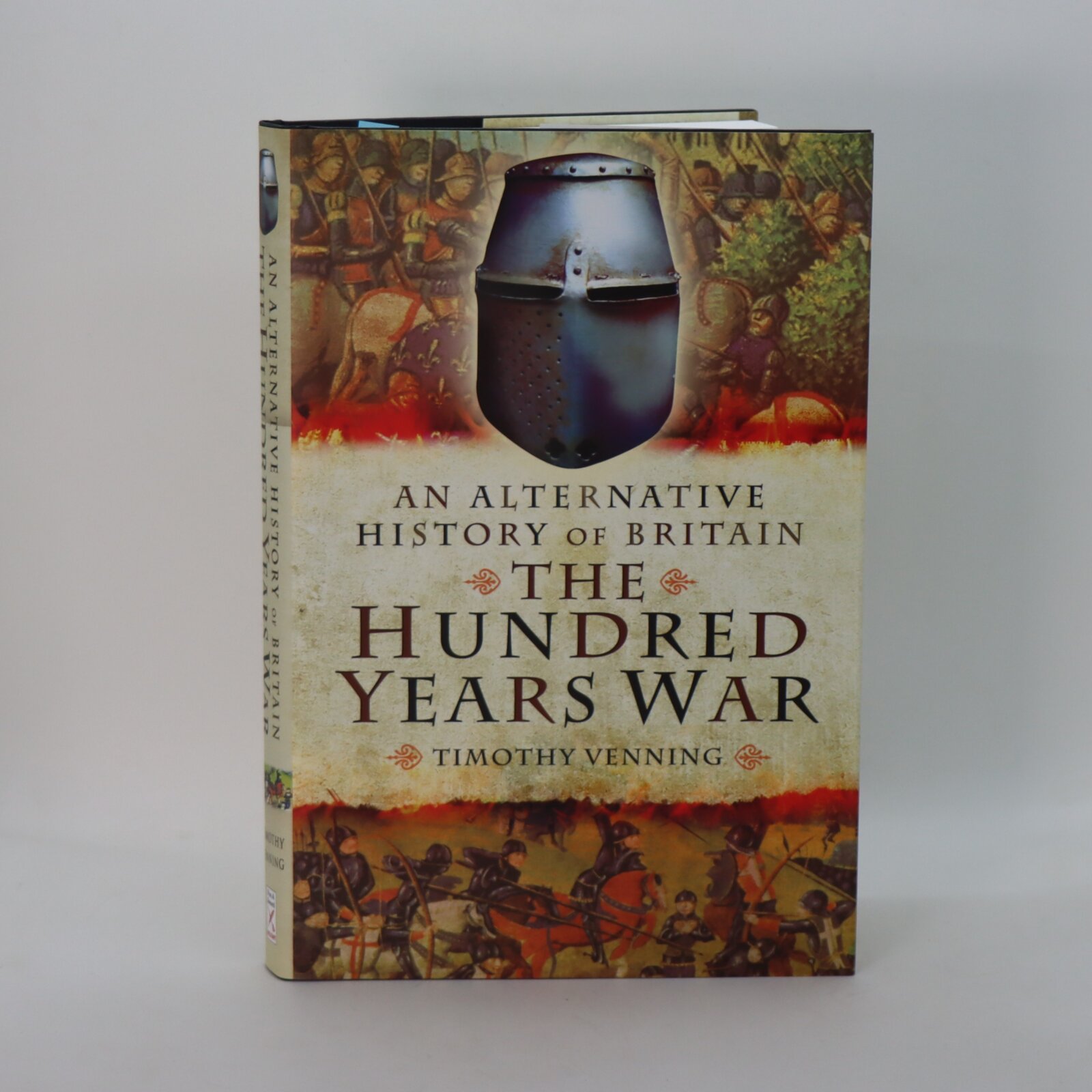
An Alternative History of Britain, The Hundred Years War.
By Timothy Venning
ISBN: 9781399024495
Printed: 2013
Publisher: Pen & Sword Military. Barnsley
Edition: First edition
| Dimensions | 16 × 24 × 2 cm |
|---|---|
| Language |
Language: English
Size (cminches): 16 x 24 x 2
Condition: As new (See explanation of ratings)
£10.00
Buy Now
Your items

Item information
Description
In the original dustsheet. Black cloth binding with gilt title on the spine.
F.B.A. provides an in-depth photographic presentation of this item to stimulate your feeling and touch. More traditional book descriptions are immediately available
Continuing his exploration of the alternative paths that British history might so easily have taken, Timothy Venning turns his attention to the Hundred Years War between England and France. Could the English have won in the long term, or, conversely, have been decisively defeated sooner?
Among the many scenarios discussed are what would have happened if the Black Prince had not died prematurely of the Black Death, leaving the 10-year-old Richard to inherit Edward IIIs crown. What would have been the consequences if France’s Scottish allies had been victorious at Neville’s Cross in 1346, while most English forces were occupied in France? What if Henry V had recovered from the dysentery that killed him at 35, giving time for his son Henry VI to inherit the combined crowns of France and England as a mature (and half-French) man rather than an infant controlled by others? And what if Joan of Arc had not emerged to galvanize French resistance at Orleans?
While necessarily speculative, all the scenarios are discussed within the framework of a deep understanding of the major driving forces, tensions and trends that shaped British history and help to shed light upon them. In so doing they help the reader to understand why things panned out as they did, as well as what might have been in this fascinating period that still arouses such strong passions on both sides of the Channel.
Dr Timothy Venning is a freelance researcher and author. He studied history at Kings College, London to PhD level, winning the London University History Prize in 1979. He has written articles for the Dictionary of National Biography, as well as a book on Oliver Cromwell and reference works on British officeholders and the chronology of the Byzantine Empire. He also contributes to major biographical publications and his research forms the basis for many other publications.
Want to know more about this item?
We are happy to answer any questions you may have about this item. In addition, it is also possible to request more photographs if there is something specific you want illustrated.
Ask a question
Related products
Share this Page with a friend
