
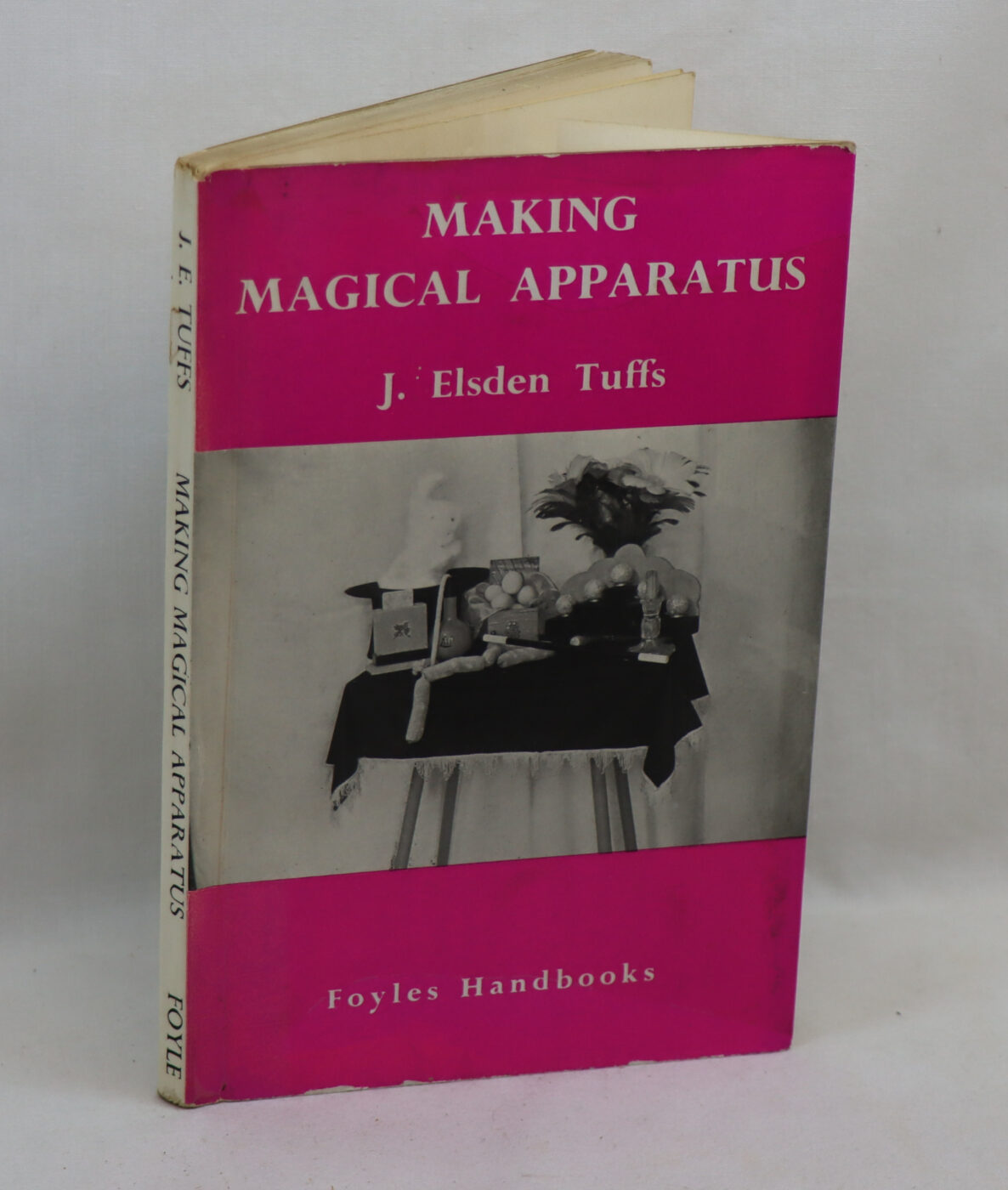
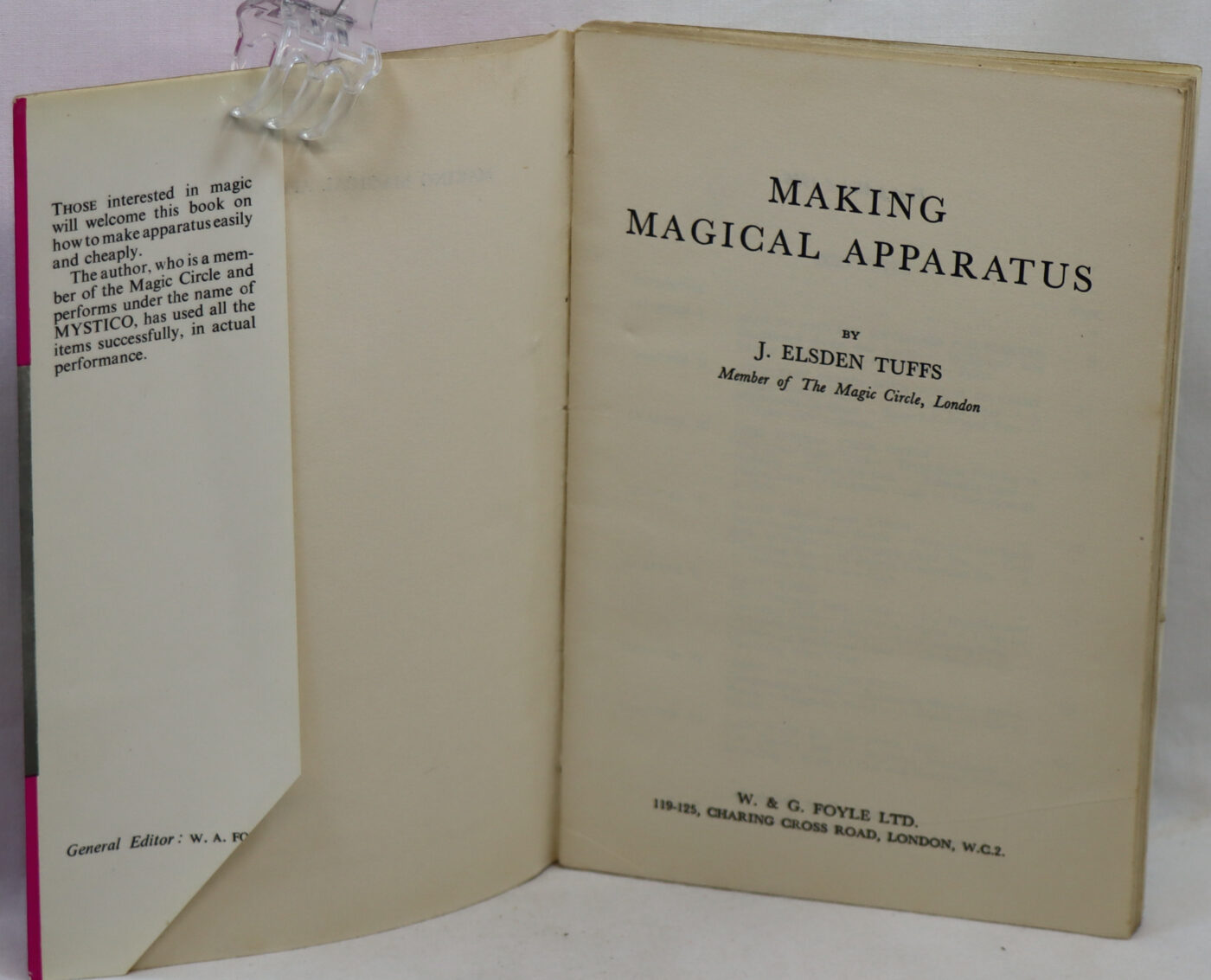
Making Magical Apparatus.
By J Elsden Tuffs
Printed: 1956
Publisher: W & G Foyle. london
Edition: First edition
| Dimensions | 13 × 19 × 1 cm |
|---|---|
| Language |
Language: English
Size (cminches): 13 x 19 x 1
Condition: Good (See explanation of ratings)
£64.00
Buy Now
Your items

Item information
Description
Paperback. Pink and white cover with white title.
We provide an in-depth photographic presentation of this item to stimulate your feeling and touch. More traditional book descriptions are immediately available
Note: This book carries a £5.00 discount to those that subscribe to the F.B.A. mailing list
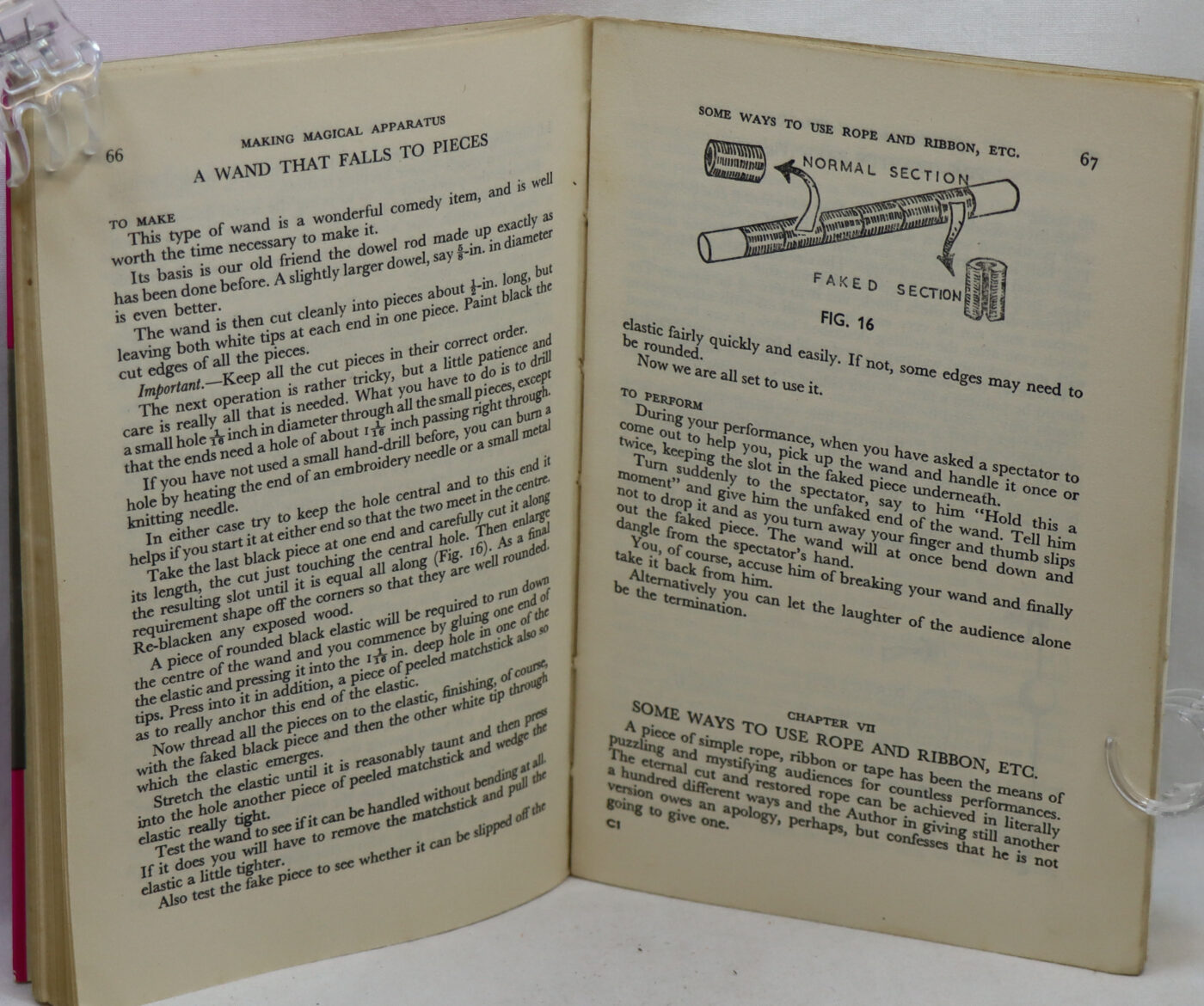
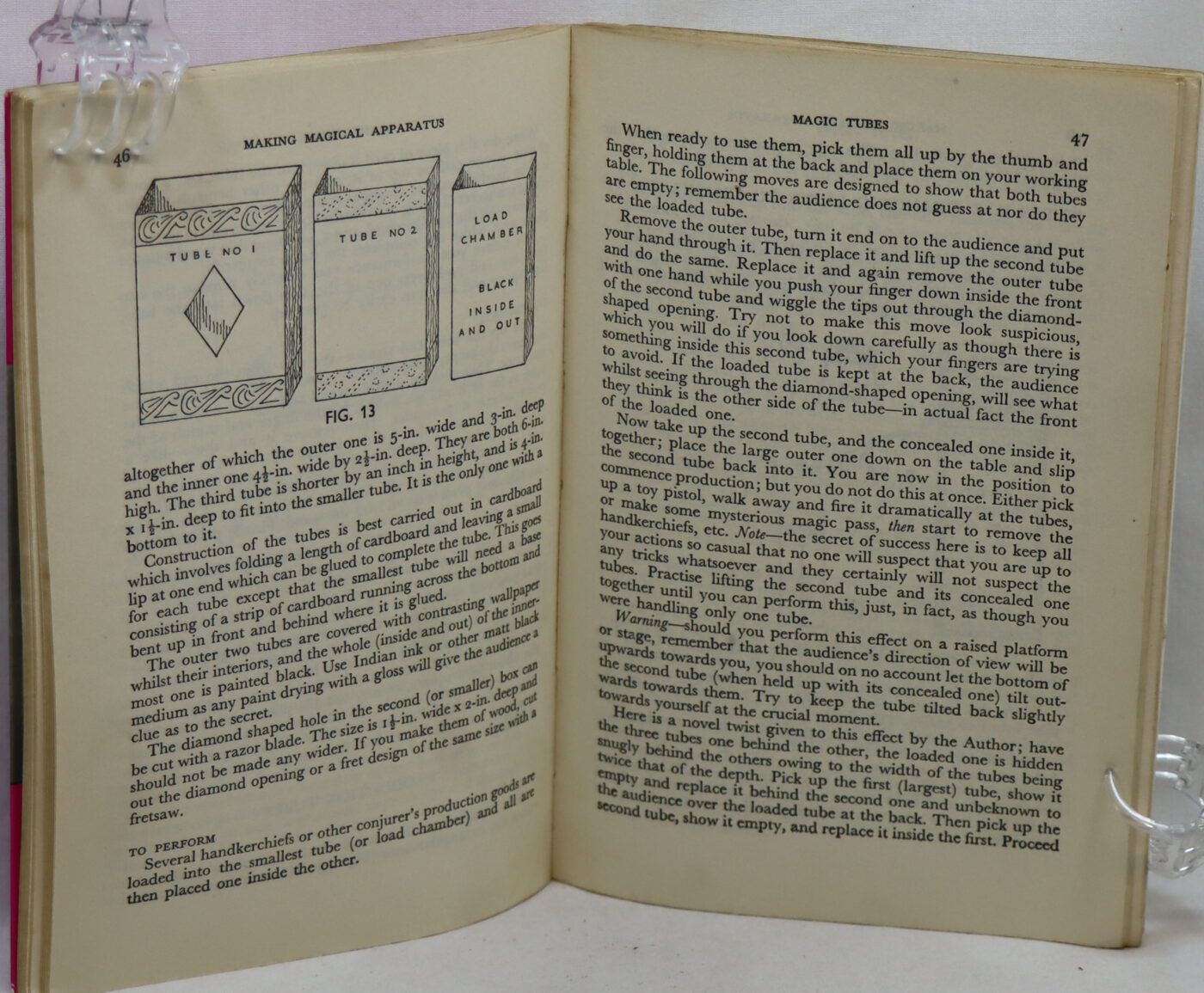
Still a bright copy of a fairly uncommon book. The author was a member of The Magic Circle, London. 100 pp with diagrammatic illustrations.
Magic Props Throughout History: How They Shaped the Art of Illusion
Magic has fascinated audiences for centuries, from ancient Egyptian conjurers to modern-day illusionists on global stages. But behind every incredible trick lies one key element: the magic prop. Over time, these tools of the trade have evolved dramatically – transforming not only how tricks are performed, but also how magic itself is perceived by audiences. In this article, we take a journey through time to explore the evolution of magic props, from simple cups and balls to sophisticated electronic marvels, and reveal how they’ve shaped the performances we know and love today.
The Ancient Origins: Simplicity Meets Deception
Magic props date back thousands of years. In ancient Egypt, magicians used basic sleight-of-hand techniques with simple items like stones, cups, and balls. One of the oldest recorded tricks was a version of the Cups and Balls – a routine still performed today! These early props were handcrafted and relied heavily on manual dexterity and misdirection, proving that even with the most basic tools, a skilled magician could amaze.
Renaissance to 18th Century: The Rise of Mechanical Marvels
During the Renaissance and Enlightenment periods, magic began to move from marketplaces into parlours and theatres. This shift gave rise to more elaborate apparatus-based magic.
- Automata – Mechanical figures powered by gears and springs were created to perform specific actions, astonishing audiences with lifelike movements.
- Magic Cabinets and Boxes – Hidden compartments, trapdoors, and cleverly designed furniture became tools for vanishes, appearances, and transformations.
Magicians like Jean Eugène Robert-Houdin in the 19th century used these props to bring a sense of science and sophistication to the art form, setting the stage for what we now call modern magic.
Victorian Era to Early 20th Century: The Golden Age of Illusion
This was the era of grand stage magic, and with it came even grander props.
- Levitation Devices – Hidden counterweights and wires allowed magicians to make people float.
- Sawing in Half Illusions – Large, purpose-built boxes with clever mechanics let magicians “saw” assistants in half.
- Spirit Cabinets – Used during the spiritualism craze to simulate ghostly phenomena and psychic happenings.
Performers like Harry Houdini and Howard Thurston popularised these props, combining engineering with showmanship to create massive theatrical illusions.
Mid-20th Century: Compact and Commercial Magic
As television and close-up magic grew in popularity, magic props had to become more portable and versatile.
- Gimmicked decks and gaff cards allowed for sleight-of-hand miracles with everyday items.
- Utility props like thumb tips, appearing canes, and coin shells became must-haves in every magician’s kit.
- TV magicians like David Copperfield and Doug Henning brought classic stage illusions to the small screen, inspiring a new generation.
This period also saw the rise of mass-produced props, making magic more accessible to hobbyists and professionals alike.
Modern Magic: Technology Meets Illusion
Today’s magic props combine traditional craftsmanship with cutting-edge technology.
Electronics and Apps – RFID chips, Bluetooth triggers, and smartphone apps are now used to trigger effects and read minds.
Mentalism Props – Invisible ink, impression pads, and electronics allow for mind-reading feats that feel truly impossible.
Custom-Built Props – Many professional magicians now commission bespoke illusions that blend tech, design, and storytelling. With the rise of social media and video platforms, magic props also need to be angle-proof, reset quickly, and play well on camera, changing how tricks are designed and performed.
What This Means for Your Event
Magic props have come a long way – from cups and balls to mind-blowing digital devices – but one thing hasn’t changed: the audience’s desire to be amazed. At Slightly Unusual, our magicians use a combination of classic props and modern innovations to deliver unforgettable performances that wow all ages. Whether you’re after close-up magic, stage illusions, or mind-reading, we’ve got the perfect blend of old-school charm and cutting-edge technique.
Bring the Magic to Life with Slightly Unusual
Want to see centuries of magical evolution come together in one unforgettable show? Slightly Unusual brings high-impact, jaw-dropping entertainment to any event – corporate functions, weddings, birthdays, and beyond.
NOTE: This is an original book from the library gathered by the famous Cambridge Don, computer scientist, food and wine connoisseur, Jack Arnold LANG. Note: Jack founded the Michelin Guide ‘Midsummer House’- Cambridge’s paramount restaurant. This dining experience is hidden amongst the grassy pastures and grazing cattle of Midsummer Common and perched on the banks of the River Cam.
In 2008, Jack was one of the co-founders of the Raspberry Pi Foundation, alongside other members of the Department, and acted as the Foundation’s Chair. The project’s original goals were modest: to build and distribute low-cost computers for prospective applicants to our Computer Science degree. Initially the project was a “success disaster”, as Jack would say, as demand far outstripped the low-scale manufacturing plans. Ultimately the Raspberry Pi became the UK’s most successful computer with more than 60 million sold to date. Jack was drawn to the educational possibilities of the Raspberry Pi, its potential uses in emerging economies and the way it could support self-directed learning.
Want to know more about this item?
We are happy to answer any questions you may have about this item. In addition, it is also possible to request more photographs if there is something specific you want illustrated.
Ask a question
Related products





Share this Page with a friend
