
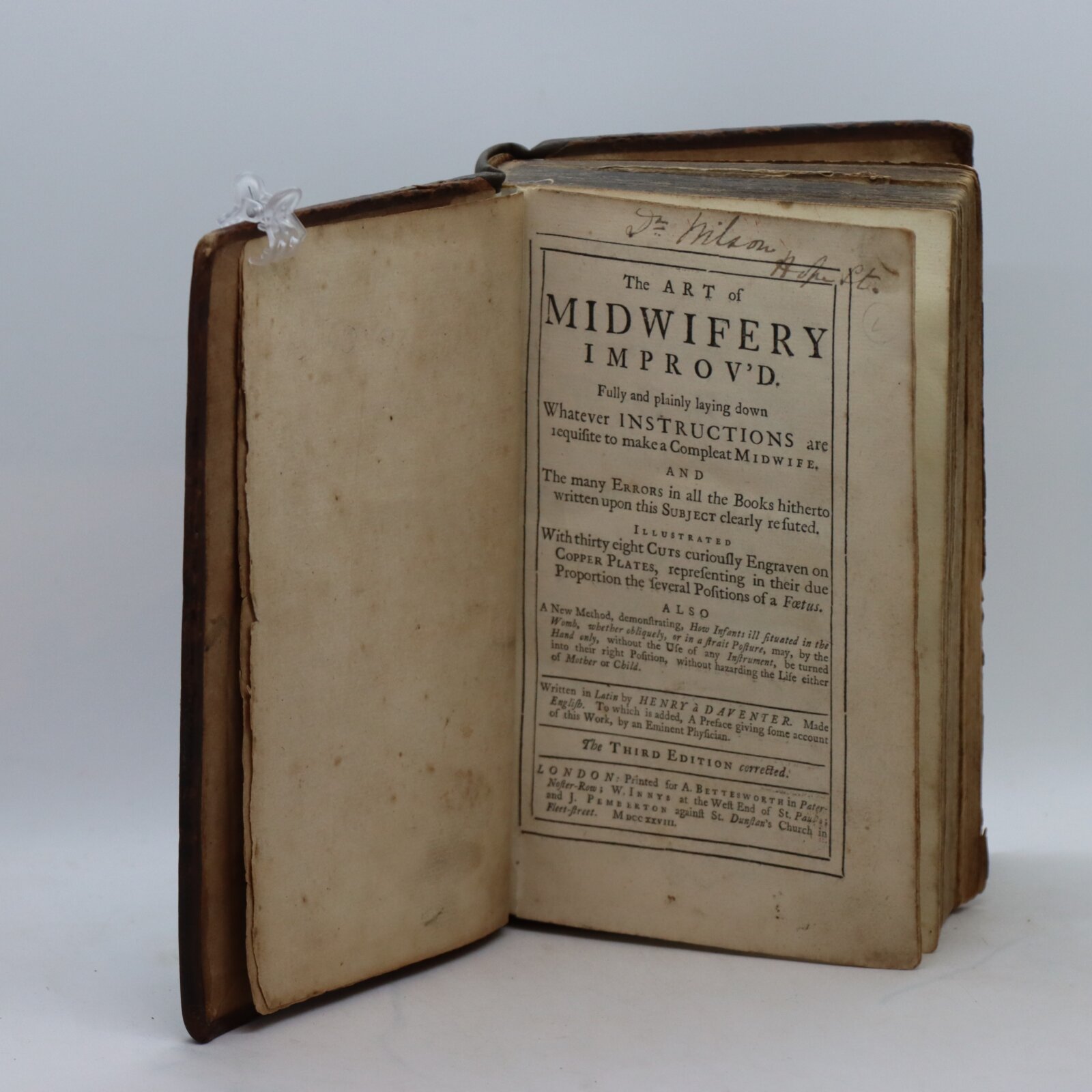
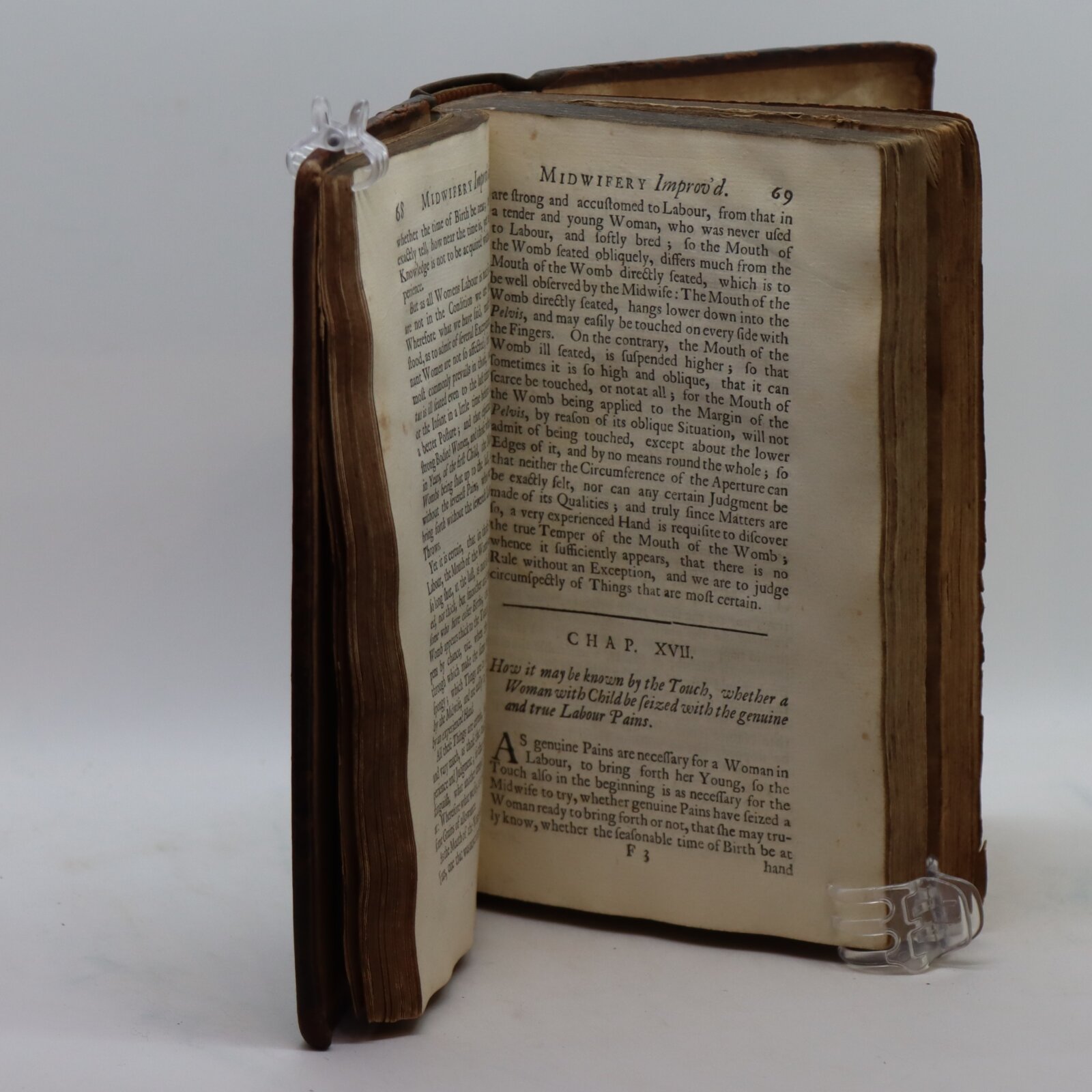
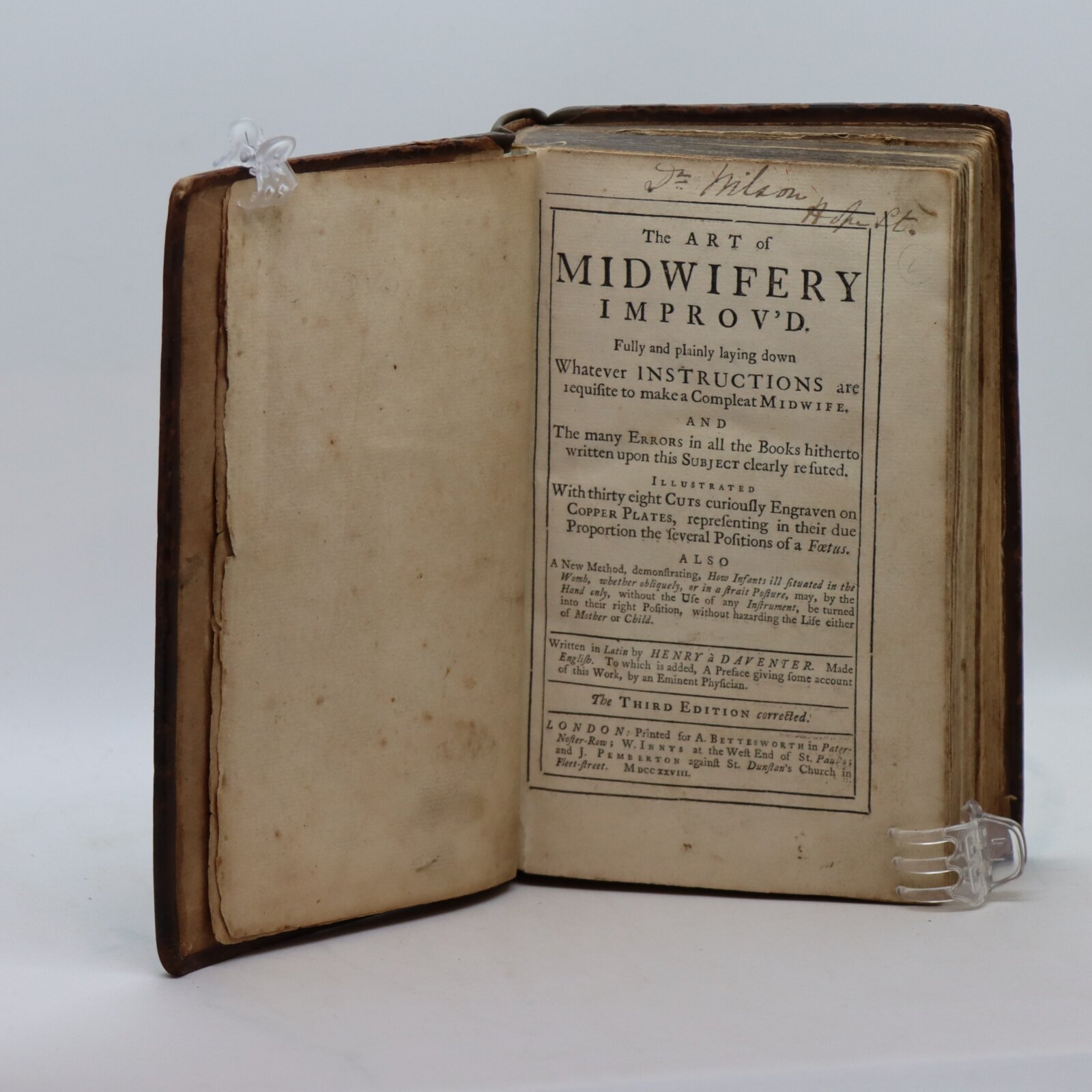
The Art of Midwifery.
By Henry A Daventer
Printed: 1728
Publisher: A Bettersworth. London
Edition: third edition
| Dimensions | 14 × 21 × 4.5 cm |
|---|---|
| Language |
Language: English
Size (cminches): 14 x 21 x 4.5
Condition: Fine (See explanation of ratings)
THIS ITEM WILL BE AVAILABLE SOON
SORRY, THIS ITEM HAS SOLD
Item information
Description
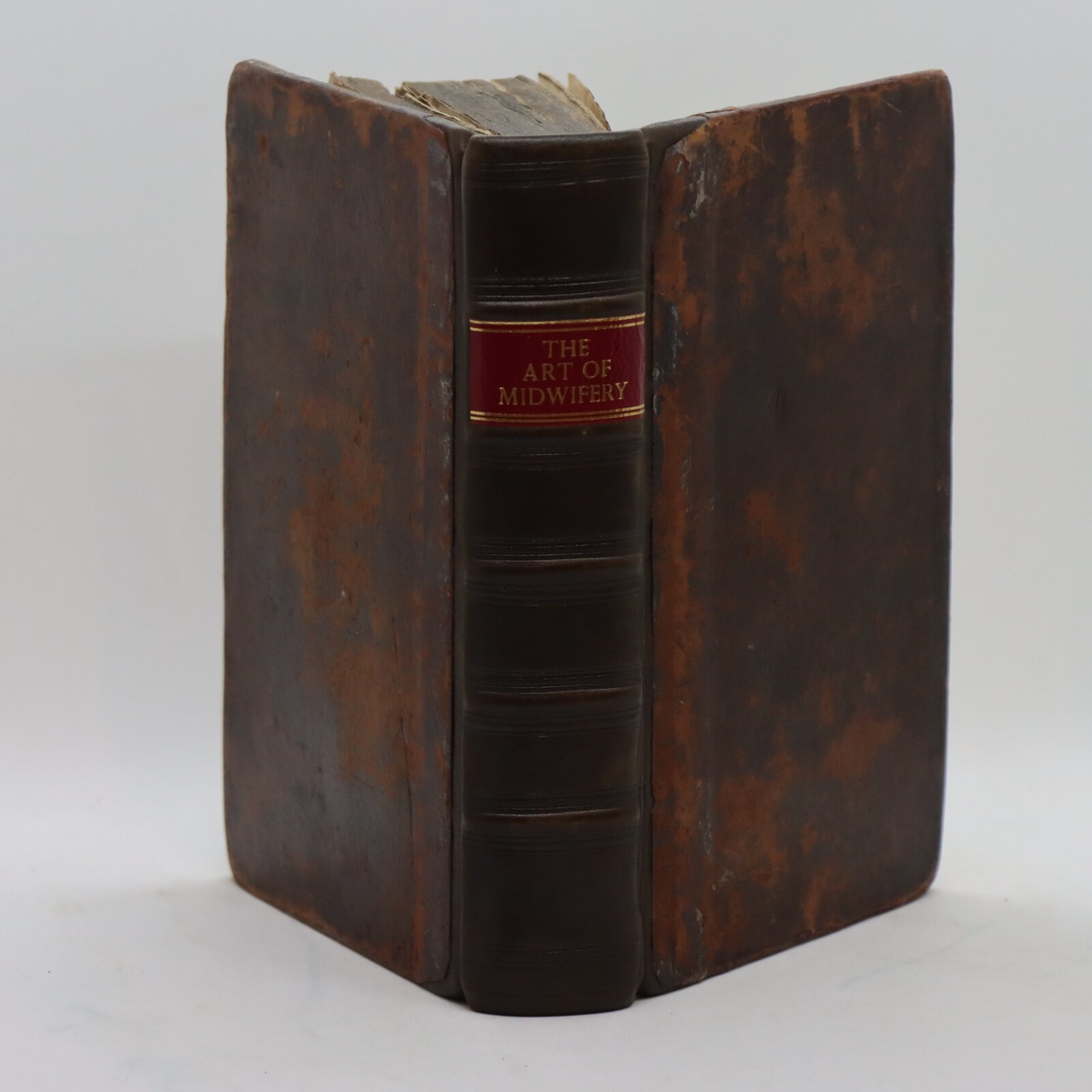
Brown calf bindings. Red title plate with gilt lettering. Spine replaced.
Deventer‘s “wife was an accomplished midwife and much of Van Deventer‘s success is due to her assistance in his obstetrical practice and in the writing of a book to meet the practical needs of the midwife”
Hendrik van Deventer (Leiden, 16 March 1651 – Voorburg, 12 December 1724) was a Dutch orthopedist, gynaecologist and labadist.
Hendrik van Deventer was the son of a leather merchant who moved to The Hague in 1653. He was apprenticed to a goldsmith. In 1678 he joined the followers of Jean de Labadie.
Most likely spurred on by the doctor of the sect,the physician Walter, in whom he was apprenticed from the age of twenty, the former goldsmith’s apprentice Hendrik also ended up with the sect members. The living sect of labadists cut off from the community tries to be as self-sufficient as possible.
Hendrik learns the profession of surgeon mainly in practice and through self-study. Shortly after his establishment in Wieuwerd, he started his practice among the labadists as early as 1679. Hendrik made a name for himself as a physician, especially as an orthopedist.
He is an expert in the field of rickets. Even the Danish-Norwegian king Christian V (1670-1699) calls on the specialist to treat himself and his children and is satisfied. Hendrik van Deventer succeeds in obtaining the doctorate in Groningenas an autodidact, who does not know Latin. With that title in front of his name, he can settle anywhere in the Netherlands. Staying longer in Wieuwerd is not attractive. His generous fee as a medical specialist disappears into the big pot of the labadists, if he stays his children will not inherit anything.
Hendrik also specializes in obstetrics. He wants to settle in The Hague, but the doctors from The Hague, united in the Collegium Medicum, have no need for competition, they do not allow Hendrik with his practice “because he does not master Latin”. Hendrik settles in Voorburg and is still recognized by the Collegium in 1695.
He opens his practice in Voorburg, in a not inconsiderable building called ‘De Poort’, near the current Herenstraat 52, just opposite the Oude Kerk. In 1702 he bought an even more rianter building, the outside Sionslust in Voorburg, located on the corner of the Sionsstraat and the Raadhuisstraat. At Sionslust he had his own printing house for his medical and religious writings and also a tannery for making orthopaedic aids.
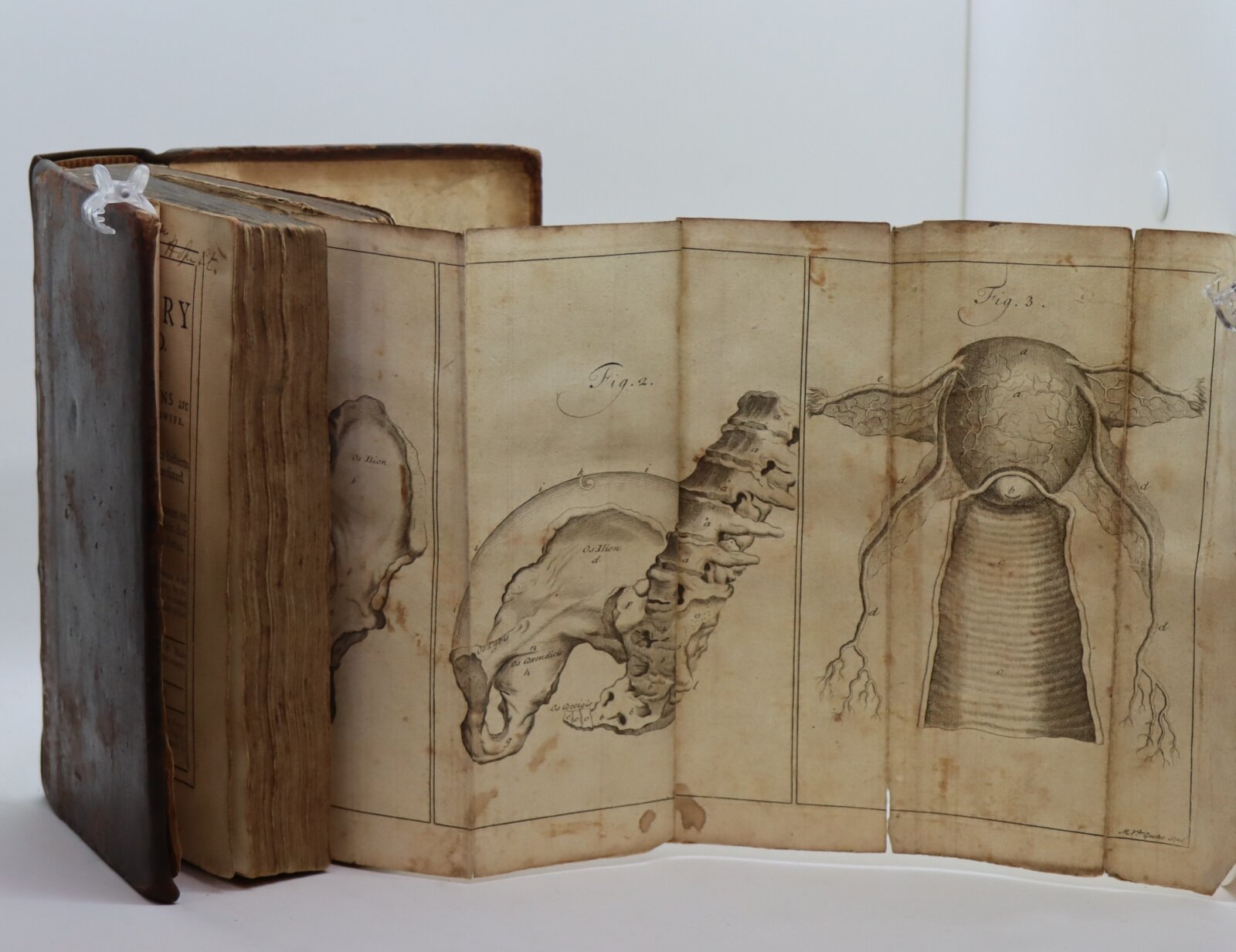
After the year 1719, Hendrik is over the height of his fame, his wife has died and many of his at least ten children. He is seen as one of the greatest physicians of his time. He was not only the combatant of the English disease, but above all a pioneer in the field of obstetrics. His most important publication Manuale operatiën, being a new lie for midwives and midwives, stirs up a lot of dust. He emphasizes that hygiene during childbirth is necessary.
The Labadists were a 17th-century Protestant religious community movement founded by Jean de Labadie (1610–1674), a French pietist. The movement derived its name from that of its founder. In the Labadist community there were craftsmen, who generated income, although as many men as possible were sent on outreach to neighbouring towns. Children were tutored communally. The women had traditional roles as homemakers. A printing press was set up, disseminating many writings by Labadie and his colleagues. The best known of Labadist writings was not Labadie’s but Anna van Schurman’s, who wrote a justification of her renunciation of fame and reputation to live in Christian community. Van Schurman was noted in her day as “The Star of Utrecht” and admired for her talents: she spoke and wrote five languages, produced an Ethiopic dictionary, played several instruments, engraved glass, painted, embroidered, and wrote poetry. At the age of 62 she gave up everything and joined the Labadists.
After Labadie’s death, his followers returned to the Netherlands, where they set up a community in a stately home – Walta Castle – at Wieuwerd in Friesland, which belonged to three sisters Van Aerssen van Sommelsdijck, who were his adherents. Here printing and many other occupations continued, including farming and milling. One member, Hendrik van Deventer, skilled in chemistry and medicine, set up a laboratory at the house and treated many people, including Christian V, the King of Denmark. He is remembered as one of the Netherlands’ pioneering obstetricians.
Several noted visitors have left their accounts of visits to the Labadist community. One was Sophia of Hanover, mother of King George I of Great Britain; another was William Penn, the Quaker pioneer, who gave his name to the US state of Pennsylvania; a third was the English philosopher, John Locke.
Several Reformed pastors left their parishes to live in community at Wieuwerd. At its peak, the community numbered around 600 with many more adherents further afield. Visitors came from England, Italy, Poland and elsewhere, but not all approved of the strict discipline. Those of arrogant disposition were given the most menial of jobs. Fussiness in matters of food was overcome since all were expected to eat what was put in front of them.
Daughter communities were set up in the New World. La Providence, a daughter colony on the Commewijne River in Surinam, proved unsuccessful. The Labadists were unable to cope with jungle diseases, and supplies from the Netherlands were often intercepted by pirates. Entomological artist Maria Sybilla Merian, who had lived in the Labadist colony in Friesland for some years, went to Surinam in 1700 and drew several plates for her classic Metamorphosis Insectorum Surinamensium on the Labadist plantation of La Providence.
Condition notes
Rebacked
Want to know more about this item?
We are happy to answer any questions you may have about this item. In addition, it is also possible to request more photographs if there is something specific you want illustrated.
Ask a question



Share this Page with a friend
