
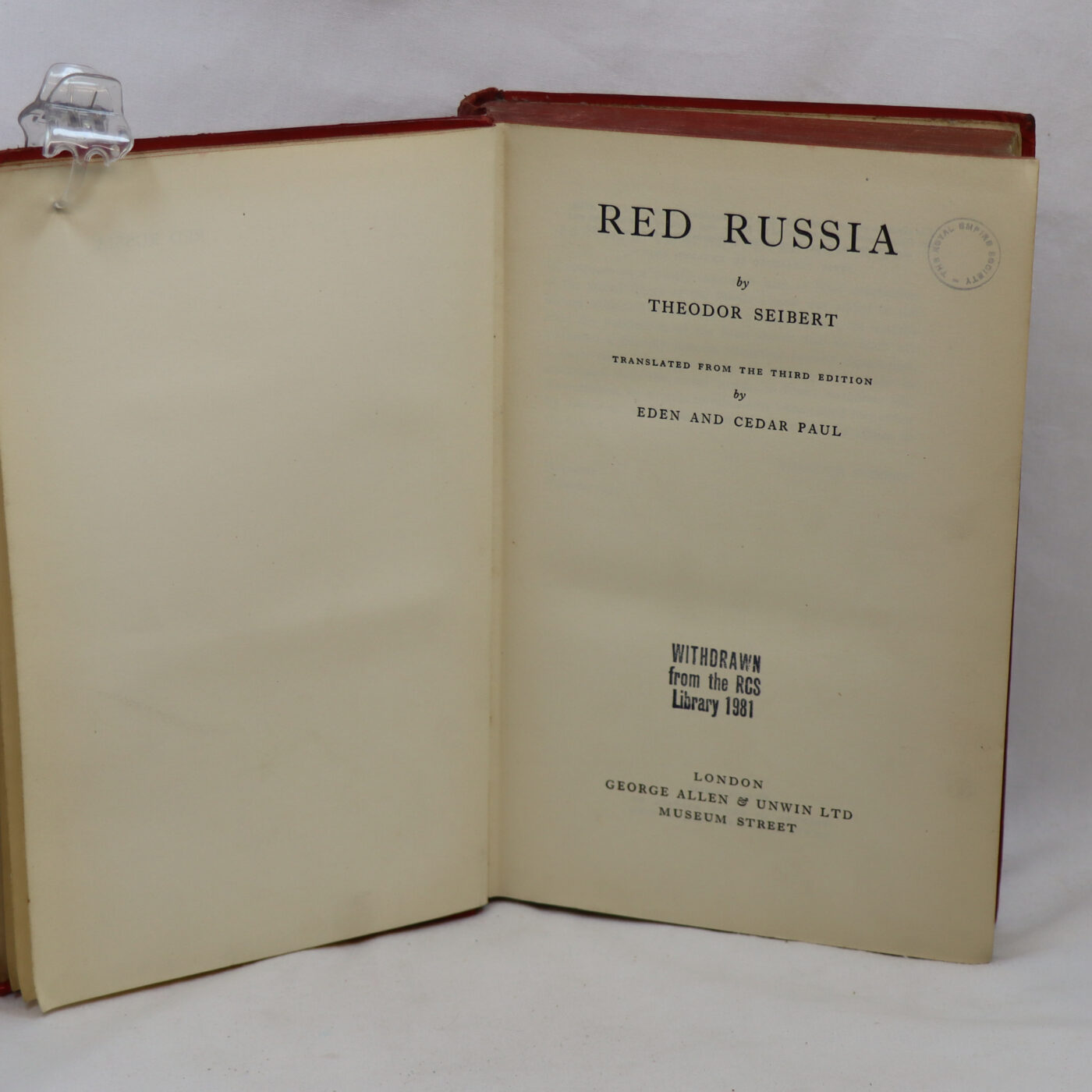
Red Russia.
By Theodore Seibert
Printed: 1932
Publisher: George Allen & Unwin. London
| Dimensions | 15 × 22 × 3 cm |
|---|---|
| Language |
Language: English
Size (cminches): 15 x 22 x 3
Condition: Fair (See explanation of ratings)
£21.00
Buy Now

Item information
Description
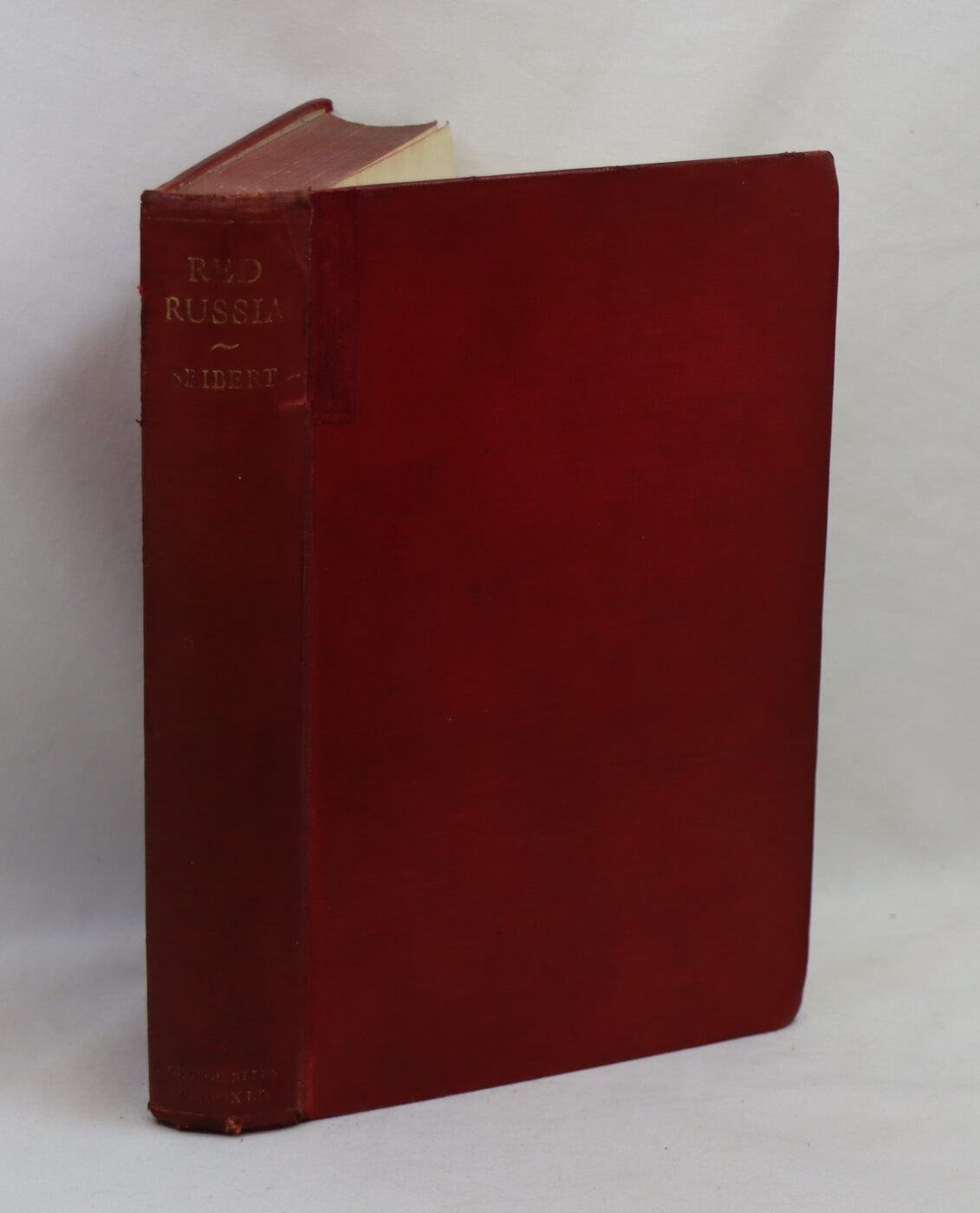
Red cloth binding with gilt title on the spine.
We provide an in-depth photographic presentation of this item to stimulate your feeling and touch. More traditional book descriptions are immediately available.
- Note: This book carries a £5.00 discount to those that subscribe to the F.B.A. mailing list
Please view our photographs. Based on the market data for early 1930s political histories and Soviet studies, the estimated retail value of this specific copy is £15 to £30 GBP. Red Russia by Theodor (Theodore) Seibert, translated by Eden and Cedar Paul, is a deeply critical account of the USSR compiled during the author’s time as a German press representative from 1926 to 1929. While well-preserved or fine copies featuring their original dust jackets sell online for £45 to £52 GBP via antiquarian platforms like Antikbar Books or AbeBooks, a copy in Fair condition—reflecting standard shelf wear, aging, or minor structural flaws—commands a more modest price.
The core contents of Theodor Seibert’s Red Russia (1932) are divided into seven major structural sections spanning 23 chapters. The book acts as a comprehensive, highly critical eyewitness study of daily life, political infrastructure, and social engineering in the early Soviet Union under Joseph Stalin. The complete table of contents from the original edition includes:
Part 1: Do We Know Russia?
- Chapter 1: The Fancy Picture of Pre-Revolutionary Russia
- Chapter 2: The Country and Its Inhabitants
- Chapter 3: The Fancy Picture of Contemporary Russia
The remaining sections of the book continue through Chapter 23, detailing the political, cultural, economic, and social structures of the regime:
- Parts 2 & 3 (Chapters 4–10): Cover the Bolshevik state structure (“Decorative Democracy,” “The Visage of the Party”) and the ideological shaping of society, addressing family life and the rising generation.
- Parts 4 & 5 (Chapters 11–18): Examine cultural production under party monopolies (science, art, press) alongside instruments of authority like Soviet justice and the police state.
- Parts 6 & 7 (Chapters 19–23): Analyze Bolshevik economics, including the Five-Year Plan and wages, concluding with Seibert’s assessment of Russia’s present condition and global outlook.
Condition notes
Small repair to spine
Want to know more about this item?
We are happy to answer any questions you may have about this item. In addition, it is also possible to request more photographs if there is something specific you want illustrated.
Ask a question
Related products

Share this Page with a friend
