
Living with Jane Austen.
By Janet Todd
ISBN: 9781009569316
Printed: 2025
Publisher: Cambridge University Press.
| Dimensions | 13 × 21 × 2 cm |
|---|---|
| Language |
Language: English
Size (cminches): 13 x 21 x 2
Condition: As new (See explanation of ratings)
£17.00
Buy Now


Item information
Description
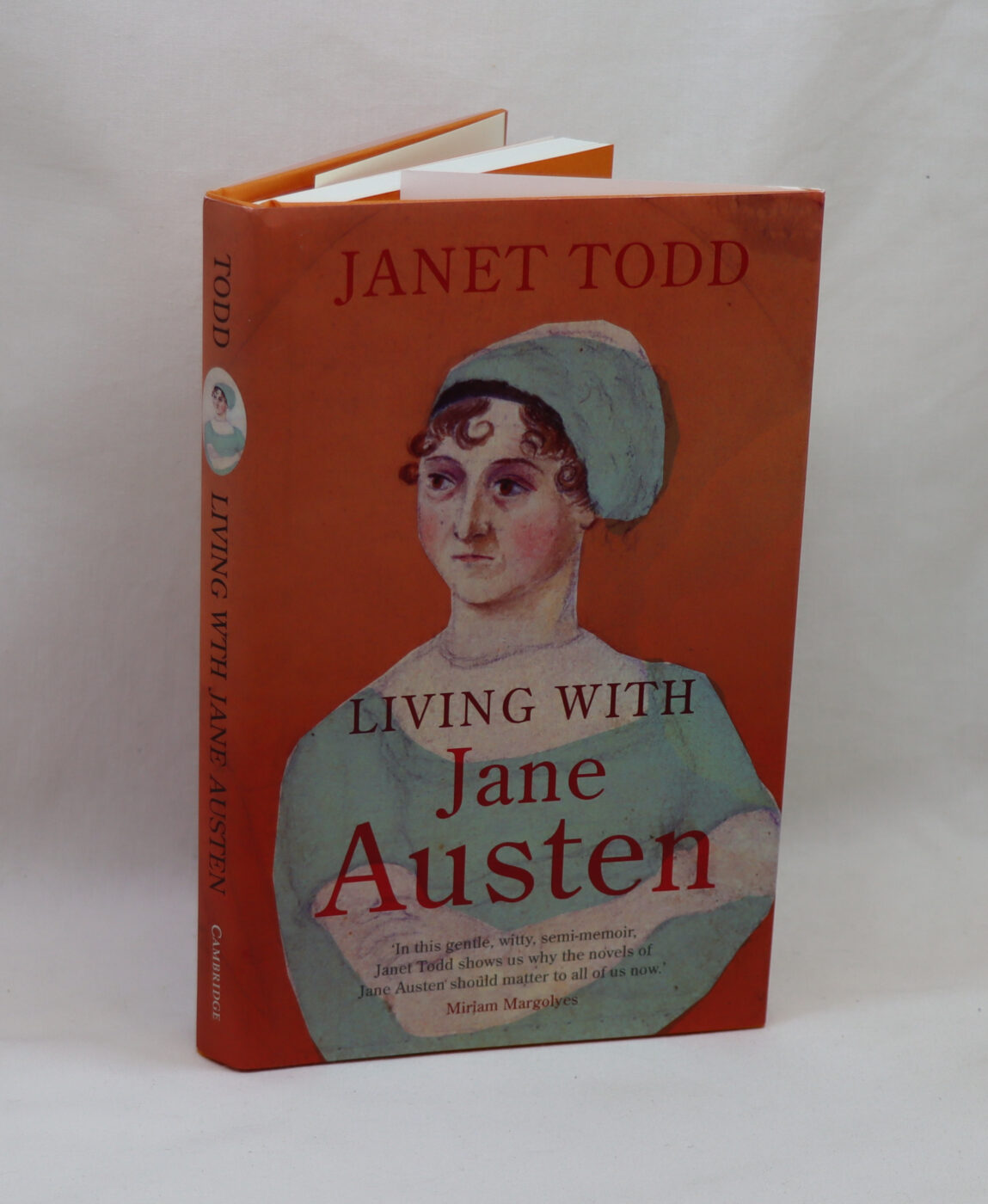
In the original dust jacket. Orange cloth binding with brown title on the spine.
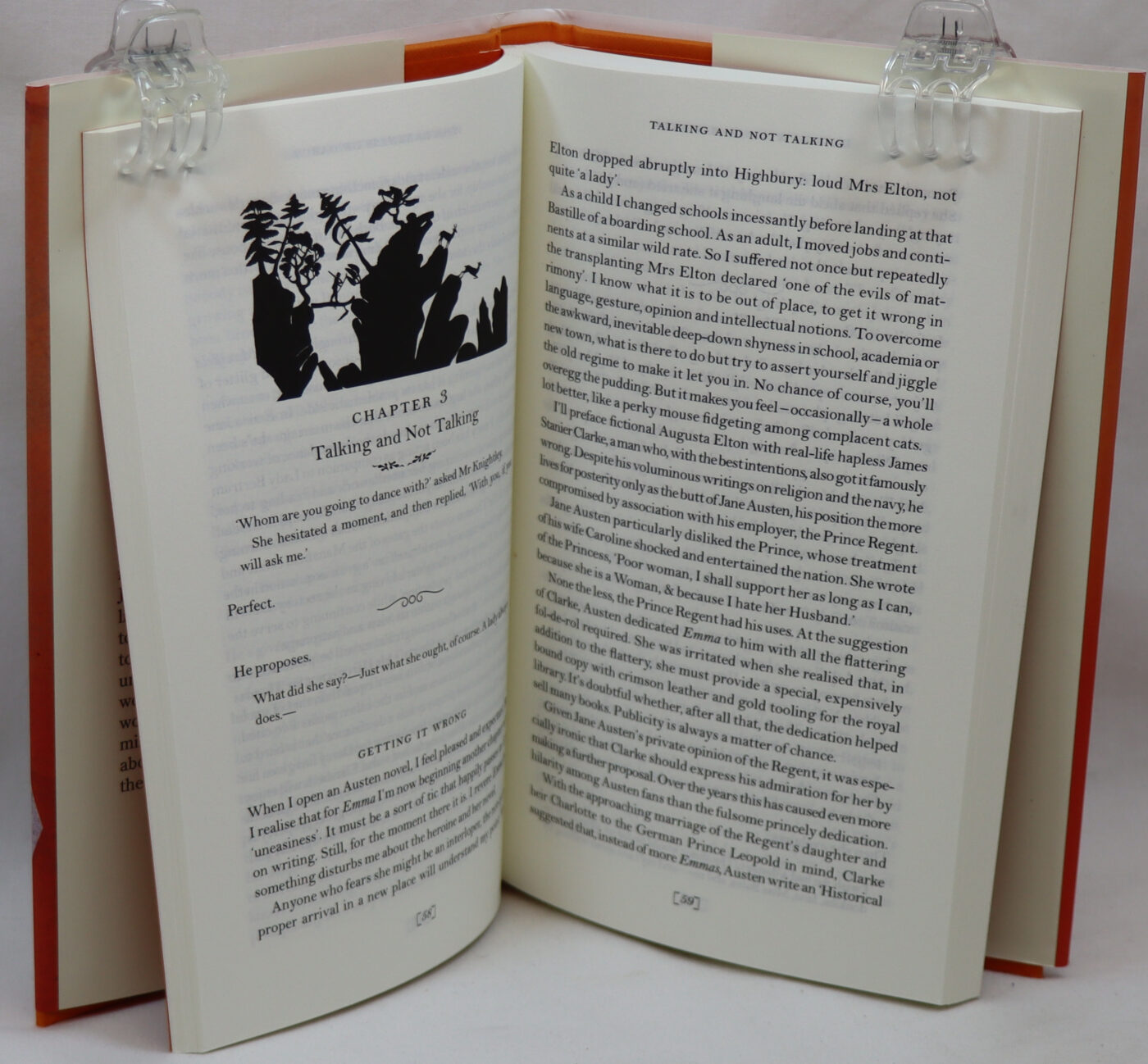
We provide an in-depth photographic presentation of this item to stimulate your feeling and touch. More traditional book descriptions are immediately available.
- Note: This book carries a £5.00 discount to those that subscribe to the F.B.A. mailing list
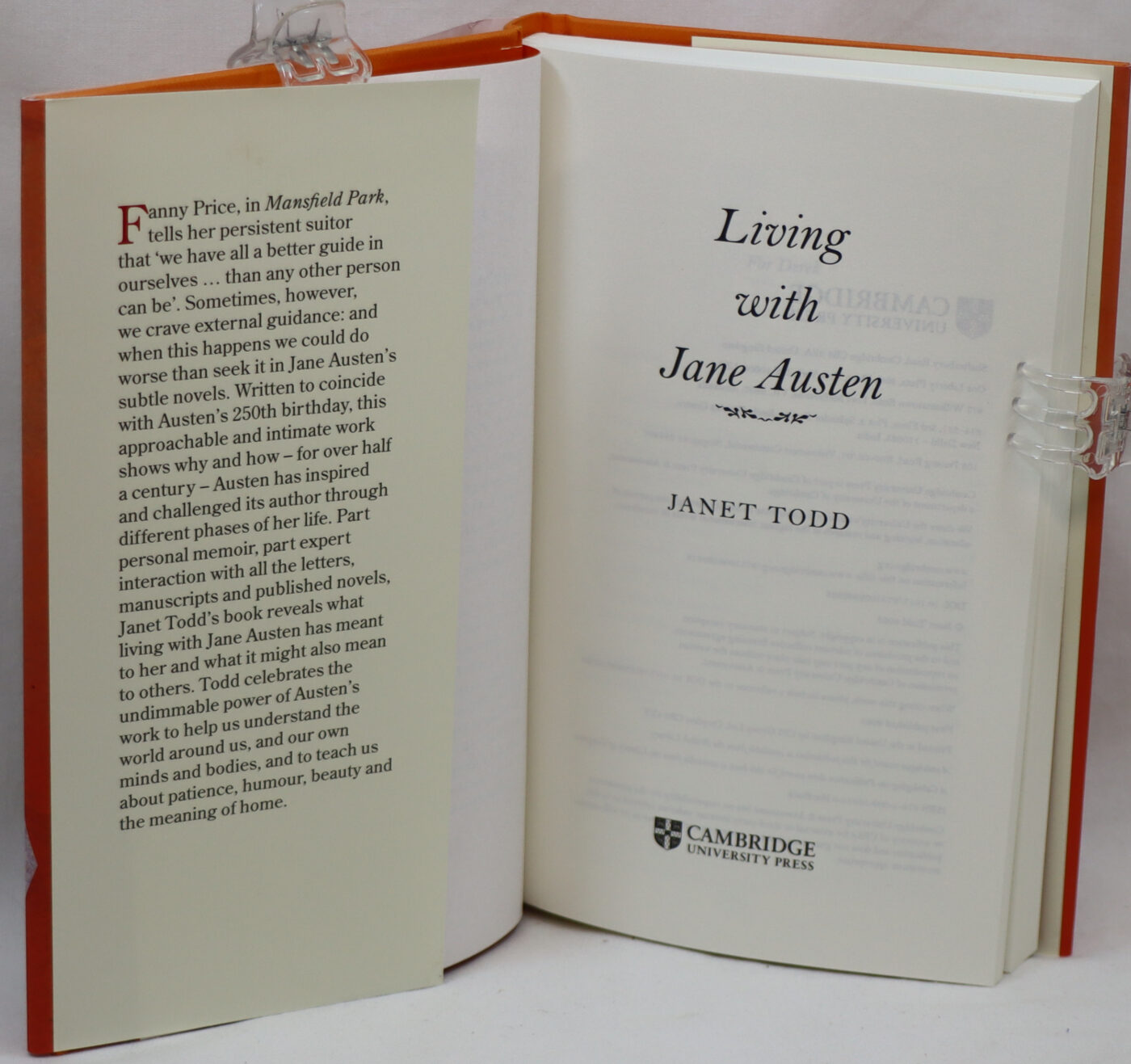
Fanny Price, in Mansfield Park, tells her persistent suitor that ‘we all have a better guide in ourselves…than any other person can be’. Sometimes, however, we crave external guidance: and when this happens we could do worse than seek it in Jane Austen’s own subtle novels. Written to coincide with Austen’s 250th birthday, this approachable and intimate work shows why and how – for over half a century – Austen has inspired and challenged its author through different phases of her life. Part personal memoir, part expert interaction with all the letters, manuscripts and published novels, Janet Todd’s book reveals what living with Jane Austen has meant to her and what it might also mean to others. Todd celebrates the undimmable power of Austen’s work to help us understand our own bodies and our environment, and teach us about patience, humour, beauty and the meaning of home.
Review: This book has been on my wish-list ever since I heard about it, and was only delayed by my annual, self-imposed necessity of reading the entire Booker Prize longlist before the prize is awarded. (Still working on it, not looking good, lol.) However, reading LIVING WITH JANE AUSTEN became imperative last week, when I learned – whoever said that Facebook is useless? – that Janet Todd, in person, was to lecture at the Chelsea Royal Hospital yesterday, as part of the Chelsea History Festival. Five minutes after learning this, I had bought a ticket, oiled out of my usual Friday morning tennis and was reading this book on my Kindle.
Reasons for recommending: (1) I adore Austen. (So do you, or you wouldn’t be reading this.) (2) Todd writes beautifully and – at least in this book – very lightly. It reads like Austen’s letters to Cassandra. She draws the reader to her like a friend in a coffee shop. (3) Todd is fearless. Parts of this book will annoy people, which is always useful, as it stirs the blood. Remember, Austen was fearless, too. So, having read everything Austen ever wrote hundreds of times, a good many books about Austen, and all the principal biographies, I was thrilled to be TAKEN FARTHER. Possibly because Todd, like my professor husband, was turfed off to boarding school as a child, she understands both Fanny and Anne’s deep loneliness with unusual acuteness. As she writes of the character of Fanny in MANSFIELD PARK: ‘I’d have liked to have contemplated her under the bedclothes before my torch and hot water bottle were confiscated: I might have understood that masterpiece even then.’ But Todd’s insights are far from confined to Austen’s underrated and understated heroines: ‘That slippery free indirect style… allows Emma to appear to think worthy thoughts while not quite being mistress of them.’ Emma has much to learn, partly thanks to her behaviour towards Jane Fairfax, for Todd, ‘that clever, handsome woman whose vulnerability she never grasps.’ Todd’s perception of PRIDE AND PREJUDICE as ‘a fantasy’ and a fantasy appealing most to women will annoy many (though Austen herself hints at its being so, in her letters). To Todd, ‘Pemberley seems to me to exist without irony.’ And this while she makes a persuasive case for there being ‘darkness’ in Darcy, a Heathcliffian/Mr Rochesterian shadow. (Here, Todd endearingly inquires, ‘Are you with me?’ – just as a friend might, in a Cambridge coffee shop… ) The Darcy-esque darkness? For Todd, ‘the sense that men of power attract erotically as well as financially, just might give a bittersweet tinge to the happy ending of PRIDE AND PREJUDICE’. Similarly, we have MANSFIELD’s Sir Thomas Bertram – who has his own quotient of darkness, in Todd’s view… ‘As Sir Thomas tight shuts the gates of Mansfield estate he congratulates himself on “a great acquisition in the promise of Fanny for a daughter”… “Acquisition”. That’s clear enough. Fanny will be “protected” but will she ever find herself “at liberty”?’ A deep question – possibly, too deep for many. This is a brave book. It’s apparent lightness, both in fluidity of tone and style, is deceptive. A few, very rare, people see farther: Todd is one of these. Here’s something else I loved: ‘Austen’s oeuvre is a kind of fugue. After creating one type of heroine, she investigates not quite an opposite but an alternative; then back she swerves to repeat subtly what’s been done in the novel-but-one before, to reprise that quietly thoughtful or that witty, sprightly young person… Anne Elliot, Elinor Dashwood and Fanny Price are aware of the constant compromise necessary between self and society which, at the outset, Elizabeth and Emma have yet to learn.’ And here’s another example of professorial daring with regard to the turning-point of PERSUASION: ‘There’s something beyond painful pleasure and pleasurable pain in the climactic scene at the White Hart Inn. Here Anne’s speech reaches out from the book. It’s like an operatic aria of passion, demanding attention and reducing the reader to a single response. It’s also a statement of feminine emotional masochism.’ Wow. Would even Helena Kennedy have gone that far?… And yet, the longer I’ve tussled with this concept, the more I see in it. Todd’s entire book is quietly radical, unnervingly honest and intensely Austenian. (Austen would have loved it. I happen to know.) And so, yesterday I loved the lecture – Todd’s dry and elegant wit – and today I am the mega-proud owner of a signed copy (‘to Alice’) of her beautiful book. And it IS a very elegant book, with a characterful Austen on it – Cambridge University Press doing their usual great job. And so, Facebook IS good for something. Who knew?
Janet Todd has been thinking and writing about books for more than half a century. She has been a biographer, novelist, critic, editor and memoirist. In the 1970s, she helped open up the study of early women writers by beginning a journal and compiling encyclopedias before editing the complete works of Mary Wollstonecraft, Aphra Behn and Jane Austen. She has worked in English departments in Africa, the West Indies, the US and the UK. A former President of Lucy Cavendish College, Cambridge, she is now an Honorary Fellow of Lucy Cavendish and Newnham Colleges and an Emerita Professor of the University of Aberdeen.
Want to know more about this item?
We are happy to answer any questions you may have about this item. In addition, it is also possible to request more photographs if there is something specific you want illustrated.
Ask a question
Share this Page with a friend
