
Monet.
By Rosalind Ormiston
ISBN: 9783791393797
Printed: 2026
Publisher: Prestel. Munich
| Dimensions | 17 × 21 × 1 cm |
|---|---|
| Language |
Language: English
Size (cminches): 17 x 21 x 1
Condition: As new (See explanation of ratings)
£10.00
Buy Now

Item information
Description
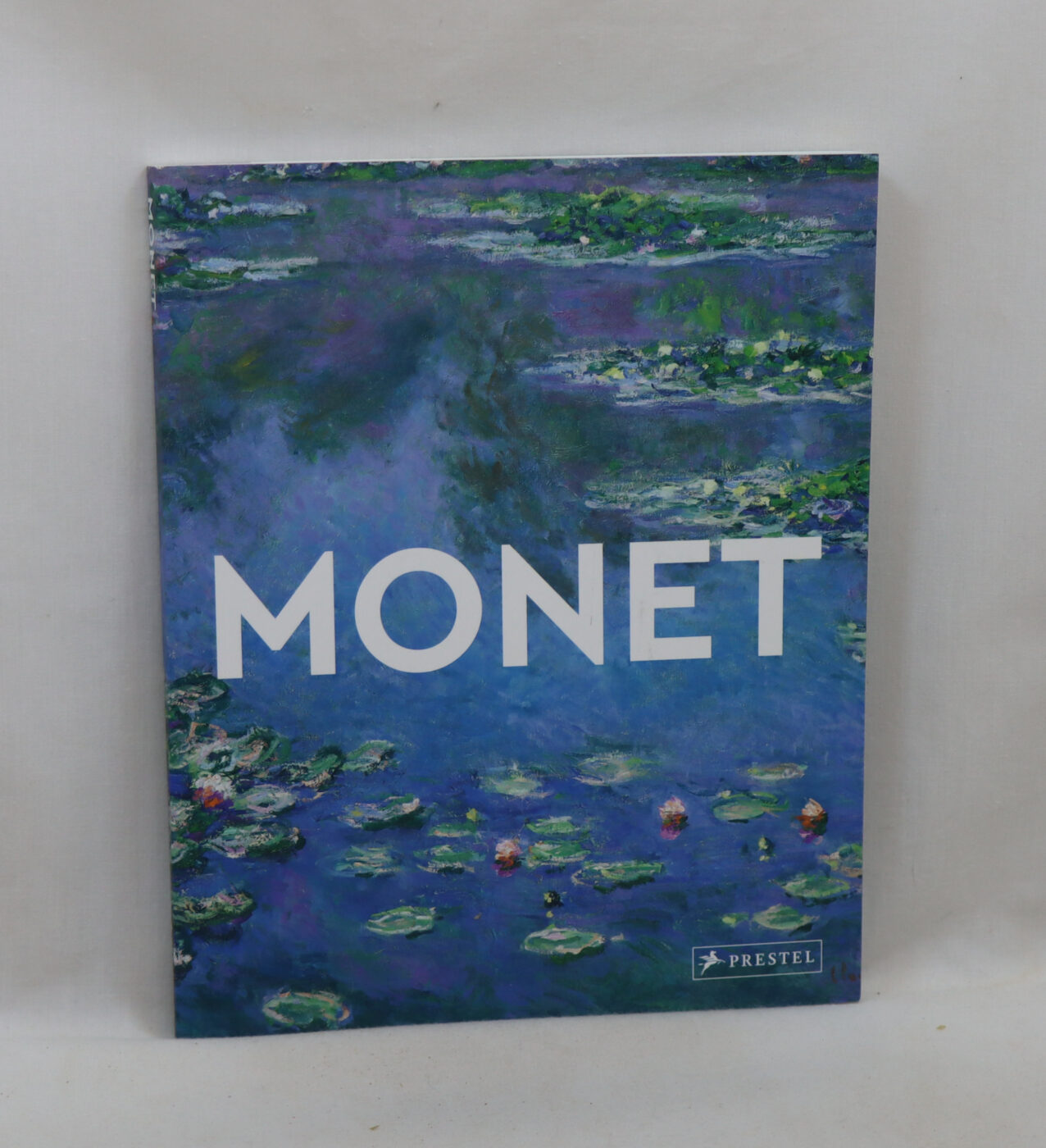
Paperback. Waterlilies image cover with white title.
We provide an in-depth photographic presentation of this item to stimulate your feeling and touch. More traditional book descriptions are immediately available.
- A £2 reduction when collected from FBA shop
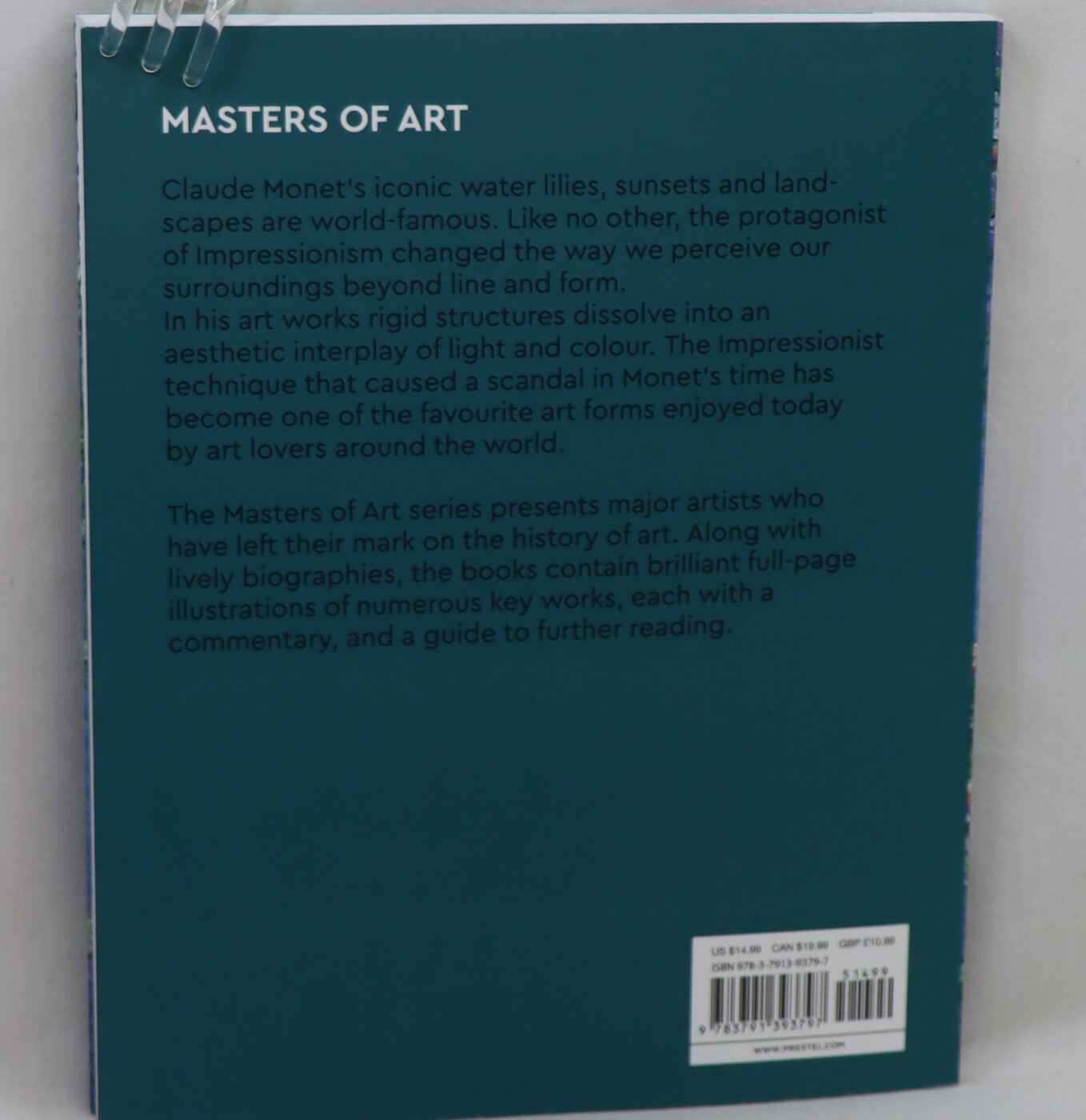
This compact, beautifully designed, and affordably priced volume is the perfect introduction to French Impressionism and to the luminous world of Claude Monet—a visionary artist whose work transformed the way we perceive and interpret nature.
From the iconic water lilies and shimmering haystacks to the vibrant scenes of bustling train stations and serene gardens, Monet’s achievements are thematically presented in 55 stunning reproductions that highlight the depth, texture, and vibrancy of his artistry. Essential works such as Impression, Sunrise; Woman with a Parasol; Bordighera; The Palazzo Contarini; The Water Lily Pond in the Evening; and Poplars in the Sun are accompanied by insightful commentary that explores his innovations and masterful ability to capture the transient interplay of light and atmosphere.
A concise yet richly detailed biography traces his journey from early struggles to his emergence as one of the most celebrated painters of his era. Rich contextual details illuminate the cultural and historical influences on his work, offering readers a deeper appreciation of his legacy.
Perfect for both seasoned art enthusiasts and those discovering Monet for the first time, this book offers an engaging and enlightening experience of one of art history’s most enduring icons, making it a must-have for any art lover’s collection.
Oscar-Claude Monet (14 November, 1840 – 5 December, 1926) was a French painter and founder of Impressionism who is seen as a key precursor to modernism, especially in his attempts to paint nature as he perceived it. During his long career, he was the most consistent and prolific practitioner of Impressionism’s philosophy of expressing one’s perceptions of nature, especially as applied to plein air (outdoor) landscape painting. The term “Impressionism” is derived from the title of his painting Impression, Sunrise (Impression, soleil levant), which was exhibited in 1874 at the First Impressionist Exhibition, initiated by Monet and a number of like-minded artists as an alternative to the Salon.
Monet was raised in Le Havre, Normandy, and became interested in the outdoors and drawing from an early age. Although his mother, Louise-Justine Aubrée Monet, supported his ambitions to be a painter, his father, Claude-Adolphe, disapproved and wanted him to pursue a career in business. He was very close to his mother, but she died in January 1857 when he was sixteen years old, and he was sent to live with his childless, widowed but wealthy aunt, Marie-Jeanne Lecadre. He went on to study at the Académie Suisse, and under the academic history painter Charles Gleyre, where he was a classmate of Auguste Renoir. His early works include landscapes, seascapes, and portraits, but attracted little attention. A key early influence was Eugène Boudin, who introduced him to the concept of plein air painting. From 1883, Monet lived in Giverny, also in northern France, where he purchased a house and property and began a vast landscaping project, including a water-lily pond.
Monet’s ambition to document the French countryside led to a method of painting the same scene many times so as to capture the changing of light and the passing of the seasons. Among the best-known examples are his series of haystacks (1890–1891), paintings of Rouen Cathedral (1892–1894), and the paintings of water lilies in his garden in Giverny, which occupied him for the last 20 years of his life. Frequently exhibited and successful during his lifetime, Monet’s fame and popularity soared in the second half of the 20th century when he became one of the world’s most famous painters and a source of inspiration for a burgeoning group of artists.
Want to know more about this item?
We are happy to answer any questions you may have about this item. In addition, it is also possible to request more photographs if there is something specific you want illustrated.
Ask a question



Share this Page with a friend
