
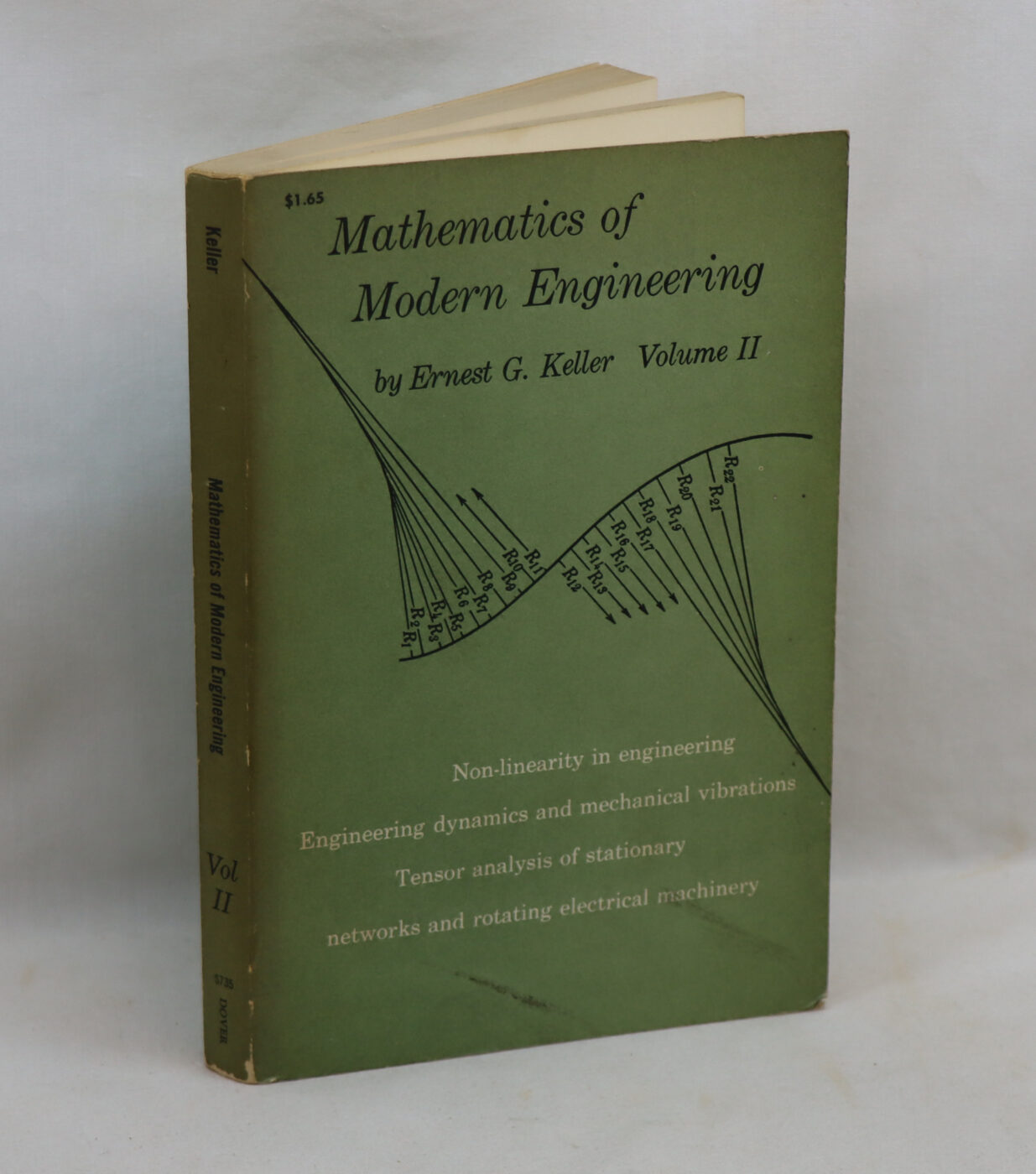
Mathematics of Modern Engineering (Vol 2).
By Ernest G Keller
Printed: 1961
Publisher: Dover Publications. New York
| Dimensions | 14 × 20 × 1.5 cm |
|---|---|
| Language |
Language: English
Size (cminches): 14 x 20 x 1.5
Condition: Good (See explanation of ratings)
£10.00
Buy Now
Item information
Description
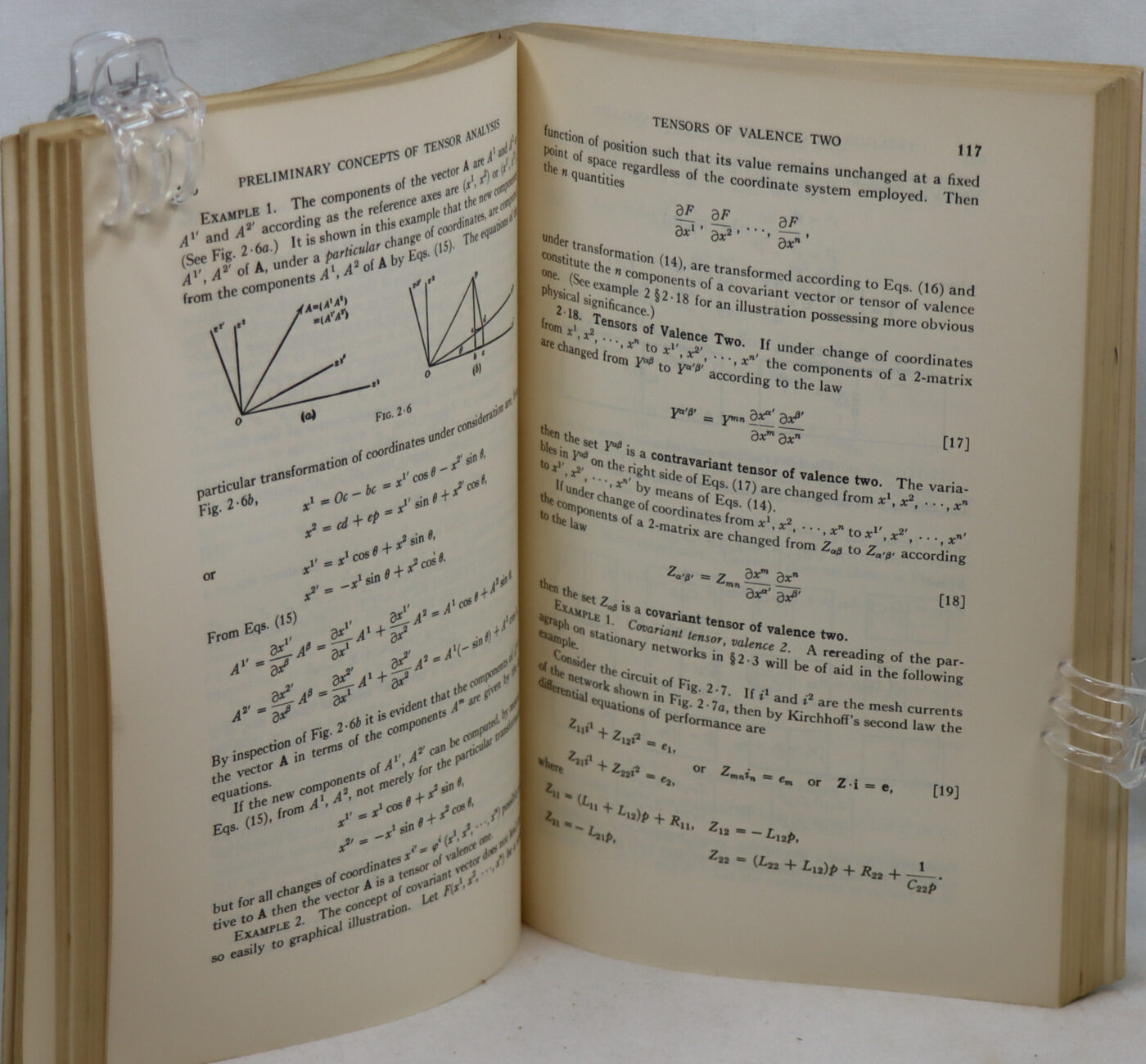
Paperback. Green cover with black title. FACTUAL: A specialist book collected by Jack Lang’s father.
Please view the photographs / No dust cover
Mathematics of Modern Engineering by Ernest G. Keller (often co-authored with Robert E. Doherty) is a classic two-volume series (originally published in the 1930s/40s, later by Dover) designed to bridge the gap between engineering physics and advanced mathematics. It focuses on applying mathematical methods to solve complex, practical engineering problems.
Key Aspects of the Text:
Context: The books were developed from advanced engineering courses at General Electric.
Volume I: Covers subjects such as differential equations, Fourier series, and other mathematical techniques essential for engineering analysis.
Volume II: Focuses on specialized topics, including non-linear mechanics and complex engineering problems.
Significance: It is noted for blending the perspective of a mathematician with that of an engineer.
Availability: Originally published by John Wiley & Sons, the work has been reprinted by Dover Publications and is often available in antiquarian or digital formats.
The series is intended for advanced students and professionals in engineering and applied mathematics.
An original book from the library gathered by the famous Cambridge Don, computer scientist, food and wine connoisseur, Jack Arnold LANG. In 2008, Jack was one of the co-founders of the Raspberry Pi Foundation, alongside other members of the Department, and acted as the Foundation’s Chair. The project’s original goals were modest: to build and distribute low-cost computers for prospective applicants to our Computer Science degree. Initially the project was a “success disaster”, as Jack would say, as demand far outstripped the low-scale manufacturing plans. Ultimately the Raspberry Pi became the UK’s most successful computer with more than 60 million sold to date. Jack was drawn to the educational possibilities of the Raspberry Pi, its potential uses in emerging economies and the way it could support self-directed learning.
Want to know more about this item?
We are happy to answer any questions you may have about this item. In addition, it is also possible to request more photographs if there is something specific you want illustrated.
Ask a question
Related products




Share this Page with a friend
