
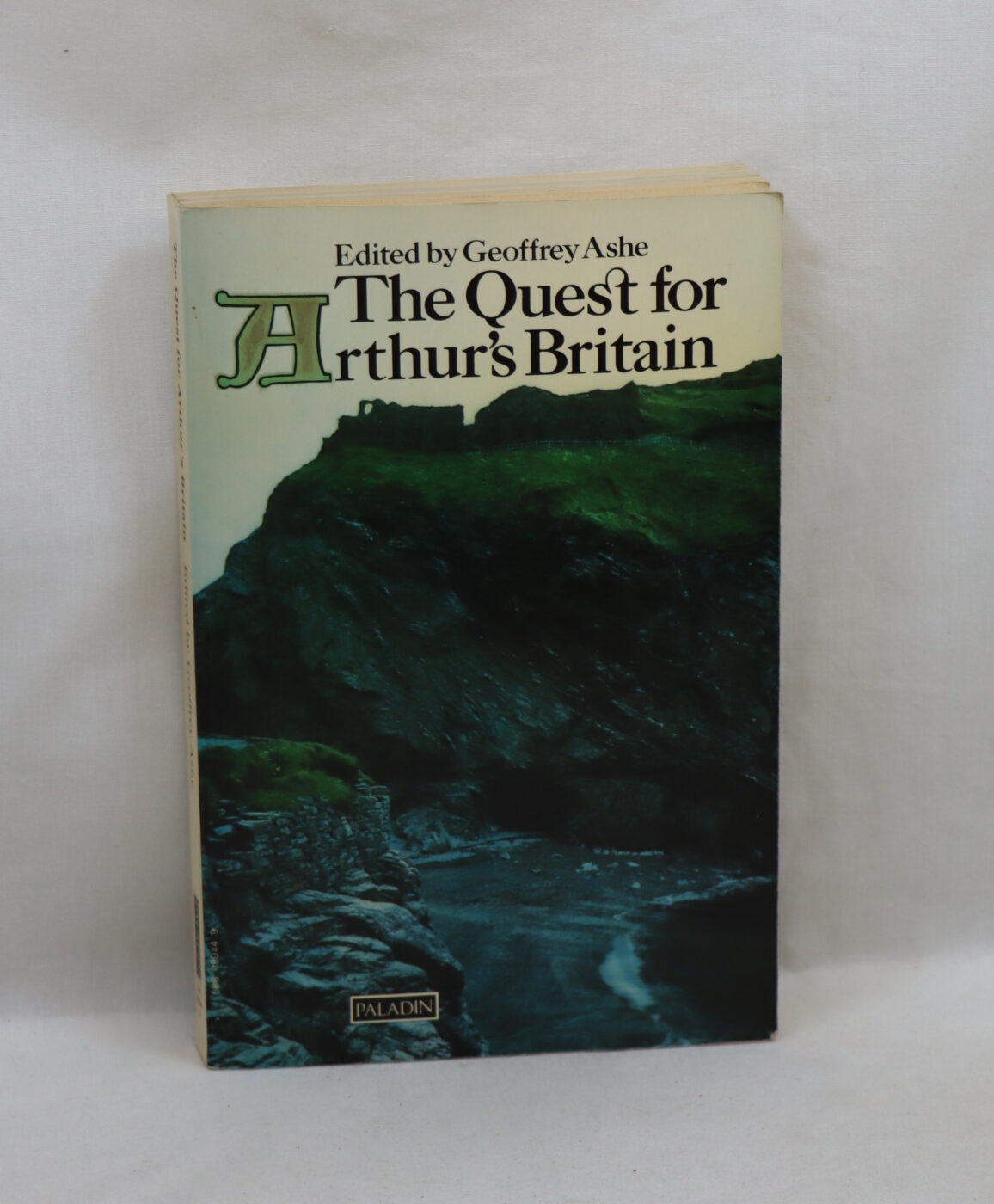
The Quest for Arthur's Britain.
By Geoffrey Ashe
ISBN: LCCN:68054498
Printed: 1976
Publisher: Paladin. St Albans.
| Dimensions | 13 × 20 × 2 cm |
|---|---|
| Language |
Language: English
Size (cminches): 13 x 20 x 2
Condition: Fair (See explanation of ratings)
£7.00
Buy Now
Item information
Description
Paperback. Cream cover with black title.
We provide an in-depth photographic presentation of this item to stimulate your feeling and touch. More traditional book descriptions are immediately available
-
THIS FROST PAPERBACK is a USED book which a member of the Frost family has checked for condition, cleanliness, completeness and readability. When the buyer collects their book from Frost’s shop, the delivery charge of £3.00 is deducted
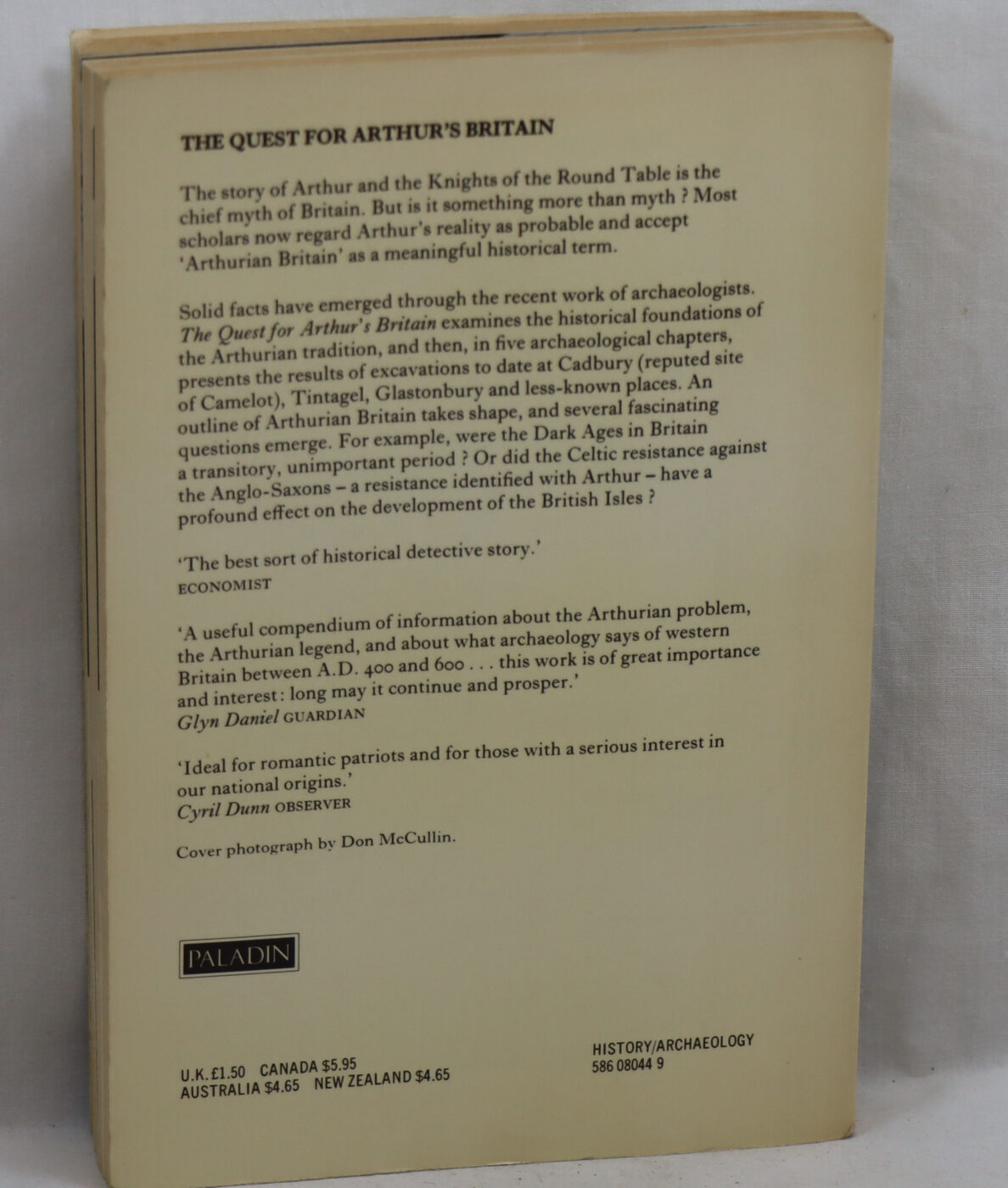
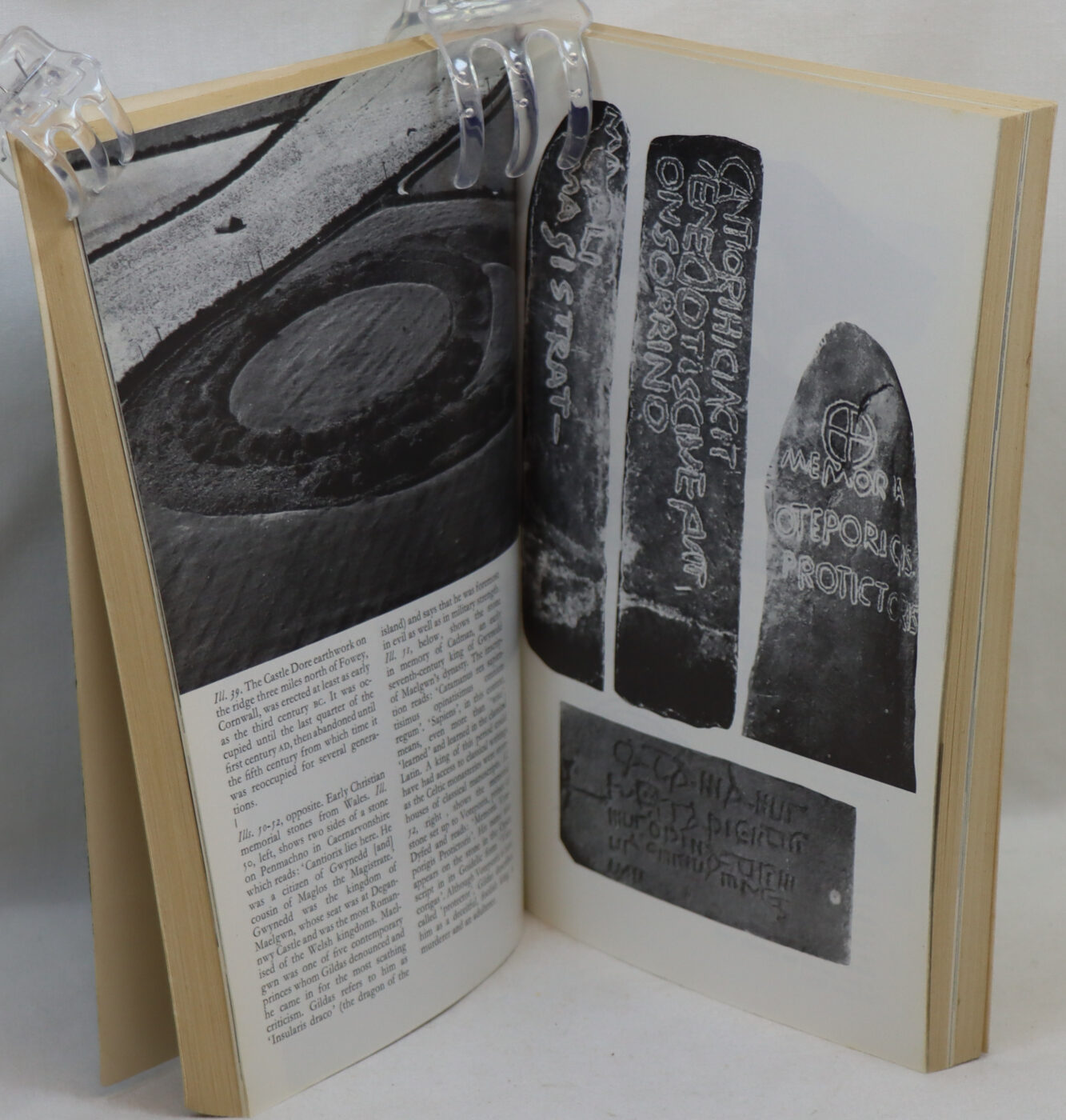
The Quest for Arthur’s Britain, by Geoffrey Ashe, is a pivotal 1968 book that explores the historical reality behind the Arthurian legend, using emerging archaeological findings from sites like Cadbury Castle (Camelot) to connect myth with sub-Roman Britain’s Dark Ages, presenting a solid, though dated, foundation for understanding the era’s culture and Arthur’s probable existence as a historical figure. The Paladin 1976 edition, with ISBN 0-586-08044-3, is a paperback that delves into historical facts, archaeology, folklore, and the actual landscapes of the Arthurian myths.
Key Details:
-
Author: Geoffrey Ashe
-
Subject: Historical investigation of the King Arthur legends, linking them to Dark Ages Britain and archaeological evidence.
-
Key Sites Explored: Cadbury Castle (Camelot), Tintagel, Glastonbury.
-
Original Publication: First published in 1968; the Paladin 1976 edition is a paperback.
-
Significance: A foundational work offering insights into sub-Roman Britain and its connection to myth, even if somewhat dated by later discoveries.
Review: The book begins with the Arthurian legend, and goes on in various chapters to examine “the Arthurian fact”. The authors certainly rate it as most probable that a Briton named Arthur existed and was important in the Dark Age military history of Britain. One thing that is brought home is the paucity of detail about the times. Whereas events in the late Roman Mediterranean can often be dated to the day, in sixth century Britain it appears to be a problem guessing the nearest decade. However, all is as clear as can be made. Although this 1968 work is now somewhat dated, it remains a solid foundation for an understanding of the material and intellectual culture of sub-Roman Britain, and how these historical facts subsequently tie up with a British and European myth.
Want to know more about this item?
We are happy to answer any questions you may have about this item. In addition, it is also possible to request more photographs if there is something specific you want illustrated.
Ask a question
Related products
Share this Page with a friend
