
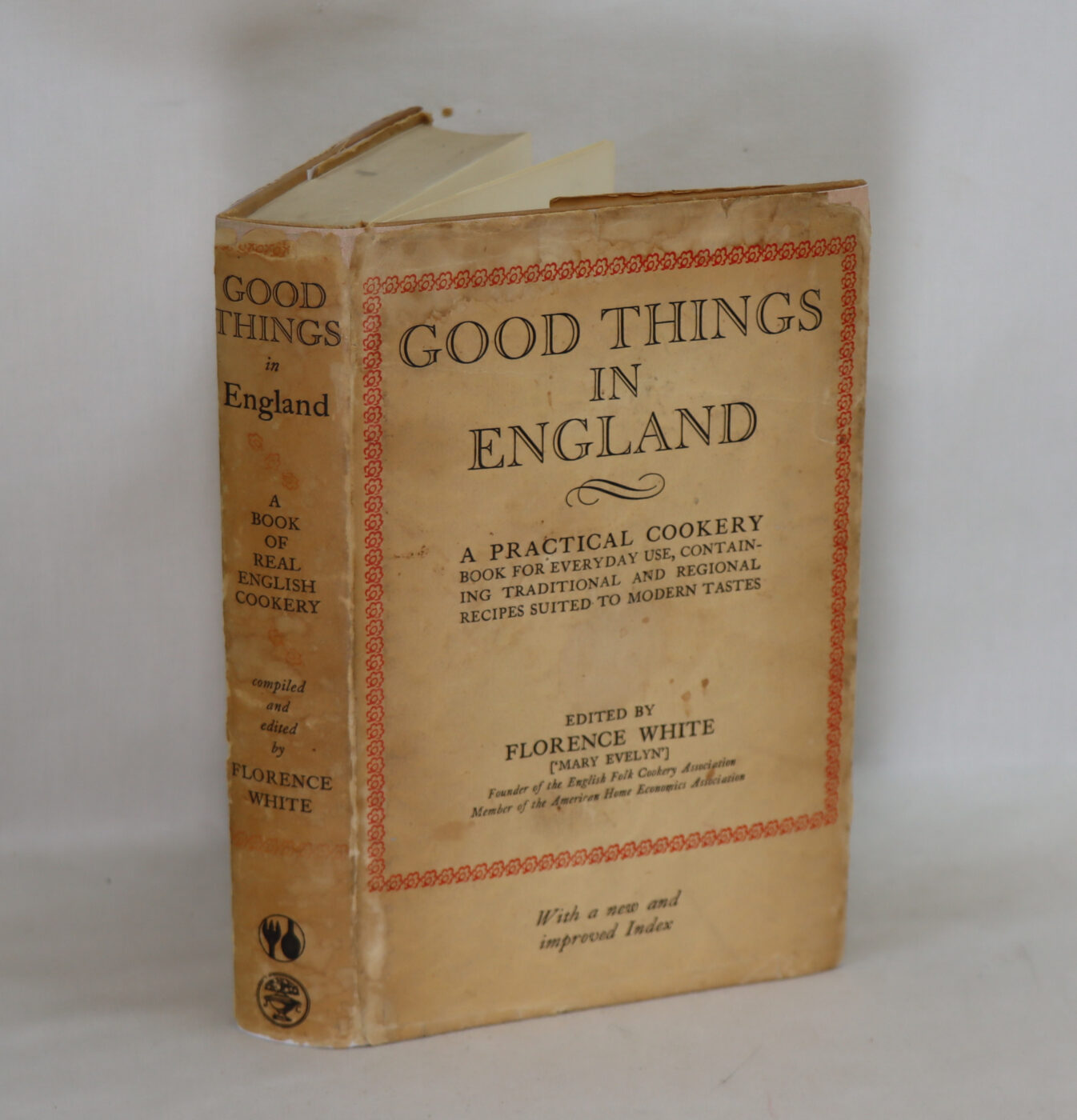
Good Things in England.
By Edited by Florence White
Printed: 1968
Publisher: The Cookery Club.
| Dimensions | 14 × 20 × 3 cm |
|---|---|
| Language |
Language: English
Size (cminches): 14 x 20 x 3
Condition: Very good (See explanation of ratings)
£64.00
Buy Now


Item information
Description
In the original dust jacket. Tan cloth binding with gilt title on the spine.
We provide an in-depth photographic presentation of this item to stimulate your feeling and touch. More traditional book descriptions are immediately available
- Note: This book carries a £5.00 discount to those that subscribe to the F.B.A. mailing list
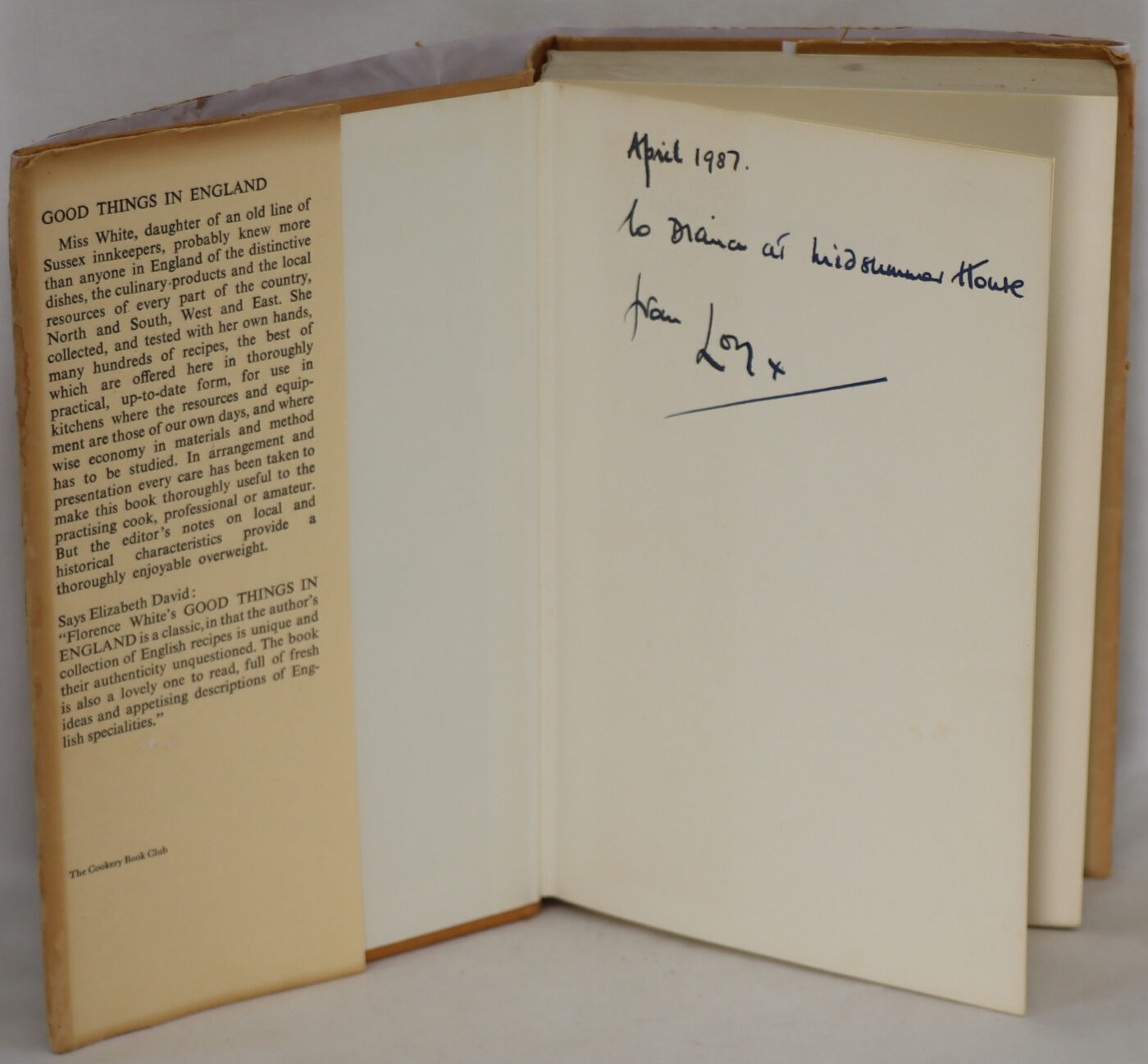
For conditions, please view our photographs. A nice clean original book from the library gathered by the famous Cambridge Don, computer scientist, food and wine connoisseur, Jack Arnold LANG.
Jack founded the Michelin Guide ‘Midsummer House’- Cambridge’s paramount restaurant. This dining experience is hidden amongst the grassy pastures and grazing cattle of Midsummer Common and perched on the banks of the River Cam. The Midsummer House experience is imaginatively curated to delight and amaze, so the surprise set menu changes regularly and is ‘Midsummer’s’ playground to showcase.
Good Things in England is a compendium of recipes written by Florence White and published in 1932. The book includes regional recipes dating back to the 14th century, with short informative introductions to each section. Good Things in England went on to influence numerous generations of food writers and culinarians, among them, Jane Grigson, who considered Florence White, along with Dorothy Hartley, one of her touchstones when it came to reminding readers of the importance of British cooking. Specializing in English food folklore, White had founded the English Folk Cookery Association a year before in 1931. She sought to promote traditional English cuisine in the face of popular French cooking. Via this association, people had sent her traditional recipes. The book was reprinted in 1951 and again in 1962, but then remained out of print until being republished by Persephone Books in 1999. It was included in The Observer Food Monthly 50 Best Cookbooks series in 2010.
Note: In 1932 when this book was collated, the reputation of English food was non-existent, and the idea that traditional recipes had anything to teach the modern cook was almost laughable. When written it was profoundly unfashionable; so influential was it that a new fashion grew out of it. This is the starting point of the renaissance of English food, and one later authors have drawn on extensively; some of the recipes look very familiar.nFlorence White assembled the book by asking for contributions from interested amateurs; thus it is a hodge-podge of recipes from all times and all regions. Brief annotations set things in context and are useful to the cook. However the recipes are tricky for the novice to follow as they do not have the level of “idiot’s advice” we may be accustomed to from TV chefs; they assume a certain basic level of knowledge. I would suggest that this is a follow-on book for those who already like traditional cooking as interpreted by the likes of Hugh Fearnley-Whittingstall, and want to extend their repertoire and venture further off the beaten track. If you want something similar, but more organised and with the recipes more carefully selected, do go for the utterly excellent but little-known The Cookery of England.
Florence White (20 June 1863 – 12 March 1940) was an English food writer, the daughter of Richard White and Harriet Jane Thirkell. She established the English Folk Cookery Association in 1928 and published books on cookery and other domestic subjects. Her cookery book Good Things in England remains in print.
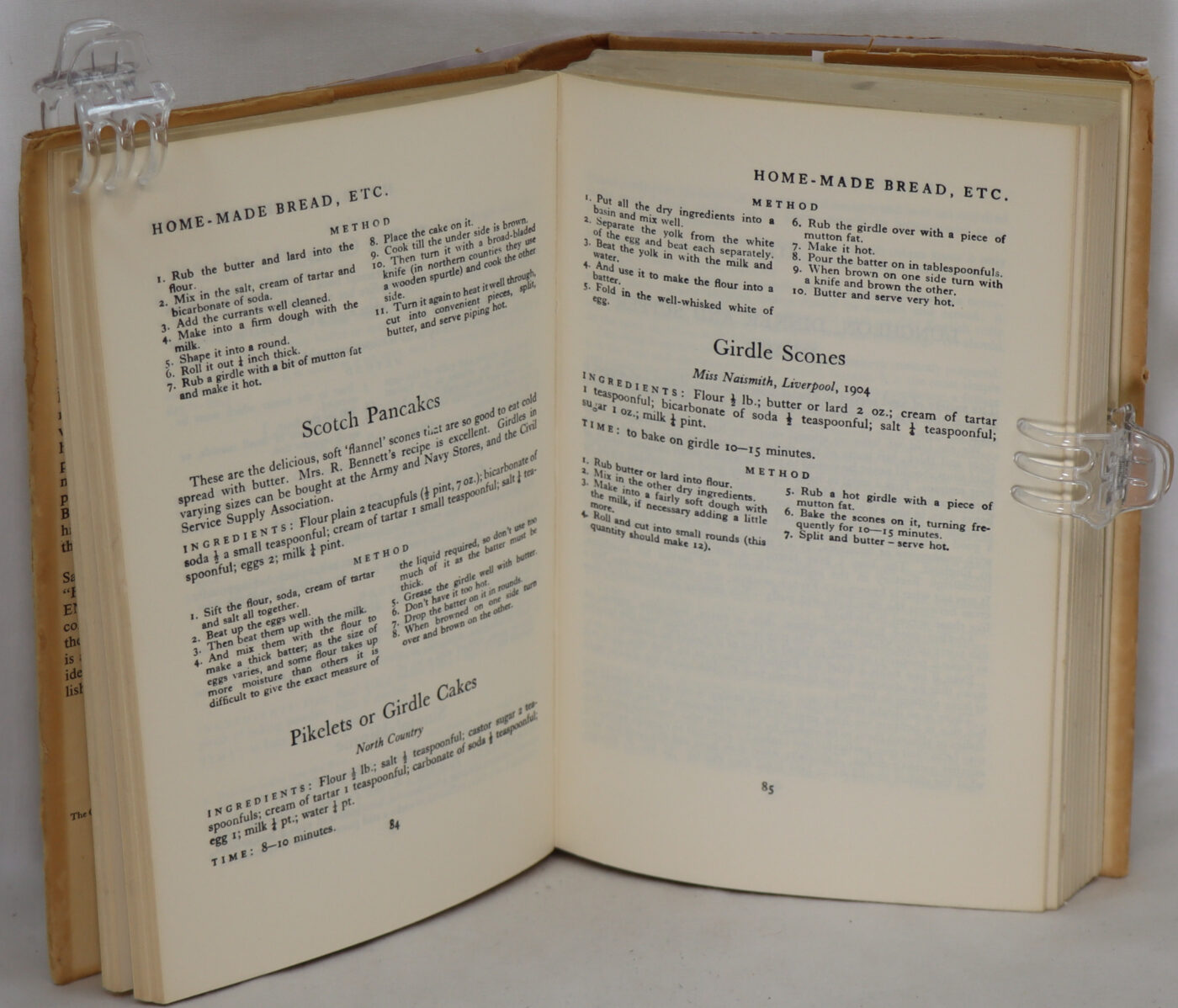
White is most remembered for her cookery book, Good Things in England, originally published in 1932, and which has gone through multiple editions. It includes 853 recipes that people from all over the United Kingdom sent to the EFCA and to White who then edited them, created a general introduction, and organized into chapters, including ones on English breakfasts, homemade bread, luncheon and supper dishes, recipes common at country and schoolroom teas, as well as suggested menus for each season of the year
Condition notes
Dust jacket raggy
Want to know more about this item?
We are happy to answer any questions you may have about this item. In addition, it is also possible to request more photographs if there is something specific you want illustrated.
Ask a question
Related products



Share this Page with a friend
