
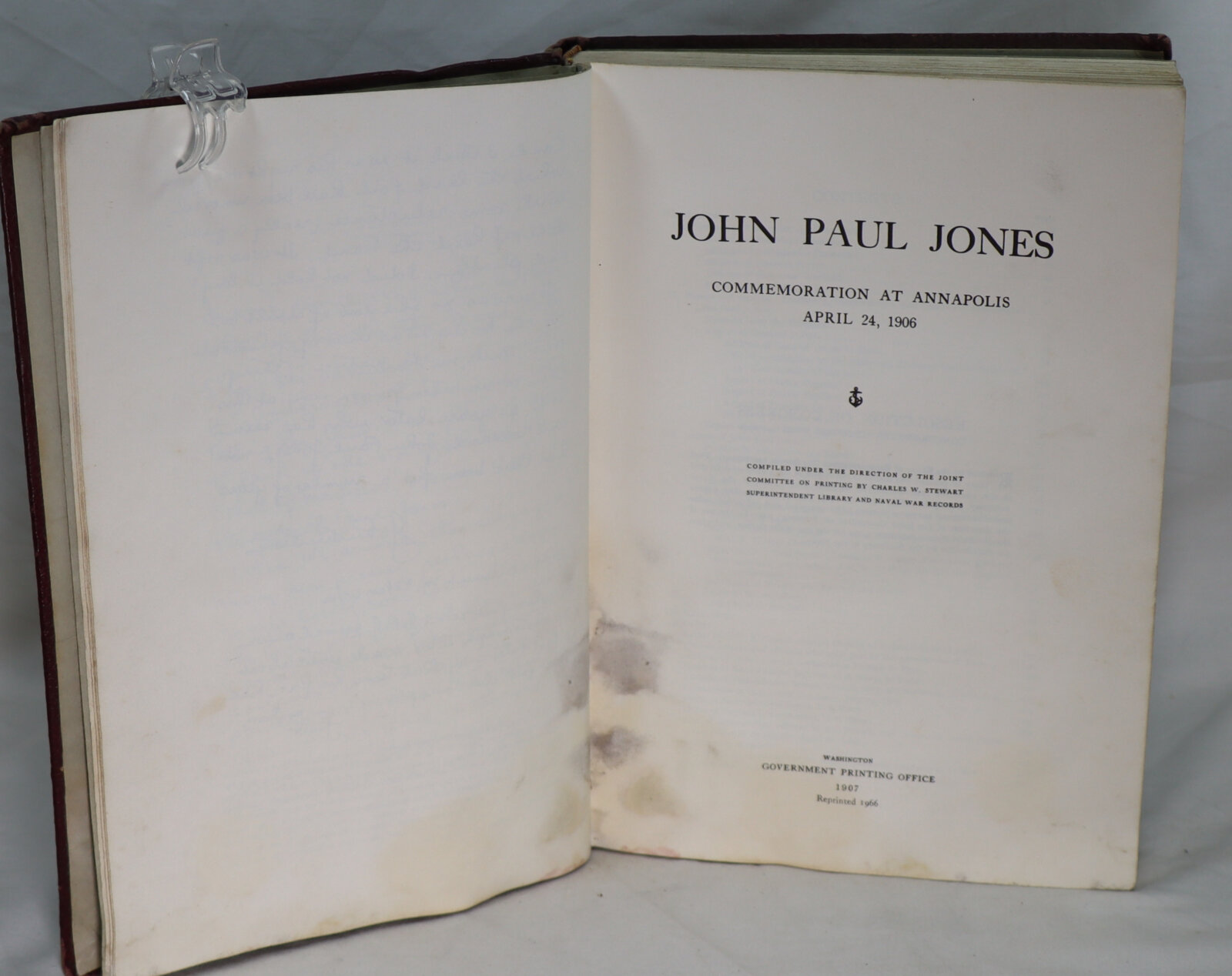
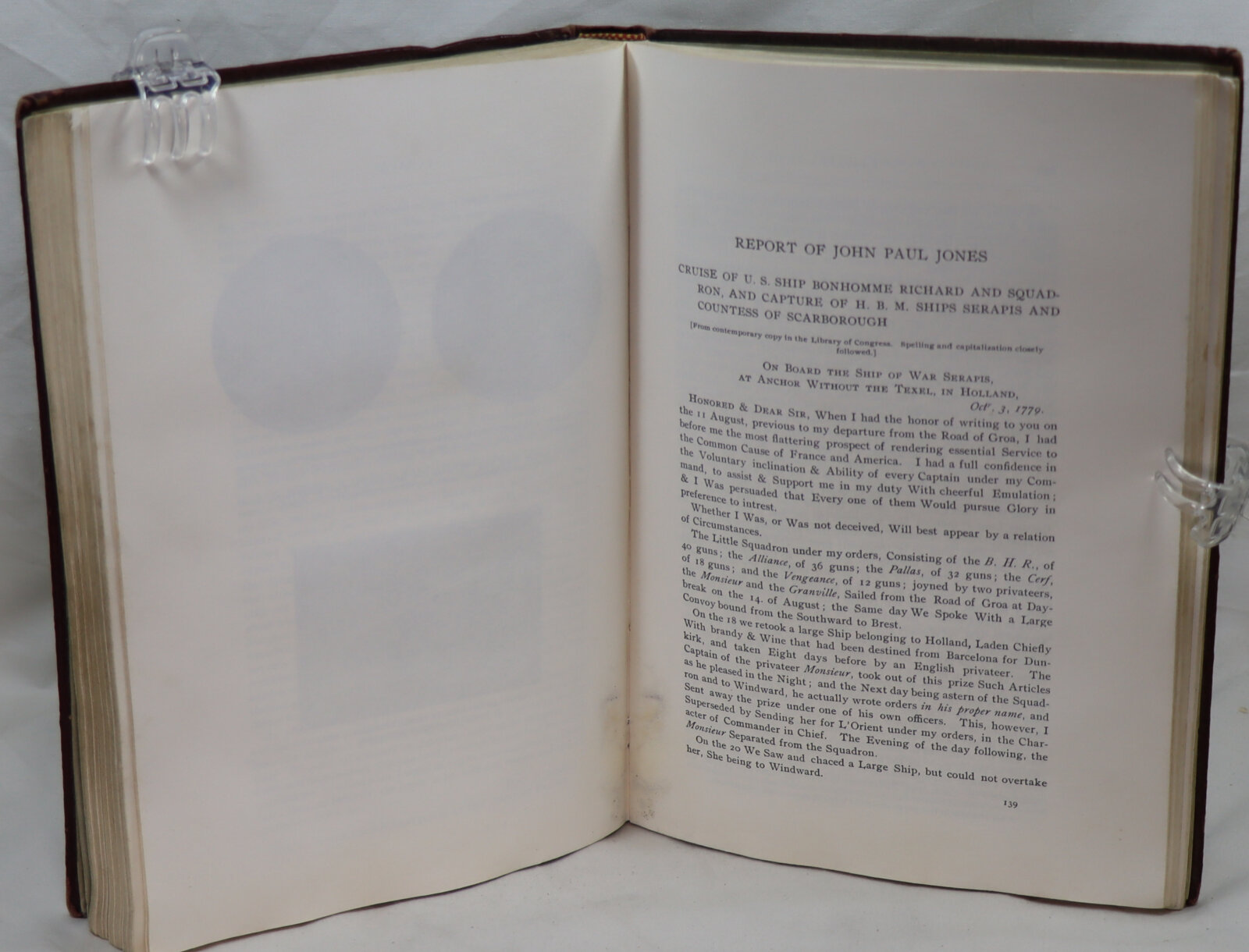
John Paul Jones Commemoration at Annapolis.
Printed: 1966
Publisher: Goverment Printing Office. Washington USA
| Dimensions | 18 × 26 × 3 cm |
|---|---|
| Language |
Language: English
Size (cminches): 18 x 26 x 3
Condition: Very good (See explanation of ratings)
SORRY, THIS ITEM HAS SOLD

Item information
Description
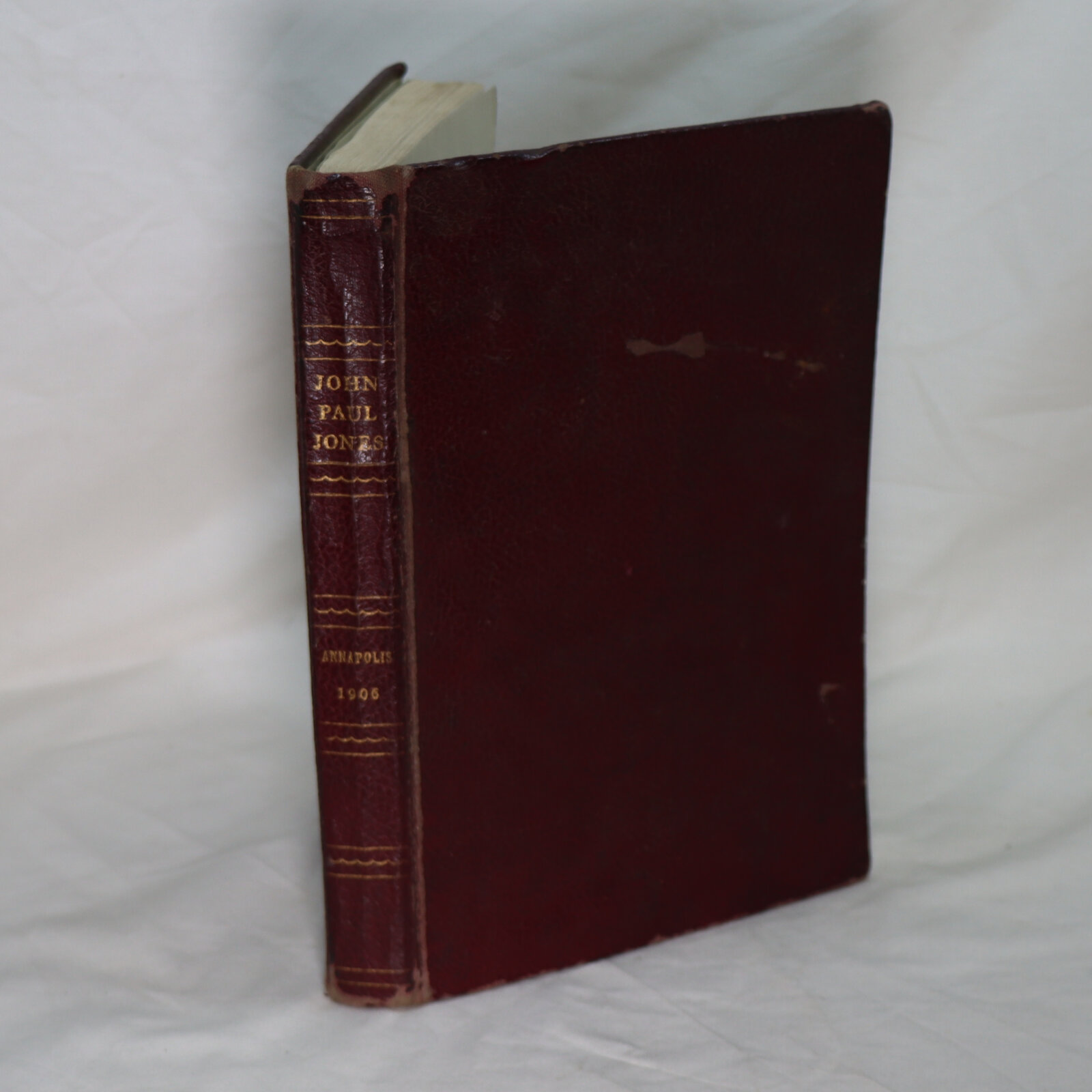
Maroon Leatherette binding with gilt banding and title on the spine.
-
F.B.A. provides an in-depth photographic presentation of this item to stimulate your feeling and touch. More traditional book descriptions are immediately available.
A rare and very interesting hindsight review of the 1906 Commemoration material made in 1966

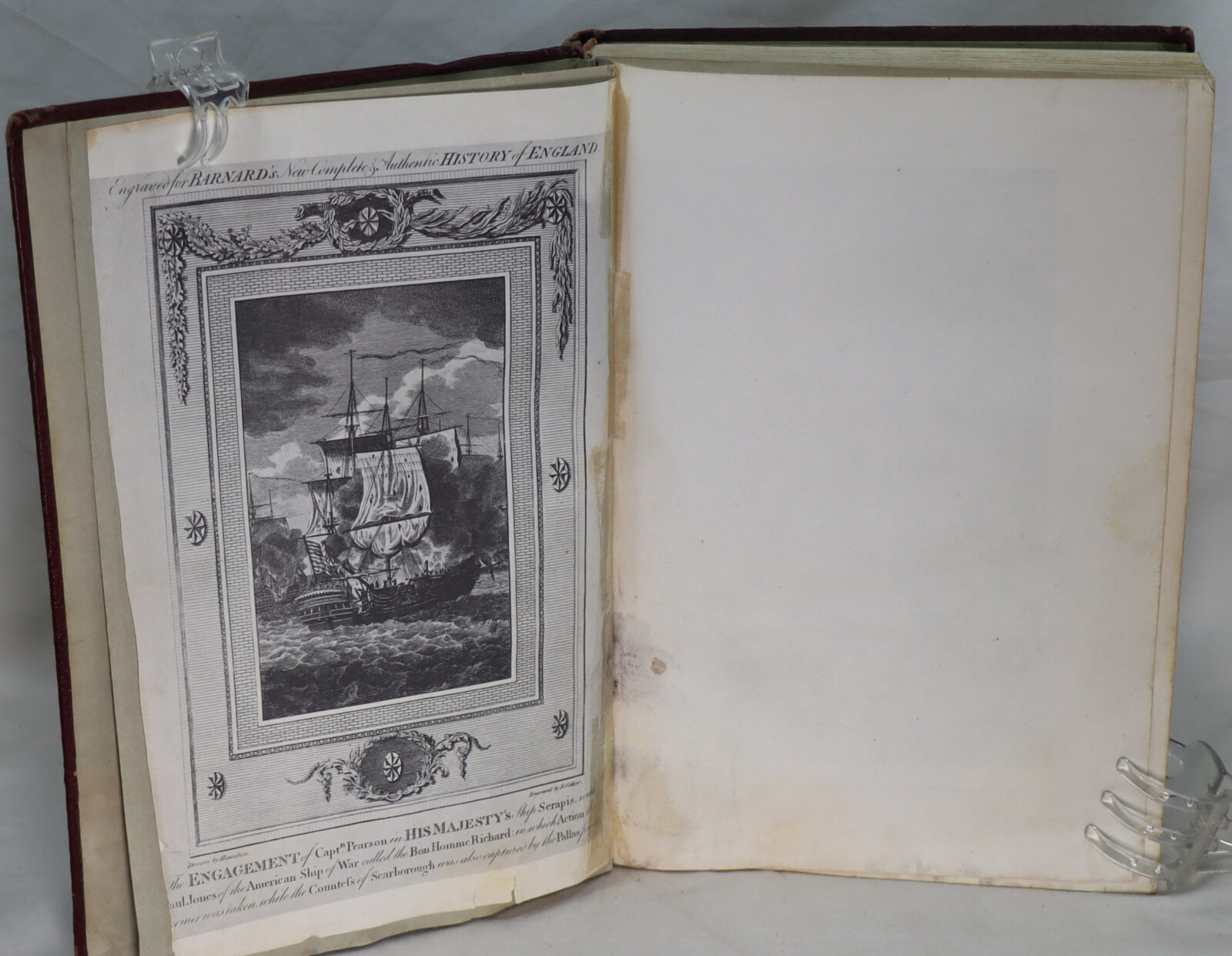
John Paul Jones (born John Paul; July 6, 1747 – July 18, 1792) was a Scottish American naval captain who was a naval commander in the American Revolutionary War. Often called the “Father of the American Navy”, a title sometimes also credited to John Barry, John Adams, and sometimes Joshua Humphreys, Jones is highly regarded as one of the greatest naval commanders in the history of the United States.
Jones was a Freemason and made many friends among U.S. political elites, including John Hancock, Benjamin Franklin, and even his enemies, who accused him of piracy. His actions in British waters during the American Revolutionary War earned him an international reputation that endures to this day.
Jones was born and raised in Scotland, became a sailor at the age of thirteen, and served as commander of several merchantmen. After having killed one of his mutinous crew members with a sword, he fled to the Colony of Virginia and around 1775 joined the newly founded Continental Navy in their fight against the Kingdom of Great Britain in the American Revolutionary War. He commanded U.S. Navy ships stationed in France, led one failed assault on Britain, and several attacks on British merchant ships. Left without a command in 1787, he joined the Imperial Russian Navy and obtained the rank of rear admiral.
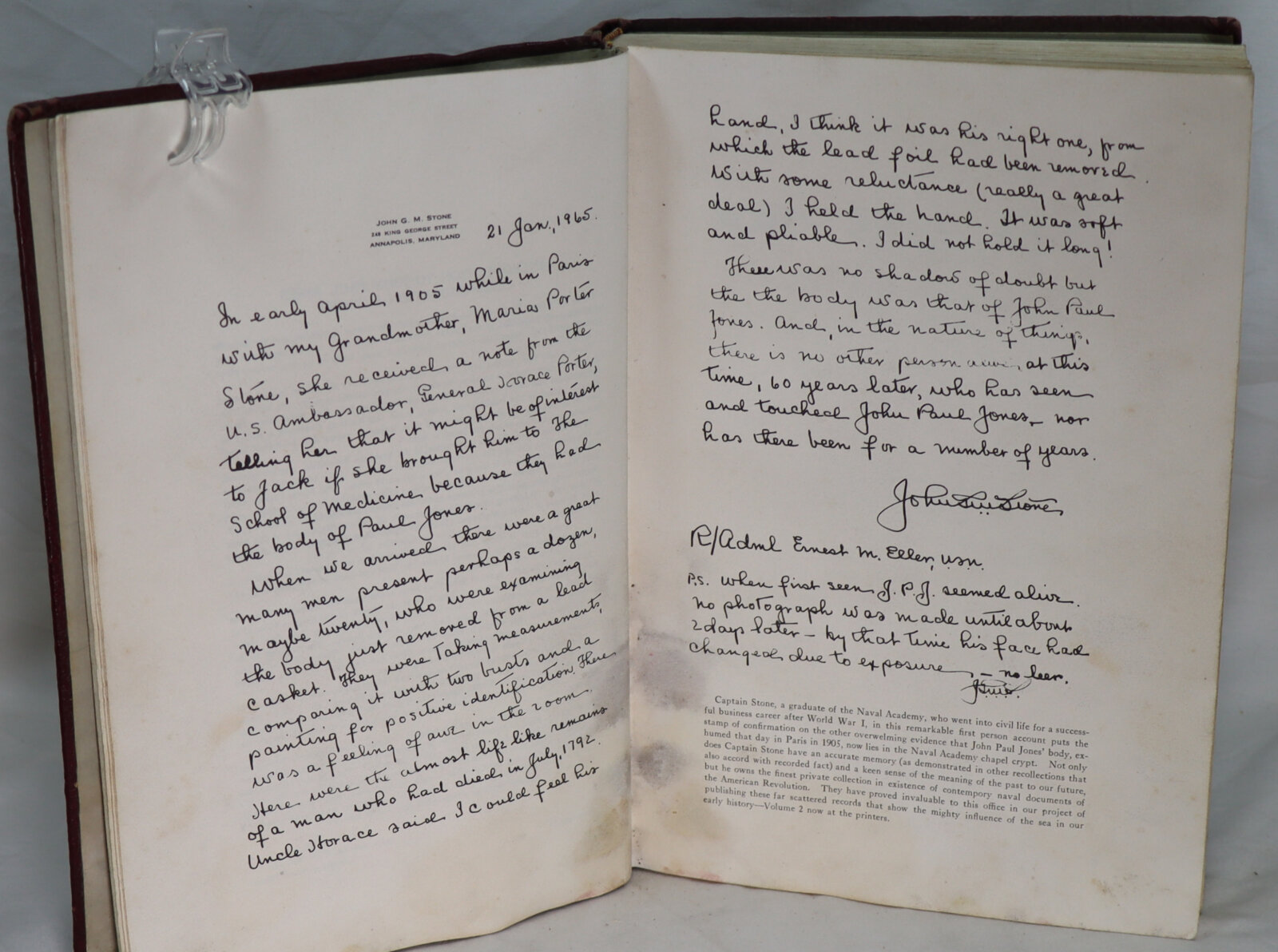
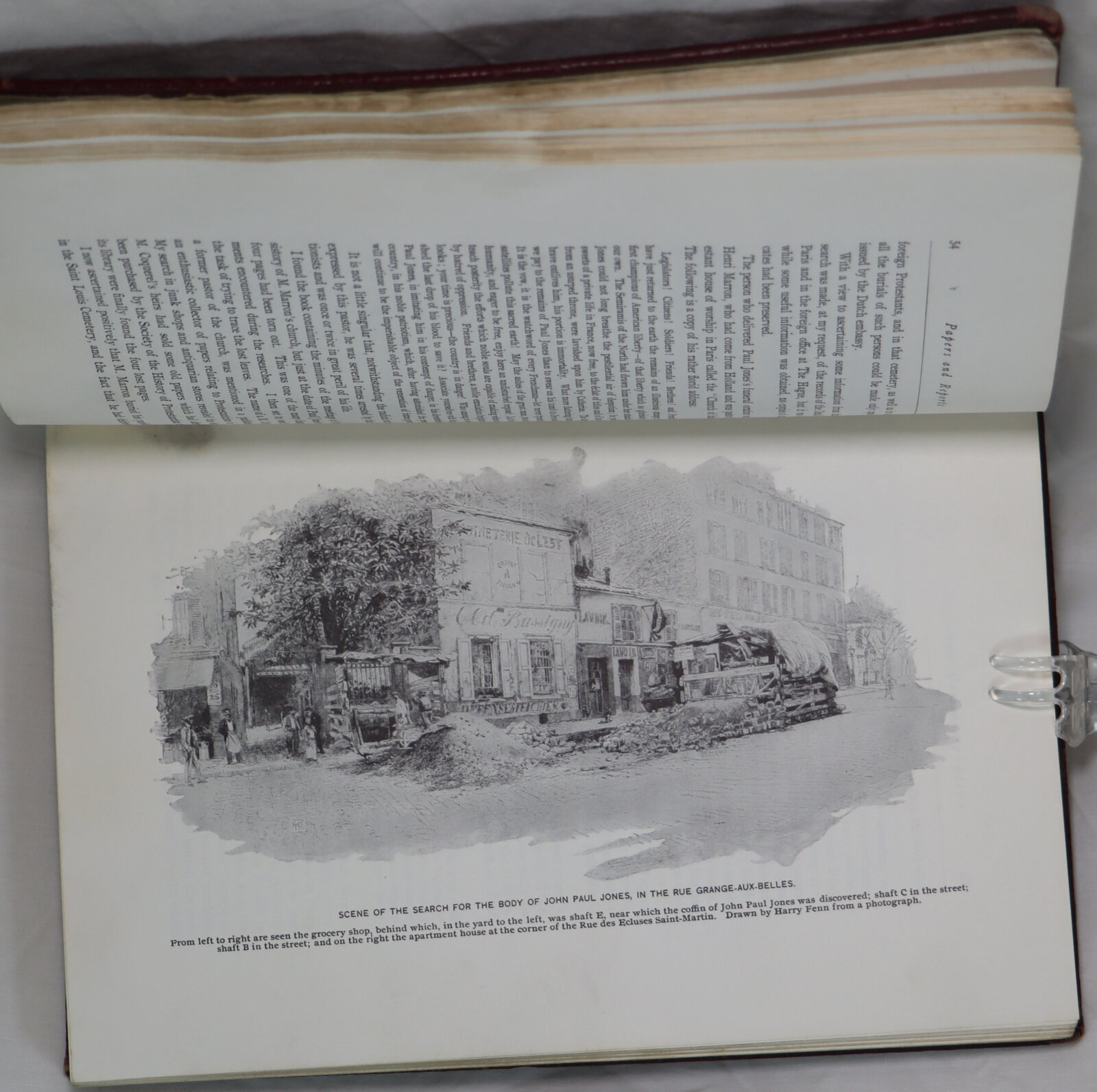
In 1905, Jones’ remains were identified by U.S. Ambassador to France General Horace Porter, who had searched for six years to track down the body using a poor 1851 copy of the missing burial record. After Jones’s death, Frenchman Pierrot Francois Simmoneau had donated over 460 francs to mummify the body. It had been preserved in alcohol and interred in a lead coffin “in the event that should the United States decide to claim his remains, they might more easily be identified.” Porter knew what to look for in his search. With the aid of an old map of Paris, Porter’s team, which included anthropologist Louis Capitan, identified the site of the former St. Louis Cemetery for Alien Protestants. Sounding probes were used to search for lead coffins, and five coffins were ultimately exhumed. The third, unearthed on April 7, 1905, was immediately recognized as Jones by the excavators. A post-mortem examination by Doctors Capitan and Georges Papillault confirmed their impression, finding several points by which the corpse could be identified as Jones. The autopsy confirmed the original listing of cause of death. The face was later compared to a bust by Jean-Antoine Houdon.
Jones’s body was brought to the United States aboard the USS Brooklyn (CA-3), escorted by three other cruisers, one being the USS Tacoma (CL-20). On approaching the American coastline, seven U.S. Navy battleships joined the procession escorting Jones’s body back to America. On April 24, 1906, Jones’s coffin was installed in Bancroft Hall at the U.S. Naval Academy, Annapolis, Maryland, following a ceremony in Dahlgren Hall, presided by President Theodore Roosevelt who gave a speech paying tribute to Jones and holding him up as an example to the officers of the Navy. On January 26, 1913, the captain’s remains were finally re-interred in a bronze and marble sarcophagus designed by Sylvain Salières at the Naval Academy Chapel in Annapolis.
Condition notes
Binding warped due to damp
Want to know more about this item?
We are happy to answer any questions you may have about this item. In addition, it is also possible to request more photographs if there is something specific you want illustrated.
Ask a question
Share this Page with a friend
