
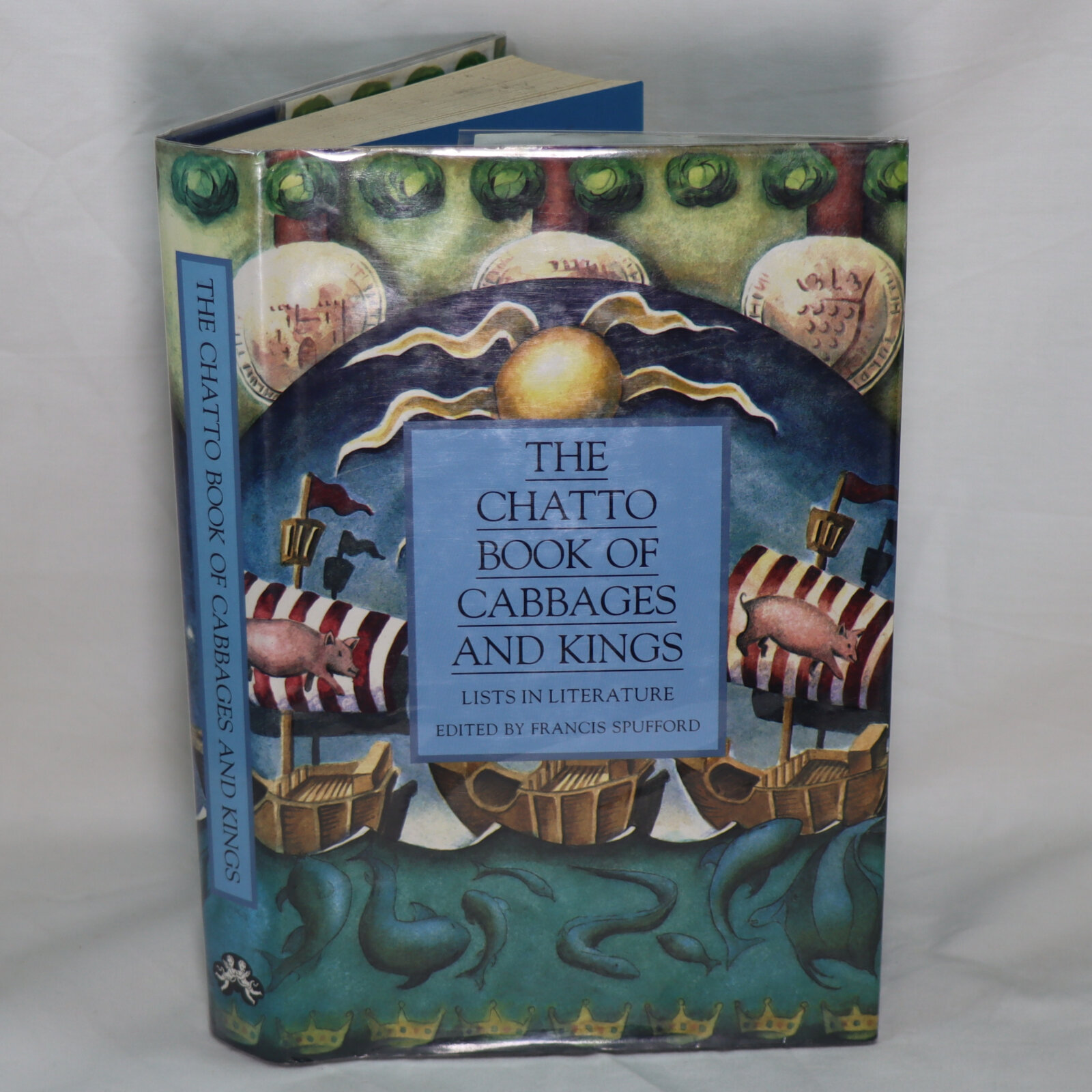
The Chatto Book of Cabbages and Kings.
By Francis Spufford
ISBN: 9781555970413
Printed: 1989
Publisher: Chatto & Windus. London
| Dimensions | 17 × 25 × 4 cm |
|---|---|
| Language |
Language: English
Size (cminches): 17 x 25 x 4
Condition: Fine (See explanation of ratings)
£34.00
Buy Now


Item information
Description
In the original dustsheet. Navy cloth binding with gilt title on the spine.
-
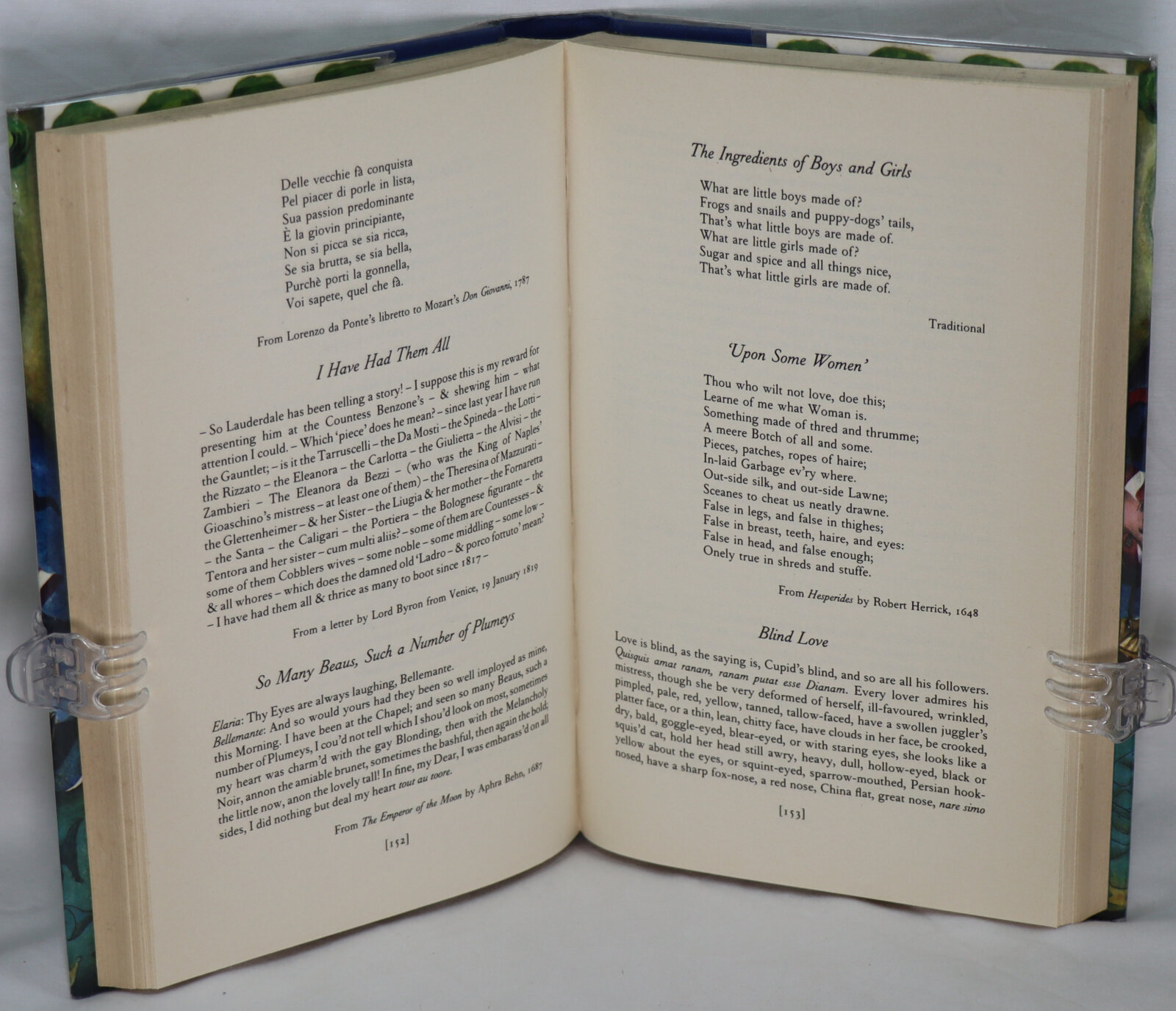
F.B.A. provides an in-depth photographic presentation of this item to stimulate your feeling and touch. More traditional book descriptions are immediately available.
Everyone has their favourite passages in books in which the author throws narrative to the winds and breaks into sheer enumeration – food, memories, places, things, describing all the contents of the world. This selection of the best lists in literature, from Homer to the present day is the second book in this series. International in scope, it invites readers to enjoy the subtlety of these eccentric works and to wonder what it is that makes these grammarless treasures of language so attractive.
Review: A great collection of selected literary pieces.

The author,Francis Spufford: Officially, I was a writer of non-fiction for the first half of my career, and I certainly enjoyed scraping up against the stubborn, resistant, endlessly interesting surface of the real world. I like awkwardness, things that don’t fit, things that put up a struggle against being described. But when I was excited by what I was writing about, what I wanted to do with my excitement was always to tell a story. So every one of my non-fiction books borrowed techniques from the novel, and contained sections where I came close to behaving like a novelist. The chapter retelling the story of Captain Scott’s last Antarctic expedition at the end of “I May Be Some Time”, for example, or the thirty-page version of the gospel story in “Unapologetic”. It wasn’t a total surprise that in 2010 I published a book, “Red Plenty”, which was a cross between fiction and documentary, or that afterwards I completed my crabwise crawl towards the novel with the honest-to-goodness entirely-made-up “Golden Hill”. This was a historical novel about eighteenth century New York written like, well, an actual eighteenth century novel: hyperactive, stuffed with incident, and not very bothered about genre or good taste. It was elaborate, though. It was about exceptional events, and huge amounts of money, and good-looking people talking extravagantly in a special place. Nothing wrong with any of that: I’m an Aaron Sorkin fan and a Joss Whedon fan, keen on dialogue that whooshes around like a firework display. But those were the ingredients of romance, and there were other interesting things to tell stories about, so my next novel “Light Perpetual” in 2021 was deliberately plainer, about the lives that five London children might have had if they hadn’t been killed in 1944 by a German rocket. Ordinary lives, in theory; except that there are no ordinary lives, if you look closely enough. It was longlisted for the Booker Prize. And now (2023) I am returning to strong forms of story, and to plotting more like “Golden Hill”, with a noir crime novel called “Cahokia Jazz”, set in the 1922 of a different timeline, where a metropolis full of Native Americans stands on the banks of the Mississippi. Gunfire! Clarinet solos! Wisecracking journalists! Men in hats! Femmes fatales! All remixed to, I hope, different effect. Unexpected effect, as the old pleasures do new imaginative work. The idea is to screen for you, on the page, something like the best black and white movie you have ever seen.
Biography: I was born in 1964, the child of two historians. I’m married to an Anglican priest, I have two daughters, and I teach writing at Goldsmiths College, London, just next door to the place where a V2 fell on a branch of Woolworths.
Want to know more about this item?
We are happy to answer any questions you may have about this item. In addition, it is also possible to request more photographs if there is something specific you want illustrated.
Ask a question
Related products

Share this Page with a friend
