
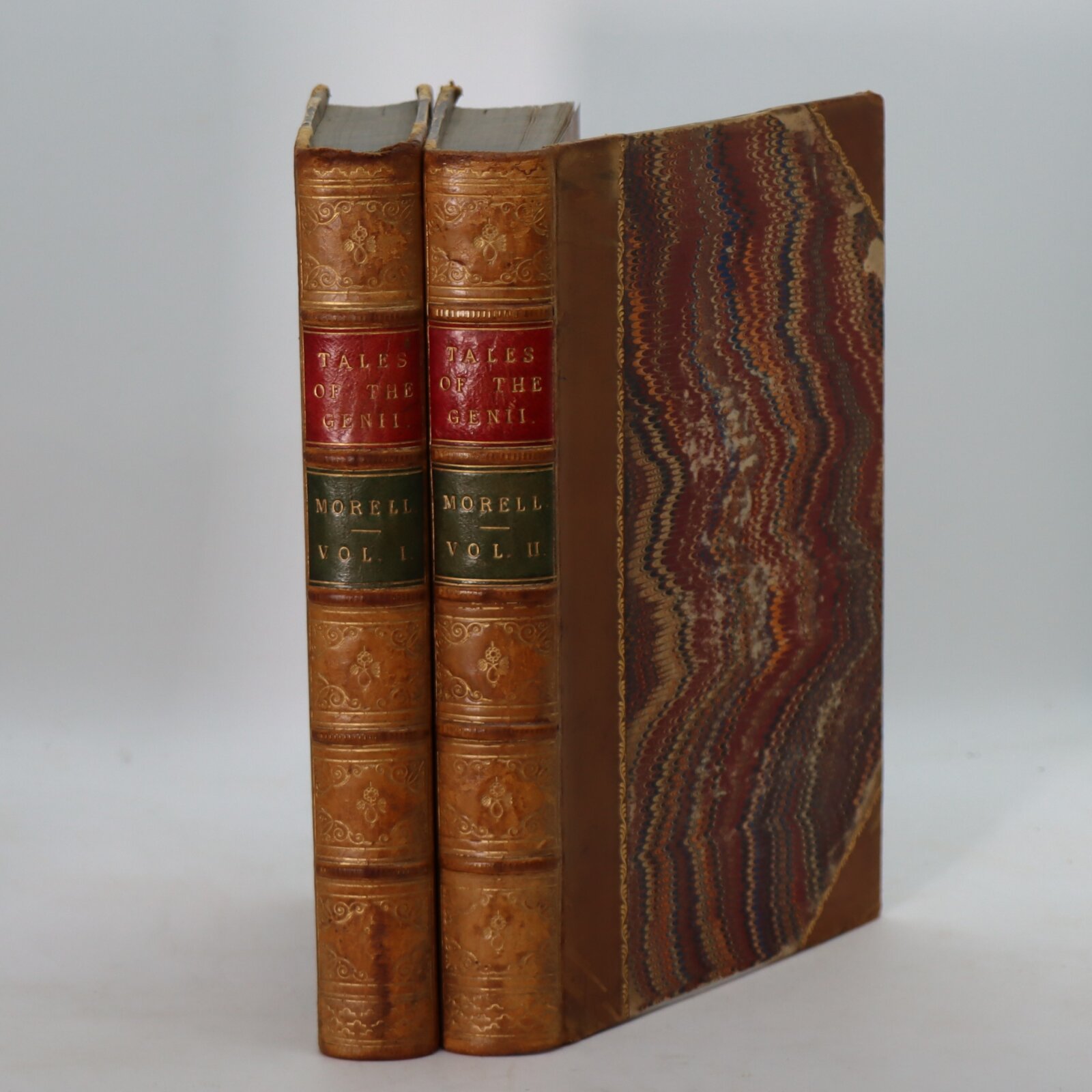
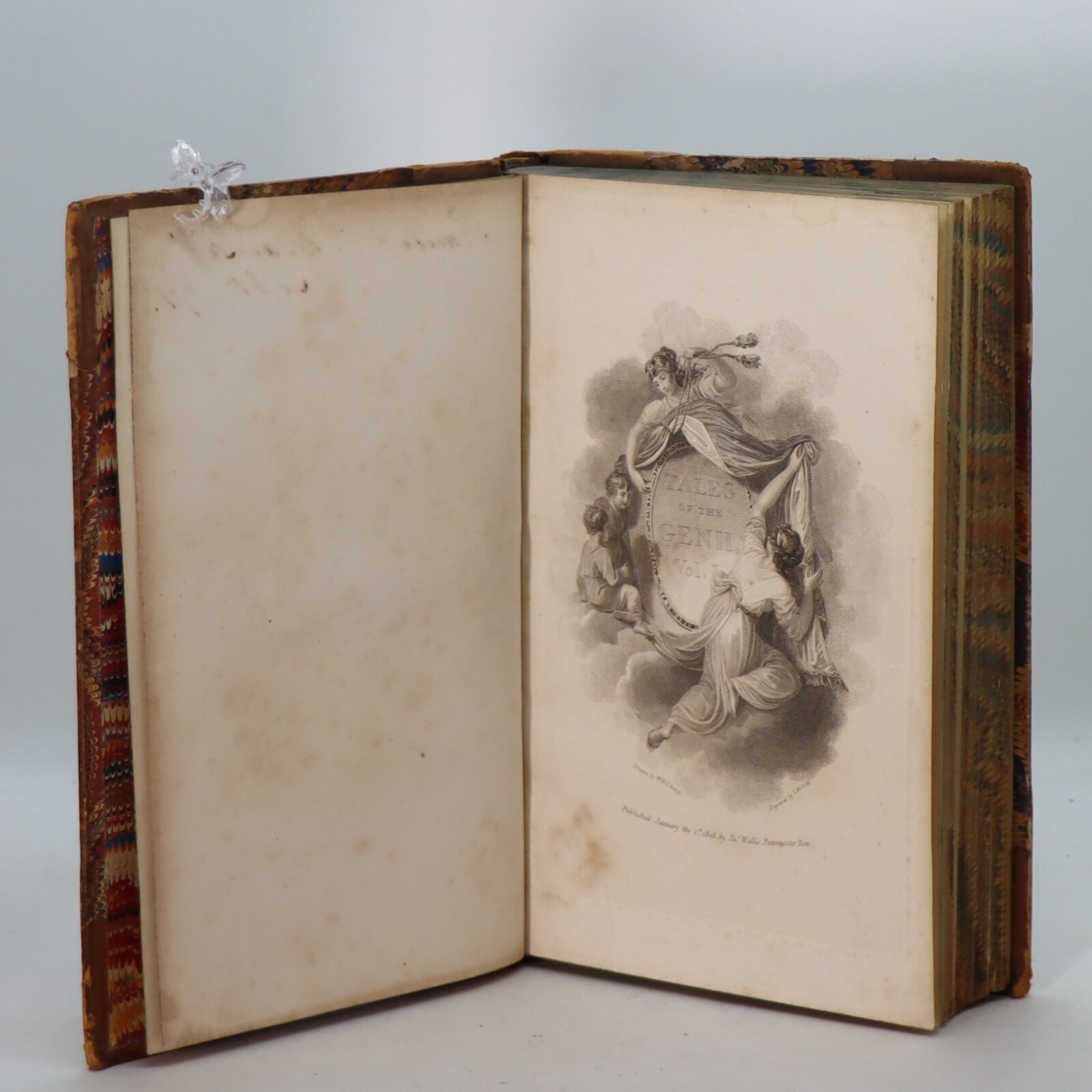
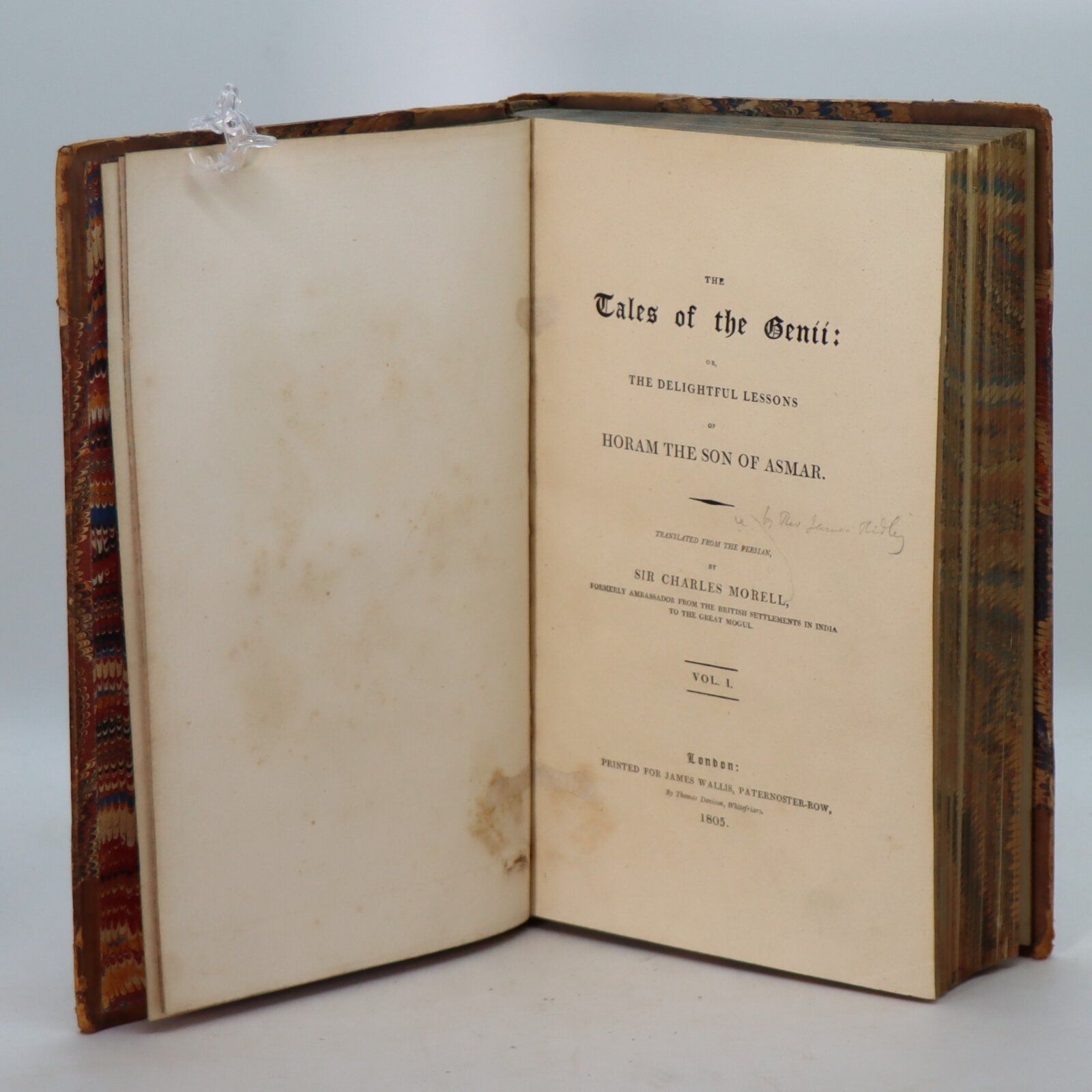
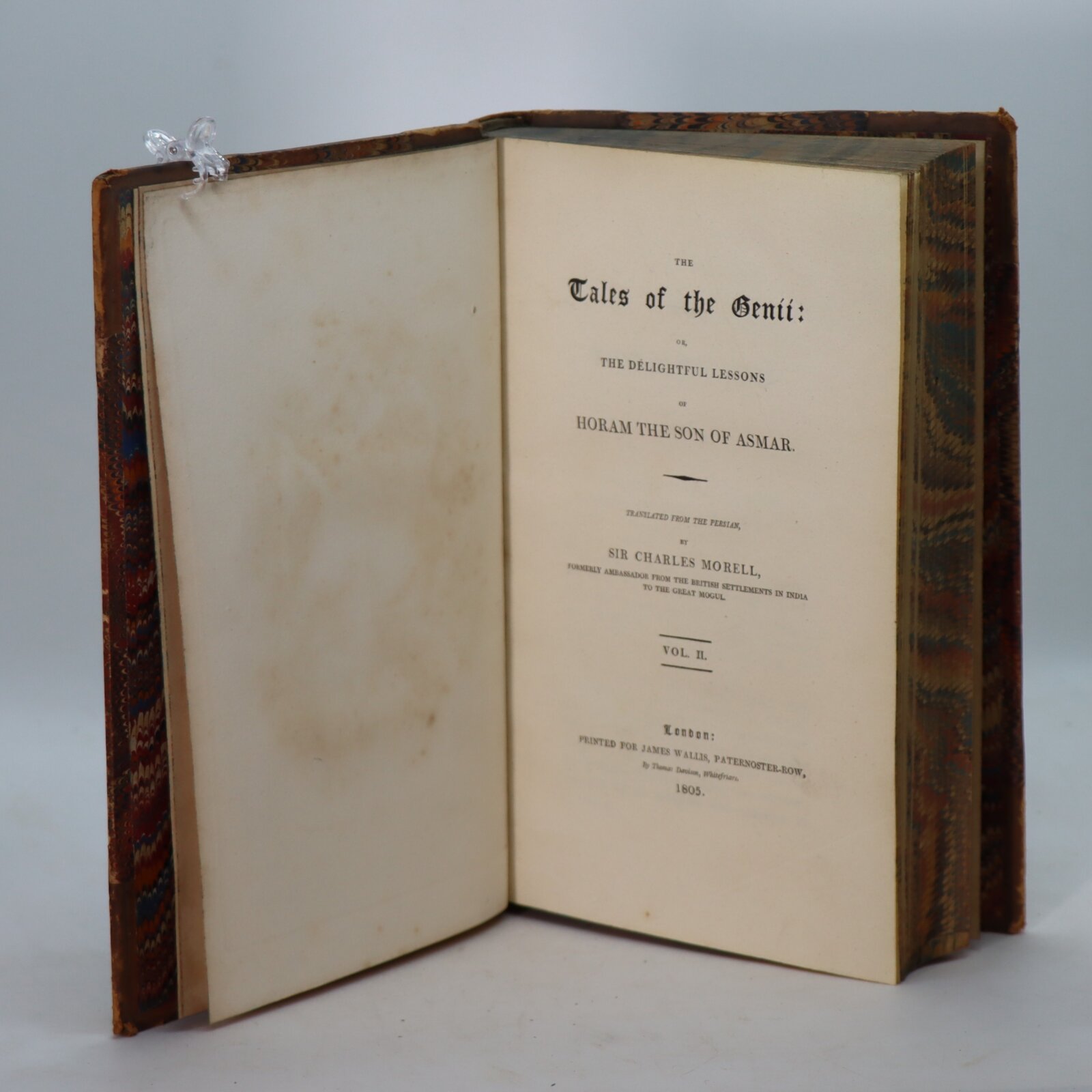
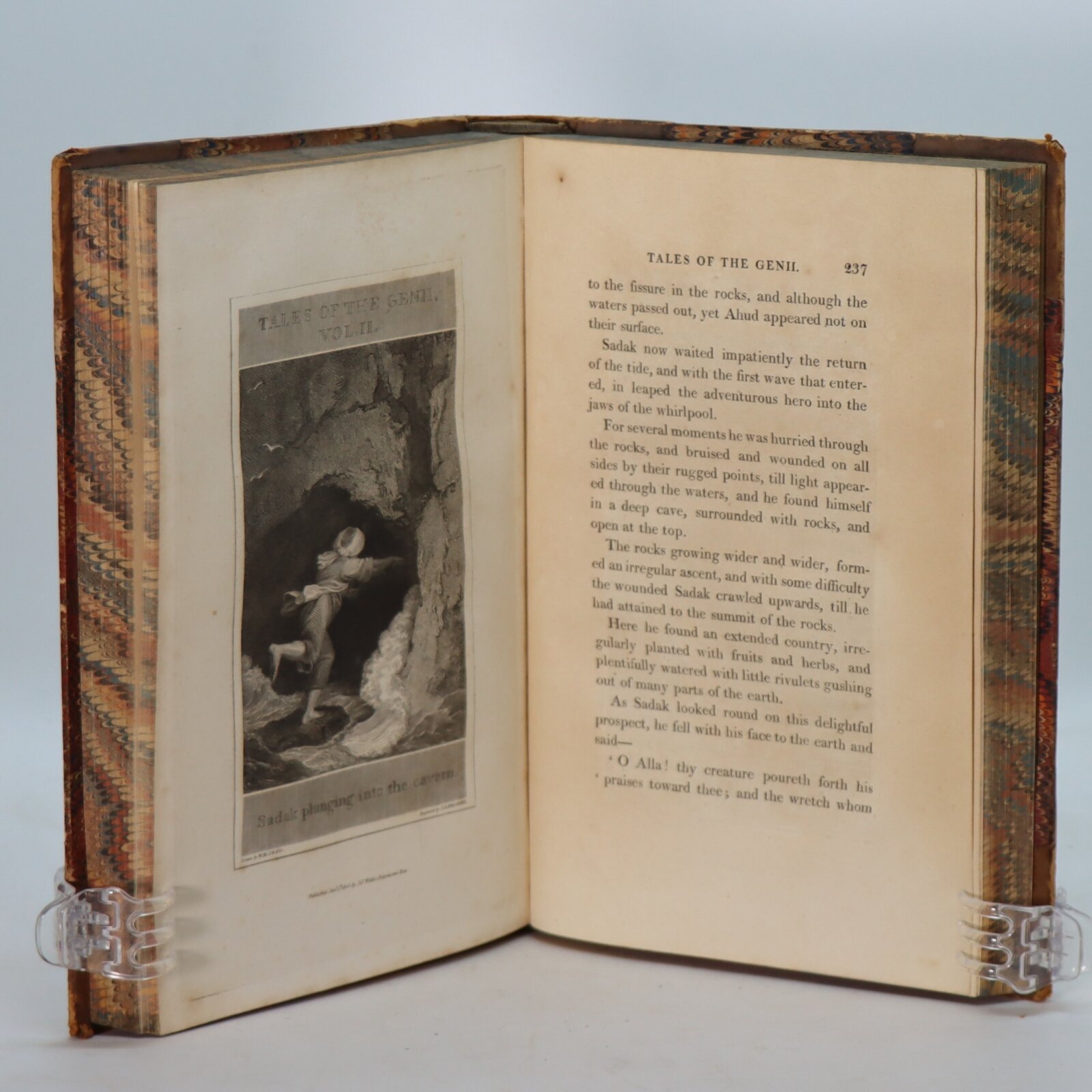
Tales of the Genii. Volumes I & II.
By Sir Charles Morell
Printed: 1805
Publisher: James Wallis. London
| Dimensions | 15 × 22 × 3.5 cm |
|---|---|
| Language |
Language: English
Size (cminches): 15 x 22 x 3.5
Condition: Fine (See explanation of ratings)
SORRY, THIS ITEM HAS SOLD

Item information
Description
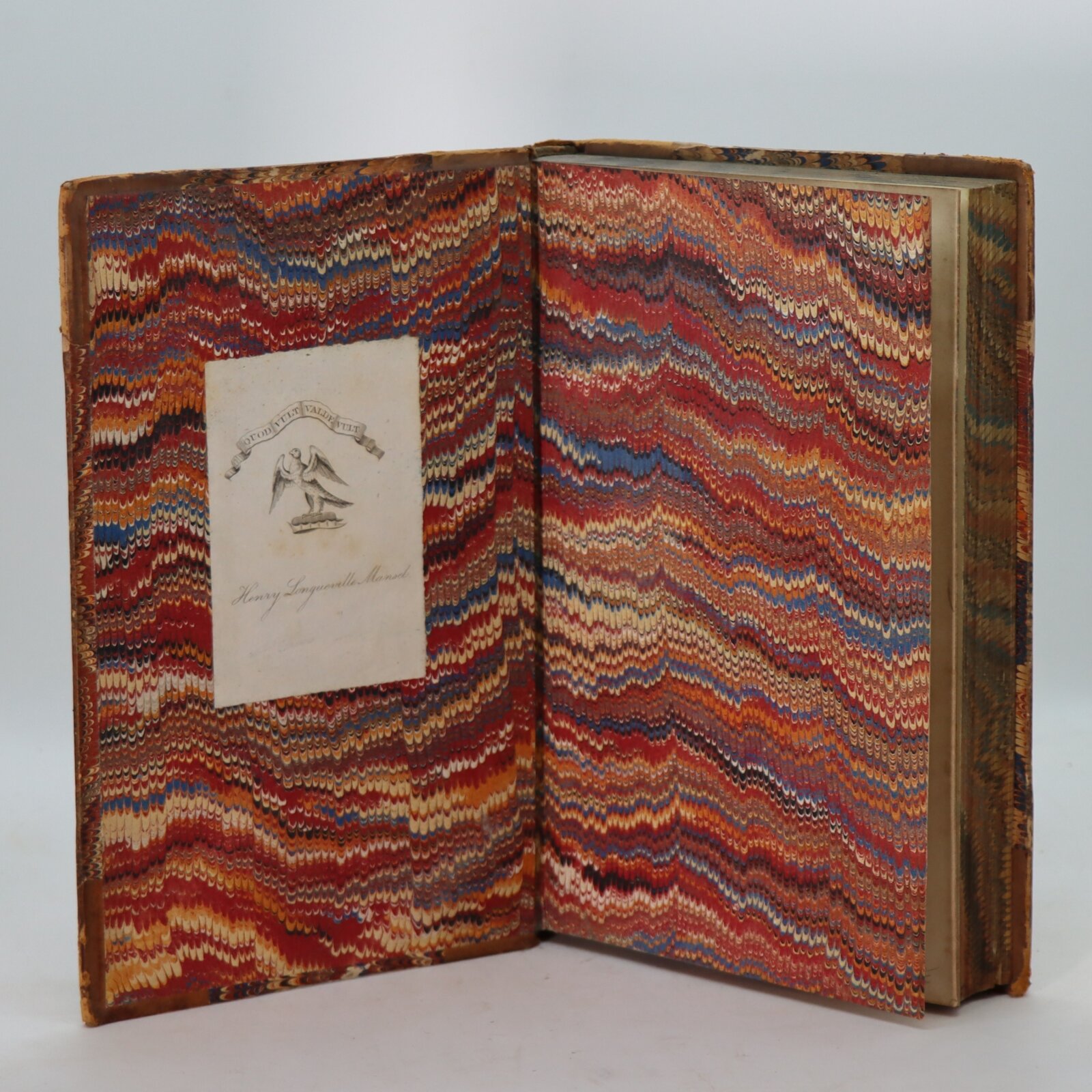
Tan calf spine and corners with green and red title plates, riased banding and gilt lettering and decorations on the spine. Red, blue and cream marbled boards.
F.B.A. provides an in-depth photographic presentation of this item to stimulate your feel and touch. More traditional book descriptions are immediately available.
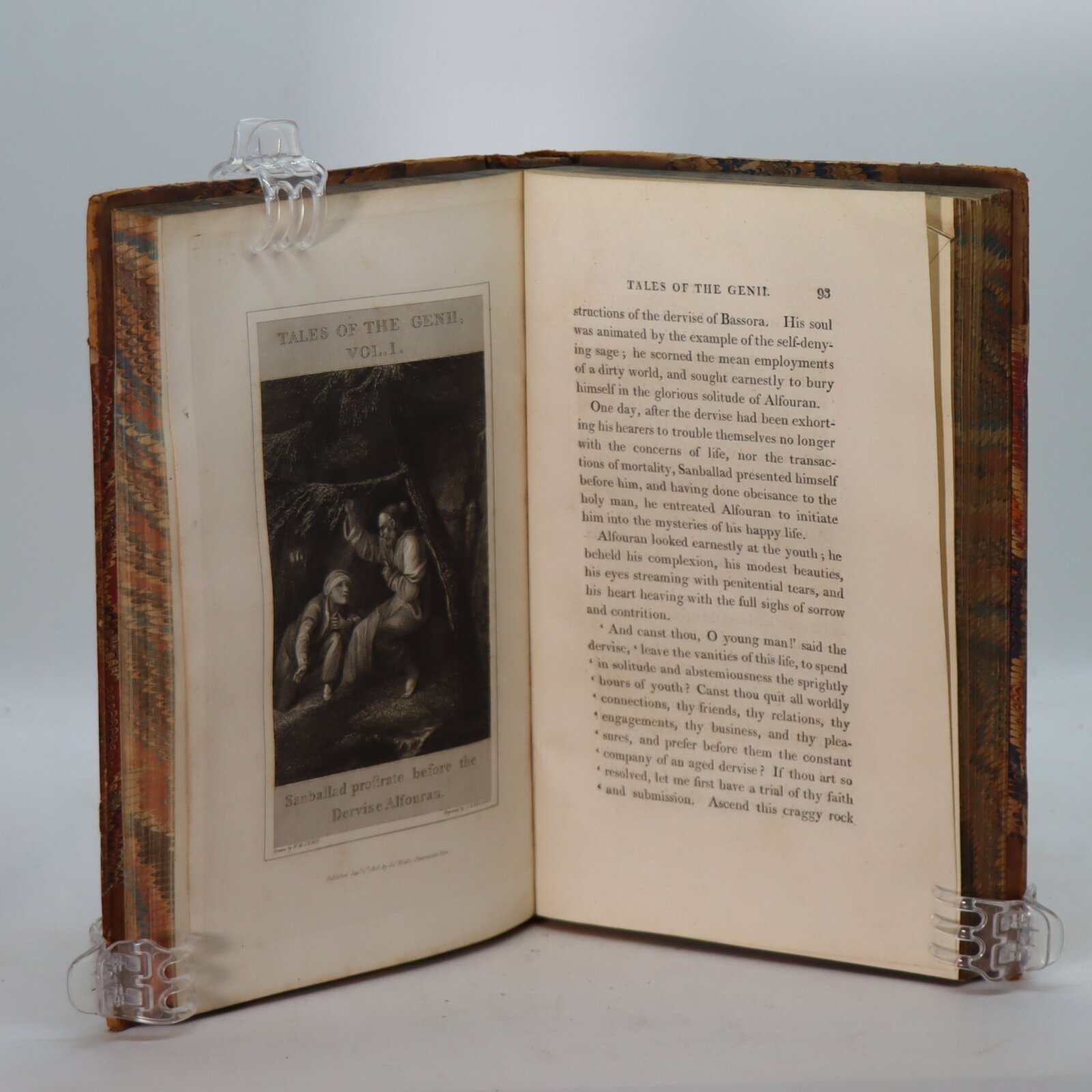
The Tales of the Genii: or, the Delightful Lessons of Horam, The Son of Asmar is a collection by the English author James Ridley, consisting of Oriental pastiche fantasy tales modelled on those of the Arabian Nights. The work was originally passed off as an authentic work by a Persian imam named Horam translated into English by “Sir Charles Morell, formerly ambassador from the British Settlements in India to the Great Mogul” and published by an anonymous “editor.” It is the work for which Ridley is chiefly remembered.
The work was first issued in shilling parts, with the full work published in two volumes in London in 1764. Further editions appeared in 1780, 1794, 1800, 1805, 1814, 1849, and 1861, the last two selected, revised, “purified and remodelled” by Archbishop Whately “with a view of developing a religious moral.” Whately’s reworking has been judged “far inferior.” The book was translated into German in 1765-66, and French in 1766.
James Kenneth Ridley (1736–1765) was an English author educated at University College, Oxford. He served as a chaplain with the British Army. He is best known for a volume of imitation Orientalia. Ridley wrote two novels: The History of James Lovegrove, Esquire (1761) and The Schemer, or the Universal Satirist, by that Great Philosopher Helter van Scelter (1763). However, he is mainly remembered for his Oriental pastiche The Tales of the Genii, a set of stories based on those of the Arabian Nights. That work, published in two volumes in 1764, was issued under the pseudonym “Sir Charles Morell”, supposedly British Ambassador at Bombay.
Ridley’s Tales were allegedly composed by an imam named Horam and translated from a Persian manuscript, but in actuality, they were products of Ridley’s imagination. They belong to a genre of imitation Orientalia popular in the 18th century. In its own time and after, Ridley’s book was compared to Samuel Johnson’s Rasselas. It retained its popularity and had gone through seven editions by 1861. Translations into German and French also appeared.
Want to know more about this item?
We are happy to answer any questions you may have about this item. In addition, it is also possible to request more photographs if there is something specific you want illustrated.
Ask a question
Related products



Share this Page with a friend
