
Yorkshire. Printers' Proof Bound Collection.
Printed: 1695
Publisher: Unkown
| Dimensions | 25 × 40 × 1 cm |
|---|---|
| Language |
Language: English
Size (cminches): 25 x 40 x 1
Condition: Fair (See explanation of ratings)
£98.00
Buy Now

Item information
Description
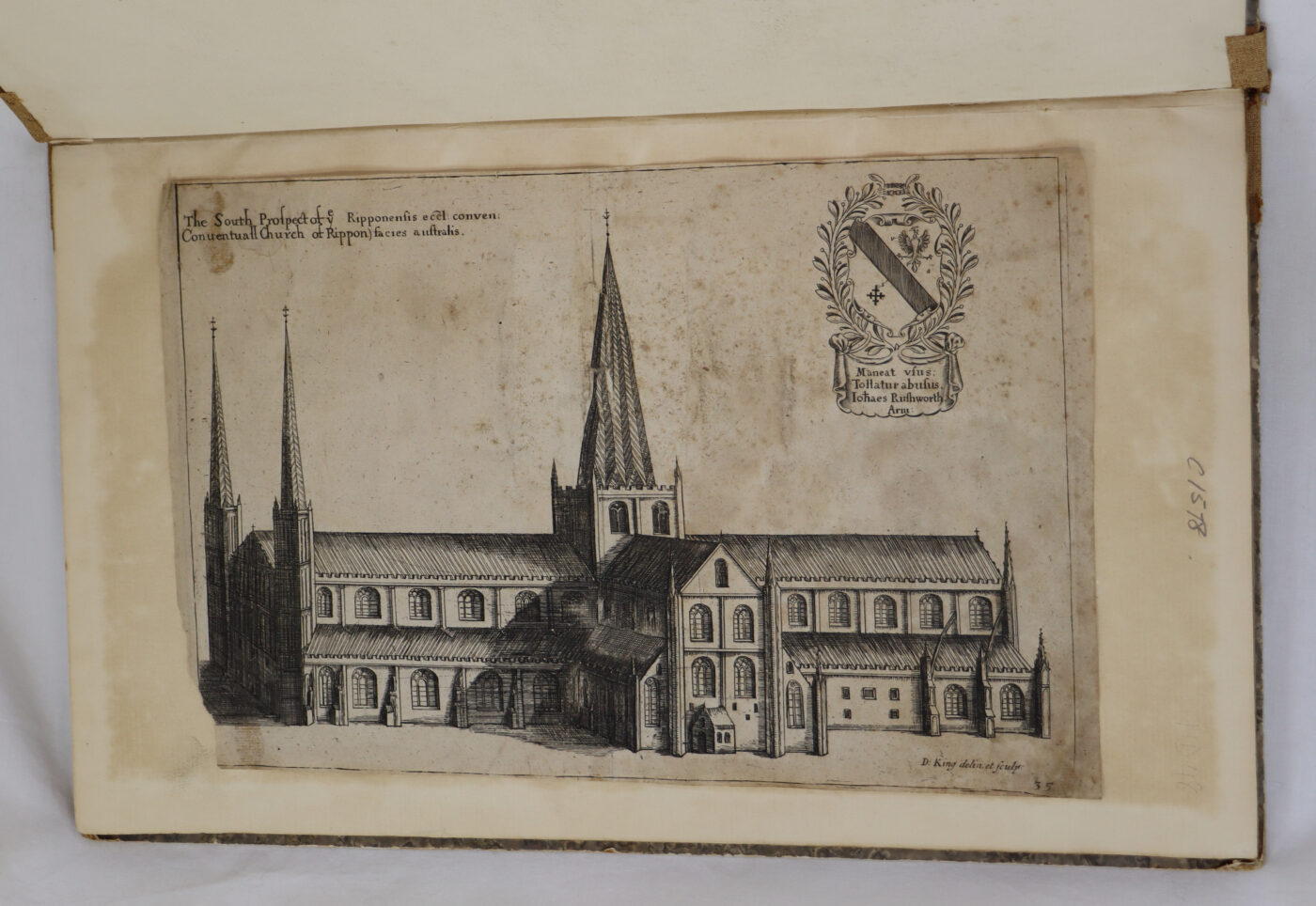
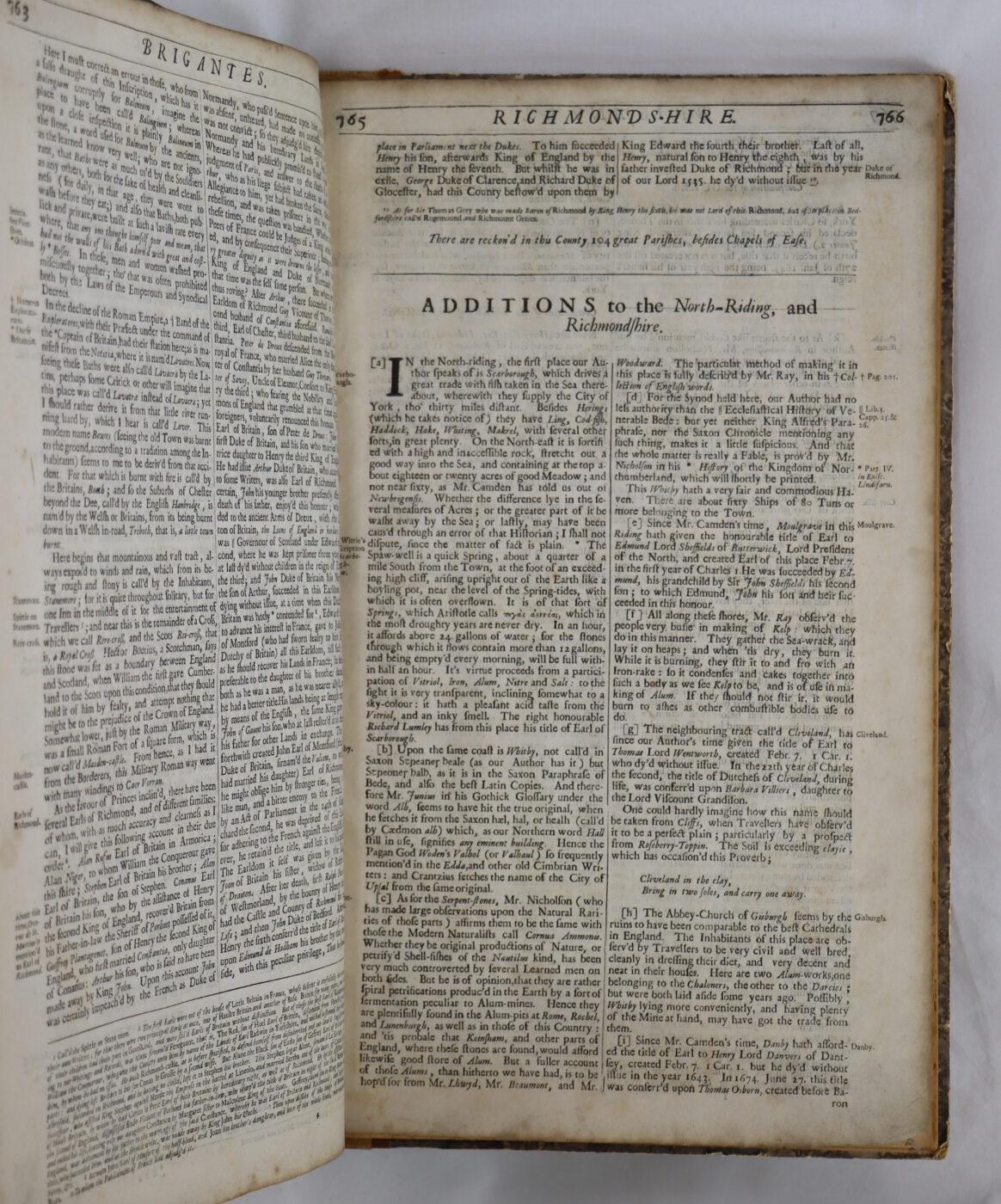
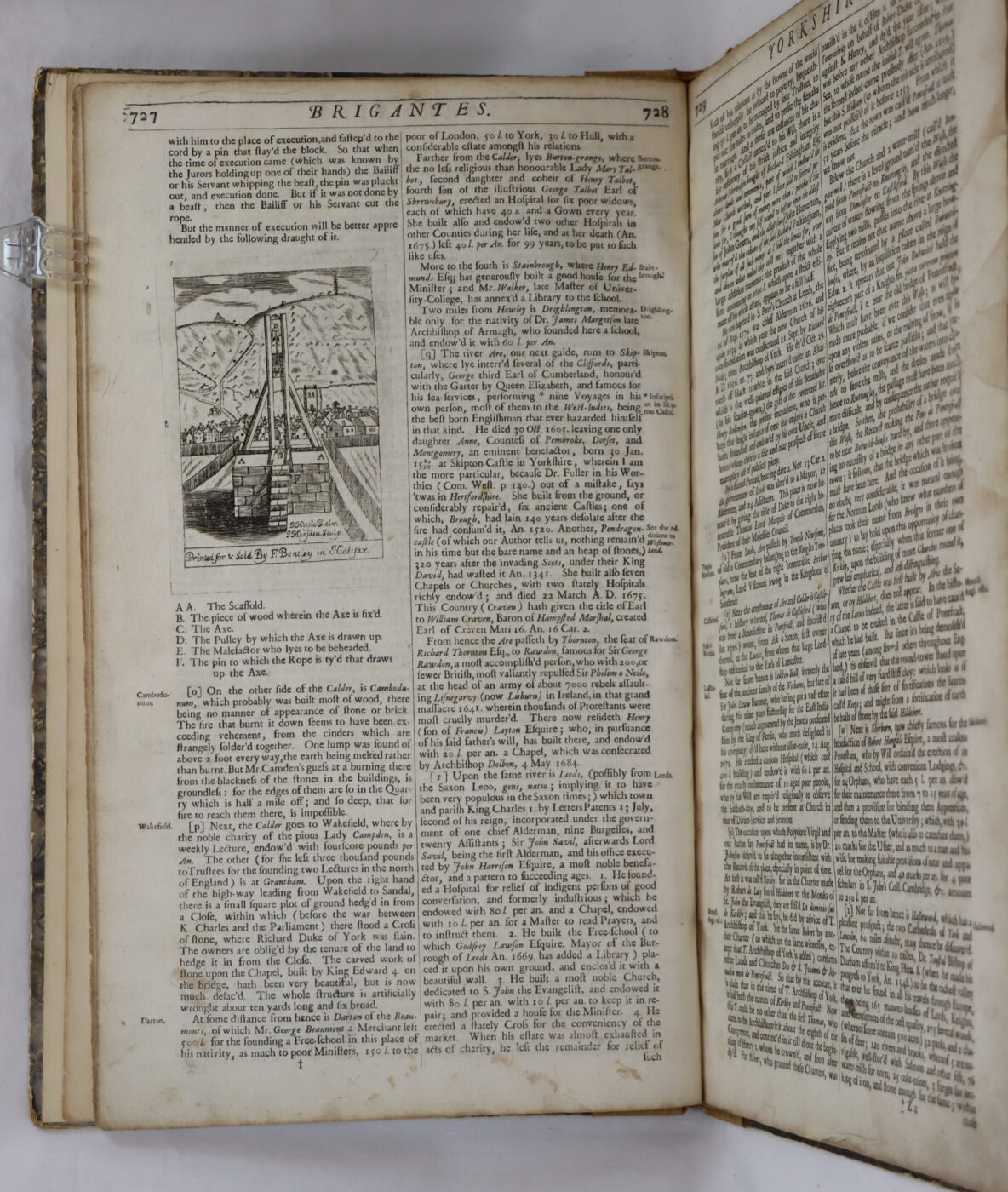
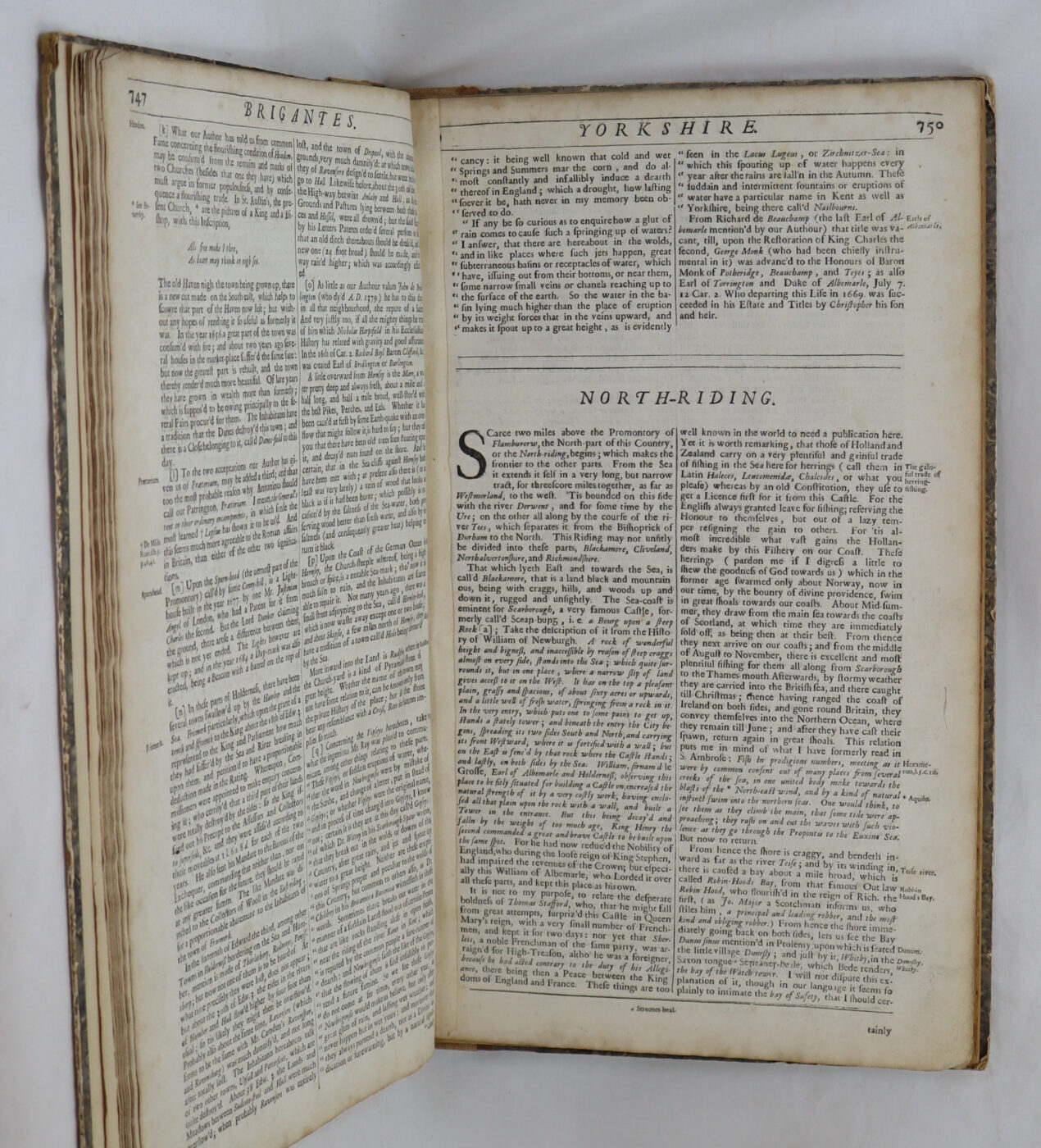
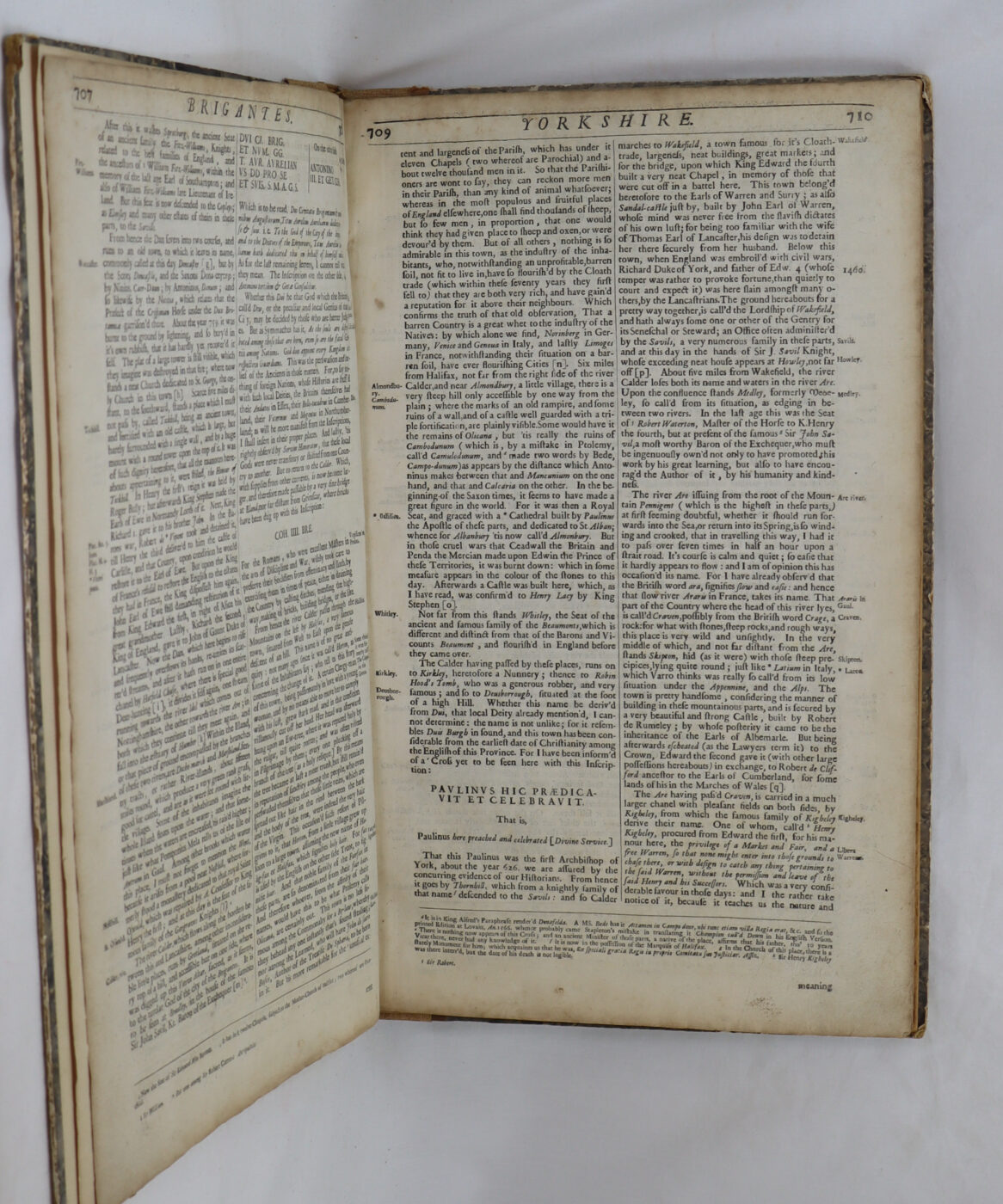
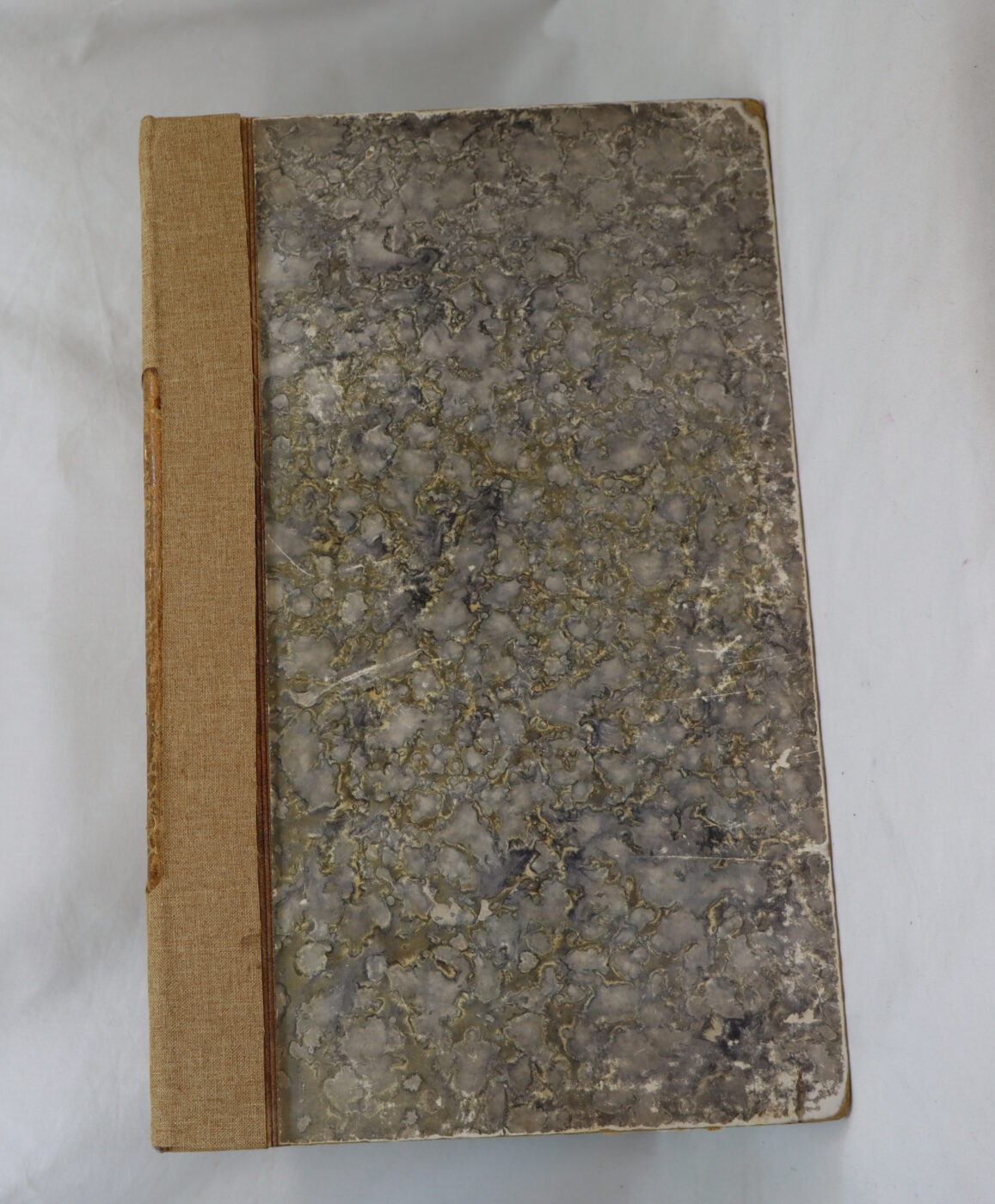
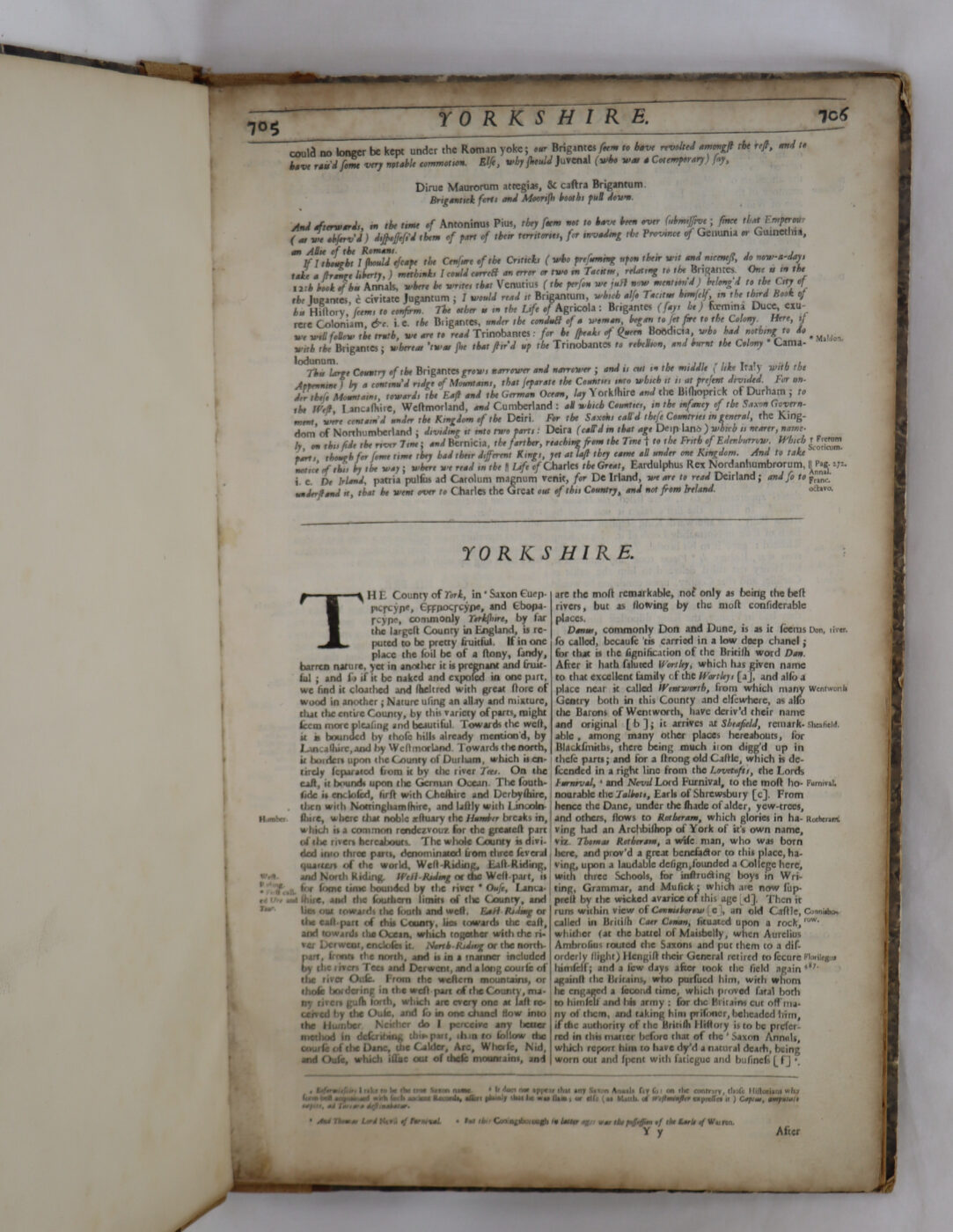
Hardboard binding with calf spine with gilt title. First Illustrated rendition of the Halifax Gibbet. A fine woodcut of Ripon Cathederal. Geographic details of Richmondshire. This printers proof by an unkown publisher is a historic joy providing many hours of thoughtful reading.
-
We provide an in-depth photographic presentation of this item to stimulate your feeling and touch. More traditional book descriptions are immediately available.
-
Note: This book carries a £5.00 discount to those that subscribe to the F.B.A. mailing list
An exceedingly rare late and middle 17th century proof copy originally prepared for introduction into a full Yorkshire compilation. This proof copy has two quality woodcuts, the Halifax Gibbet and a side view of Ripon cathedral.
This extremely rare proof copy is the first known proof copy of the Halifax Gibbet. The Halifax Gibbet was an early, medieval guillotine used in West Yorkshire to execute petty thieves. Dating back to at least the 13th century, the original device was heavily associated with the local wool trade and used to behead 52 known individuals before being dismantled in 1650.
Location and Site Details
-
Address: The replica site is located just off Gibbet Street in Halifax, West Yorkshire (HX1 5LE).
-
The Site: The gibbet sits on its original stone base, which dates back to the 13th century and is a preserved, Grade II listed monument. A non-working replica structure is erected on this spot.
-
Recent Updates: The 1974 wooden replica was replaced by Calderdale Council with an exact bespoke copy constructed from green oak.
Historical Significance
-
Forerunner to the Guillotine: The machine pre-dated the French Revolution’s guillotine by centuries. It consisted of a large, heavy axe blade attached to a wooden block that slid down 15-foot upright wooden posts.
-
Halifax Law: The Lord of the Manor had the unique legal authority to execute anyone caught stealing goods worth 13.5 pence or more, or who confessed to the theft.
-
The Blade: The original historical axe blade is preserved and displayed at the Bankfield Museum in Boothtown, Halifax.
-
The Famous Phrase: The severe nature of the gibbet law gave rise to the notorious 17th-century beggar’s prayer: “From Hull, Hell and Halifax, good Lord deliver us.”
The Cathedral Church of St Peter and St Wilfrid, commonly known as Ripon Cathedral, and until 1836 known as Ripon Minster, is a cathedral in Ripon, North Yorkshire, England. Founded as a monastery by monks of the Irish tradition in the 660s, it was refounded as a Benedictine monastery by St Wilfrid in 672. The church became collegiate in the tenth century, and acted as a mother church within the large Diocese of York for the remainder of the Middle Ages. The present church is the fourth, and was built between the 13th and 16th centuries. In 1836 the church became the cathedral for the Diocese of Ripon. In 2014 the Diocese was incorporated into the new Diocese of Leeds, and the church became one of three co-equal cathedrals of the Bishop of Leeds.
The cathedral is notable architecturally for its gothic west front in the Early English style, considered one of the best of its type, as well as the Geometric east window. The seventh-century crypt of Wilfrid’s church is a significant example of early Christian architecture in England. The cathedral has Grade I listed building status.
Want to know more about this item?
We are happy to answer any questions you may have about this item. In addition, it is also possible to request more photographs if there is something specific you want illustrated.
Ask a question
Related products





Share this Page with a friend
