
Vitruvius, Architect and Engineer.
By Alexander McKay
Printed: 1978
Publisher: Macmillan Education.
| Dimensions | 14 × 21 × 0.5 cm |
|---|---|
| Language |
Language: English
Size (cminches): 14 x 21 x 0.5
Condition: Good (See explanation of ratings)
£9.00
Buy Now
Item information
Description
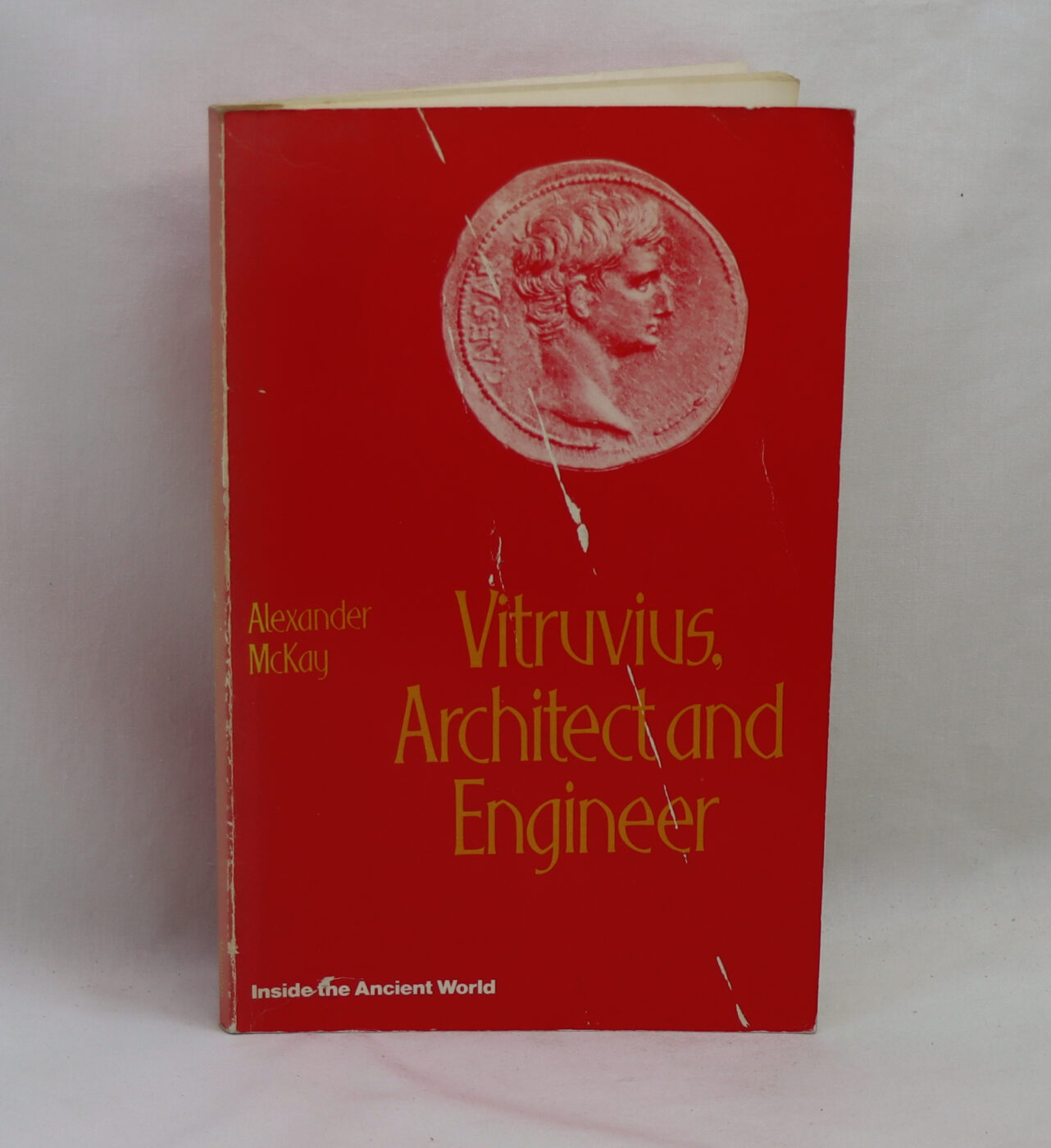
Paperback. Red cover with orange title on the front board.
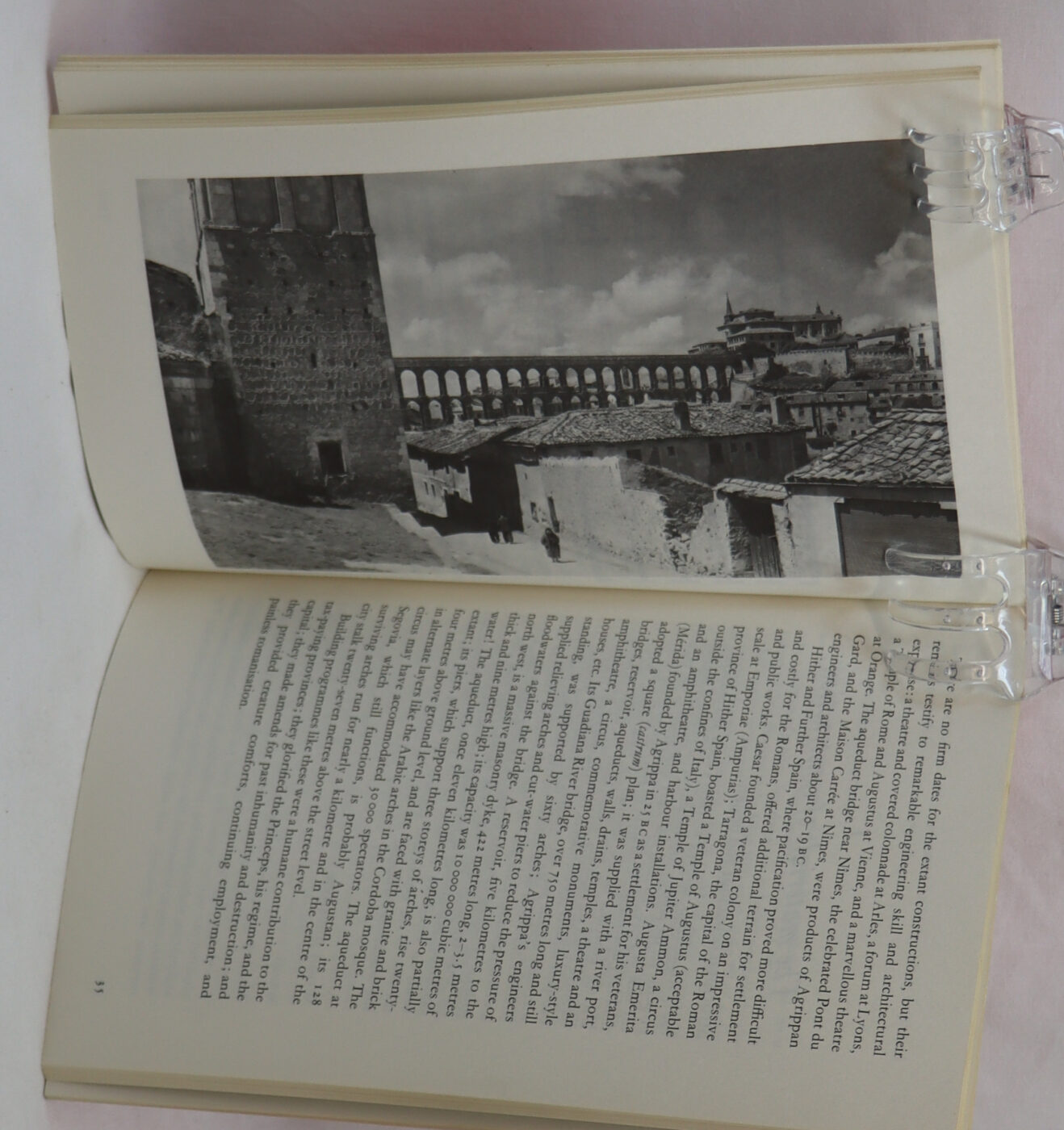
We provide an in-depth photographic presentation of this item to stimulate your feeling and touch. More traditional book descriptions are immediately available.
- A £2 reduction when collected from FBA shop
Vitruvius (c. 80–70 BC – after c. 15 BC) was a Roman architect and engineer during the 1st century BC, known for his multi-volume work titled De architectura.nAs the only treatise on architecture to survive from antiquity, it has been regarded since the Renaissance as the first book on architectural theory, as well as a major source on the canon of classical architecture.It is not clear to what extent his contemporaries regarded his book as original or important. He states that all buildings should have three attributes: firmitas, utilitas, and venustas (“strength”, “utility”, and “beauty”), principles reflected in much Ancient Roman architecture. His discussion of perfect proportion in architecture and the human body led to the famous Renaissance drawing of the Vitruvian Man by Leonardo da Vinci.
Little is known about Vitruvius’ life, but by his own description he served as an artilleryman, the third class of arms in the Roman military offices. He probably served as a senior officer of artillery in charge of doctores ballistarum (artillery experts) and libratores who actually operated the machines. As an army engineer he specialized in the construction of ballista and scorpio artillery war machines for sieges. It is possible that Vitruvius served with Julius Caesar’s chief engineer Lucius Cornelius Balbus.
Vitruvius’ De architectura was well-known and widely copied in the Middle Ages and survives in many dozens of manuscripts, though in 1414 it was “rediscovered” by the Florentine humanist Poggio Bracciolini in the library of Saint Gall Abbey. Leon Battista Alberti published it in his seminal treatise on architecture, De re aedificatoria (c. 1450). The first known Latin printed edition was by Fra Giovanni Sulpitius in Rome in 1486. Translations followed in Italian, French, English, German, Spanish, and several other languages. Though any original illustrations have been lost, the first illustrated edition was published in Venice in 1511 by Fra Giovanni Giocondo, with woodcut illustrations based on descriptions in the text. Bramante, Michelangelo, Palladio, Vignola and earlier architects are known to have studied the work of Vitruvius, and consequently it has had a significant impact on the architecture of many European countries.
Mainly known for his writings, Vitruvius was himself an architect. In Roman times architecture was a broader subject than at present including the modern fields of architecture, construction management, construction engineering, chemical engineering, civil engineering, materials engineering, mechanical engineering, military engineering and urban planning; architectural engineers consider him the first of their discipline, a specialization previously known as technical architecture.
In his work describing the construction of military installations, he also commented on the miasma theory – the idea that unhealthy air from wetlands was the cause of illness, saying:
For fortified towns the following general principles are to be observed. First comes the choice of a very healthy site. Such a site will be high, neither misty nor frosty, and in a climate neither hot nor cold, but temperate; further, without marshes in the neighbourhood. For when the morning breezes blow toward the town at sunrise, if they bring with them mists from marshes and, mingled with the mist, the poisonous breath of the creatures of the marshes to be wafted into the bodies of the inhabitants, they will make the site unhealthy. Again, if the town is on the coast with southern or western exposure, it will not be healthy, because in summer the southern sky grows hot at sunrise and is fiery at noon, while a western exposure grows warm after sunrise, is hot at noon, and at evening all aglow.
Frontinus mentions Vitruvius in connection with the standard sizes of pipes: probably the role for which he was most widely respected in Roman times. He is often credited as the father of architectural acoustics for describing the technique of echeas placement in theaters. The only building, however, that we know Vitruvius to have worked on is one he tells us about, a basilica completed in 19 BC. It was built at Fanum Fortunae, now the modern town of Fano. The basilica (Italian: “Basilica di Fano”) had disappeared so completely that its very site was a matter of conjecture, although various attempts had been made to visualise it.It was ultimately identified and its foundations unearthed in Piazza Andrea Costa, Fano, in January 2026.
In later years the emperor Augustus, through his sister Octavia Minor, sponsored Vitruvius, entitling him with what may have been a pension to guarantee financial independence.
Gerolamo Cardano, in his 1552 book De subtilitate rerum, ranks Vitruvius as one of the 12 persons whom he supposes to have excelled all men in the force of genius and invention; and might have given him first place if it was clear that he had set down his own discoveries.
James Anderson’s “The Constitutions of the Free-Masons” (1734), reprinted by Benjamin Franklin, describes Vitruvius as “the Father of all true Architects to this Day.”
Want to know more about this item?
We are happy to answer any questions you may have about this item. In addition, it is also possible to request more photographs if there is something specific you want illustrated.
Ask a question
Related products






Share this Page with a friend
