
Through the Looking Glass.
By Lewis Carroll
Printed: 1978
Publisher: Macmillan & Co. London
| Dimensions | 16 × 21 × 3 cm |
|---|---|
| Language |
Language: English
Size (cminches): 16 x 21 x 3
Condition: Very good (See explanation of ratings)
£28.00
Buy Now

Item information
Description
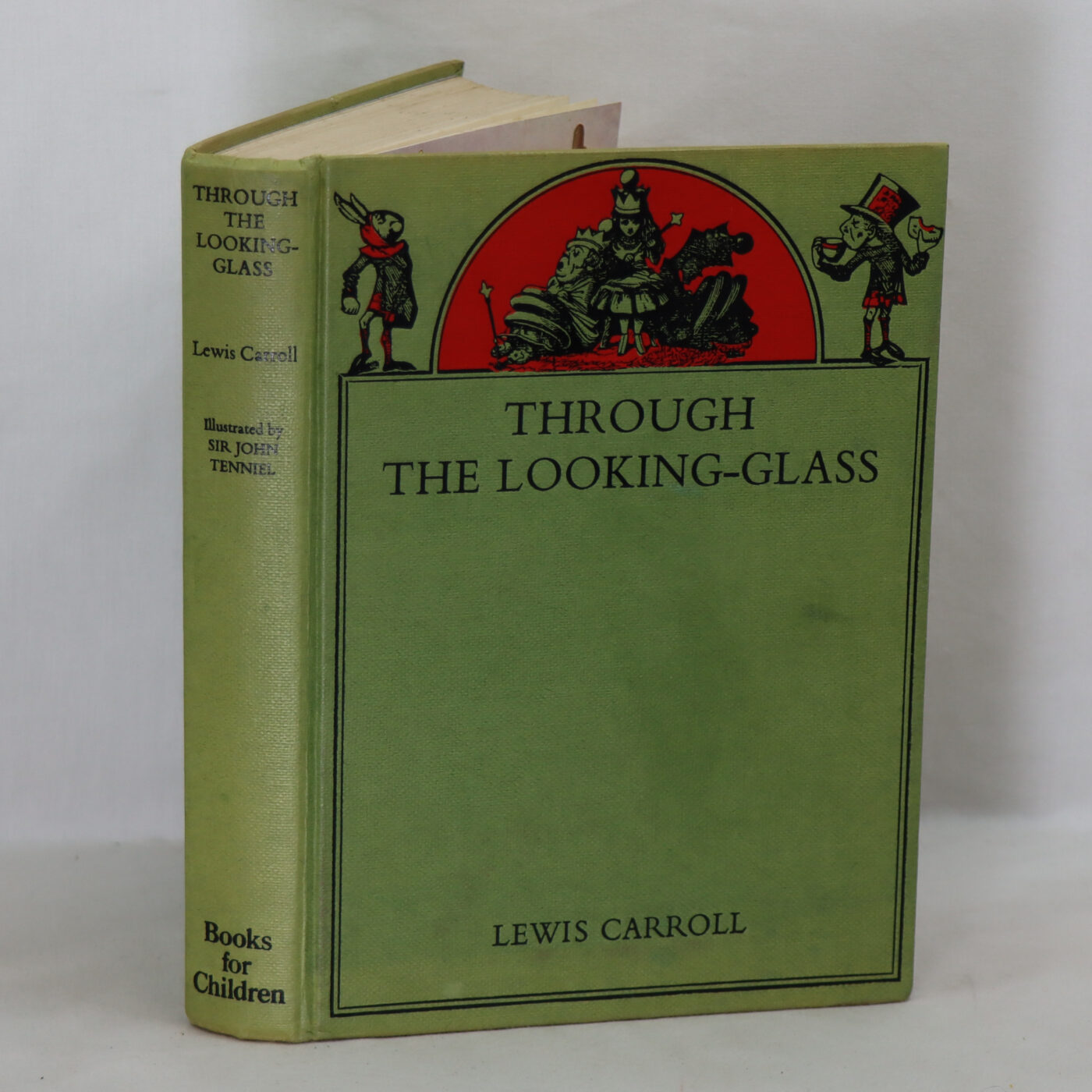
Green cloth binding with black title on the spine and front board.
We provide an in-depth photographic presentation of this item to stimulate your feeling and touch. More traditional book descriptions are immediately available
- Note: This book carries a £5.00 discount to those that subscribe to the F.B.A. mailing list
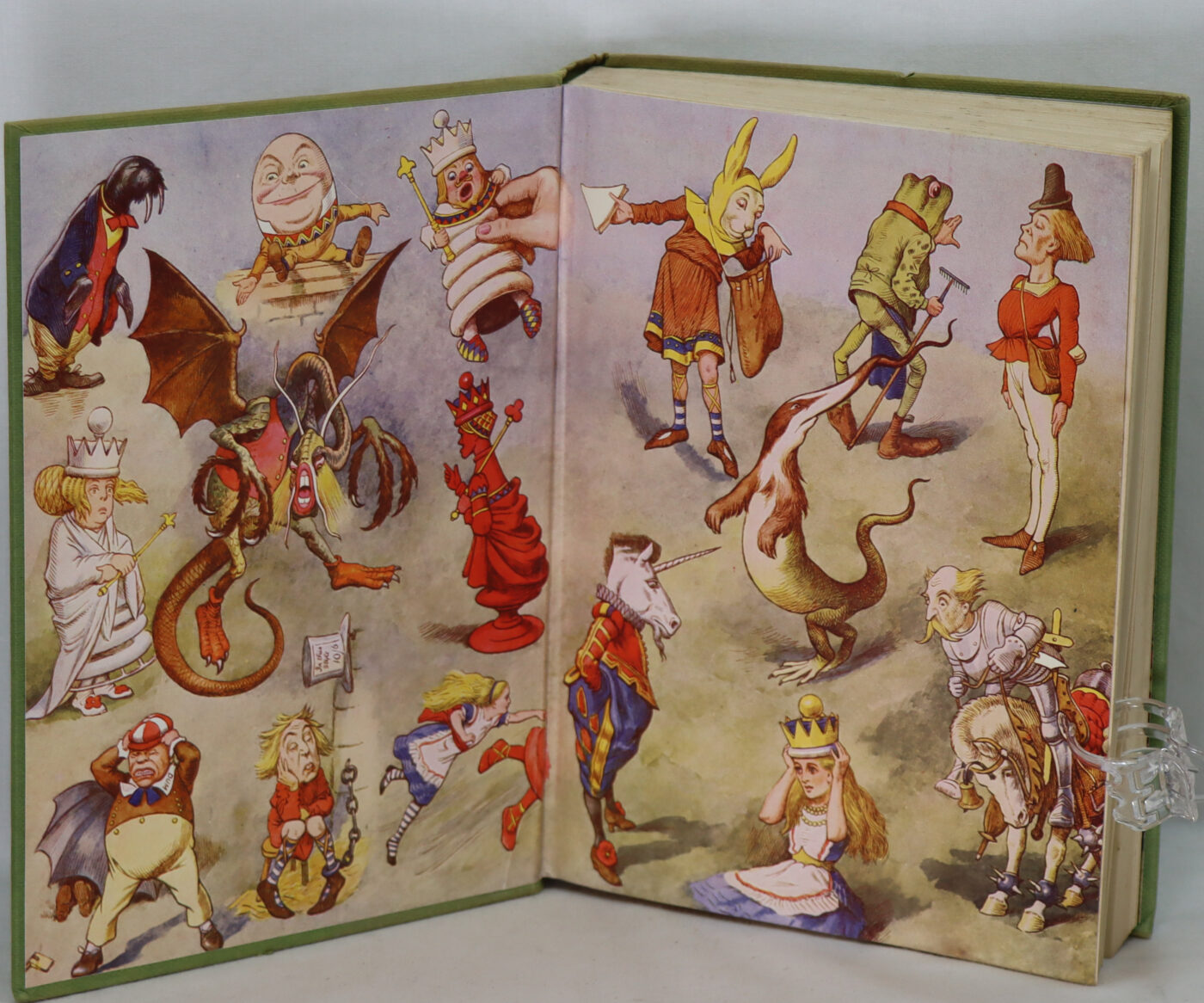
For conditions, please view our photographs. A nice clean rare copy from the library gathered by the famous Cambridge Don, computer scientist, food and wine connoisseur, Jack Arnold LANG. A lovely book famed for being a near copy of the first edition.
Charles Lutwidge Dodgson (27 January 1832 – 14 January 1898), better known by his pen name Lewis Carroll, was an English author, poet, mathematician, photographer and reluctant Anglican deacon. His most notable works are Alice’s Adventures in Wonderland (1865) and its sequel Through the Looking-Glass (1871), some of the most important examples of Victorian literature. He was noted for his facility with word play, logic, and fantasy. His poems Jabberwocky (1871) and The Hunting of the Snark (1876) are classified in the genre of literary nonsense. Some of Alice’s nonsensical wonderland logic reflects his published work on mathematical logic.nCarroll came from a family of high-church Anglicans, and pursued his clerical training at Christ Church, Oxford, where he lived for most of his life as a scholar, teacher and (necessarily for his academic fellowship at the time) Anglican deacon. Alice Liddell – a daughter of Henry Liddell, the Dean of Christ Church – is widely identified as the original inspiration for Alice in Wonderland, though Carroll always denied this. An avid puzzler, Carroll created the word ladder puzzle, which he called “Doublets”, which was published in Vanity Fair magazine between 1879 and 1881. In 1982 a memorial stone to Carroll was unveiled at Poets’ Corner in Westminster Abbey. There are societies in many parts of the world dedicated to the enjoyment and promotion of his works.
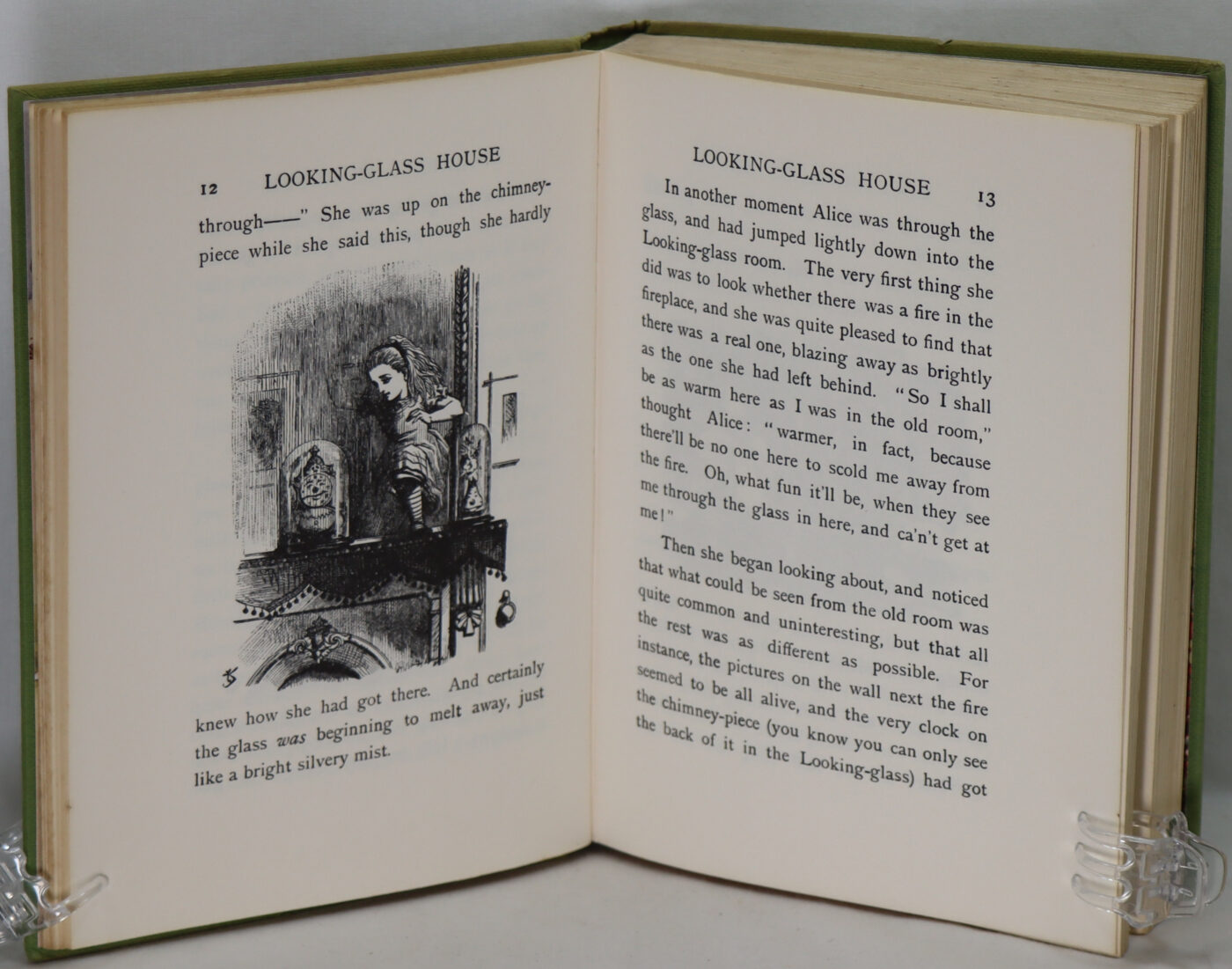
Through the Looking-Glass, and What Alice Found There is a novel published in December 1871 by Lewis Carroll, the pen name of Charles Lutwidge Dodgson, a mathematics lecturer at Christ Church, Oxford. It is the sequel to his Alice’s Adventures in Wonderland (1865), in which many of the characters were anthropomorphic playing cards. In this second novel the theme is chess. As in the earlier book, the central figure, Alice, enters a fantastical world, this time by climbing through a large looking-glass (a mirror) into a world that she can see beyond it. There she finds that, just as in a reflection, things are reversed, including logic (for example, running helps one remain stationary, walking away from something brings one towards it, chessmen are alive and nursery-rhyme characters are real).
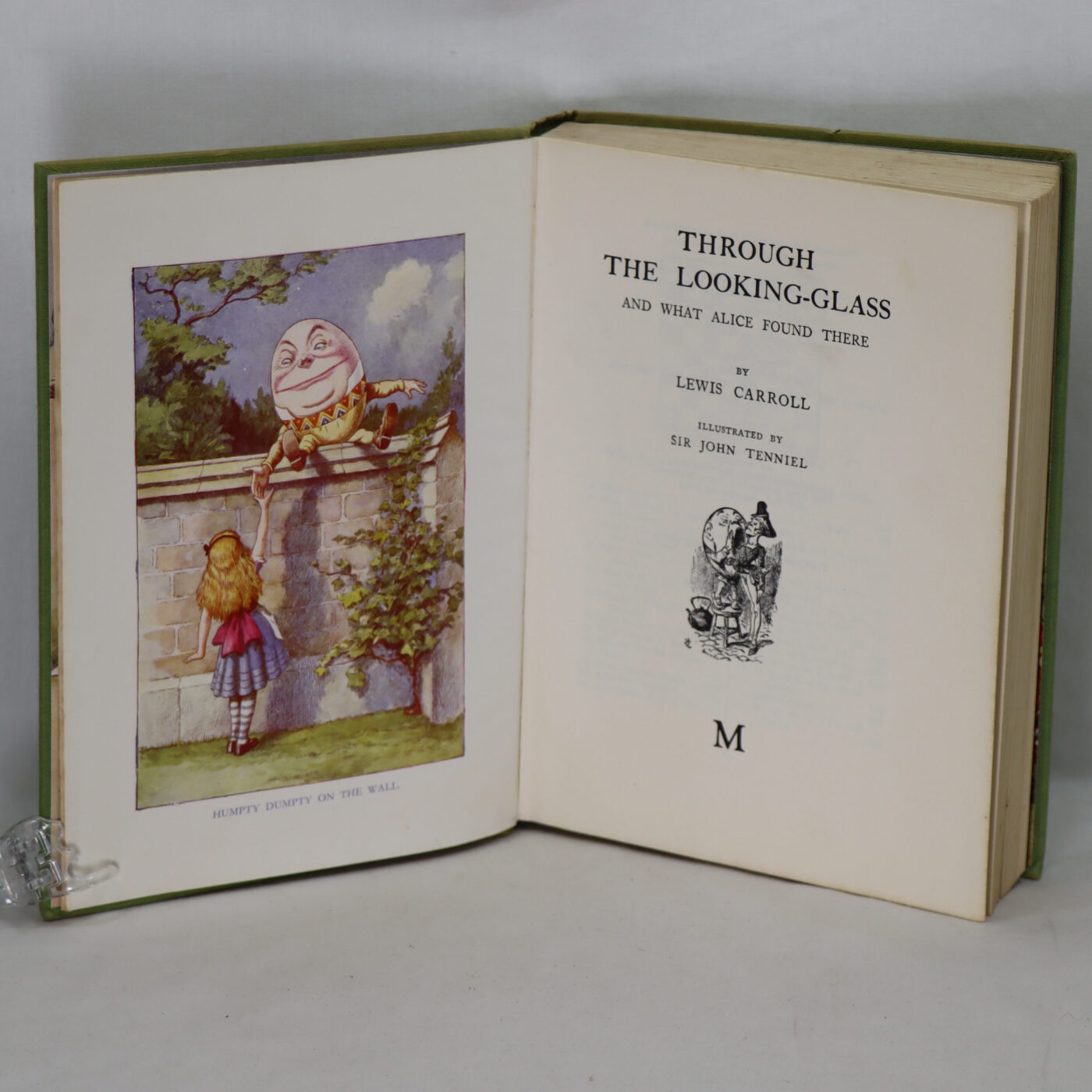
Among the characters Alice meets are the severe Red Queen,the gentle and flustered White Queen, the quarrelsome twins Tweedledum and Tweedledee, the rude and opinionated Humpty Dumpty, and the kindly but impractical White Knight. Eventually, as in the earlier book, after a succession of strange adventures, Alice wakes and realises she has been dreaming. As in Alice’s Adventures in Wonderland, the original illustrations are by John Tenniel.
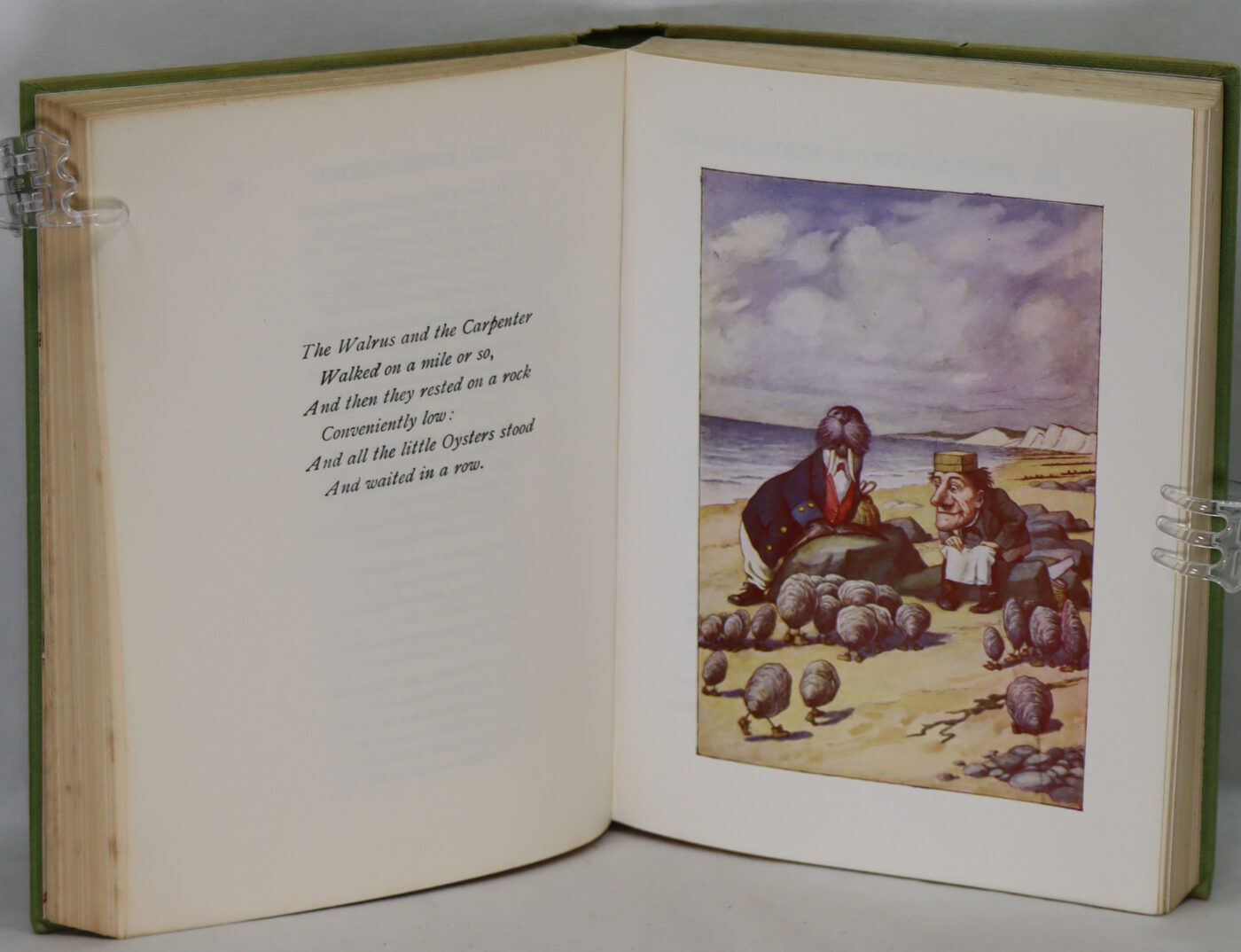
The book contains several verse passages, including “Jabberwocky”, “The Walrus and the Carpenter” and the White Knight’s ballad, “A-sitting On a Gate”. Like Alice’s Adventures in Wonderland, the book introduces phrases that have become common currency, including “jam to-morrow and jam yesterday – but never jam to-day”, “sometimes I’ve believed as many as six impossible things before breakfast”, “un-birthday presents”, “portmanteau words” and “as large as life and twice as natural”.
Through the Looking Glass has been adapted for the stage and the screen and translated into many languages. Critical opinion of the book has generally been favourable and either ranked it on a par with its predecessor or else only just short of it.
Sir John Tenniel (28 February 1820 – 25 February 1914) was an English illustrator, graphic humourist and political cartoonist prominent in the second half of the 19th century. An alumnus of the Royal Academy of Arts in London, he was knighted for artistic achievements in 1893, the first such honour ever bestowed on an illustrator or cartoonist. Tenniel is remembered mainly as the principal political cartoonist for Punch magazine for over 50 years and for his illustrations to Lewis Carroll’s Alice’s Adventures in Wonderland (1865) and Through the Looking-Glass, and What Alice Found There (1871). Tenniel’s detailed black-and-white drawings remain the definitive depiction of the Alice characters, with comic book illustrator and writer Bryan Talbot stating, “Carroll never describes the Mad Hatter: our image of him is pure Tenniel.”
Want to know more about this item?
We are happy to answer any questions you may have about this item. In addition, it is also possible to request more photographs if there is something specific you want illustrated.
Ask a question
Related products
Share this Page with a friend
