
The Man in the Ice.
By Konrad Spindler
ISBN: 9780517799697
Printed: 1994
Publisher: Weidenfield & Nicolson. London
| Dimensions | 16 × 23 × 3 cm |
|---|---|
| Language |
Language: English
Size (cminches): 16 x 23 x 3
Condition: Very good (See explanation of ratings)
£18.00
Buy Now

Item information
Description
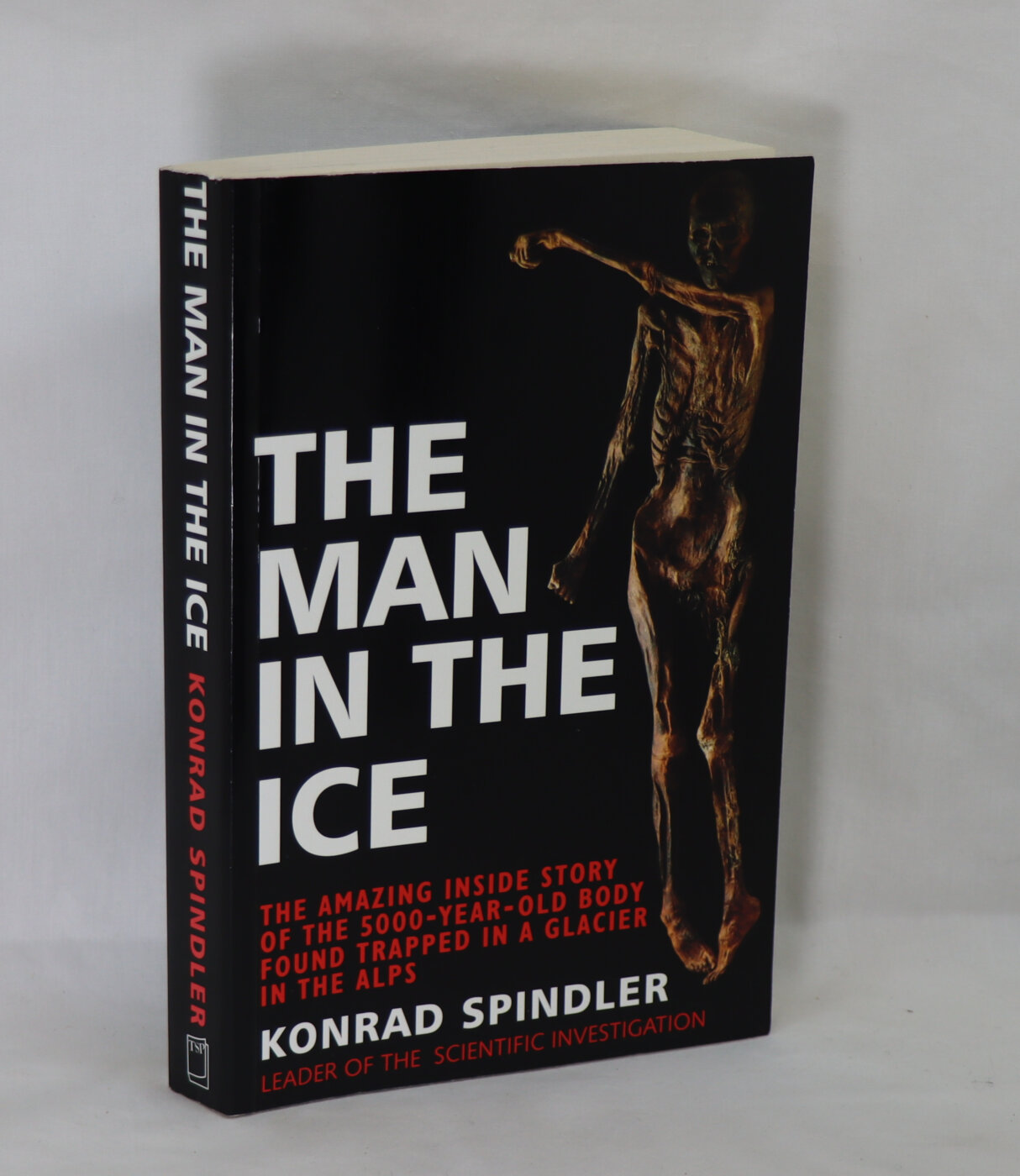
Paperback. Black binding with white title and skeleton image on the front board.
-
We provide an in-depth photographic presentation of this item to stimulate your feeling and touch. More traditional book descriptions are immediately available
-
Note: This book carries a £5.00 discount to those that subscribe to the F.B.A. mailing list
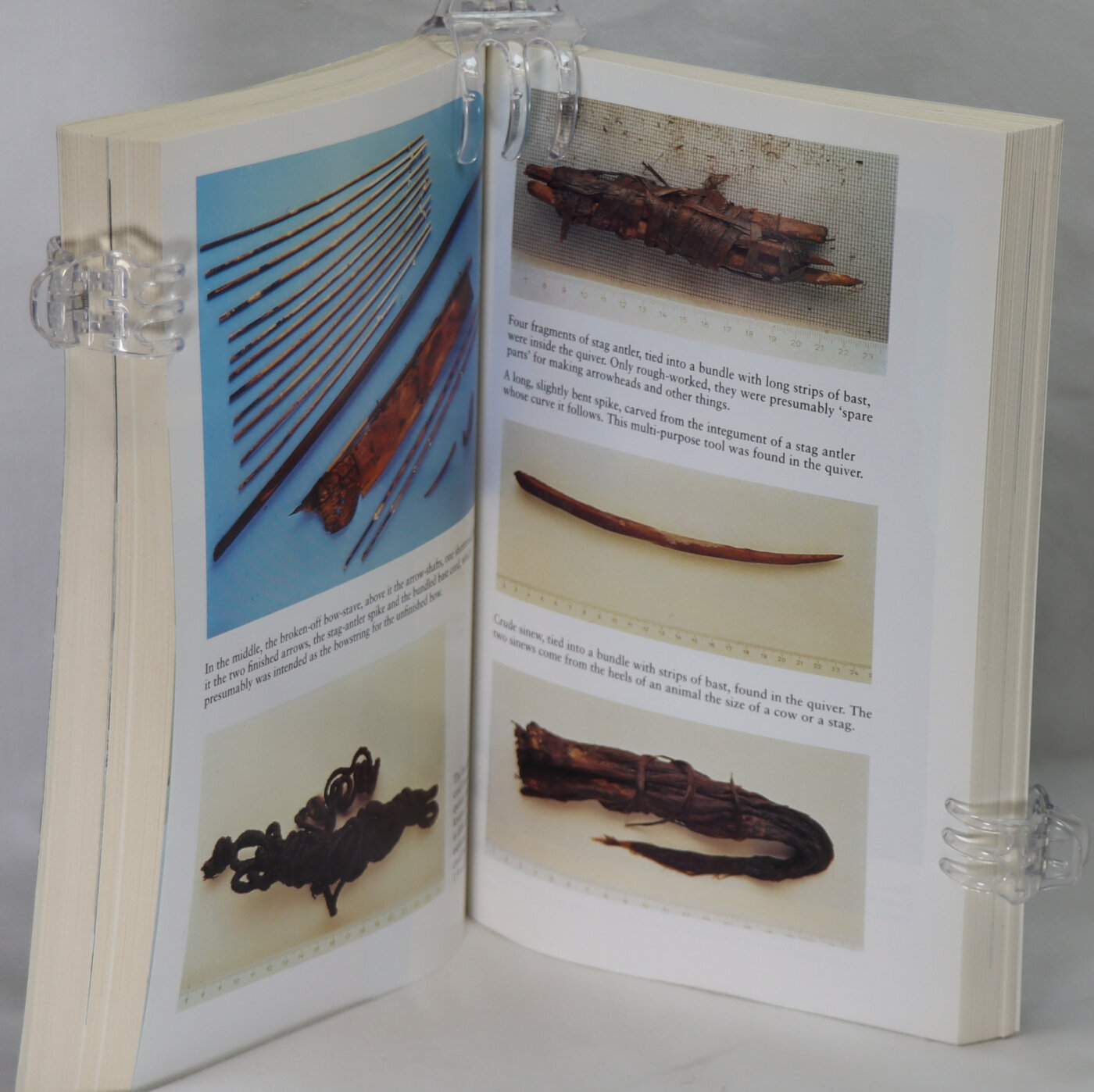
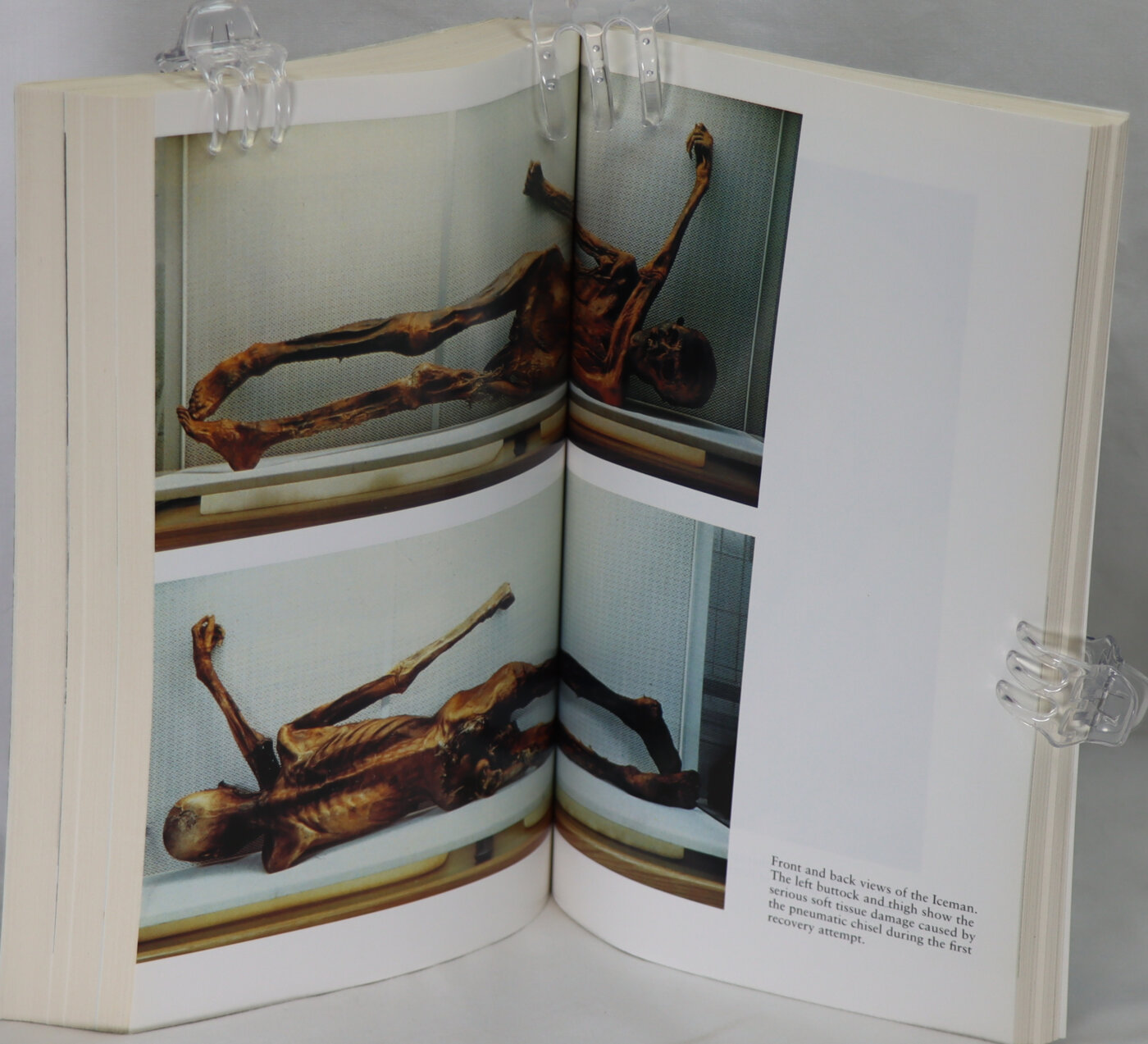
In 1991 the chance discovery of an “ice man” in the Otztaler Alps on the Austrian-Italian border. This almost perfectly preserved corpse of a neolithic hunter who died some 5000 years ago is the prelude to an enthralling detective story. How and why did he die? What do his belongings – clothes, rucksack, axe, dagger, bow, quiver, needle – tell us about the daily existence of the late-Stone-Age inhabitants of Europe? Then there is the body itself – stomach contents, micro-organisms, parasites, hair, teeth, DNA – which form the basis of Dr Konrad Spindler’s official account. And since this book is both an exploration into the realms of forensic science and intended for the general reader, the “ice man” is set in the context of other human mummy finds from Greenland, the Andes and Scythia.
Reviews:
-
In 1991, a body was discovered partially hidden in meltwater from an Austrian glacier. Initially thought to be a recent murder or accident victim, Konrad Spindler had the entirely enviable task of explaining to waiting journalists that this was in fact the remains of a 5000 year old man. It’s his tendency to entirely justifiable theatrics that make his archaeology such fun to read. Almost as interesting as the archaeology is the preliminary tale of the politics of possession. For those of us who’ve made our escape from academia and might regret it, it’s always instructive to be reminded that scholars get so little cash or kudos that when an opportunity like this one comes along, it’s not to be missed. Hence the ongoing battle for Ötzi the ice man between the Austrians and the Italians on the other side of the valley. The middle third of the book provides an exhaustive catalogue and commentary on the items found in the vicinity of the body. Many of these are the sole relics of their type ever found; certainly as a group they are totally unique. The clothing in particular is fascinating; personally I think if I were wearing straw-stuffed boots and a grass cloak, up a mountain would not be my first choice of place to be. So often we think of the Stone Age in such dead terms: cave pictures, a few crude tools, the remains of a rubbish dump. This is a chance (perhaps the only chance) to see these people in terms of humanity, in a living, breathing, functioning scenario. The final section of the book attempts to place the entire find into context, of what is known already of the Iceman’s society, and of the more general conclusions which might be drawn from his evidence. Spindler is quick to point out that much of this is speculative, and subject to change: this is fortunate as subsequent research has shown that a piece of evidence for the cause of death from the body itself was overlooked for ten years.This is a fascinating book, as much for its insights into archaeological methodology as Stone Age culture itself.
-
In principle this should be a fascinating read about the unique and historically significant find of this 5000 year old body in the alps. Surprisingly the book seems to want to avoid talking about the body, and seems to be more of a justification of why they did what they did during its recovery and the period post that event. It seems to be filled with poorly written prose and largely irrelevant detail. I suspect part of this may be a personal preference (not the writing style, I stick by my belief that this was awful) as I notice some reviewers liked the early chapters. However, to like these early chapters you need to have a love of the jurisdictional questions of high altitude corpse ownership , justifications of why they went to a fair amount of effort to destroy the corpse and tedious blow by blow detail of how it was found (person A walked up the hill, he then walked down, person B walked up and then walked down with person C after hitting the body with an ice axe for a bit). I get the fact that no one expected this corpse to be 5000 years old and there is going to be a certain amount of damage, and I suspect a lot of their justification in this book was a reaction to the heat they got from the scientific community as to how the whole thing was handled. That aside it does not make for exciting reading (or not for me). This is like the Phantom Menace of the Star Wars series, promises a lot, but untimely drags on with dull grating dialogue and a meandering direction. The corpse also looks suspiciously like Jar-Jar-binks without the ears. This book was a missed opportunity that could have been greatly improved by a ghost writer and an editor who had the wherewithal to say ‘cut that its boring’.
-
I bought this in order to reconstruct the Ice Man’s tools and equipment. The author has included a wealth of excellent photos, drawings and measurements which will allow me to do this. I will start with the copper axe as soon as the snow melts here, then on to the bow and arrows and rucksack. Plenty of info to allow me to replicate these tools.
Want to know more about this item?
We are happy to answer any questions you may have about this item. In addition, it is also possible to request more photographs if there is something specific you want illustrated.
Ask a question
Related products

Share this Page with a friend
