
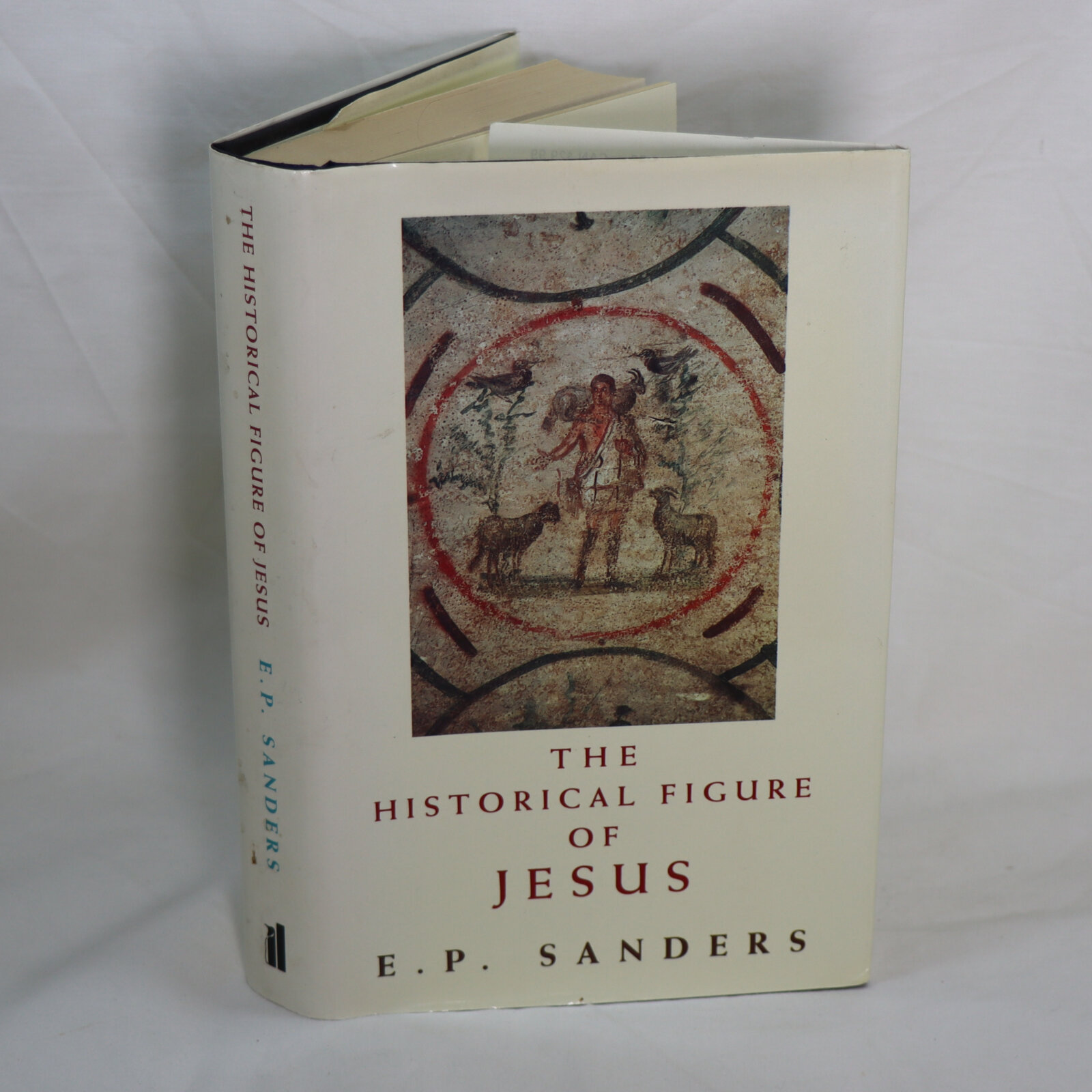
The Historical Figure of Jesus.
ISBN: 9780141928227
Printed: 1993
Publisher: Allen Lane. London
| Dimensions | 15 × 23 × 4 cm |
|---|---|
| Language |
Language: English
Size (cminches): 15 x 23 x 4
Condition: Fine (See explanation of ratings)
£17.00
Buy Now
Your items


Item information
Description
In the original dustsheet. Black cloth binding with gilt title on the spine.
-
F.B.A. provides an in-depth photographic presentation of this item to stimulate your feeling and touch. More traditional book descriptions are immediately available.
A biography of the historical figure of Jesus. The book studies the relationship between Judaism and Christianity, distinguishing the certain from the improbable, and assessing the historical and religious context of Christ’s time. The spread of Christianity is also discussed.
Review: This book represents a lot of scholarly work on the history behind the (Christian) Bible’s story, and of its chief figure, Jesus. It serves as a concise and handy guide to thinking historically about the first centuries bce and ce (or bc and ad). The first part of the book really sets the context that is missing to readers of the Bible, addressing the issue of the centuries of Hellenistic rule in Palestine and then the century of independent rule by the Jewish Hasmoneans and finally the climactic period of Herod the Great leading up to the birth of Jesus. There is further, a lot of clarity regarding the governance of Palestine during this period, including the differentiation between Galilee (where Jesus resided) and Judea (where the capital, Jerusalem was). The Roman occupation also is detailed, including the petition process to the prefect in Caesarea and the legate in Syria. Apparently, there were nonviolent ways in which Jewish people could protest Roman policies and see results. There is also helpful commentary on the fact of the governance system being mainly theocratic, that is led by the high priest in Jerusalem and that only when things got out of hand (riots, for instance), would further measures be taken. Numerous leaders both Roman and Jewish were replaced in the region for not handling situations very well.
Sanders throughout emphasizes that there are some broad facts about Jesus’ life that we know with more confidence, and a whole host of information, contained in the gospels, that may be there as a kind of theological gloss, an attempt by later Christians to make sense of their somewhat enigmatic founder and his life. But there are some facts that seem, according to Sanders, to hold up fairly well in parsing the material for historical accuracy. He emphasizes that Jesus appears to have been viewed as a prophet and exorcist, a charismatic leader who had a message of love to his fellow Jews, especially those who lived in the countryside and small villages of Galilee. His teaching was authoritative and autonomous, claiming to have a direct relationship with God without the mediation of human organizations or scripture. As a prophet, Jesus utilized symbolism such as the Twelve disciples symbolizing the twelve tribes of Israel, the banquet as symbolizing the coming kingdom of God, and the overturning of the money-changer’s tables as symbolizing the destruction of the temple (or its coming destruction). During his lifetime, it appears that Jesus was not considered divine, despite his ability to make miracles and perform exorcisms (other figures could do similar feats), rather his followers seemed to be attracted to his message of inclusion of sinners in the kingdom of God, and his claims regarding authority and autonomy with respect to the practice of Judaism at that time.
As someone raised as a Christian it is striking to me how some elements of who Jesus is (as I understood him from church) is retained in this historical (and more tentative) view of who Jesus is. Yes, Jesus is all about love, forgiveness, and a relationship with God, and yet these very traits are what got him killed as the authorities worry about insurrection and riot resulting from his actions and following. Of course, the most striking contrast is in thinking about what he meant by ‘kingdom of God.’ This seems to have been a reference to a future event in which a heavenly realm would appear on Earth, and that ultimately didn’t happen, needing subsequent reinterpretation by Christians in the aftermath of his death. Jesus’ followers, including the apostle Paul, had a resurrection experience that appeared to have convinced them that Jesus was, in addition to being a healer and prophet, to have been a heavenly Lord that will return to usher in the Kingdom that he had spoken so much about. While, of course, the book diverges from any sort of official theological position, it does provide a tentative historical framework for piecing together the mystery of who Jesus was, what he taught and did, how he died, and why his followers acted the way they did—all within a tightly focused historical account of the 1st century. I heartily recommend the book to anyone, Christian or not, as it provides a good starting point for thinking historically about events surrounding the founding of Christianity.
Want to know more about this item?
We are happy to answer any questions you may have about this item. In addition, it is also possible to request more photographs if there is something specific you want illustrated.
Ask a question
Related products








Share this Page with a friend
