
The Greville Diary.Volumes I & II.
By Edited by Philip Whitwell Wilson
Printed: 1927
Publisher: William Heinemann. London
| Dimensions | 17 × 25 × 4 cm |
|---|---|
| Language |
Language: English
Size (cminches): 17 x 25 x 4
Condition: Good (See explanation of ratings)
£39.00
Buy Now

Item information
Description
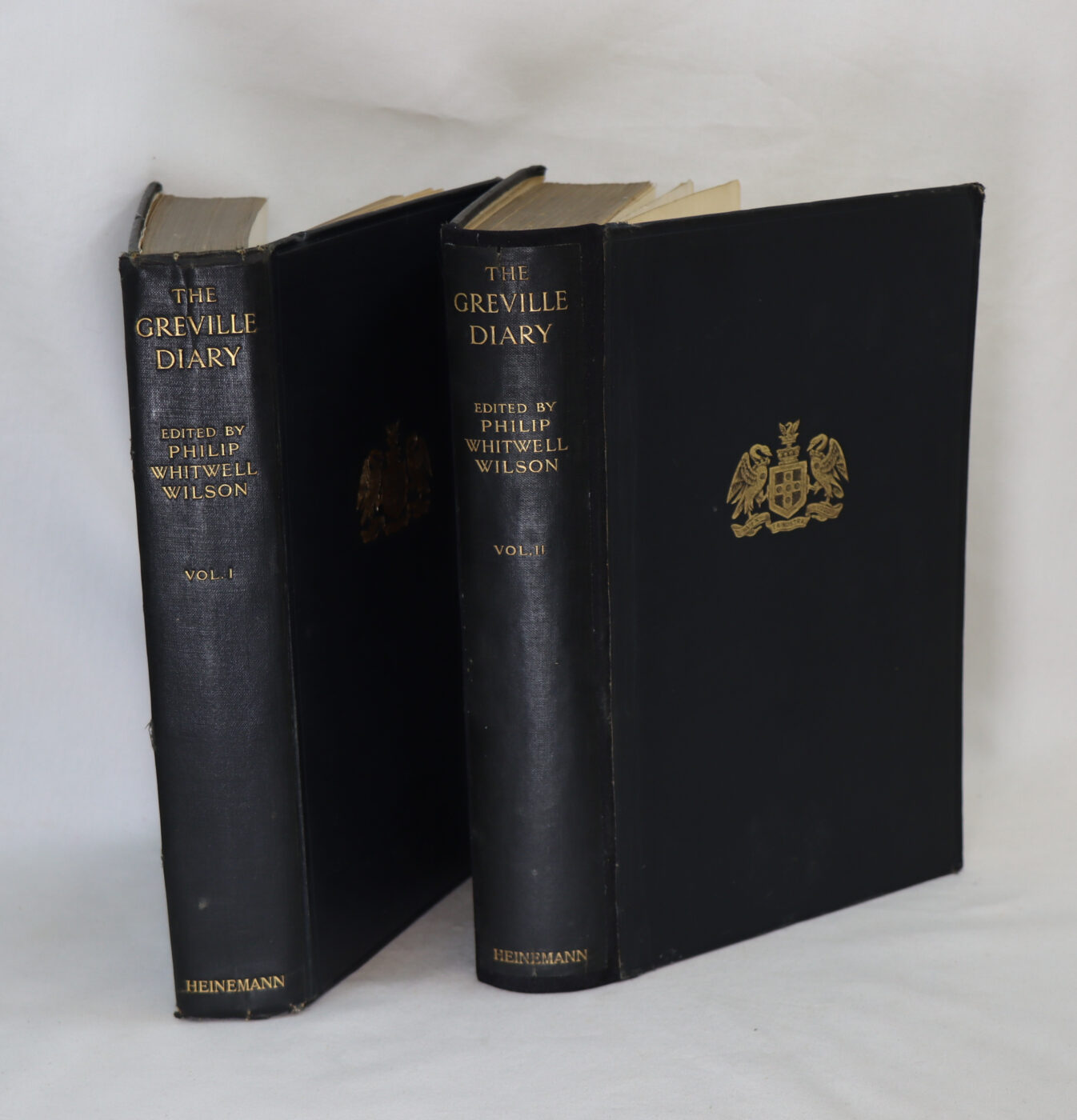
Black cloth binding with gilt title on the spine .Volume II has a rebacked spine. Dimensions are for one volume.
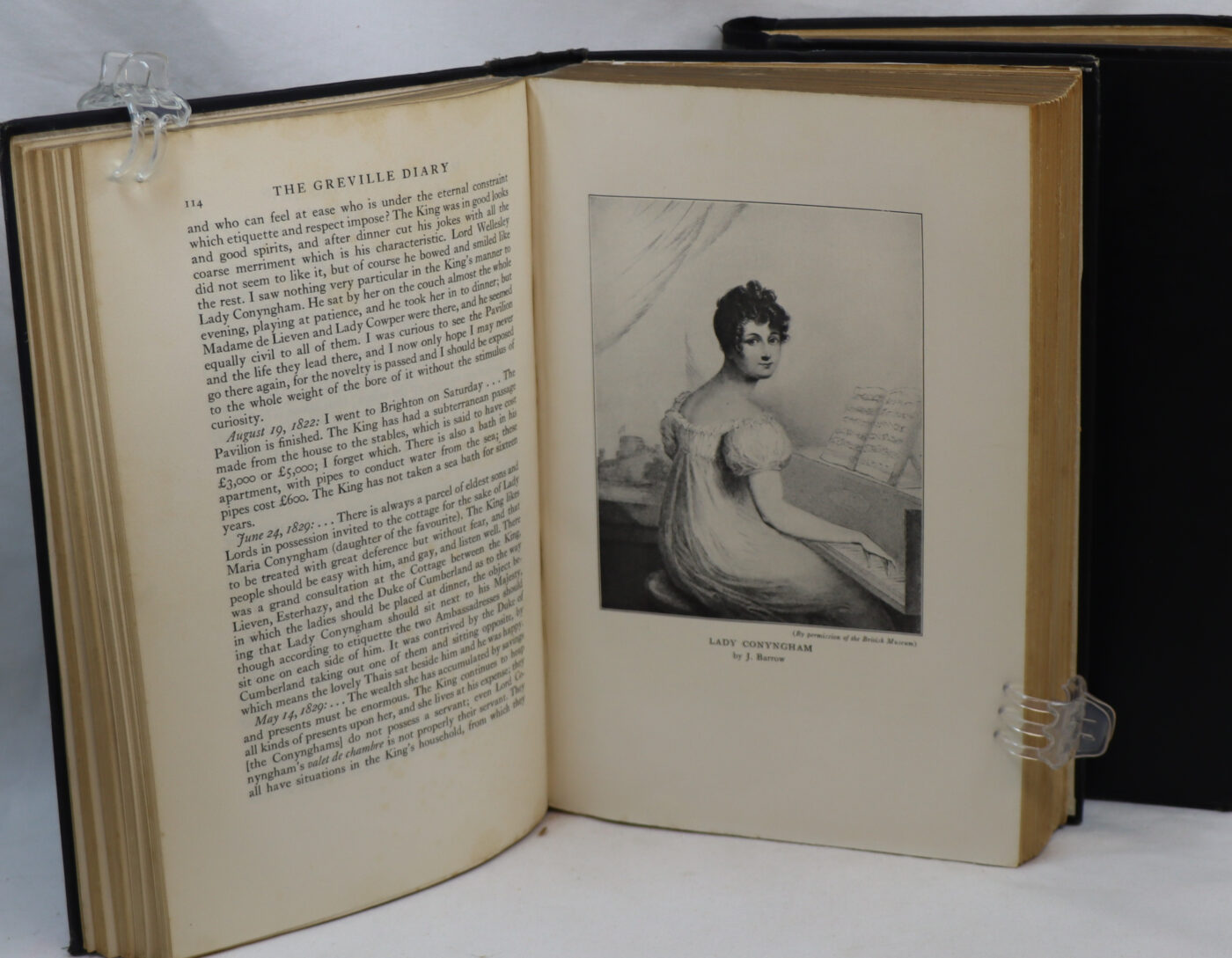
We provide an in-depth photographic presentation of this item to stimulate your feeling and touch. More traditional book descriptions are immediately available.
- Note: This book carries a £5.00 discount to those that subscribe to the F.B.A. mailing list
Please view our photographs. titled The Greville Diary (named after the famous diarist Charles Greville) rather than “Granville”. These are nicely restored copies.
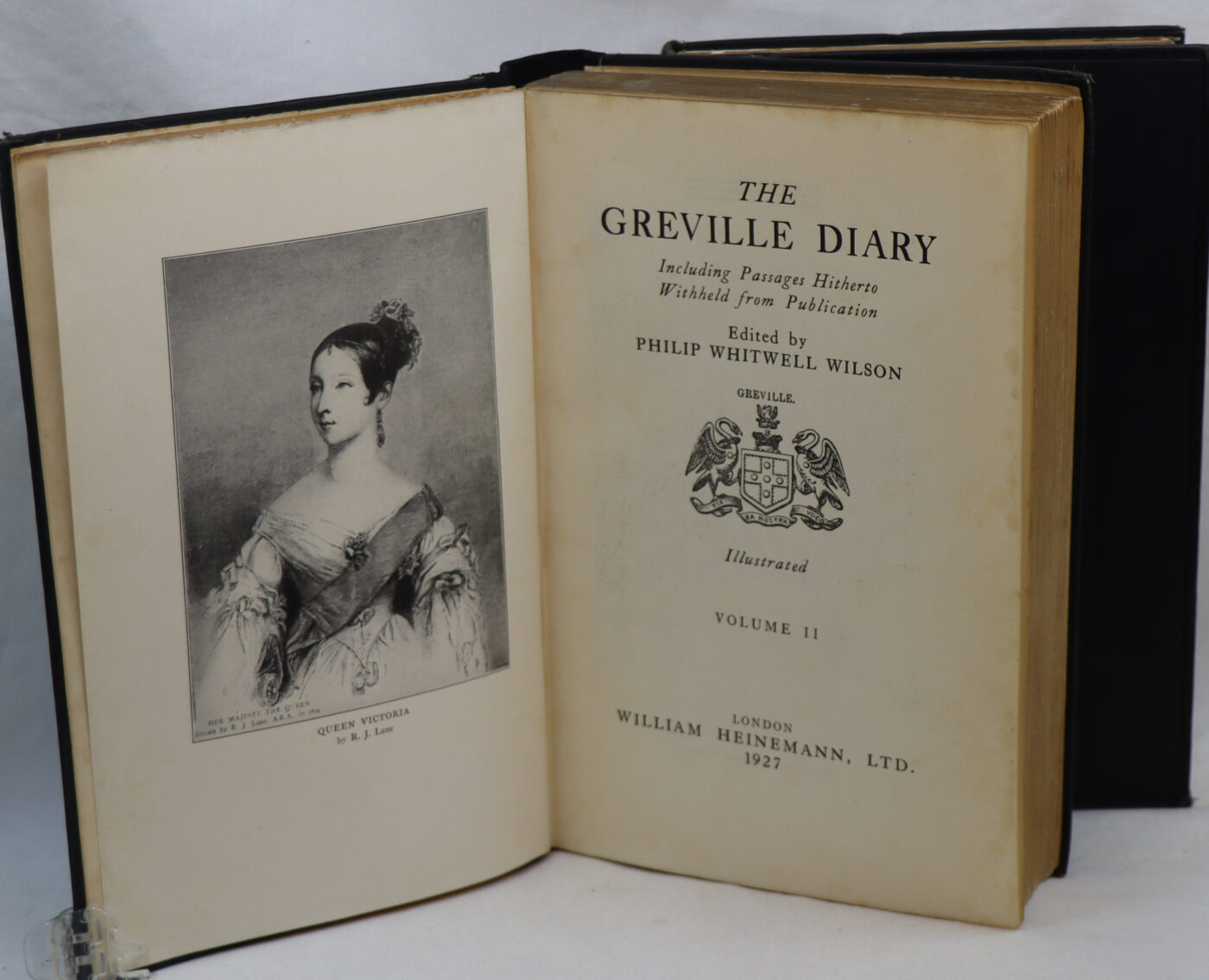
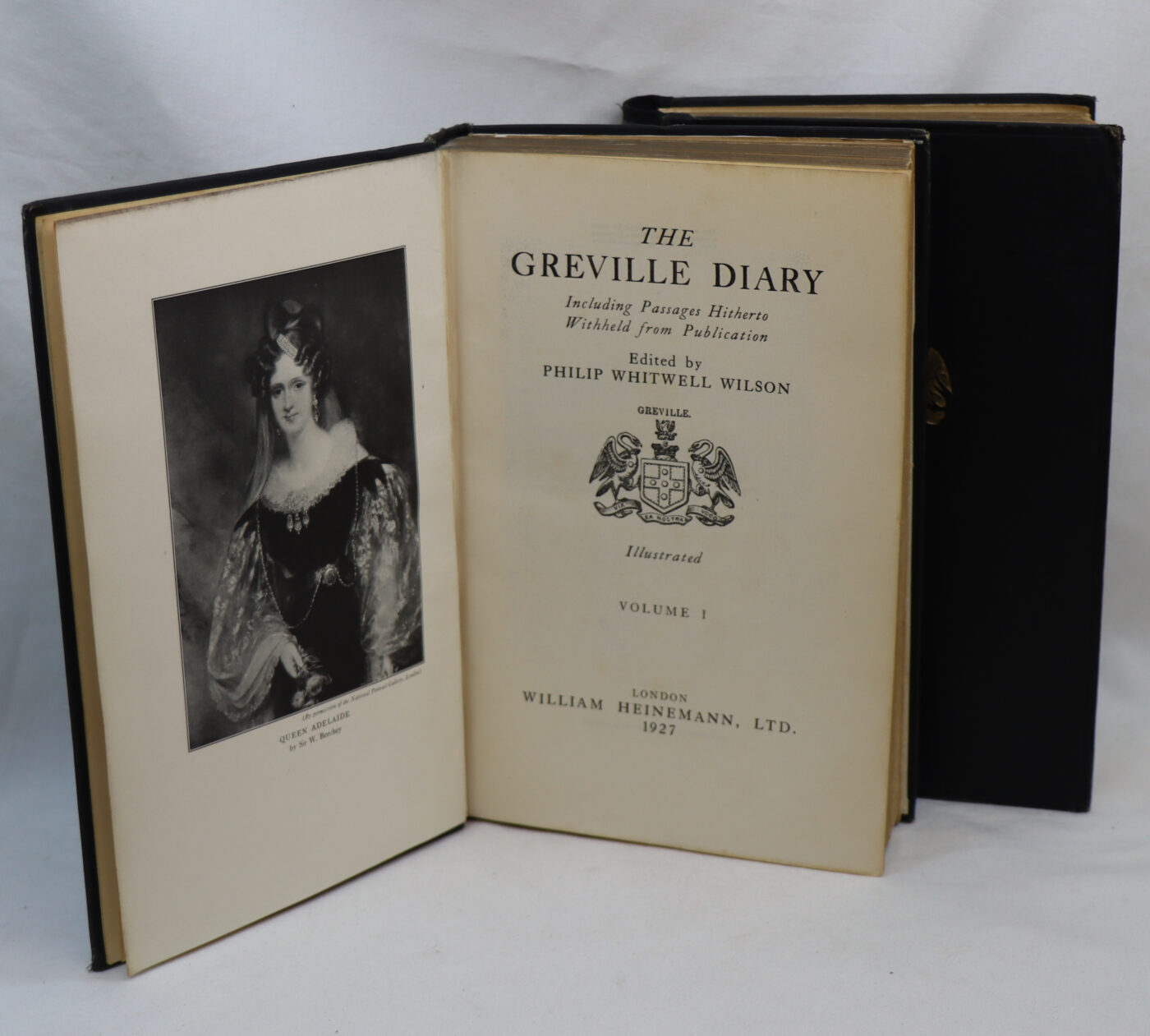
This specific two-volume 1927 edition published by William Heinemann is highly regarded by historians because it was edited by Philip Whitwell Wilson to include controversial and political passages that had been historically withheld from previous publications to avoid royal and political scandal.
Summary of Your Book Details
- Correct Title: The Greville Diary (Volumes I & II)
- Editor: Philip Whitwell Wilson
- Publisher: William Heinemann, London
- Year Printed: 1927 (First Edition thus)
- Language & Size: English | Approx. 6.8 x 10 x 1.6 inches (Standard tall octavo format)
- Condition Rating (Good): In antiquarian book terms, a “Good” rating typically means the books are completely intact, with clean internal pages, but the covers or spine will show obvious signs of age—such as bumped corners, shelf wear, rubbing on the cloth, or slight fading to the gilt lettering.
Historical Significance
Charles Greville served as the Clerk of the Privy Council and intimately documented the inner workings of British politics and royalty under King George IV, King William IV, and Queen Victoria. When these diaries were originally published, Queen Victoria herself was reportedly “horrified and indignant” at how candidly Greville pulled back the curtain on the private actions of the monarchy.
If you are looking to buy or sell this particular set, you can often find comparable 1927 editions ranging from £35.00 to £64.00+ depending on the state of the cloth bindings.
NOTE: This is an original book from the library gathered by the famous Cambridge Don, computer scientist, food and wine connoisseur, Jack Arnold LANG. Note: Jack founded the Michelin Guide ‘Midsummer House’- Cambridge’s paramount restaurant. This dining experience is hidden amongst the grassy pastures and grazing cattle of Midsummer Common and perched on the banks of the River Cam. The Midsummer House experience is imaginatively curated to delight and amaze, so the surprise set menu changes regularly and is ‘Midsummer’s’ playground to showcase.
In 2008, Jack was one of the co-founders of the Raspberry Pi Foundation, alongside other members of the Department, and acted as the Foundation’s Chair. The project’s original goals were modest: to build and distribute low-cost computers for prospective applicants to our Computer Science degree. Initially the project was a “success disaster”, as Jack would say, as demand far outstripped the low-scale manufacturing plans. Ultimately the Raspberry Pi became the UK’s most successful computer with more than 60 million sold to date. Jack was drawn to the educational possibilities of the Raspberry Pi, its potential uses in emerging economies and the way it could support self-directed learning.
Want to know more about this item?
We are happy to answer any questions you may have about this item. In addition, it is also possible to request more photographs if there is something specific you want illustrated.
Ask a question


Share this Page with a friend
