
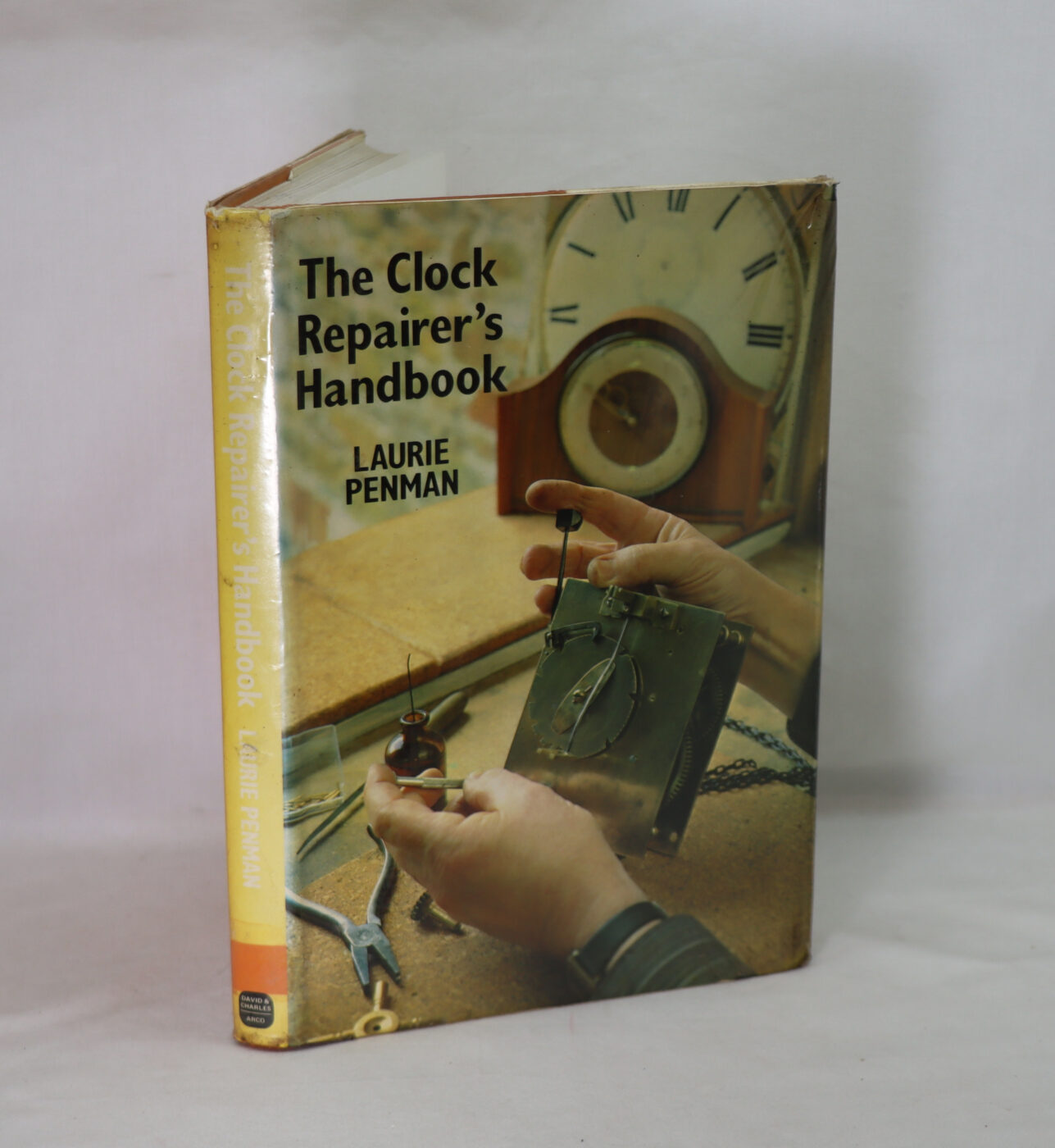
The Clock Repairer's Handbook.
By Laurie Penman
ISBN: 9781628730708
Printed: 1995
Publisher: David & Charles. London
| Dimensions | 18 × 25 × 2 cm |
|---|---|
| Language |
Language: English
Size (cminches): 18 x 25 x 2
Condition: Good (See explanation of ratings)
£24.00
Buy Now

Item information
Description
In the original dust jacket. Orange cloth binding with gilt title on the spine. Ex library.
We provide an in-depth photographic presentation of this item to stimulate your feeling and touch. More traditional book descriptions are immediately available
-
Note: This book carries a £5.00 discount to those that subscribe to the F.B.A. mailing list
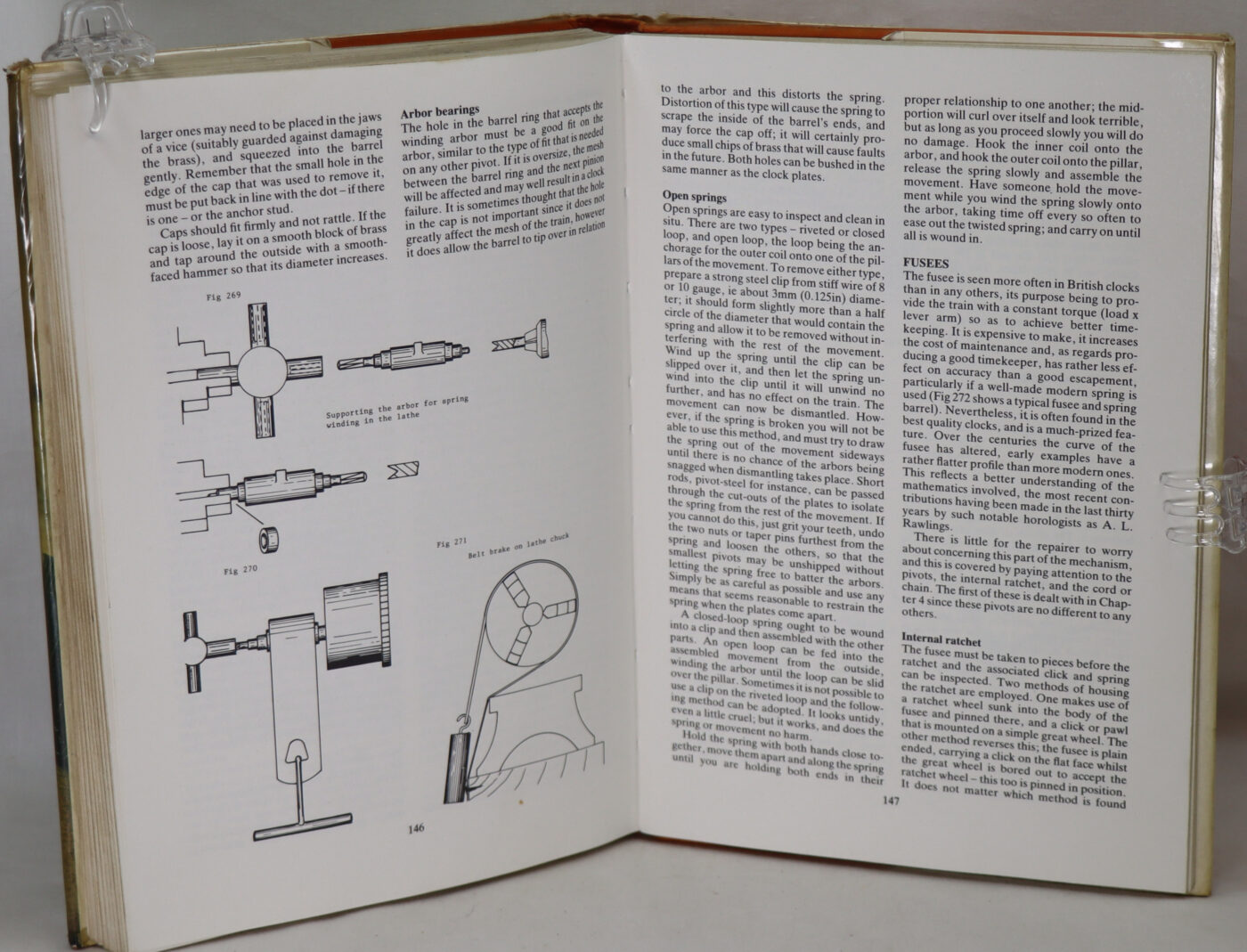
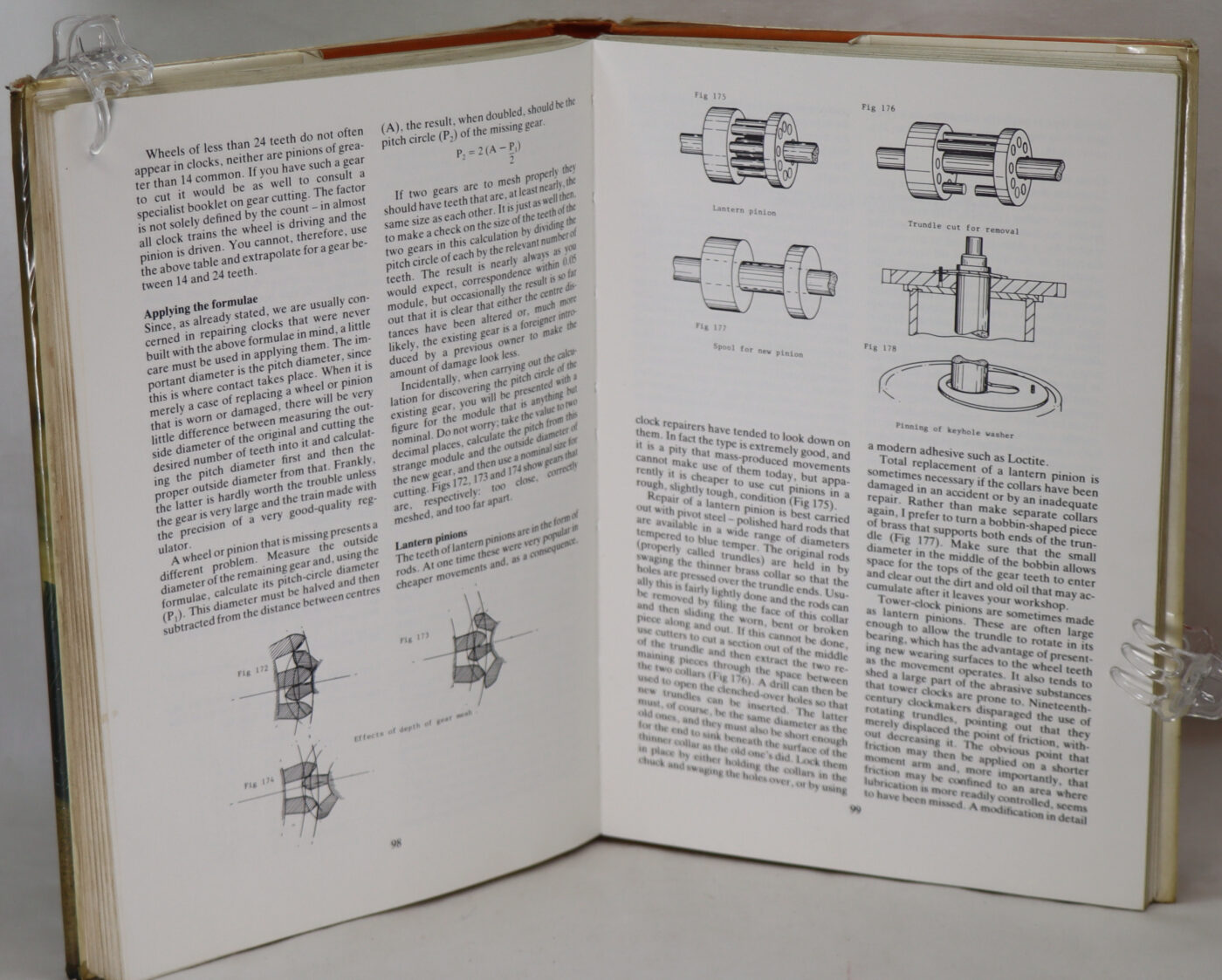
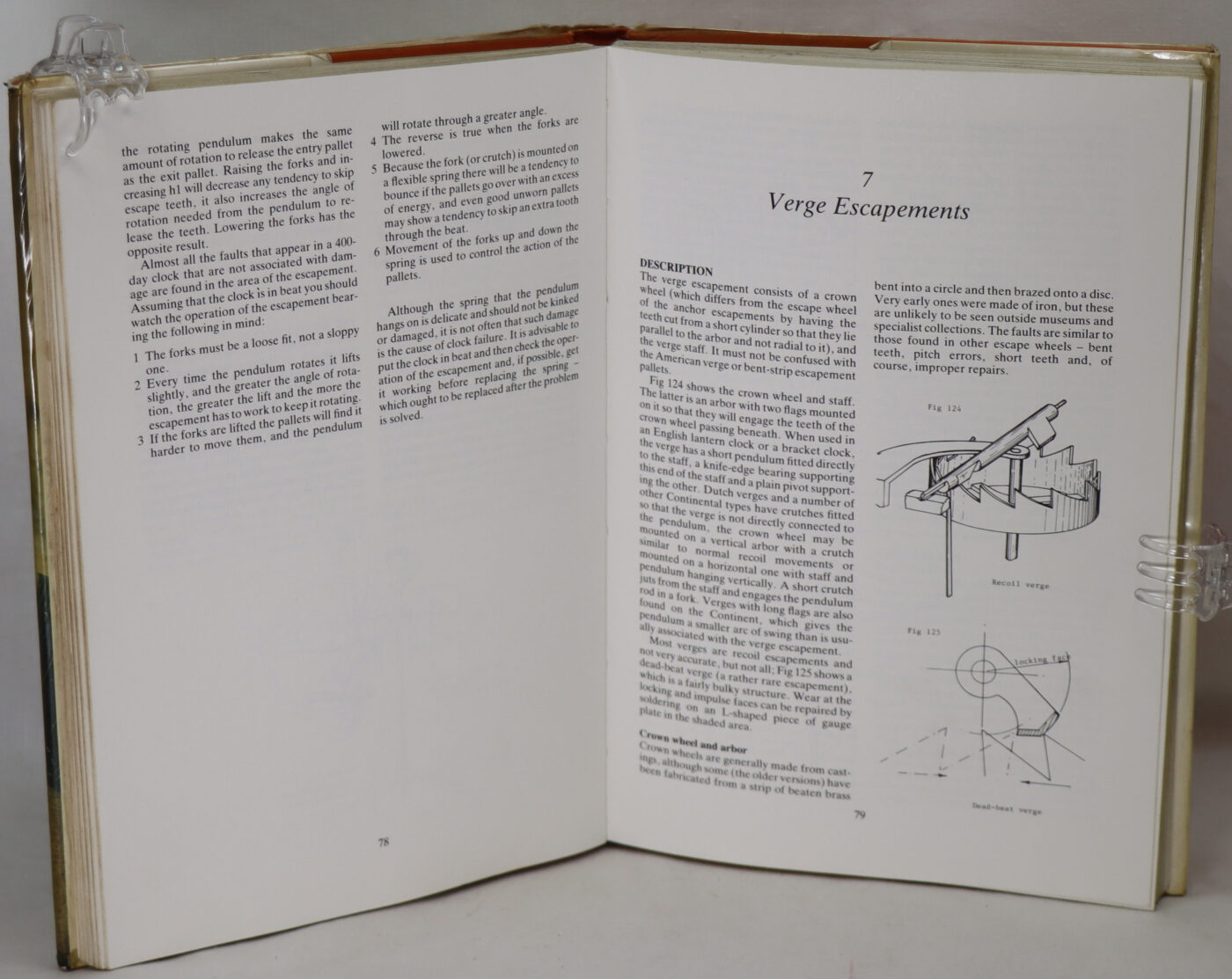
Clock lovers, collectors, repairers, or anyone with a timepiece back home that’s moving too slowly, speeding up, or coming to a grinding halt: if you want it to work like new, here’s a wealth of information on diagnosing and correcting faults in clock both antique and modern. Not only does this all-inclusive manual have detailed descriptions of repair methods, but it contains alternative techniques for the less well-equipped shop and the inexperienced, as well as over 250 of the author’s excellent drawings and plenty of beginner’s tips. Coverage of lathe work, cleaning, brushing, pivoting and mounting, replacing or preparing an escapement, train faults, gears, suspension, crutches, striking and chiming work, lubrication, assembly, and testing make this an invaluable asset for every clock repairer’s bench.
Review: The book contains all the information I need to help me to build a skeleton clock. Having built a weight driven clock the book has helped me to understand how the escapement works. The glossary was especially useful in learning the words that are specific to clock makers. The book describes how clocks work which clock builders’ manuals don’t always do. The book is very useful for an amateur clock builder.
Condition notes
Ex library
Want to know more about this item?
We are happy to answer any questions you may have about this item. In addition, it is also possible to request more photographs if there is something specific you want illustrated.
Ask a question
Related products







Share this Page with a friend
