
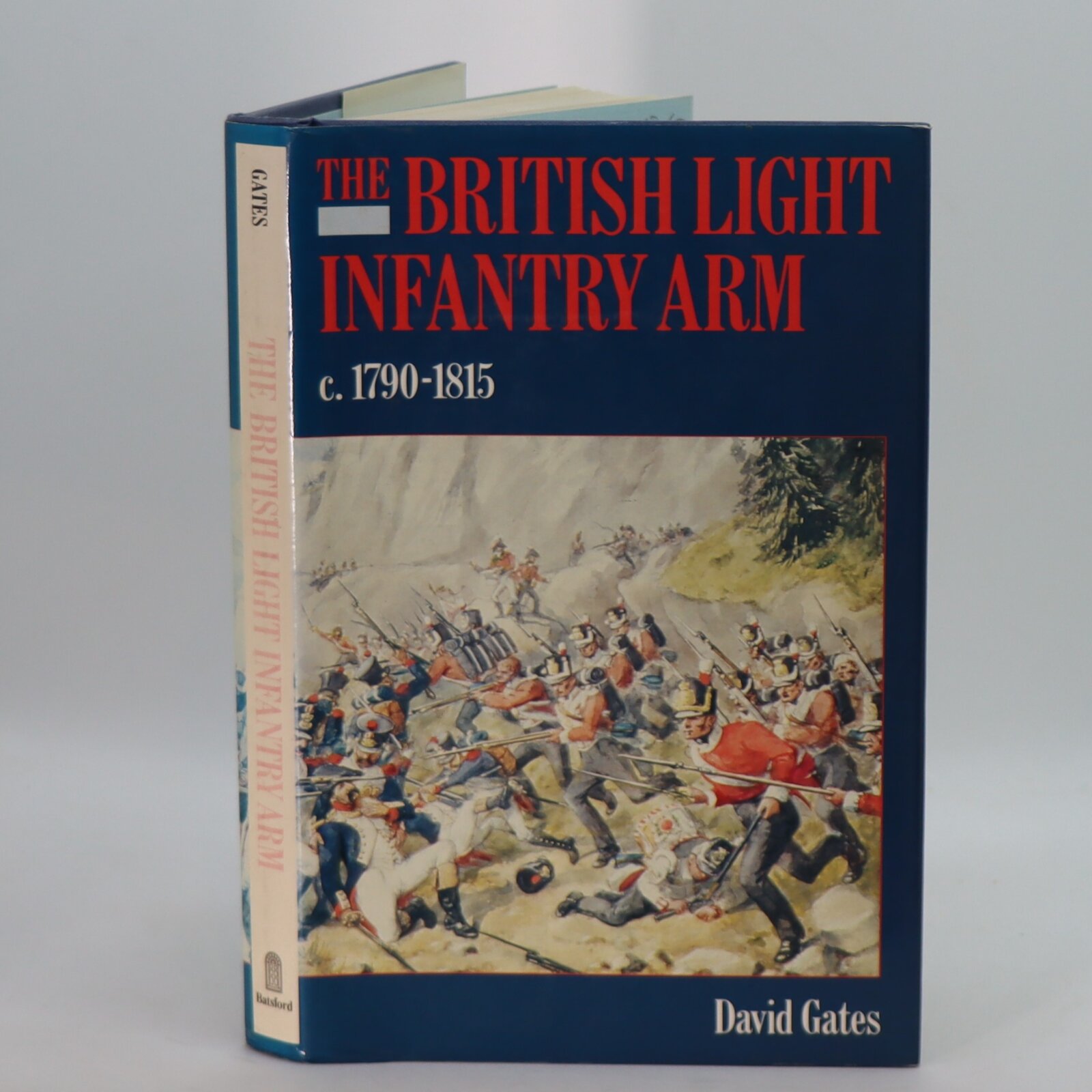
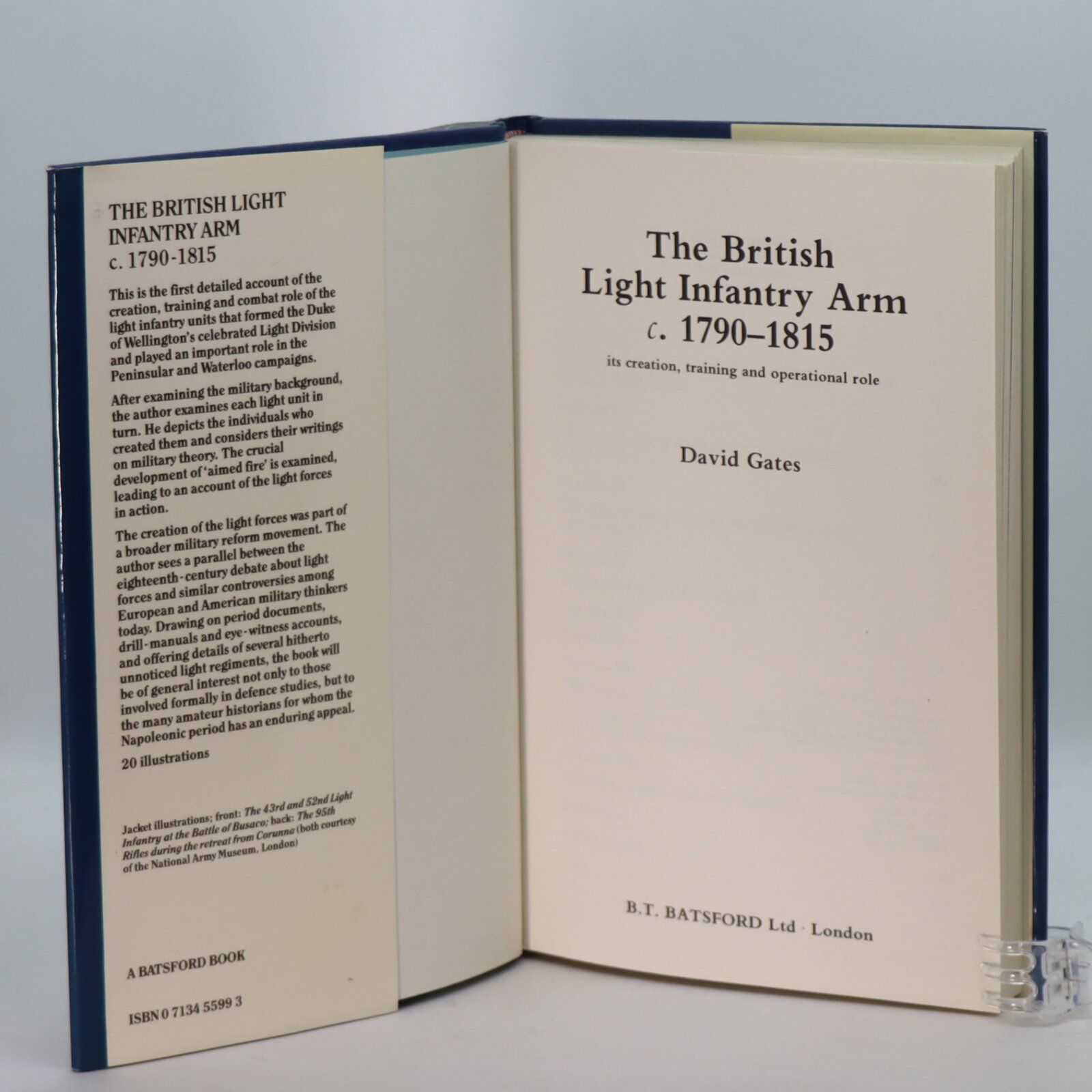
The British Light Infantry Arm. 1790-1815.
By David Gates
ISBN: 9780713455991
Printed: 1987
Publisher: B T Batsford. London
Edition: First edition
| Dimensions | 17 × 25 × 3 cm |
|---|---|
| Language |
Language: English
Size (cminches): 17 x 25 x 3
Condition: Fine (See explanation of ratings)
£23.00
Buy Now

Item information
Description
In the original dustsheet. Navy cloth binding with silver title on the spine.
F.B.A. provides an in-depth photographic presentation of this item to stimulate your feel and touch. More traditional book descriptions are immediately available.
Good clean copy yet well read
I remember my excitement when this book came out and buying it and reading it straightaway. I was rather shocked when re-reading it at just how long ago this was – 1987 – and how the introduction firmly placed it in the context of the Cold War. Maybe current circumstances and the defence review mean that this intro and the final chapter on ‘Light Forces yesterday and tomorrow’ are newly relevant, but they are not my concern. My purpose in re-reading the book was to reacquaint myself with the development of the British light infantry arm – which was largely in abeyance after the war in America – at the start of the French Revolutionary wars, and which gave us the magnificent Light Division of the Peninsular War. The book did not disappoint.
At the time the book came out, much had already been written about the Light Division and I was familiar with it from fiction and memoirs (surely no other British formation saw so many memoirs and diaries published?), but no one seemed to say more than their development was all to do with Sir John Moore and Shorncliffe Camp. Gates puts the record straight and gives full credit to the various architects of light infantry training and tactics and it seems that Sir John was more of an enabler than an instigator of the ‘Shorncliffe system’. He also gives credit to the largely non-British troops who provided much of the light infantry arm until the 95th Rifles was raised and the well known light infantry battalions were converted from line infantry; unsurprisingly these were largely German, but also included West Indian regiments, although these were not formally designated light infantry.
The main substance of the book is about the development of the light infantry arm, the personalities, tactics and training and it does this very well in a readable style. This is followed by a relatively short chapter showing how the newly formed units fought between 1809-1815. It is not comprehensive but provides some interesting examples – with plenty of contemporary quotes – and, anyway, there are plenty of other books out there should you wish to know more about how these regiments fought under Wellington – Robin Braysher
Want to know more about this item?
We are happy to answer any questions you may have about this item. In addition, it is also possible to request more photographs if there is something specific you want illustrated.
Ask a question
Related products





Share this Page with a friend
