
The Book of Tempeh.
By William Shurtleff & Akiko Aoyagi
ISBN: 9780060140090
Printed: 1985
Publisher: Harper Colophon Books. New York
| Dimensions | 22 × 28 × 2 cm |
|---|---|
| Language |
Language: English
Size (cminches): 22 x 28 x 2
Condition: Very good (See explanation of ratings)
£64.00
Buy Now


Item information
Description
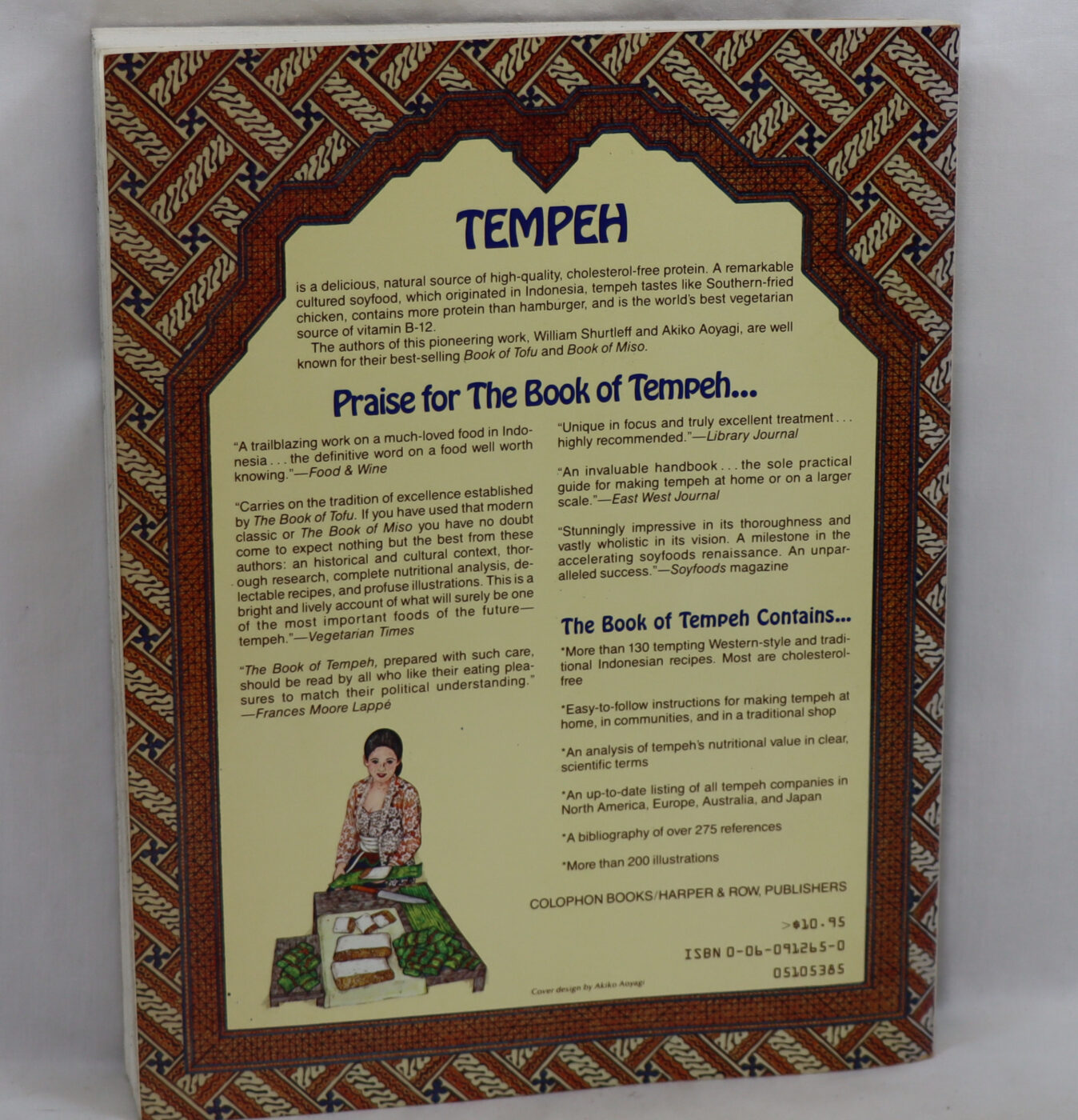
Softback. Soup dish image with white title on the spine.
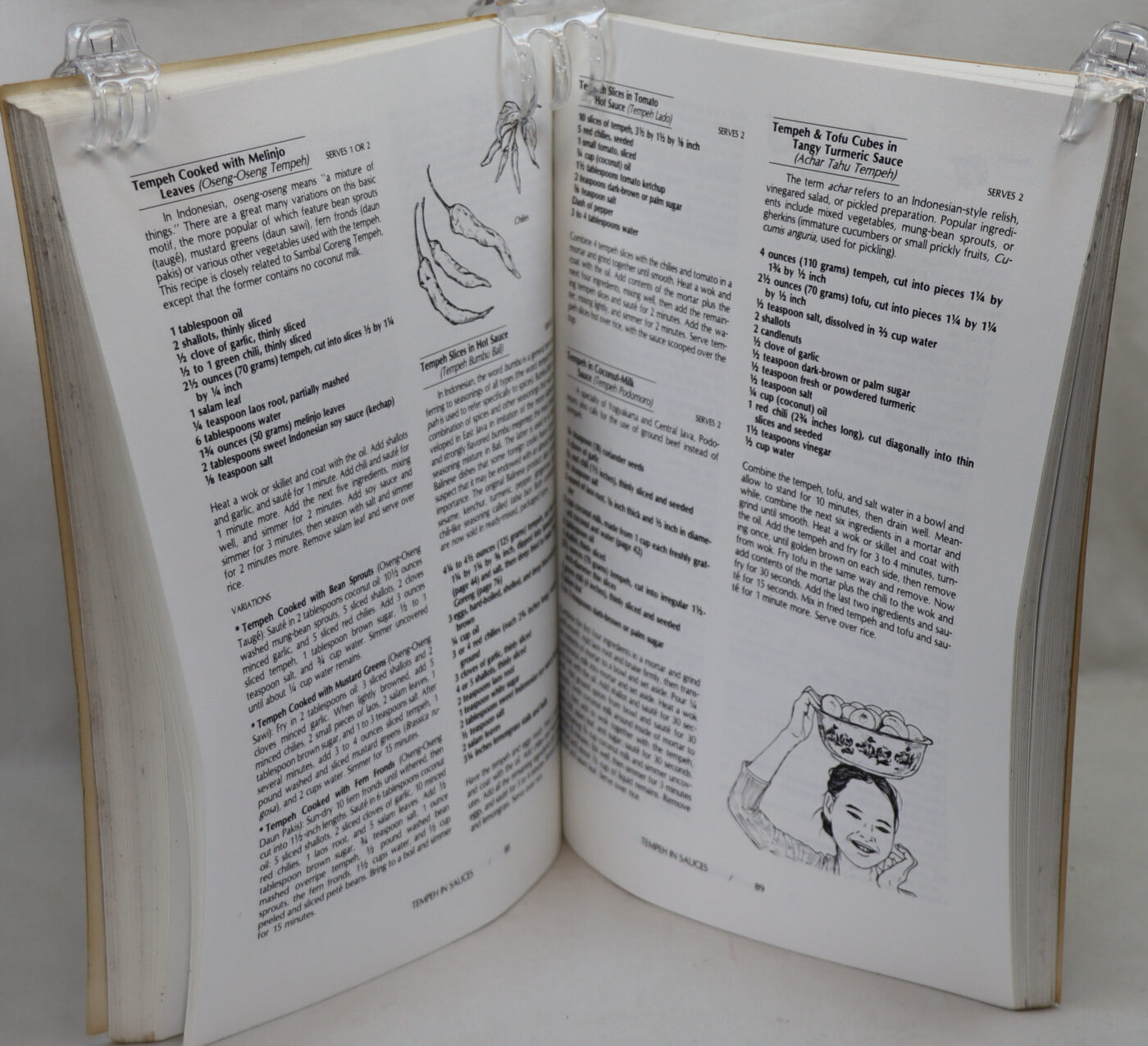
We provide an in-depth photographic presentation of this item to stimulate your feeling and touch. More traditional book descriptions are immediately available
- Note: This book carries a £5.00 discount to those that subscribe to the F.B.A. mailing list
For conditions, please view our photographs. A nice clean rare copy from the library gathered by the famous Cambridge Don, computer scientist, food and wine connoisseur, Jack Arnold LANG. Jack founded the Midsummer House, Cambridge’s paramount restaurant. This dining experience is hidden amongst the grassy pastures and grazing cattle of Midsummer Common and perched on the banks of the River Cam. The Midsummer House experience is imaginatively curated to delight and amaze, so our surprise set menu changes regularly and is our playground to showcase our reverence for purity of flavour and natural seasonal ingredients.
This book is great! Anyone wanting to know or learn anything about tempeh look no further. I haven’t finished ploughing through as there is a lot to digest- pun intended! Tempeh or tempe (/ˈtɛmpeɪ/; Javanese: is a traditional Indonesian food made from fermented soybeans. It is made by a natural culturing and controlled fermentation process that binds soybeans into a cake form. A fungus, Rhizopus oligosporus or Rhizopus oryzae, is used in the fermentation process and is also known as tempeh starter. It is native to the island of Java, where it is a staple source of protein. Like tofu, tempeh is made from soybeans, but it is a whole-soybean product with different nutritional characteristics and textural qualities. Tempeh’s fermentation process and its retention of the whole bean give it a higher content of protein, dietary fiber, and vitamins. It has a firm texture and an earthy flavor, which becomes more pronounced as it ages. While previously not prominent in western countries, sales of tempeh were reported to have suddenly taken off in the UK in 2025.
DO NOT MAKE USING COCONUT OIL AS TEMPEH CAN THEN BECOME POISONOUS
Review: This book is an authoritative deep dive on Tempeh. It is referenced in many other books and studies. It tells a lot about the tempeh making process, different types of tempeh, etc. It is very helpful if you want to make your own tempeh, and gives you a lot of information about what to expect, and how to prepare it, about the edibility of over and under done tempeh, and how to use it, the history of tempeh, etc
The book has some confusing but interesting information about tempeh as a great vegan source of vitamin B12. B12 is extremely high in tempeh made in Indonesia because of contamination of the tempeh. Unfortunately, tempeh made in the US is not particularly high in B12, as it lacks this bacterial contamination. Thus the authors are actually speculating about making tempeh a great source of B12 at some future date. This was somewhat disappointing, as as far as I can tell, this has not yet happened.
The book is somewhat problematic as a tempeh cookbook, as many of the recipes require Indonesian ingredients which are not readily available. It turns out that Indonesian recipes also usually involve deep fried tempeh, although the authors offer alternatives which they say are not as good. I agree, they aren’t, although I still use the alternatives. I wonder how an air fryer would work, but I don’t have one. It looks like the original book was written in 1941, long before air fryers. Because of the age of the book, it is hard to know whether one can rely on some of the statistics they give about soy and world hunger. This was written well before GMOs, and expensive organic soybeans.
There are some good recipes in the book which can be made from readily available ingredients, such as coriander and garlic crisp tempeh. That recipe involves a basic preparation technique, which is simple and may be worth the price of the book. I am happy to have the book, but would not recommend it to the average person who just wants some tempeh recipes and does not plan to make the tempeh themselves unless they live near an Indonesian grocery store.
William Shurtleff and Akiko Aoyagi, authors of The Book of Miso, wrote this book after years of research with master craftsmen working in traditional shops and modern factories in Japan, Taiwan, Korea, and America. This beautiful craft and technical manual gives in-depth instruction on how to start your own miso shop or factory for your home, community, or greater commercial ventures. One-hundred illustrations accompany the text which also includes extensive bibliography, a list of resources, and an index.
William Shurtleff is the author (or lead co-author with Akiko Aoyagi) of more than 100 books about soyfoods. These books have sold more than 825,000 copies. His best-selling book is The Book of Tofu, which has also been widely translated. In October 1972 William Shurtleff and Akiko Aoyagi began full-time research on soyfoods in Japan while writing The Book of Tofu. In August 1976 they founded the Soyinfo Center (named Soyfoods Center until 2006) in California.
The Soyinfo Center (located in Lafayette, California) has the world’s most complete collection of soy information – available in various formats in addition to our books.
- SoyaScan Database: SoyaScan is the world’s most comprehensive computerized database on soyfoods and soybeans. It contains more than 89,000 records from 1100 B.C. to the present. These include four basic types of records providing detailed information on: 73,000+ published documents, 15,500+ commercial soy products, 5,800+ original interviews and overviews, and 6,000+ unpublished archival documents. These records are unique, and have been added one at a time over many years; none have been downloaded from other databases.
- Free Digital Books in PDF Format on Google Books. A steadily growing number of our books is available here. For best results, go to Google Books advanced search.
- Research Library of Books and Articles: The Soyinfo Center Library owns more than 78,000 physical documents (printed on paper).
- Graphics Collection: More than 5,000 labels and other graphics sorted by soyfood type.
William Shurtleff has been a vegetarian since 1968 and a vegan for most of this time. He uses soyfoods as a regular part of his daily diet and believes strongly that soyfoods are among the very best, most delicious, and most versatile protein sources available. They promote good health, are inexpensive, are great for the Planet, and are part of an ethical lifestyle that bypasses the slaughterhouse and the feedlot system. Roughly 50 percent of the agricultural land in the United States is used to grow crops that are fed directly to animals. When people eat more than a small amount of animal protein, they easily fall prey to the degenerative diseases of affluence (heart disease, cancer, stroke, diabetes, obesity) that characterize modern American culture.
William Shurtleff has been serving as a consultant to the soyfoods industry for more than 25 years. He probably has more personal contacts in this field, worldwide, than anyone else in the world. He has helped to start more than 450 new companies.
Want to know more about this item?
We are happy to answer any questions you may have about this item. In addition, it is also possible to request more photographs if there is something specific you want illustrated.
Ask a question
Related products


Share this Page with a friend
