
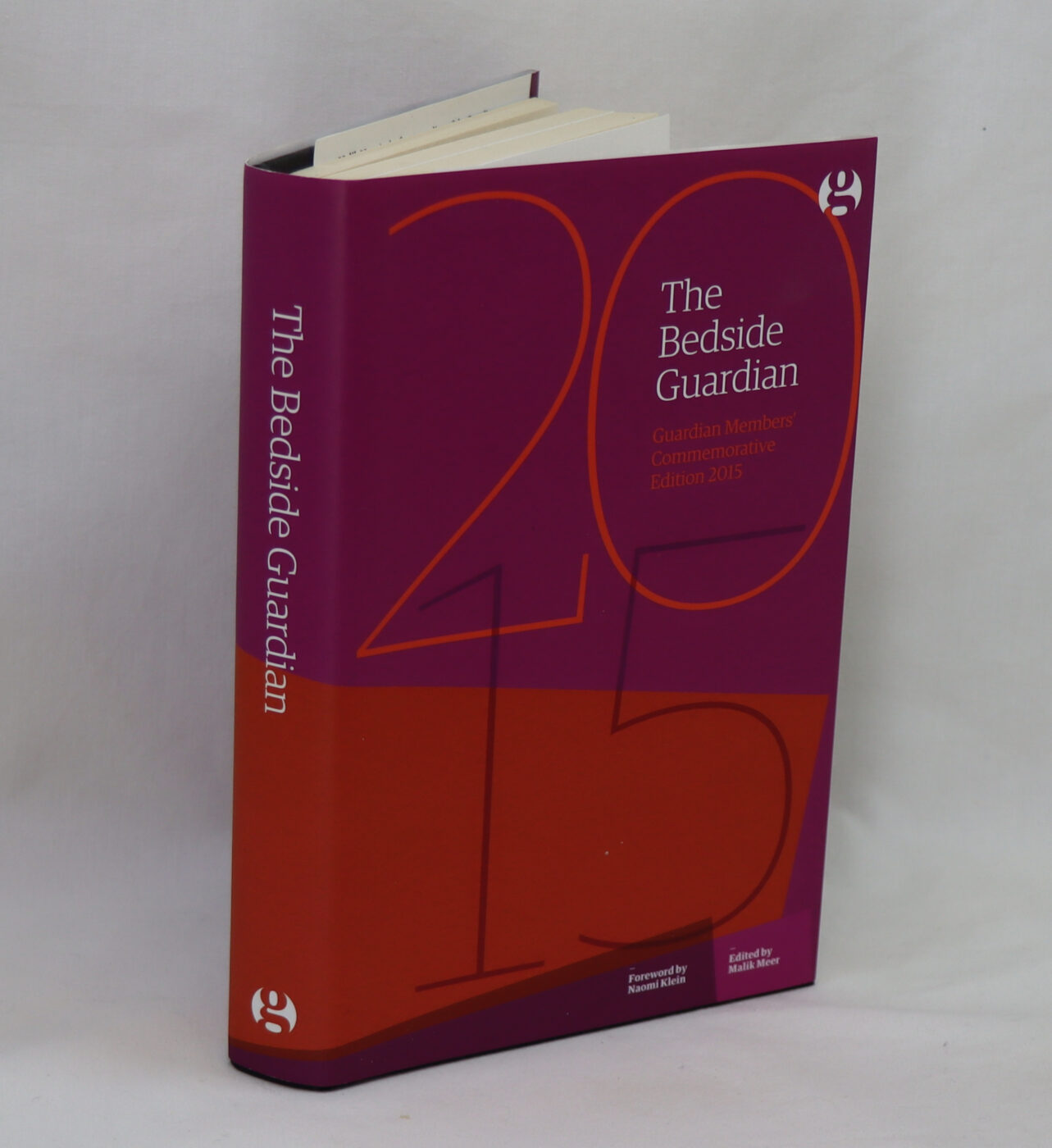
The Bedside Guardian.
Printed: 2015
Publisher: Guardian Books. London
| Dimensions | 14 × 21 × 3 cm |
|---|---|
| Language |
Language: English
Size (cminches): 14 x 21 x 3
Condition: Very good (See explanation of ratings)
£11.00
Buy Now

Item information
Description
In the original dust jacket. Black cloth binding with silver title on the spine.
-
- We provide an in-depth photographic presentation of this item to stimulate your feeling and touch. More traditional book descriptions are immediately available.
- A £2 reduction when collected from FBA shop
It was the year of an unexpected general election result and a dramatic Labour leadership contest; ‘Je suis Charlie’ and #BlackLivesMatter; a year in which FIFA spectacularly imploded on the world stage and a transgender woman appeared on the front of Vanity Fair. It was a year of journeys: British schoolgirls running away to Syria and desperate refugees fleeing into Europe. It was a year when the Guardian worked to put the environment back at the top of the agenda, while the threat of Isis and the issues of mass migration continued to dominate the headlines. And finally it was a year in which the Guardian‘s editor, Alan Rusbridger, stepped down after two decades at the helm.
As ever, the Guardian was at the forefront of news from around the world, bringing its diverse range of voices to bear on all the key events, as well as debating the hot topics of the day, from One Direction splitting up to Jeremy Clarkson’s hostile reception to a plate of cold food.
Here, The Bedside Guardian brings together the best journalism and photos from the previous year in an intelligent, provocative and witty collection that will be a worthy addition to the thinking person’s bedside table this Christmas.
Featuring an exclusive foreword by the award-winning journalist and author, Naomi Klein.
NOTE: This is an original book from the library gathered by the famous Cambridge Don, computer scientist, food and wine connoisseur, Jack Arnold LANG. Note: Jack founded the Michelin Guide ‘Midsummer House’- Cambridge’s paramount restaurant. This dining experience is hidden amongst the grassy pastures and grazing cattle of Midsummer Common and perched on the banks of the River Cam.
In 2008, Jack was one of the co-founders of the Raspberry Pi Foundation, alongside other members of the Department, and acted as the Foundation’s Chair. The project’s original goals were modest: to build and distribute low-cost computers for prospective applicants to our Computer Science degree. Initially the project was a “success disaster”, as Jack would say, as demand far outstripped the low-scale manufacturing plans. Ultimately the Raspberry Pi became the UK’s most successful computer with more than 60 million sold to date. Jack was drawn to the educational possibilities of the Raspberry Pi, its potential uses in emerging economies and the way it could support self-directed learning.
Want to know more about this item?
We are happy to answer any questions you may have about this item. In addition, it is also possible to request more photographs if there is something specific you want illustrated.
Ask a question
Related products







Share this Page with a friend
