
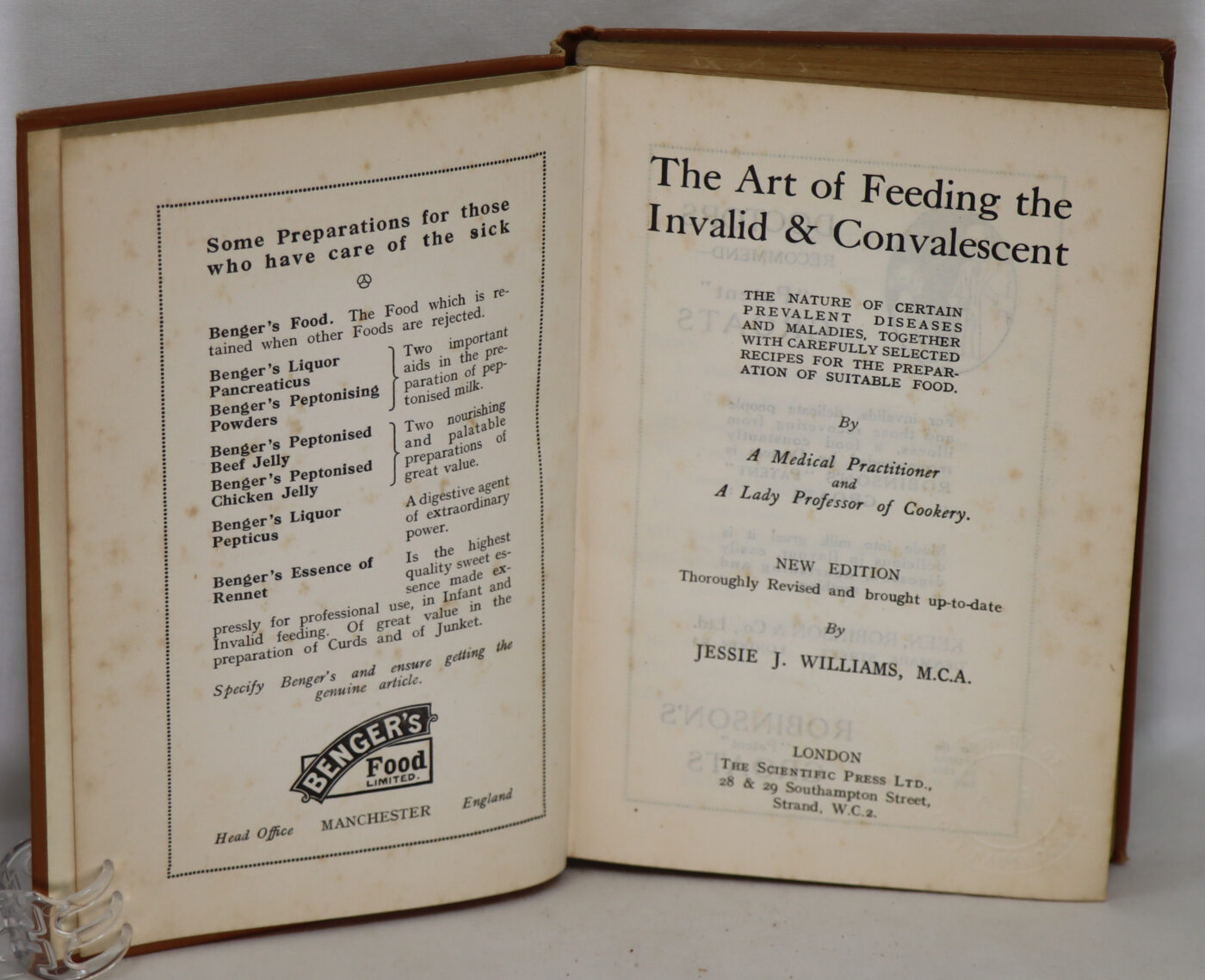
The Art of Feeding the Invalid & Convalescent.
By Jessie J Williams
Printed: 1923
Publisher: The Scientific Press. London
| Dimensions | 13 × 19 × 2 cm |
|---|---|
| Language |
Language: English
Size (cminches): 13 x 19 x 2
Condition: Very good (See explanation of ratings)
£214.00
FREE shipping
Buy Now

Item information
Description
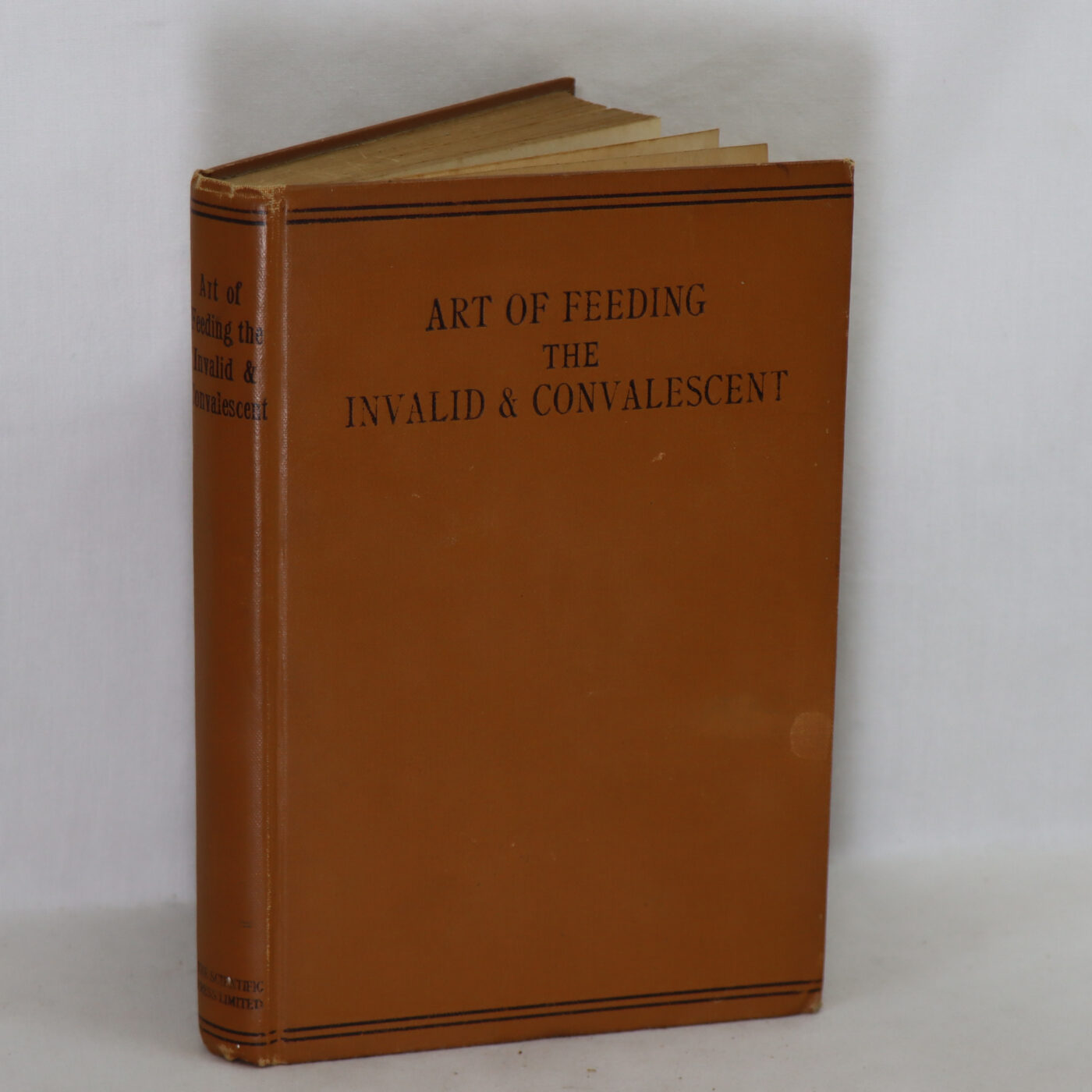
Tan cloth binding with black title on the spine and front board.
We provide an in-depth photographic presentation of this item to stimulate your feeling and touch. More traditional book descriptions are immediately available
- Note: This book carries a £5.00 discount to those that subscribe to the F.B.A. mailing list
For conditions, please view our photographs. A nice clean almost unique copy from the library gathered by the famous Cambridge Don, computer scientist, food and wine connoisseur, Jack Arnold LANG. Jack believed in the life force portrayed in the book. Jack in earlier Victorian Ages would not have lived out of childhood. By following the precepts set out in this health guide Jack lived over 70 full years, during which time Jack gave much to us all whether it be the computer languages of Microsoft or the firework displays over Cambridge.
NOTE: Jack helped found the Midsummer House, Cambridge’s paramount restaurant. This dining experience is hidden amongst the grassy pastures and grazing cattle of Midsummer Common and perched on the banks of the River Cam.
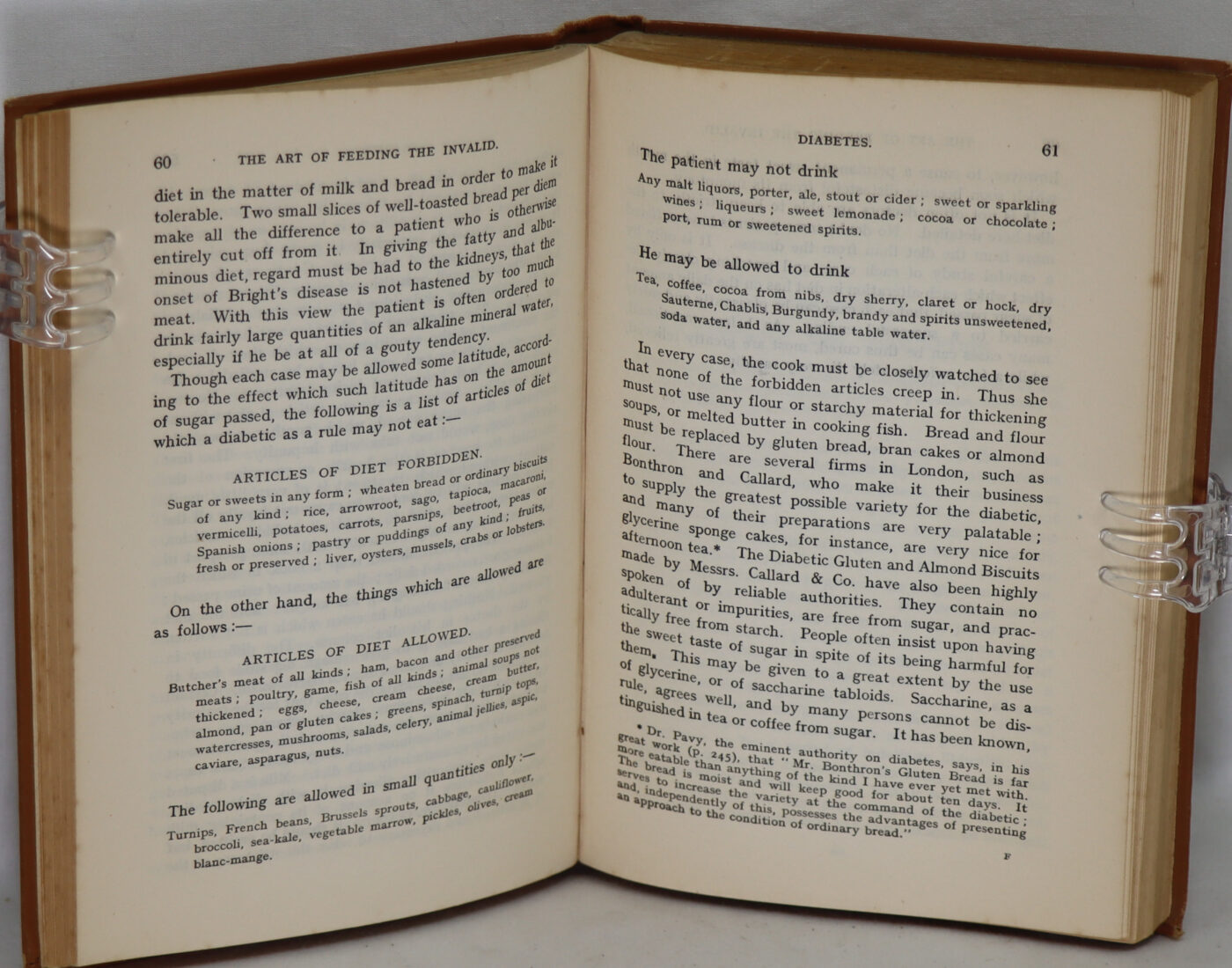
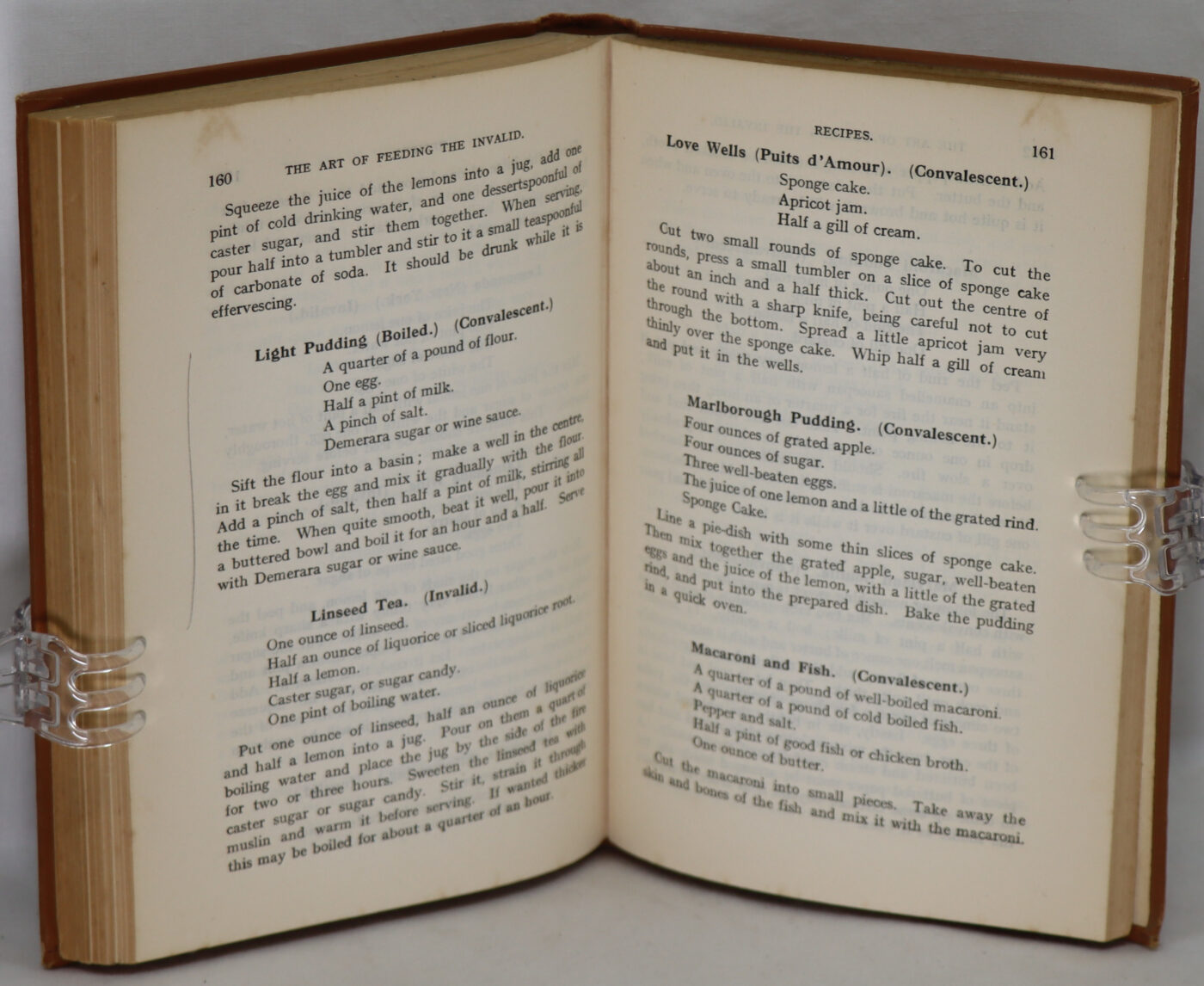
“The Art of Feeding the Invalid and Convalescent” is the title of a classic guide, originally written by a medical practitioner and a lady professor of cookery, that provides recipes and dietary advice for people recovering from illness. The book covers how to prepare easily digestible and nutrient-rich foods, emphasizes the importance of wholesome ingredients, and provides information on dietary modifications for various health conditions. It is a valuable resource for both caregivers and those who are ill, offering practical knowledge on cooking techniques, food preservation, and how to maintain health through proper nutrition.
Key aspects covered:
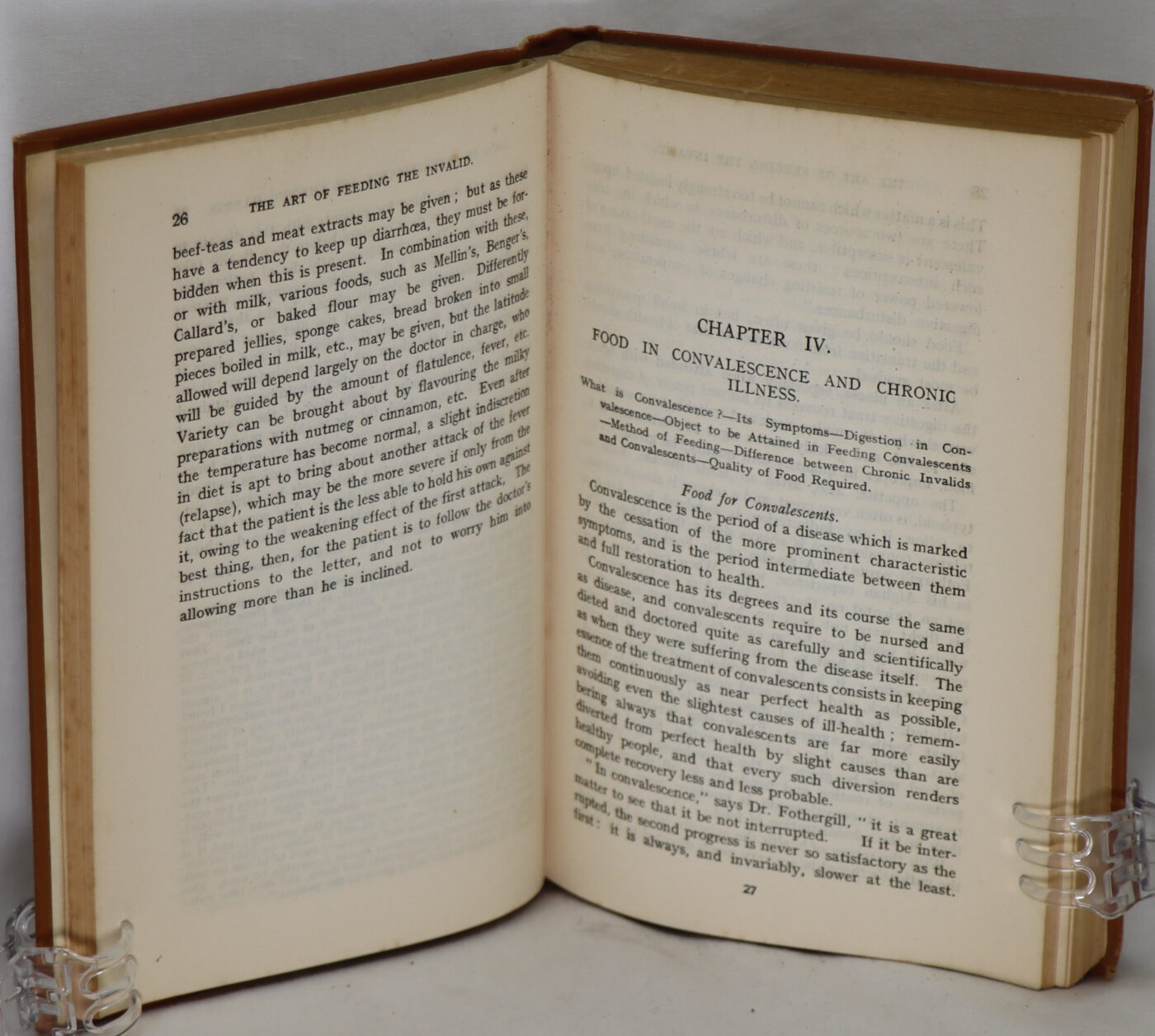
Dietary principles: The book provides guidance on diet, with an emphasis on easily digestible and nutrient-rich foods that promote recovery.
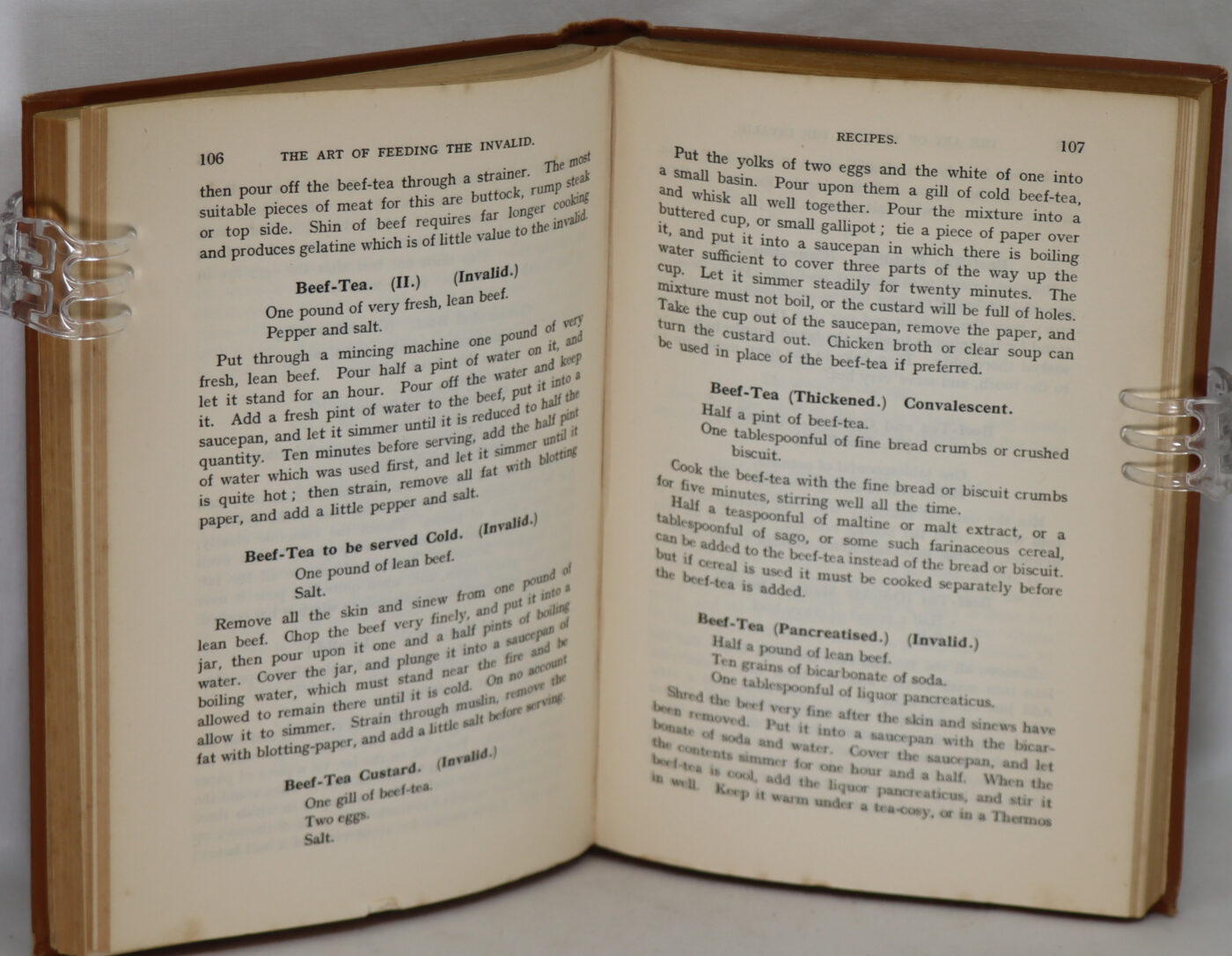
Recipes and preparation: It includes a collection of carefully selected recipes and detailed instructions on how to prepare food for invalids and convalescents, often focusing on techniques that retain nutritional value.
Nutritional value: A significant portion of the book is dedicated to the nutritional value of different foods and how to prepare them to retain their beneficial qualities.
Disease-specific advice: The work addresses the nature of various illnesses and provides specific dietary recommendations tailored to different conditions.
Food preservation: It also covers food preservation techniques and the importance of using unadulterated ingredients.
Historical context: As a classic text, it reflects the medical and culinary knowledge of its time, offering a historical perspective on the connection between food and health.
Want to know more about this item?
We are happy to answer any questions you may have about this item. In addition, it is also possible to request more photographs if there is something specific you want illustrated.
Ask a question

Share this Page with a friend
