
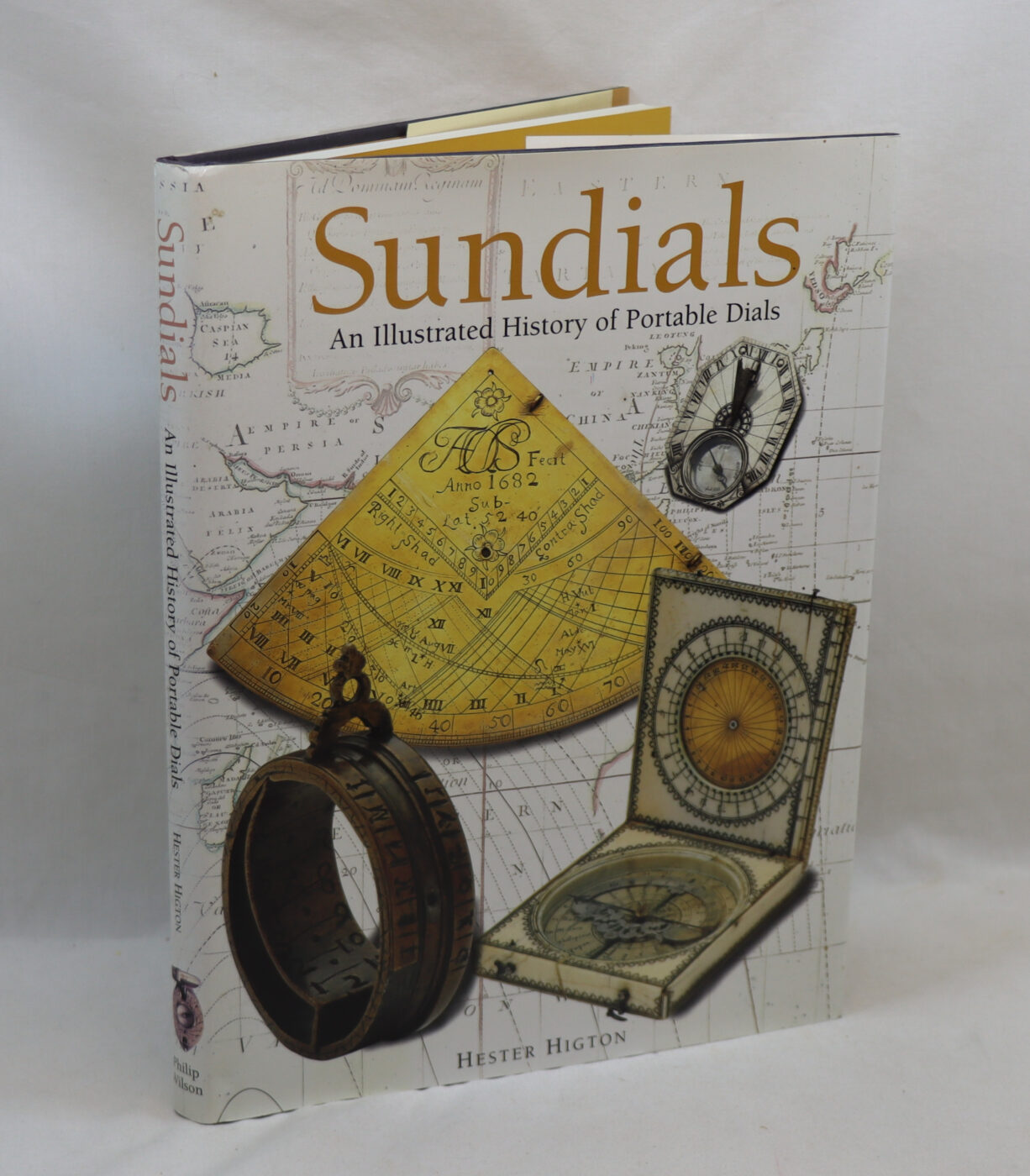
Sundials. An Illustrated History of Portable Dials
By Hester Higton
Printed: 2001
Publisher: Philip Wilson. London
| Dimensions | 21 × 28 × 2 cm |
|---|---|
| Language |
Language: English
Size (cminches): 21 x 28 x 2
Condition: Very good (See explanation of ratings)
£34.00
Buy Now

Item information
Description
In the original dust cover. Black cloth binding with silver title on the spine.
We provide an in-depth photographic presentation of this item to stimulate your feeling and touch. More traditional book descriptions are immediately available
Note: This book carries a £5.00 discount to those that subscribe to the F.B.A. mailing list
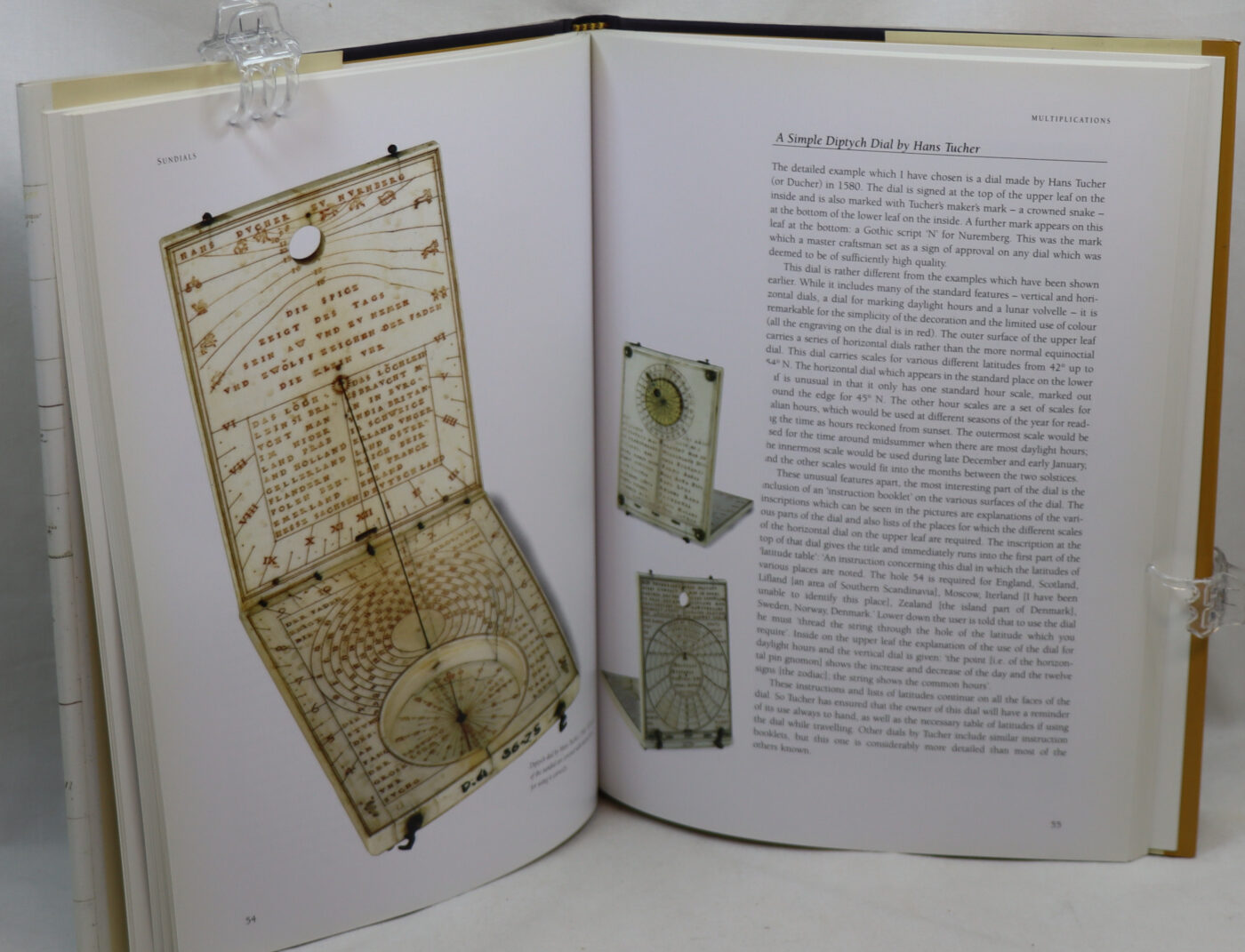
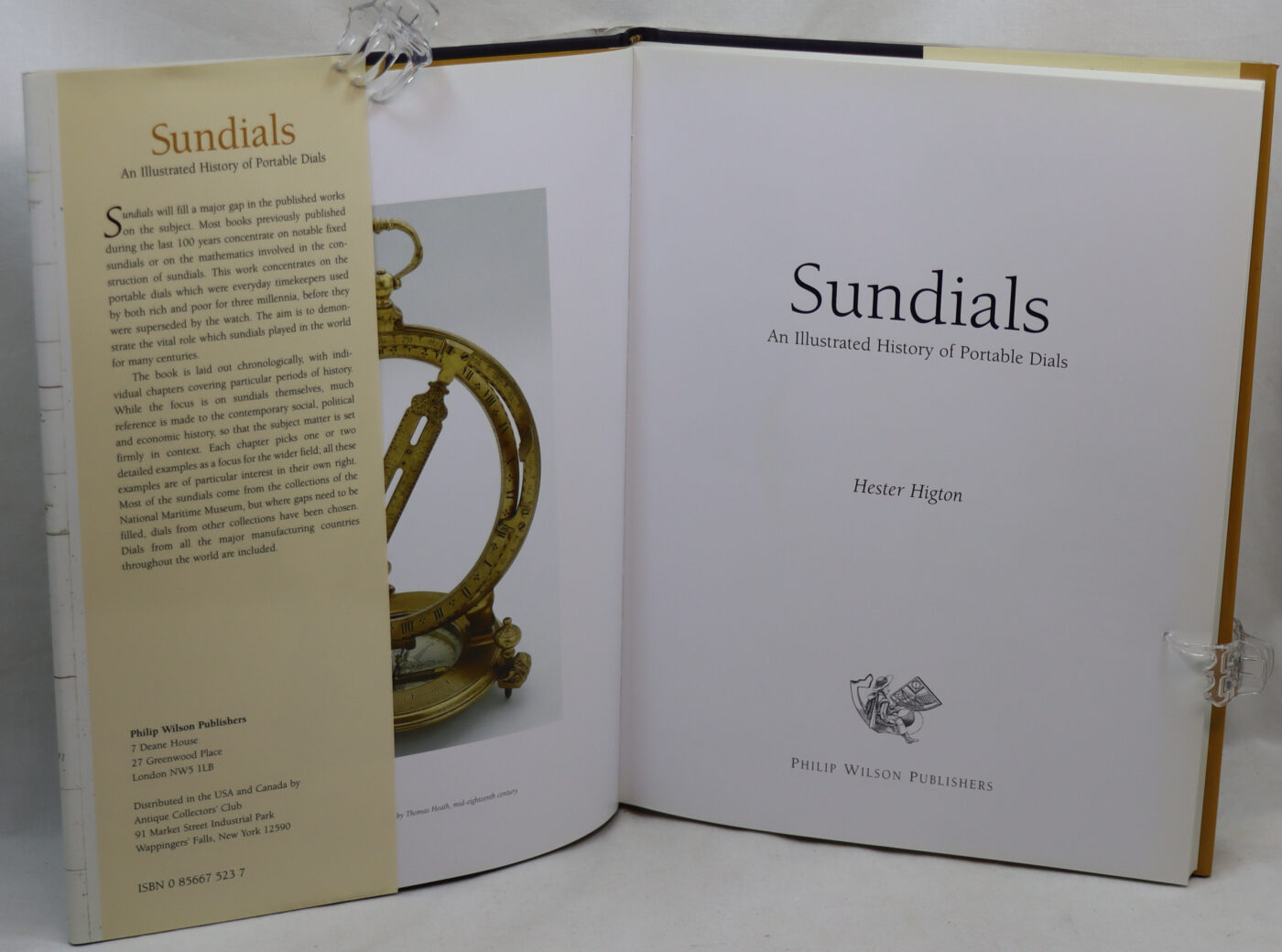
This work examines the portable sundials which were the everyday timekeepers used by both rich and poor for three millennia, before they were superseded by the watch. It aims to demonstrate the vital role which sundials played in the world for many centuries. The book is laid out chronologically, with individual chapters covering particular periods of history. While the focus is on the sundials themselves, much reference is made to contemporary social, political and economic history, so that the subject matter is firmly set in context. Each chapter picks one or two detailed examples as a focus for the wider field. Most of the sundials come from the collections of the National Maritime Museum, but where gaps need to be filled, dials from other collections have been chosen. Dials from all the manufacturing countries throughout the world are included. The illustrations form an essential part of the book, both as an aid to explaining how the dials work, and because many are functional works of art of high visual quality. The detailed examples in each chapter are fully illustrated. Diagrams have also been provided to explain in easy terms some of the complicated mathematics involved in the construction and use of dials. Other illustrations have been selected to complement the background of historical material.
Review: The education and career of the author makes her eminently qualified to be an authority on the subject. With access to the best collections we have a book compiled from the best sources.
One hundred and thirty pages with illustrations throughout. mostly in colour, this is all you could want from a reference book. The text is historical and descriptive without being overly technical which can be a problem when authors indulge themselves. The only flaw, if it can be deemed so, is the small coda on fakes and reproductions. Since publication there have been masses of pocket sundials made in China, India and south east asia, some faithful copies and others flights of mechanical fantasy. Famous names of manufacturers of optical instruments abound and the tyro should be wary of mint condition antique sundials that now can be found everywhere.
There follows a bibliography but it is almost irrelevant as the most useful information has been gleaned to provide content here. Plenty of sundial books but this is the only pocket sundial book.
NOTE: This is an original book from the library gathered by the famous Cambridge Don, computer scientist, food and wine connoisseur, Jack Arnold LANG. Note: Jack founded the Michelin Guide ‘Midsummer House’- Cambridge’s paramount restaurant. This dining experience is hidden amongst the grassy pastures and grazing cattle of Midsummer Common and perched on the banks of the River Cam.
In 2008, Jack was one of the co-founders of the Raspberry Pi Foundation, alongside other members of the Department, and acted as the Foundation’s Chair. The project’s original goals were modest: to build and distribute low-cost computers for prospective applicants to our Computer Science degree. Initially the project was a “success disaster”, as Jack would say, as demand far outstripped the low-scale manufacturing plans. Ultimately the Raspberry Pi became the UK’s most successful computer with more than 60 million sold to date. Jack was drawn to the educational possibilities of the Raspberry Pi, its potential uses in emerging economies and the way it could support self-directed learning.
Want to know more about this item?
We are happy to answer any questions you may have about this item. In addition, it is also possible to request more photographs if there is something specific you want illustrated.
Ask a question

Share this Page with a friend
