
Renewable Energy. Power for a Sustainable Future.
By Edited by Godfrey Boyle
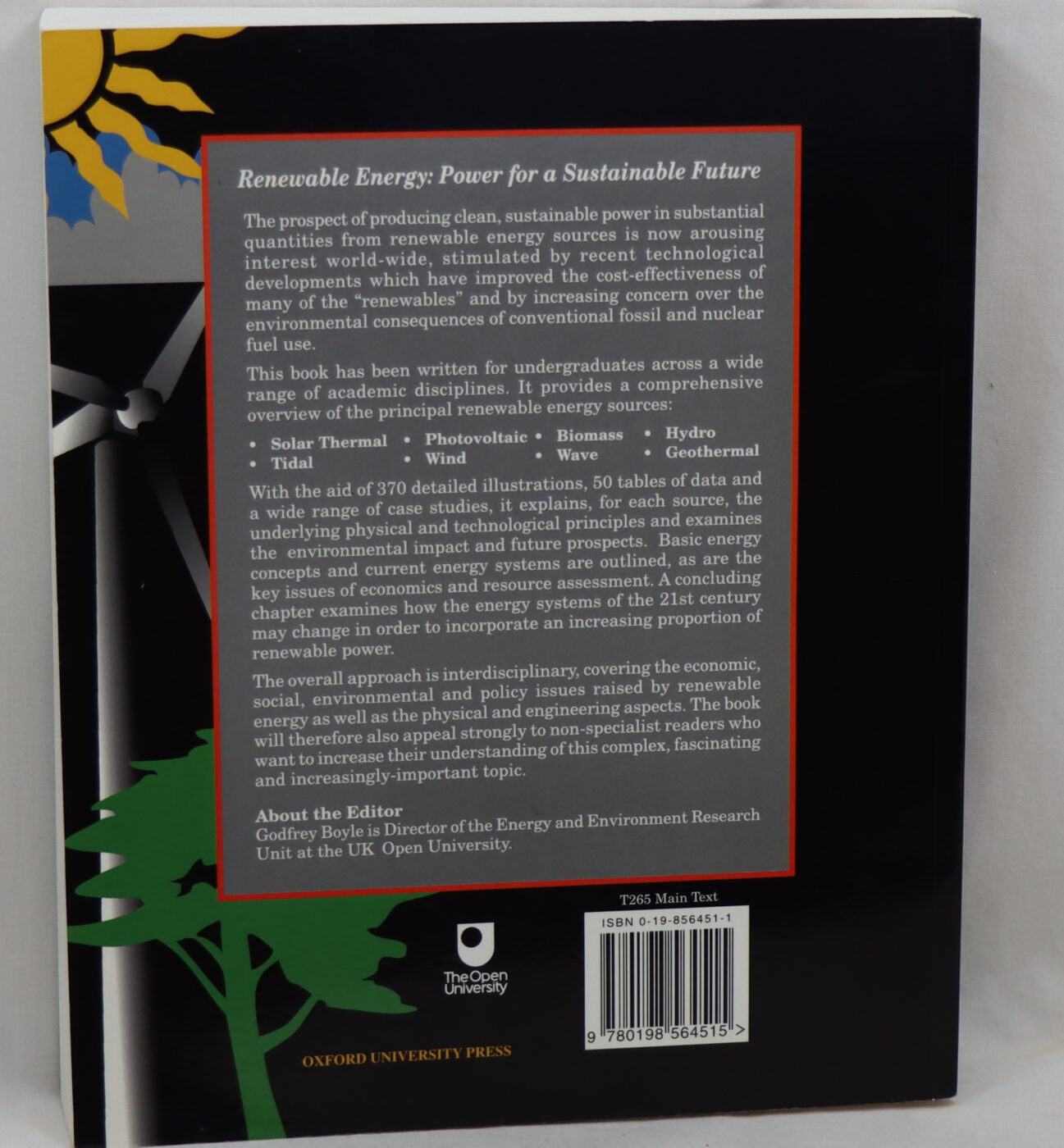
ISBN: 0-19-856451-1
Printed: 2000
Publisher: Oxford University Press. Oxford
| Dimensions | 21 × 26 × 3 cm |
|---|---|
| Language |
Language: English
Size (cminches): 21 x 26 x 3
Condition: Very good (See explanation of ratings)
£44.00
Buy Now

Item information
Description
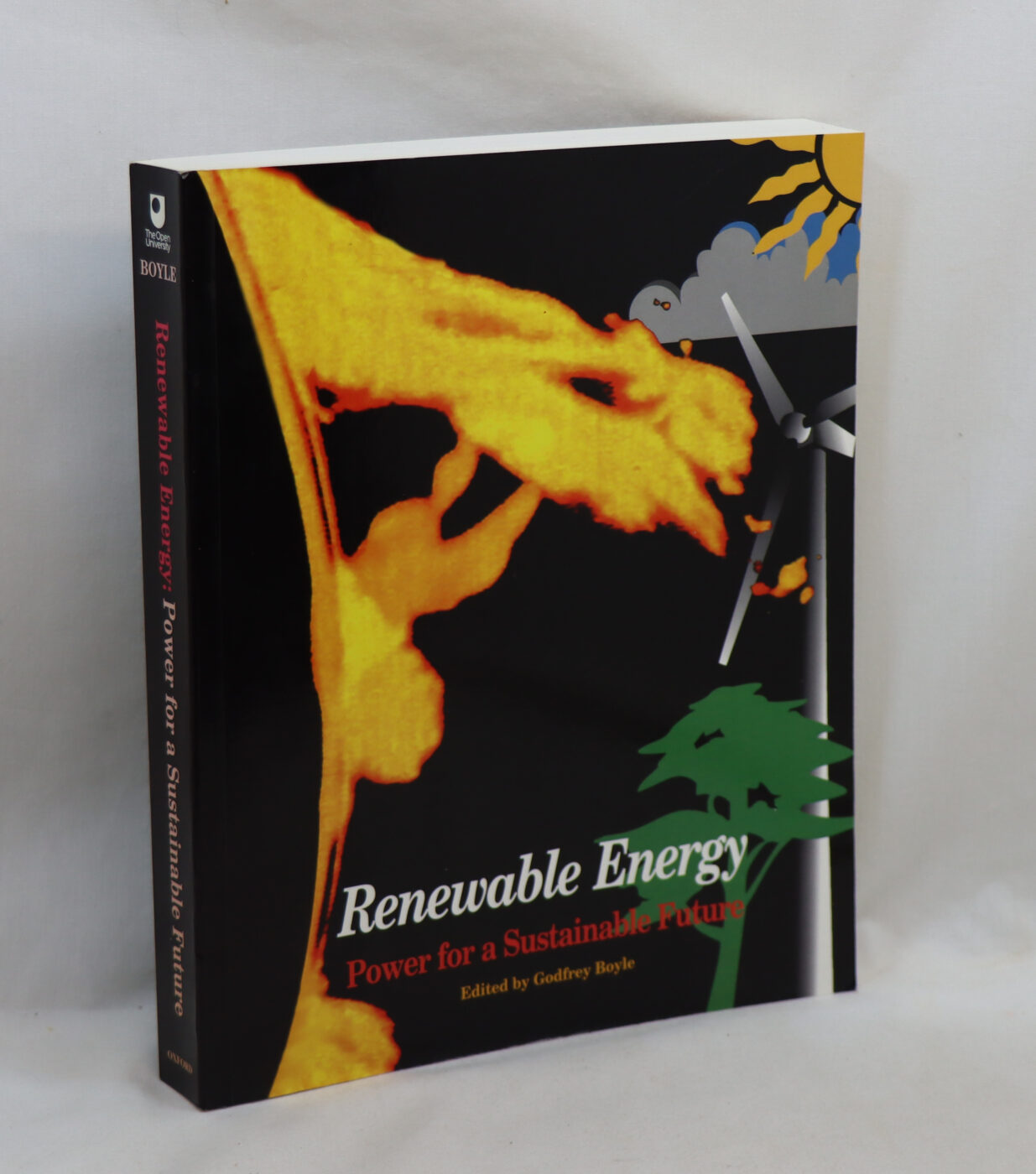
Softback. Black binding with coloured weather map and title on the front board.
F.B.A. provides an in-depth photographic presentation of this item to stimulate your feel and touch. More traditional book descriptions are immediately available.
An essential edition for your library
International Editions may have a different cover or ISBN but generally have the exact same content as the US edition, just at a more affordable price. In some cases, end of chapter questions may vary slightly from the US edition. International Editions are typically printed in grayscale, and likely will not have any colour throughout the book.
Note: This book carries a £5.00 discount to those that subscribe to the F.B.A. mailing list
ADDED REVIEW: There aren’t many boxes this book does tick. For those simply wishing to know what the fuss is all about to academics and professionals this book takes the subject and assumes you know nothing, then leads you through the theory to real life examples. Some chapters (each chapter is devoted to a technology e.g. wind, solar) are stronger than others, but all stick to the excellent method and do so well. Recommended for anyone with an interest – but certainly A Level to PhD studies on the topic will not be disappointed.
(NB – this 3rd reprint is very similar to the 2nd (which I had previously) with general updates to the figures used and real life examples, to bring it up to date. The style and theoretical content are pretty much identical)
NOTE: This is an original book from the library gathered by the famous Cambridge Don, computer scientist, food and wine connoisseur, Jack Arnold LANG. Note: Jack founded the Michelin Guide ‘Midsummer House’- Cambridge’s paramount restaurant. This dining experience is hidden amongst the grassy pastures and grazing cattle of Midsummer Common and perched on the banks of the River Cam.
In 2008, Jack was one of the co-founders of the Raspberry Pi Foundation, alongside other members of the Department, and acted as the Foundation’s Chair. The project’s original goals were modest: to build and distribute low-cost computers for prospective applicants to our Computer Science degree. Initially the project was a “success disaster”, as Jack would say, as demand far outstripped the low-scale manufacturing plans. Ultimately the Raspberry Pi became the UK’s most successful computer with more than 60 million sold to date. Jack was drawn to the educational possibilities of the Raspberry Pi, its potential uses in emerging economies and the way it could support self-directed learning.
Want to know more about this item?
We are happy to answer any questions you may have about this item. In addition, it is also possible to request more photographs if there is something specific you want illustrated.
Ask a question








Share this Page with a friend
