
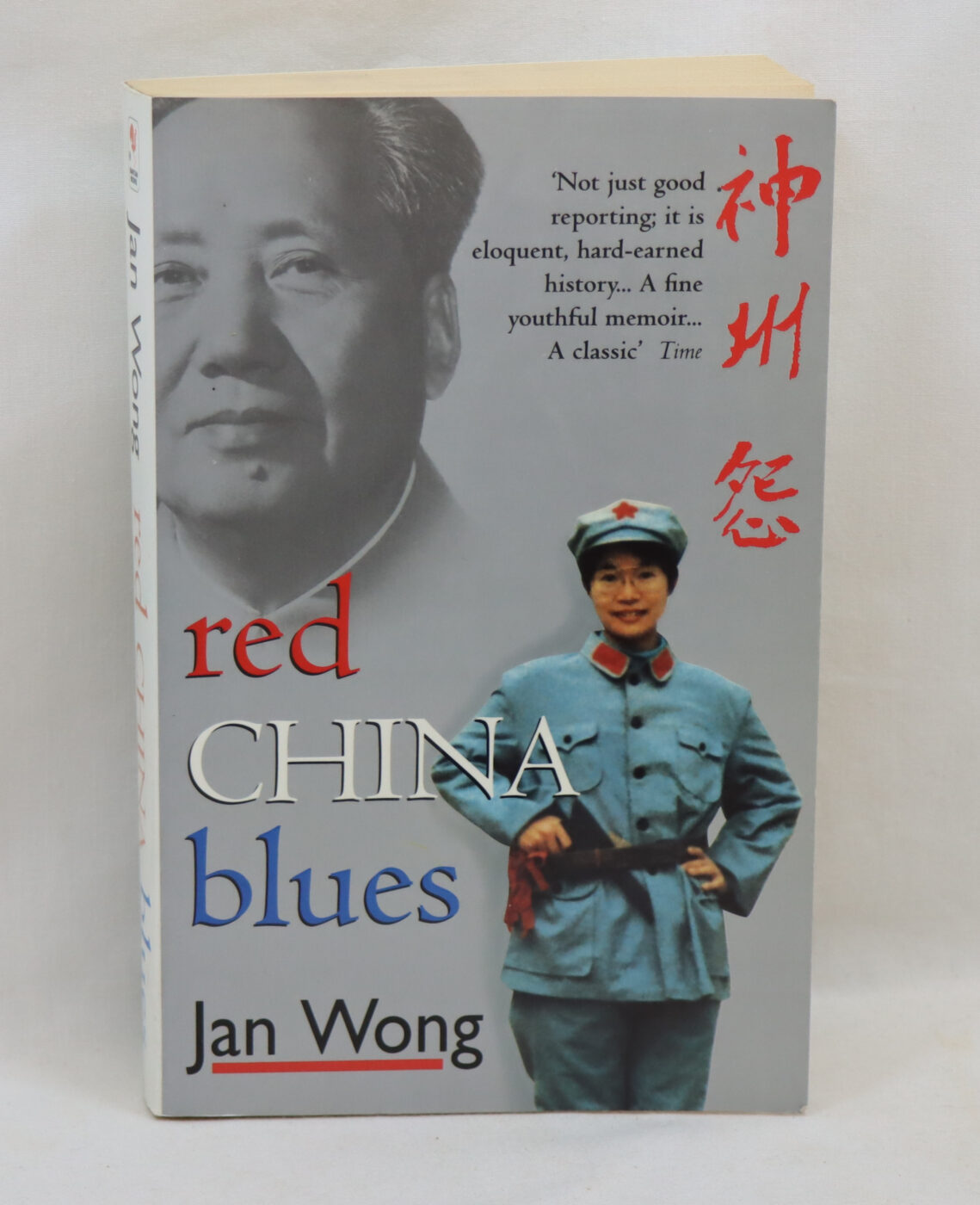
Red China Blues.
By Jan Wong
ISBN: 9780385674362
Printed: 1997
Publisher: Bantam Books. London
| Dimensions | 13 × 20 × 2 cm |
|---|---|
| Language |
Language: English
Size (cminches): 13 x 20 x 2
Condition: Good (See explanation of ratings)
£15.00
Buy Now

Item information
Description
Paperback. Orange cover with black title.
Please view the photographs.
Is China still like this?
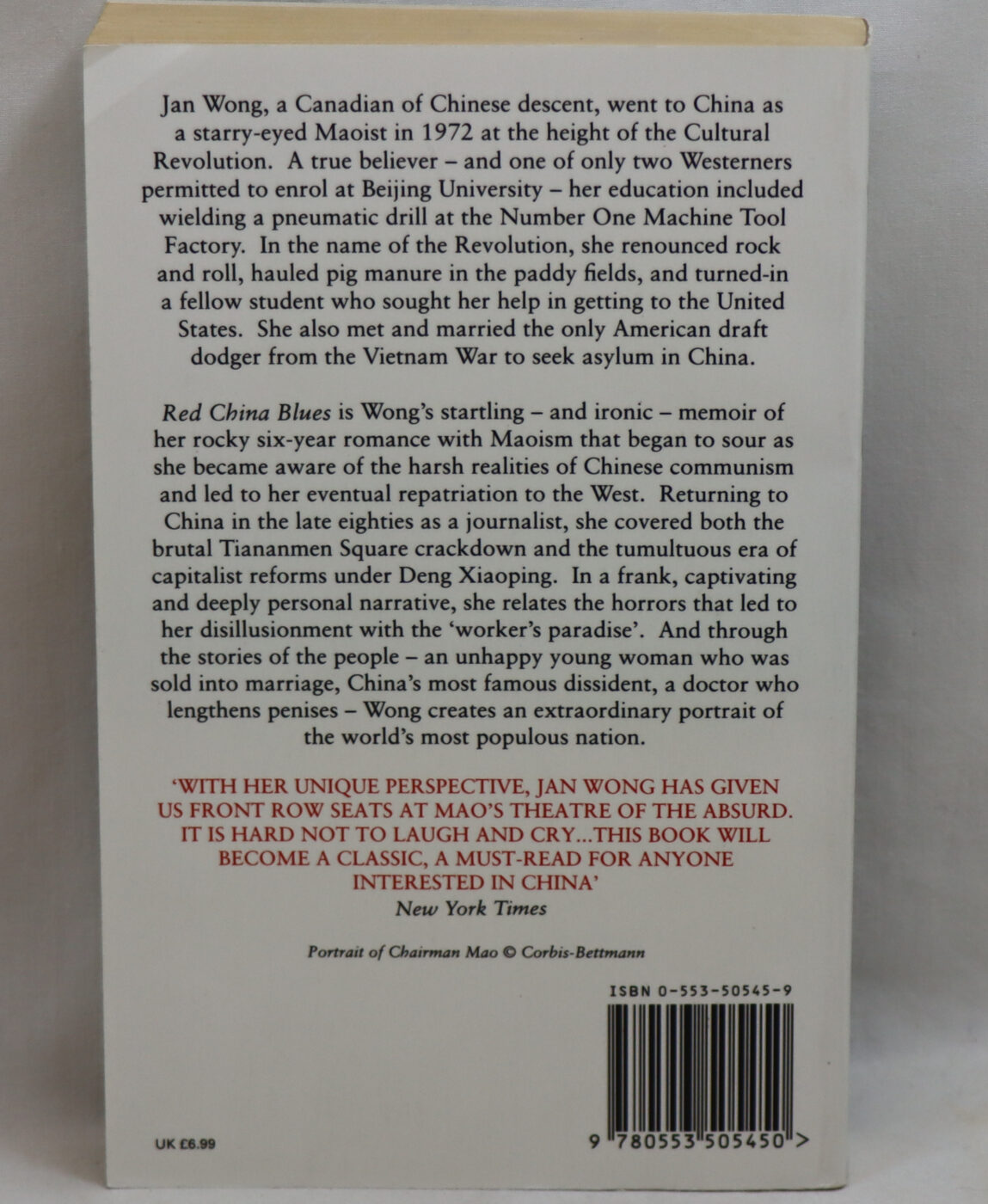
Jan Wong, a Canadian of Chinese descent, went to China as a starry-eyed Maoist in 1972 at the height of the Cultural Revolution. A true believer–and one of only two Westerners permitted to enroll at Beijing University–her education included wielding a pneumatic drill at the Number One Machine Tool Factory. In the name of the Revolution, she renounced rock & roll, hauled pig manure in the paddy fields, and turned in a fellow student who sought her help in getting to the United States. She also met and married the only American draft dodger from the Vietnam War to seek asylum in China.
Red China Blues is Wong’s startling–and ironic–memoir of her rocky six-year romance with Maoism (which crumbled as she became aware of the harsh realities of Chinese communism); her dramatic firsthand account of the devastating Tiananmen Square uprising; and her engaging portrait of the individuals and events she covered as a correspondent in China during the tumultuous era of capitalist reform under Deng Xiaoping. In a frank, captivating, deeply personal narrative she relates the horrors that led to her disillusionment with the “worker’s paradise.” And through the stories of the people–an unhappy young woman who was sold into marriage, China’s most famous dissident, a doctor who lengthens penises–Wong reveals long-hidden dimensions of the world’s most populous nation.
In setting out to show readers in the Western world what life is like in China, and why we should care, she reacquaints herself with the old friends–and enemies of her radical past, and comes to terms with the legacy of her ancestral homeland.
A £3 reduction when collected from the FBA shop. An original book from the library gathered by the famous Cambridge Don, computer scientist, food and wine connoisseur, Jack Arnold LANG. In 2008, Jack was one of the co-founders of the Raspberry Pi Foundation, alongside other members of the Department, and acted as the Foundation’s Chair. The project’s original goals were modest: to build and distribute low-cost computers for prospective applicants to our Computer Science degree. Initially the project was a “success disaster”, as Jack would say, as demand far outstripped the low-scale manufacturing plans. Ultimately the Raspberry Pi became the UK’s most successful computer with more than 60 million sold to date. Jack was drawn to the educational possibilities of the Raspberry Pi, its potential uses in emerging economies and the way it could support self-directed learning.
Want to know more about this item?
We are happy to answer any questions you may have about this item. In addition, it is also possible to request more photographs if there is something specific you want illustrated.
Ask a question





Share this Page with a friend
