
Picture of Whitby.
By Rev George Young
Printed: 1840
Publisher: Horne & Richardson. Whitby
Edition: Second edition
| Dimensions | 12 × 18 × 3 cm |
|---|---|
| Language |
Language: English
Size (cminches): 12 x 18 x 3
Condition: Fine (See explanation of ratings)
£82.00
Buy Now


Item information
Description
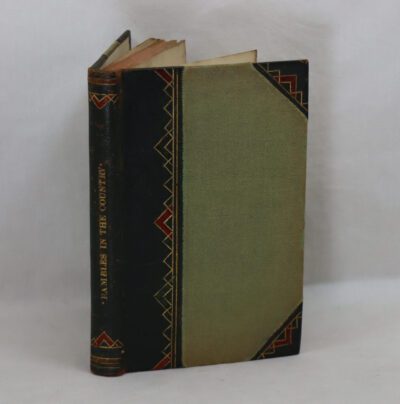
Recently rebound in half brown calf with brown and cream marbled boards. Black title plates with gilt banding and title on the spine.
A very nice rebound copy by Brian Cole of the Second Edition.312pps Frontispiece view of Whitby and 29 plates in wood & steel plus a large folding map and plan of the town.
George Young was born on 25 July 1777, the fourth of ten children of John and Jean Young, at their small farm in the parish of Kirk-Newton, south-west of Edinburgh. Since George was born with only a right hand (the left forearm ended in a stump), agriculture was ruled out as a future vocation. His pious parents therefore educated him with a view to Christian ministry, a course consistent with his own spiritual convictions, which developed early in life.
To fulfill the requirements for ordination in the Church of Scotland, to which he and his family belonged, he commenced, in 1792, four years of literary and philosophical studies at the University of Edinburgh. He distinguished himself, especially in mathematics and natural philosophy, being a favorite student of Professor John Playfair, who was in the process of becoming the articulate interpreter of James Hutton’s uniformitarian geological theory.2 Young completed his degree with high honors and then began a five-year course in theology at Selkirk, under the tutelage of Dr George Lawson (1749–1820), a famous Scottish divine who was well read in philosophy, history and natural science.3 In 1801 Young was licensed to preach by the presbytery of Edinburgh. After a brief visit in the summer of 1805 to Whitby, North Yorkshire, he became, in 1806, the pastor of the chapel in Cliff Street, a congregation he served for 42 years until his death. In 1819 the University of Edinburgh conferred on him the degree of M.A.
Young faithfully discharged his responsibilities as a pastor and was respected for his concern for the poor and his generous, self-denying Christian spirit, because of which he delighted to unite with Christians of other communions in joint efforts of witness and service. His congregation fixed a monument over the pulpit of the church after his death, which honored Young for having ‘preached the Word of God within these walls with unabated zeal for 42 years, actuated and sustained throughout solely by a sense of duty, and an anxious desire for the salvation of souls.’
Beyond this, his scholarly attainments were also considerable. He had a more than common knowledge of Hebrew, Greek, Latin, French and Italian, as well as acquaintance with Arabic, Chaldee and Syriac, and was considered quite an authority on the Anglo-Saxon language. His extensive knowledge of antiquities and numismatics enabled him to decipher ancient manuscripts, coins and inscriptions with great skill.
In 1823 he became a founding member and the first secretary of the Whitby Literary and Philosophical Society, a position he held until his death and which also included the establishment of the Whitby Museum. He was also a corresponding member of the Wernerian Natural History Society and the Northern Institution and an honorary member of the Yorkshire, Newcastle, Leeds and Hull Literary and Philosophical Societies.
Young published 21 books. His longer works included a series of lectures on the Book of Jonah, a two-volume The History of Whitby, a treatise vindicating the evangelical principles of religion and a highly acclaimed biography of Captain James Cook.
Young wrote three works on geology. A Geological Survey of the Yorkshire Coast (236 pages), written with the assistance of John Bird, first appeared in 1822, with a greatly revised edition (356 pages) released in 1828. Ten years later he published Scriptural Geology (1838, 78 pages), followed shortly thereafter by Appendix to Scriptural Geology (1840, 31 pages), in which he responded to John Pye Smith’s theory that Genesis described merely a local creation and local Noachian Flood, both in the Mesopotamian Valley.
Condition notes
Rebound
Want to know more about this item?
We are happy to answer any questions you may have about this item. In addition, it is also possible to request more photographs if there is something specific you want illustrated.
Ask a question
Related products
Share this Page with a friend
