
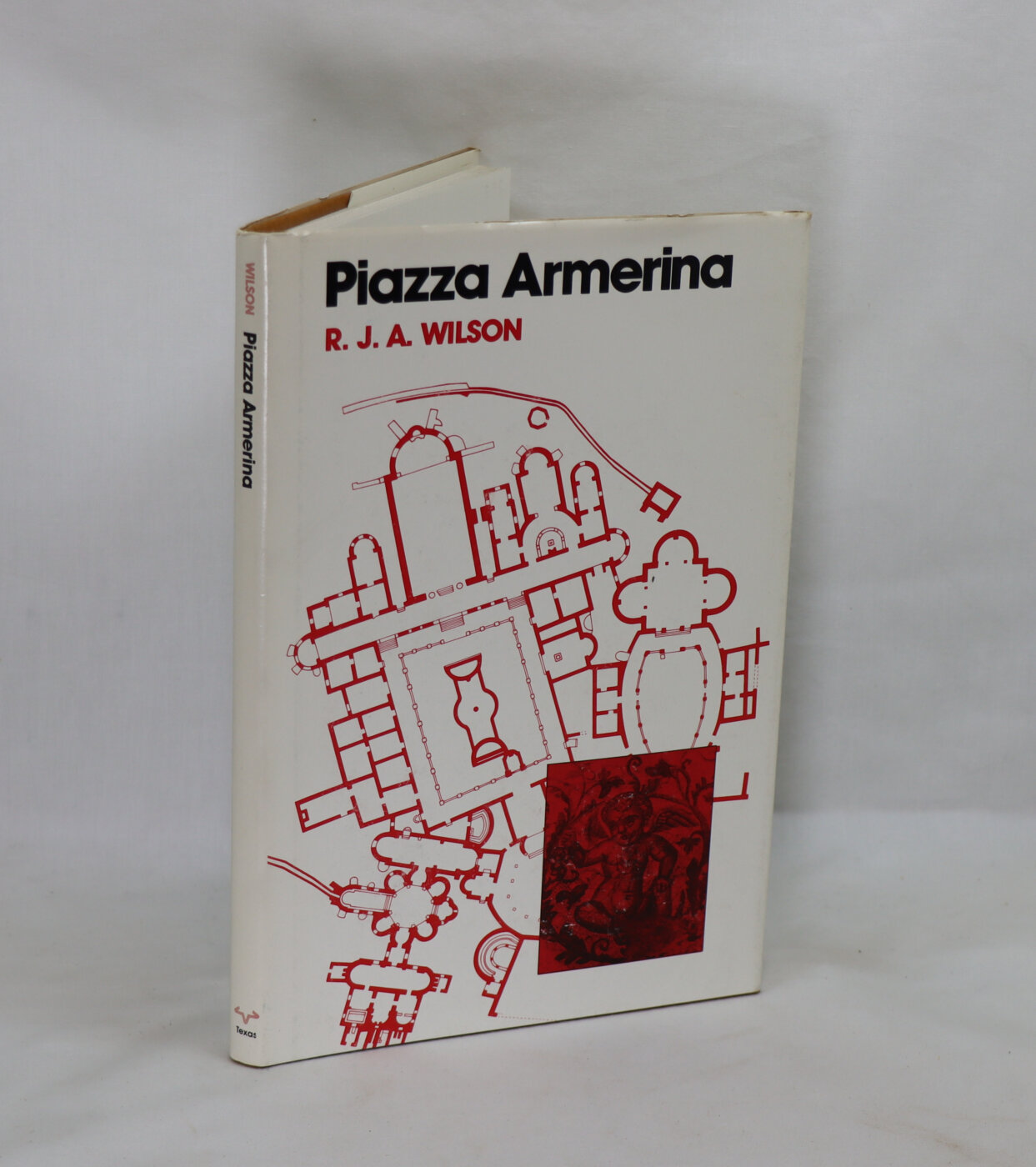
Piazza Armerina.
By R J A Wilson
ISBN: 9780951180402
Printed: 1983
Publisher: University of Texas. Austin
Edition: 1st edition
| Dimensions | 17 × 24 × 1.5 cm |
|---|---|
| Language |
Language: English
Size (cminches): 17 x 24 x 1.5
Condition: Very good (See explanation of ratings)
£54.00
Buy Now

Item information
Description
In the original dust jacket. Tan cloth binding with gilt title on the spine.
- We provide an in-depth photographic presentation of this item to stimulate your feeling and touch. More traditional book descriptions are immediately available
- Note: This book carries a £5.00 discount to those that subscribe to the F.B.A. mailing list
Hardcover. Condition: Like New. Dust Jacket Condition: Like New. First Edition. First Edition, First Printing. 124 pages. Published by University of Texas Press, 1983. Octavo. Brown boards stamped in gold. Book is like new; clean with no writing or names. Sharp corners and spine straight. Binding tight and pages crisp. Dust jacket is like new.
Piazza Armerina is a commune in the province of Enna of the autonomous island region of Sicily, southern Italy.
The city of Piazza (as it was called before 1862) developed during the Norman domination in Sicily (11th century), when Lombards settled the central and eastern part of Sicily.
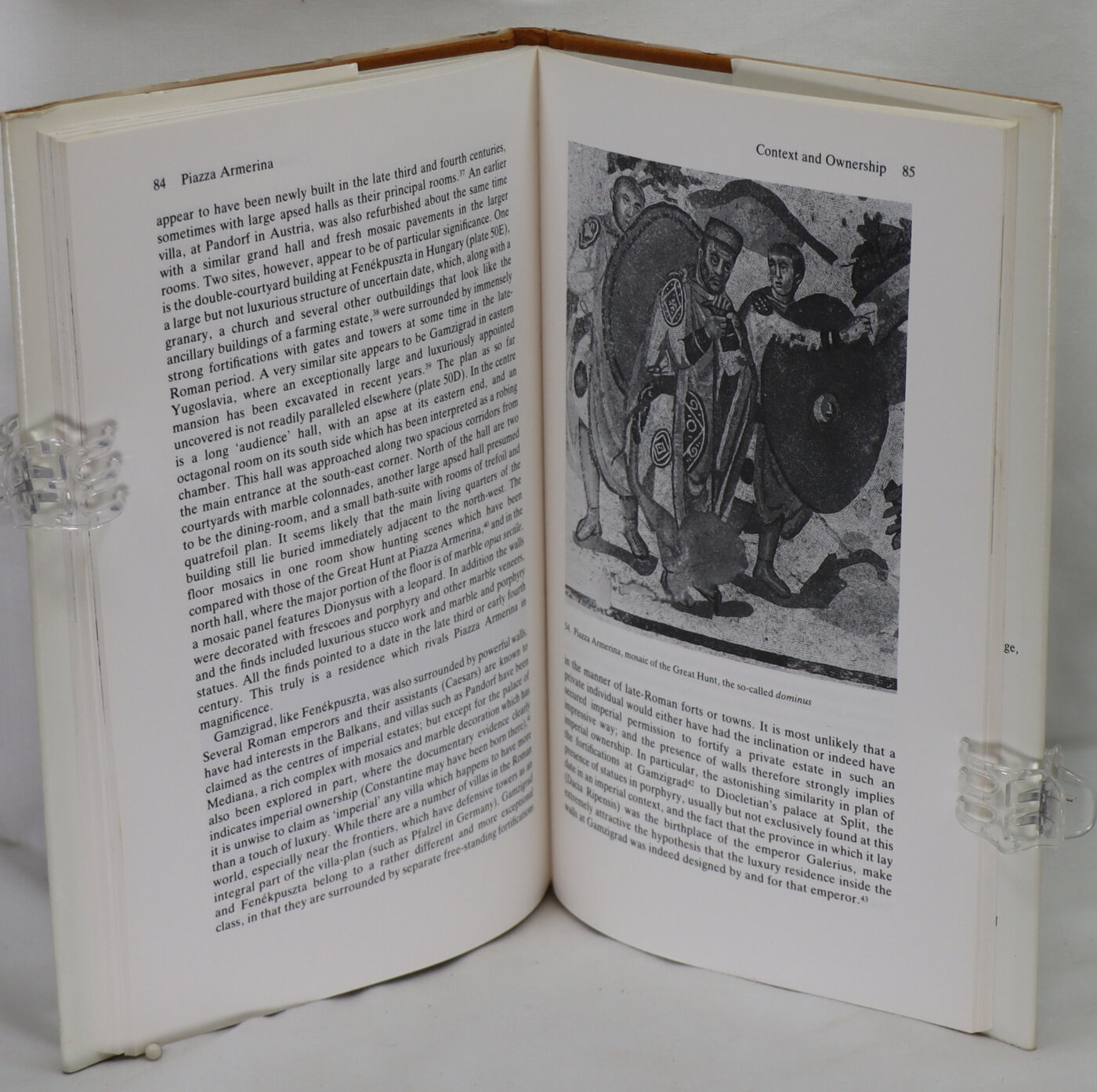
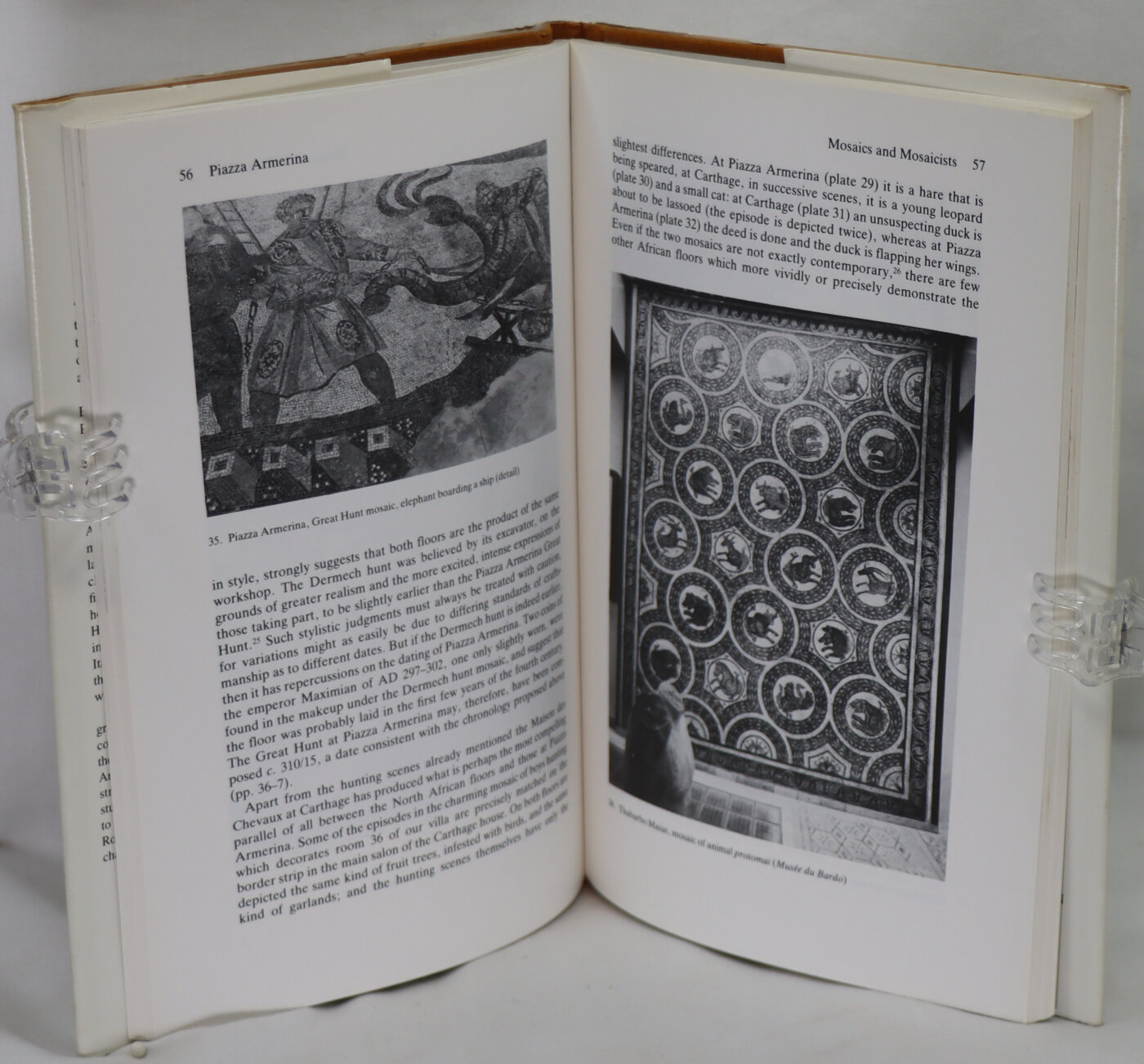
The area has been inhabited since prehistoric times. The city flourished during Roman times, as shown by the large mosaics at the patrician Villa Romana del Casale.
Remains, artefacts of old settlements and a necropolis from the 8th century BC were found in the territory of the commune.
Boris Giuliano (1930-1979) was born in Piazza Armerina.
The town is famous chiefly for its monumental Roman villa with its exceptional mosaics in the Villa Romana del Casale, about 3 kilometres (2 miles) to the southwest.
It also has a range of significant architecture dating from the medieval through the 18th century. The medieval history of the city is manifest in some of its houses, which show Norman or Gothic architecture. The main landmarks include a range of architectural styles:
- Piazza Armerina Cathedral: church was built atop the 15th-century foundations of a former church, from which the bell tower was taken and reused; completed during the 17th and 18th centuries. Also original to the 15th-century church are the Catalan-Gothic style windows on the left side. The dome dates from 1768. The façade has a notable portal with spiral columns by Leonardo De Luca. The interior, with a single large nave, houses the Madonna della Vittoria (Madonna of the Victory). The Byzantine icon is traditionally associated with the banner donated by the Pope to Roger I of Sicily during the Council of Melfi. The cathedral has an unusual two-sided crucifix by an unknown artist. The Diocesan Museum holds reliquaries, articles of silverware, monstrances and other religious art works.
- Palazzo Trigona: palace of the wealthy family who commissioned the nearby cathedral church.
- San Rocco: church of Fundrò with a carved tufa portal.
- Palazzo di Città (1613), characterized by a fresco ceiling by Salvatore Martorana.
- Aragonese Castle (1392–96). It is square in shape, with square towers.
- San Giovanni Evangelista: 14th-century church with interior frescoes by Guglielmo Borremans and assistants.
- Sant’Anna: 18th century church with Baroque sinuous façade inspired by the buildings of Borromini.
- The church of St. Martin of Tours: church completed in 1163.
- Santa Maria di Gesù: 16th century church now abandoned.
- Garibaldi Theatre.
- Commenda Dei Cavalieri Di Malta (1150) Old Church, run by the Knights of Malta from 1150, now a national monument, at Piazza Umberto 1.
Outside the city is the ancient church of the Priorato di Sant’Andrea (1096), founded by Count Simon of Butera, a nephew of Roger I of Sicily. It has important medieval frescoes.
Want to know more about this item?
We are happy to answer any questions you may have about this item. In addition, it is also possible to request more photographs if there is something specific you want illustrated.
Ask a question
Related products
Share this Page with a friend
