
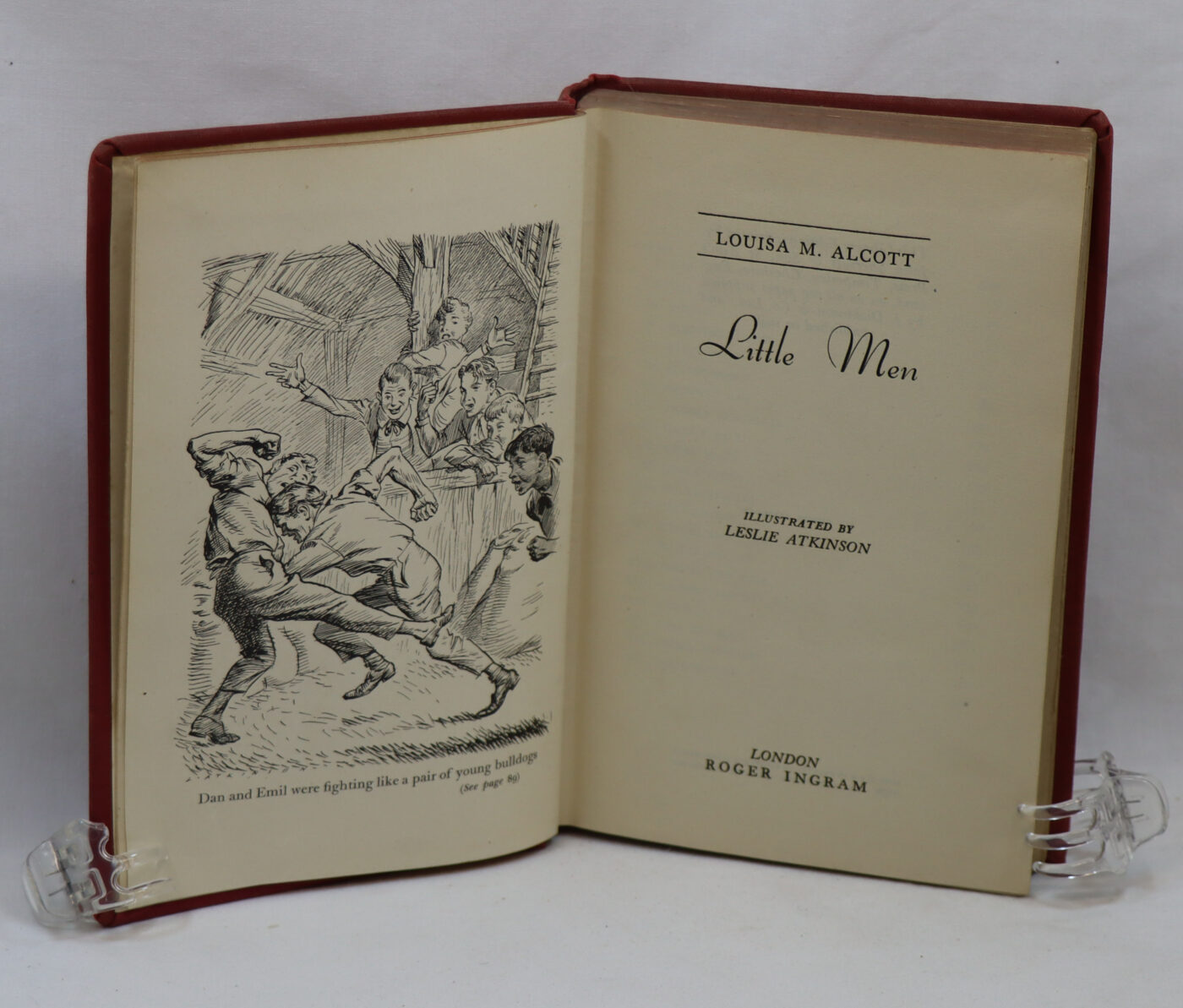
Little Men.
By Lousia M Alcott
Printed: 1948
Publisher: Roger Ingram. London
| Dimensions | 13 × 19 × 2 cm |
|---|---|
| Language |
Language: English
Size (cminches): 13 x 19 x 2
Condition: Good (See explanation of ratings)
£17.00
Buy Now

Item information
Description
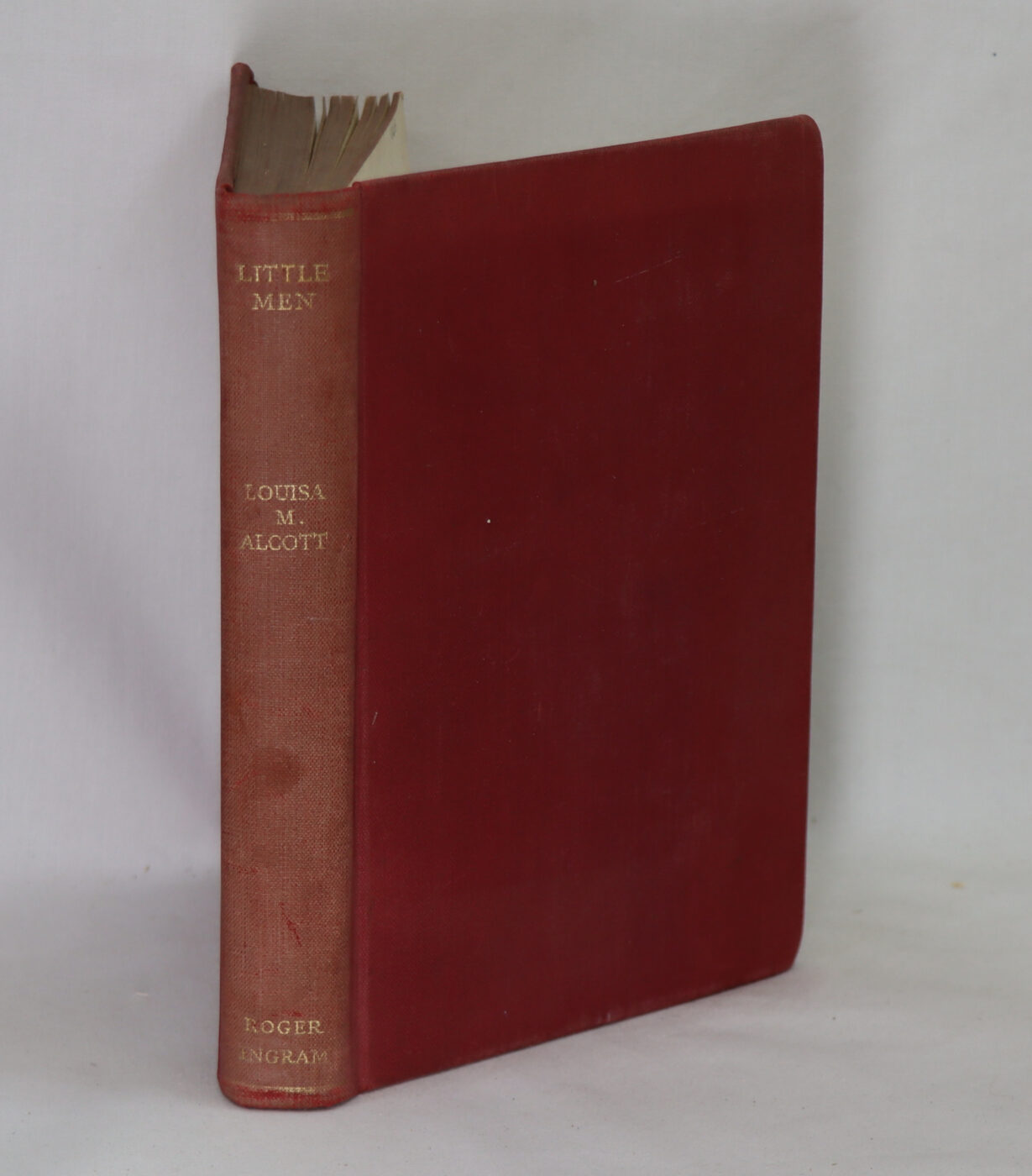
Red cloth binding with black title on the spine.
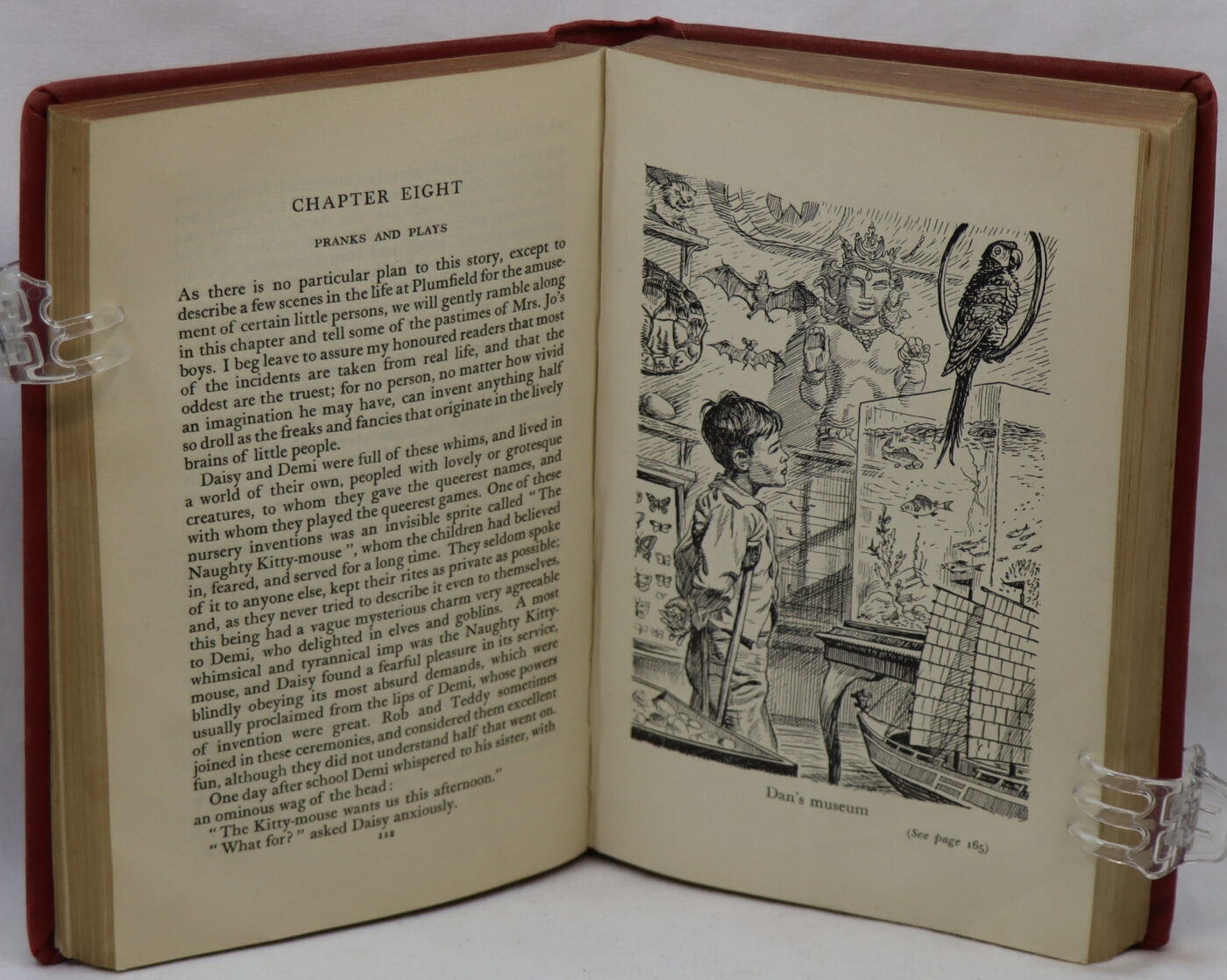
We provide an in-depth photographic presentation of this item to stimulate your feeling and touch. More traditional book descriptions are immediately available.
-
Note: This book carries a £5.00 discount to those that subscribe to the F.B.A. mailing list
This is a lovely read. The book is dated though sound with no dust cover.
Little Men: Life at Plumfield with Jo’s Boys, is a children’s novel by American author Louisa May Alcott (1832–1888). First published in 1871 by Roberts Brothers, the book reprises characters from Alcott’s 1868–69 two-volume novel Little Women, and acts as a sequel in the unofficial Little Women trilogy. The trilogy ends with Alcott’s 1886 novel Jo’s Boys, and How They Turned Out: A Sequel to “Little Men”.
Little Men describes the life of Jo Bhaer and her husband as they run a school and educate the various children at Plumfield. The teaching methods used at Plumfield reflect transcendentalist ideals followed by Alcott’s father, Bronson Alcott. Book education is combined with learning about morals and nature as the children learn through experience. Paradoxes in the story serve to emphasize Alcott’s views on social norms.
Little Men was written following the death of Alcott’s brother-in-law, John Bridge Pratt, who inspired the character John Brooke, while Alcott was visiting Rome. By June 1871, the book had sold 130,000 copies. Reviews at the time said Little Men had the same charm as Alcott’s other books, although it was overly idealistic at times, and that Alcott had depicted children well in her writing.nAlcott’s classic novel has been adapted to a 1934 film, a 1940 film, a 1998 film, a television series, and a Japanese animated television series.
Jo’s Boys, and How They Turned Out: A Sequel to “Little Men” was first published in 1886 as the final book in the Little Women series. In it, Jo’s children, now grown, are caught up in real world troubles. The book follows the lives of Plumfield boys who were introduced in Little Men, particularly Tommy, Emil, Demi, Nat, Dan, and Professor Bhaer as well as Jo’s sons Rob and Teddy. The book takes place ten years after Little Men.
Jo’s Boys, and How They Turned Out: A Sequel to “Little Men” is a novel by American author Louisa May Alcott, first published in 1886. The novel is the final book in the unofficial Little Women series. In it, the March sisters’ children and the original students of Plumfield, now grown, are caught up in real world troubles as they work towards careers and pursue love.
Jo’s Boys was written between 1882 and 1886 as Alcott dealt with chronic illness. The book explores themes relating to modern ideals regarding gender roles and vocation, as well as progressive reform in education and women’s right to vote. The characters Dan and Nan are examples of the opportunities open to people unattached in society.
Critics credited Jo’s Boys with Alcott’s normal charm and humor, noting its values and progressive ideas along with the return of past loved characters, although some called the book a lesser counterpart to Alcott’s other books.
Review: I have read the two books preceding this one, Little Women, and Little Men, and this is a beautiful conclusion to the series.My heart will always remember the characters in these three books, especially Dan, Nat, Jo and Laurie, their lives seem so real to me. Such depth of character, such differences of direction within their lives, yet all of one heart for the ‘family’ they all were to each other.nThis series was set in a time long ago, and written long ago, and yet the issues the young people faced growing up were so akin to our own in this day and age that they could have been written now, and were so very relatable, even though the characters in the books led entirely different lives than any we live today. Do I advise you to read this book? Yes, definitely yes, but start with Little Women and read the entire series and you will gain a deeper appreciation for the skill of the author.
Louisa May Alcott (November 29, 1832 – March 6, 1888) was an American novelist, short story writer, and poet best known for writing the novel Little Women (1868) and its sequels Good Wives (1869), Little Men (1871), and Jo’s Boys (1886). Raised in New England by her transcendentalist parents, Abigail May and Amos Bronson Alcott, she grew up among many well-known intellectuals of the day, including Margaret Fuller, Ralph Waldo Emerson, Nathaniel Hawthorne, and Henry David Thoreau. Encouraged by her family, Alcott began writing from an early age.
Alcott’s family experienced financial hardship, and while Alcott took on various jobs to help support the family from an early age, she also sought to earn money by writing. In the 1860s she began to achieve critical success for her writing with the publication of Hospital Sketches, a book based on her service as a nurse in the American Civil War. Early in her career, she sometimes used pen names such as A. M. Barnard, under which she wrote lurid short stories and sensation novels for adults. Little Women was one of her first successful novels and has been adapted for film and television. It is loosely based on Alcott’s childhood experiences with her three sisters, Abigail May Alcott Nieriker, Elizabeth Sewall Alcott, and Anna Alcott Pratt.
Alcott was an abolitionist and a feminist and remained unmarried throughout her life. She also spent her life active in reform movements such as temperance and women’s suffrage. During the last eight years of her life she raised the daughter of her deceased sister. She died from a stroke in Boston on March 6, 1888, just two days after her father’s death and was buried in Sleepy Hollow Cemetery. Louisa May Alcott has been the subject of numerous biographies, novels, and a documentary, and has influenced other writers and public figures such as Ursula K. Le Guin and Theodore Roosevelt.
Want to know more about this item?
We are happy to answer any questions you may have about this item. In addition, it is also possible to request more photographs if there is something specific you want illustrated.
Ask a question
Related products
Share this Page with a friend
