
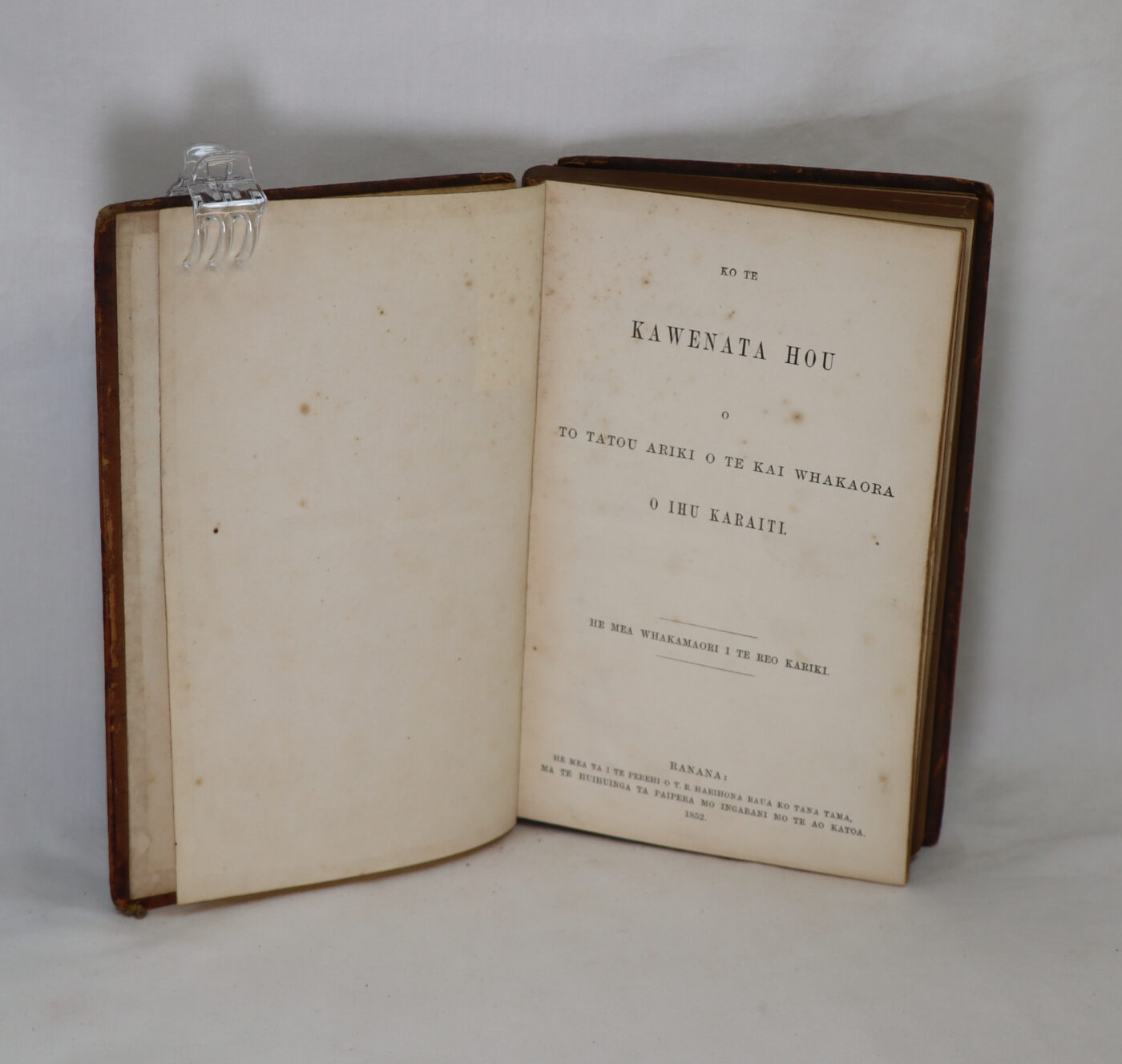
Ko te Kawenata Hou.
By He Mea Whakamaori I Te Reo Kariki
Printed: 1852
Publisher: Harihona Raua Ko Tama. Ranana
| Dimensions | 15 × 22 × 2 cm |
|---|---|
| Language |
Language: Maori
Size (cminches): 15 x 22 x 2
Condition: Fair (See explanation of ratings)
£224.00
FREE shipping
Buy Now

Item information
Description
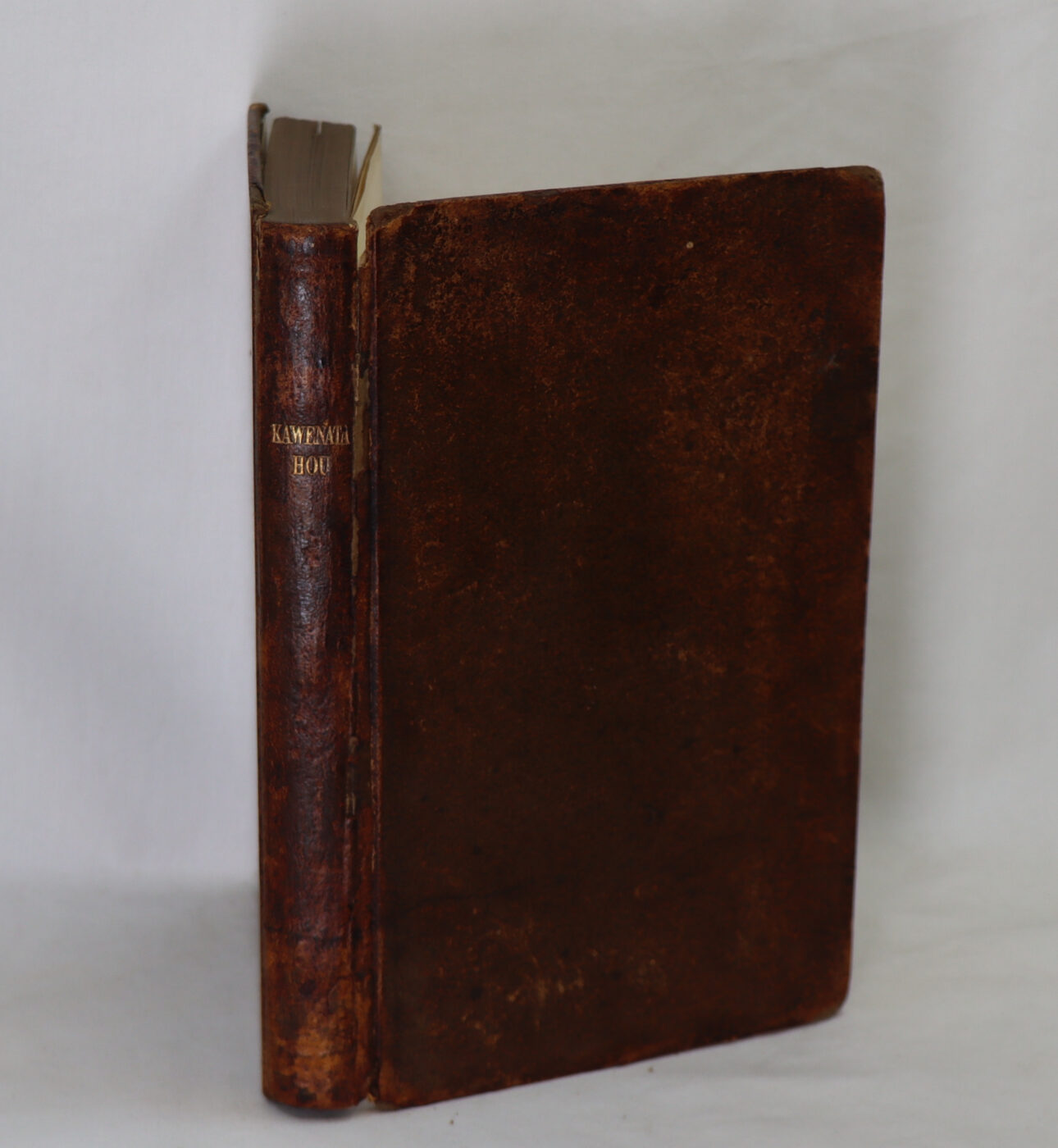
Brown calf binding with gilt title on the spine.
We provide an in-depth photographic presentation of this item to stimulate your feeling and touch. More traditional book descriptions are immediately available.
- Note: This book carries a £5.00 discount to those that subscribe to the F.B.A. mailing list
This is an early ground breaking edition of the Māori New Testament (Ko te Kawenata Hou), produced by the British and Foreign Bible Society, which many people still regard as the most spiritual.
Book Details
-
Title: Ko te Kawenata Hou o to tatou Ariki o te kai whakaora o Ihu Karaiti
-
Translation: Translated from Greek (he mea whakamaori i te reo Kariki) by missionary scholars including Robert Maunsell and William Williams.
-
Publication Year: 1852
-
Printer / Publisher: T.R. Harihona raua ko tana tama (T.R. Harrison and Son, London Gazette Office, St Martin’s Lane) for the Bible Society.
-
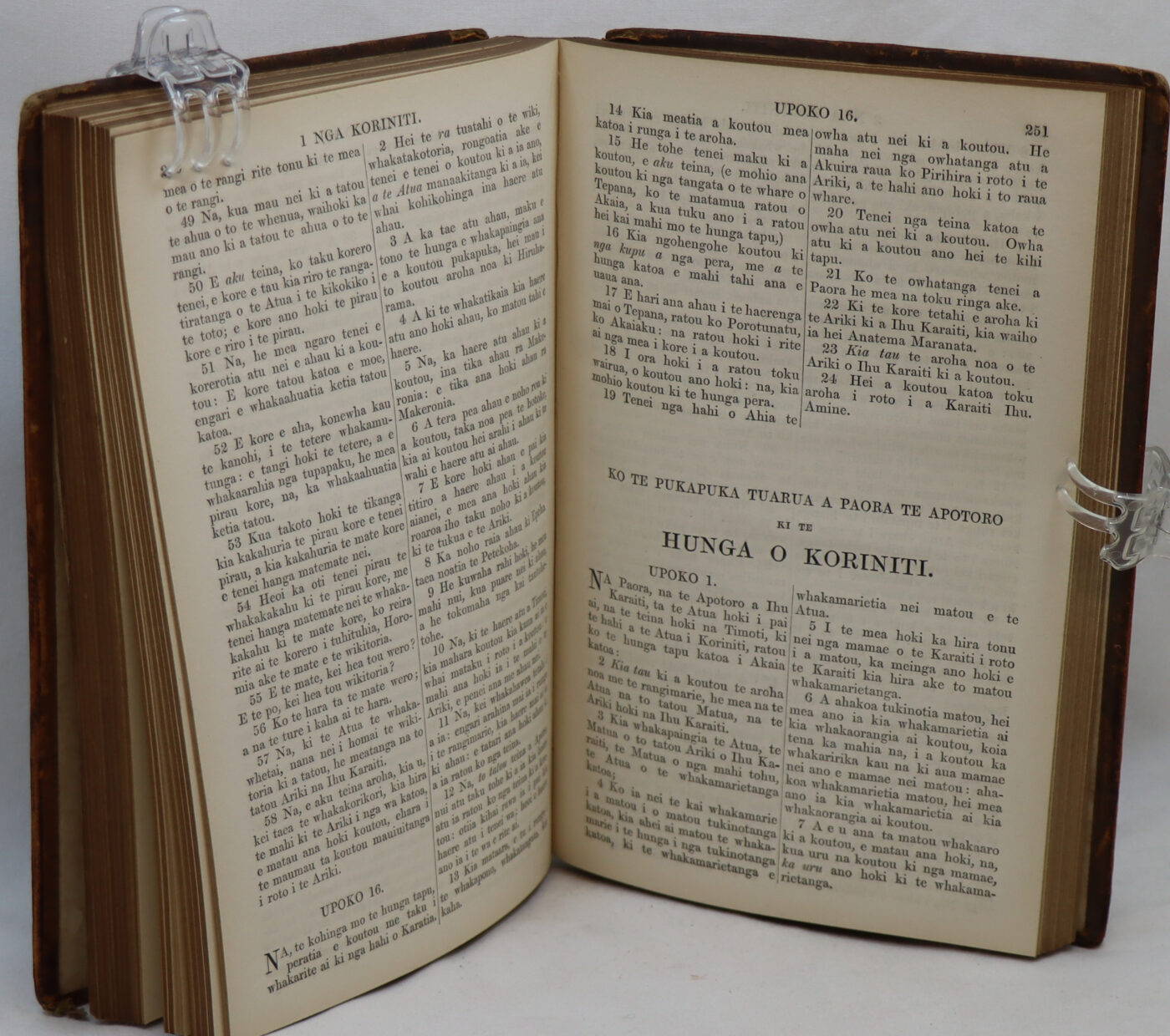
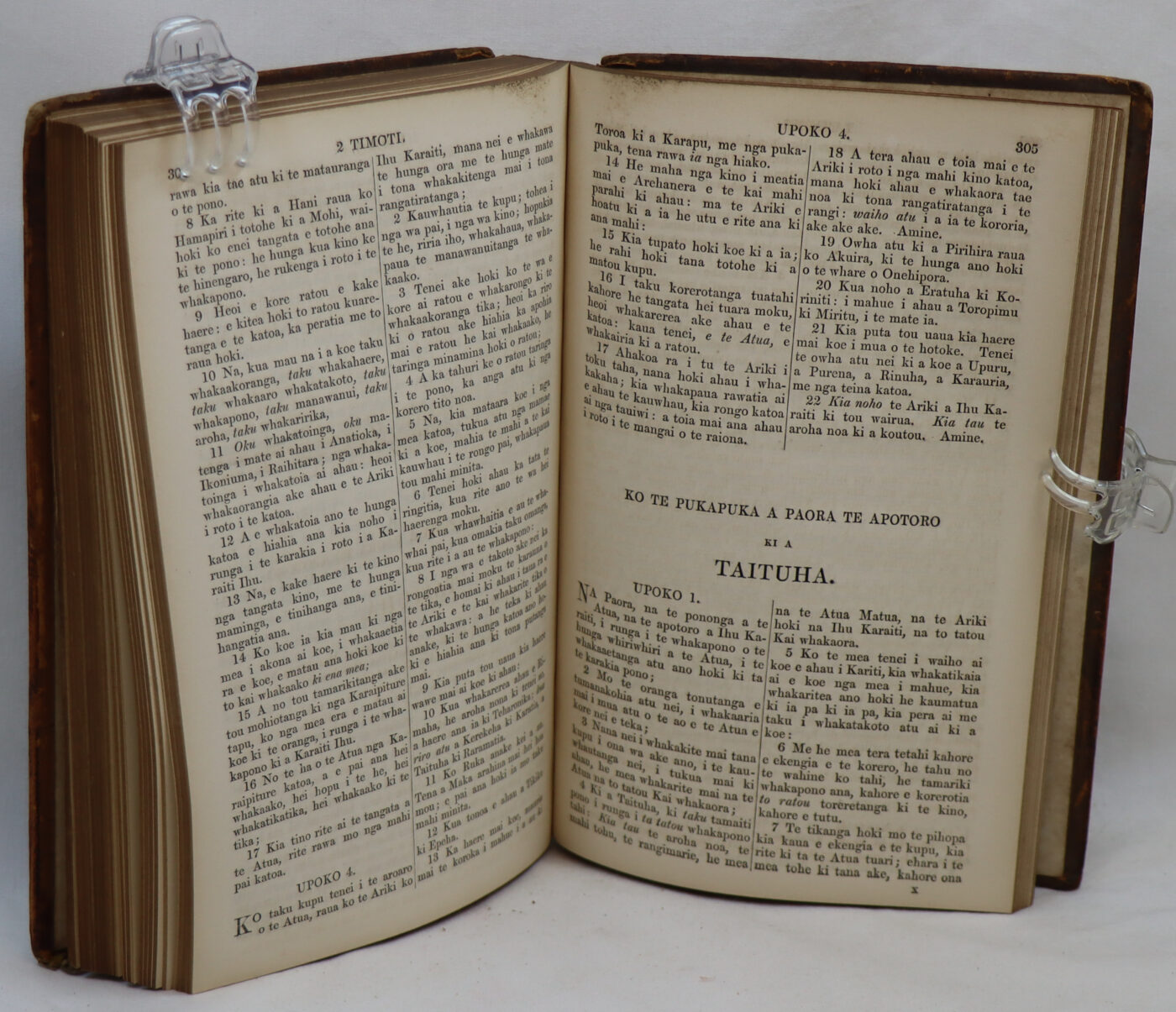
Significance: Noted by bibliographers as the first edition of the Māori New Testament to use the “wh” compound spelling convention.
The first serious edition of the New Testament in Maori translation, had appeared in 1837. Subsequent editions followed until a large revision was made in the fifth edition of 1852. By 1884 it was felt that a new revision should be made to correct the numerous misprints and incorrect translations. The resulting edition appeared in 1887 and is considered “the finest Maori book of the 19th century” (Lineham). However, it was highly unpopular with its intended audience because for most of the Maori the older Bible text had a spiritual status and memorization of the Bible was highly respected. Despite the objections, a new edition appeared in 1894, which is the present edition. Together with the 1887 edition, it is considered to be one of the “greatest Maori publications of the 19th century” (Lineham). The publication of this eighth edition was overseen by the same scholars who had prepared the previous one. The text was supplied by William Leonard Williams (1829-1916), future bishop of Waiapu and an eminent scholar of Maori, who also corrected the proofs as far as signature H. The remainder of the text was corrected by Robert Maunsell (1810-1894), a missionary and authority on the Maori language.
Want to know more about this item?
We are happy to answer any questions you may have about this item. In addition, it is also possible to request more photographs if there is something specific you want illustrated.
Ask a question
Related products
Share this Page with a friend
