
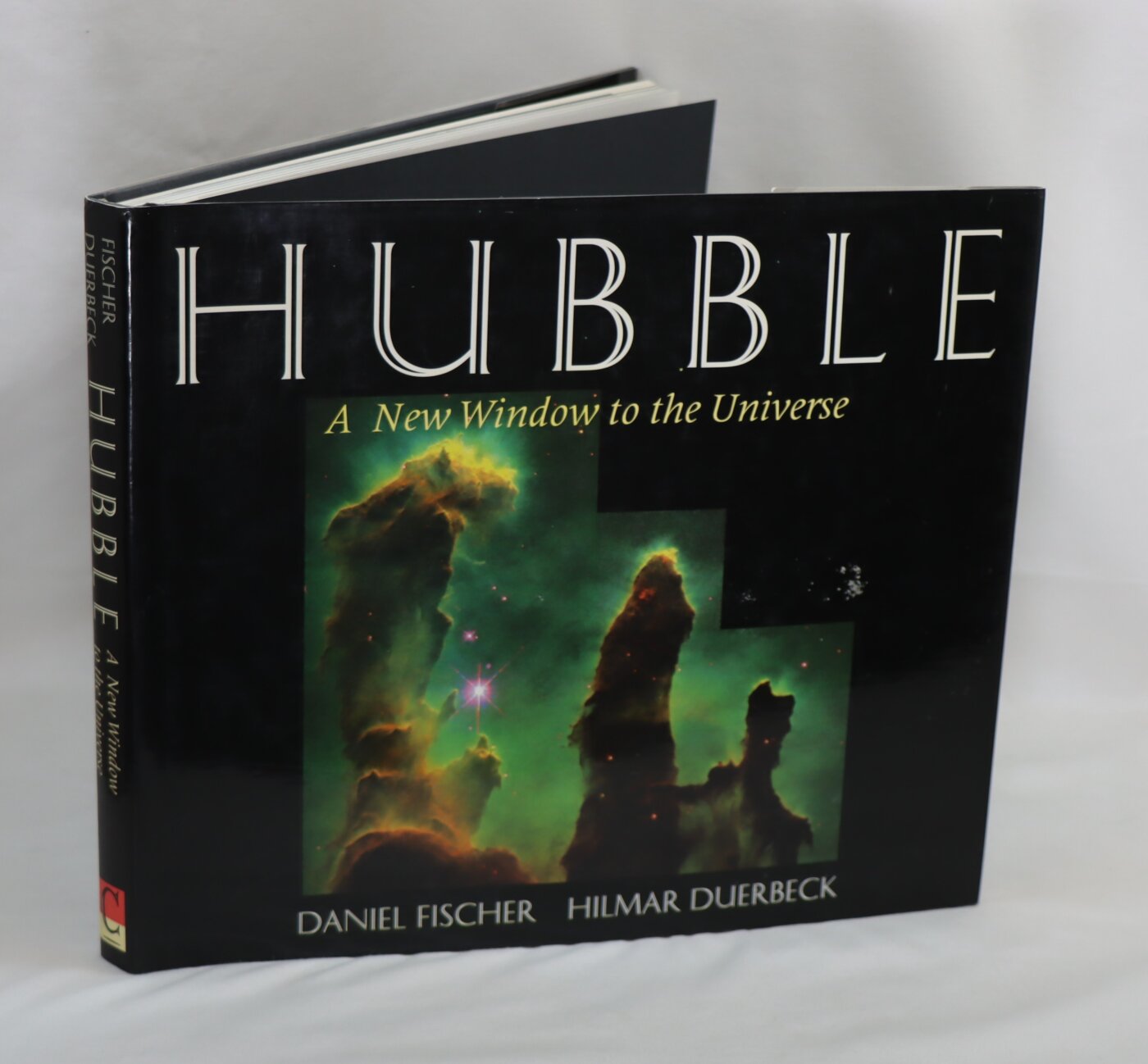
Hubble. A New Window on the Universe.
By Daniel fischer & Hilmar Duerbeck
ISBN: 9781461223900
Printed: 1996
Publisher: Copernicus. New York
| Dimensions | 29 × 25 × 2 cm |
|---|---|
| Language |
Language: English
Size (cminches): 29 x 25 x 2
Condition: Very good (See explanation of ratings)
£15.00
Buy Now

Item information
Description
In the original dust jacket. Black cloth binding with whitetitle on the spine.
- We provide an in-depth photographic presentation of this item to stimulate your feeling and touch. More traditional book descriptions are immediately available
Note: This book carries a £5.00 discount to those that subscribe to the F.B.A. mailing list.
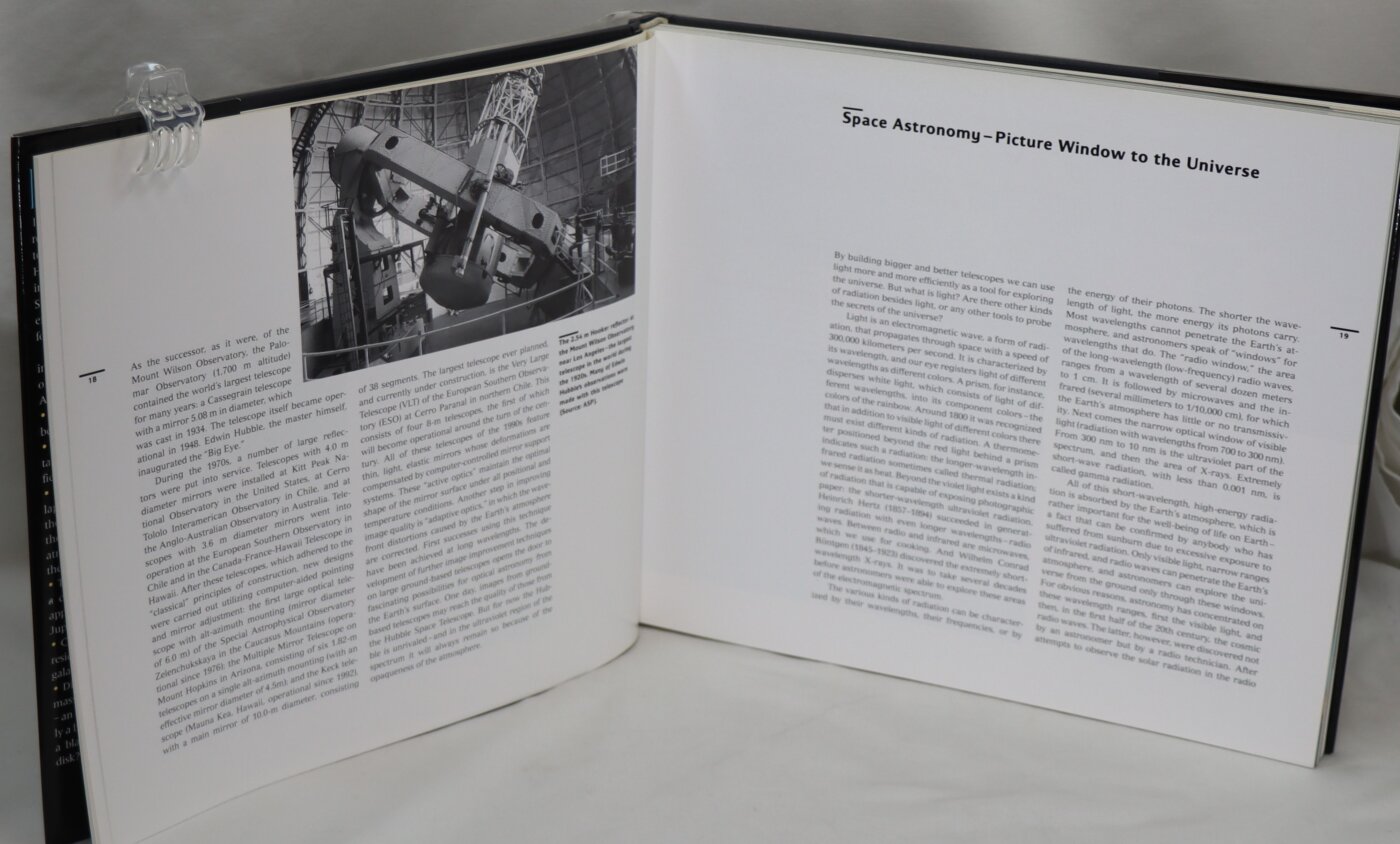
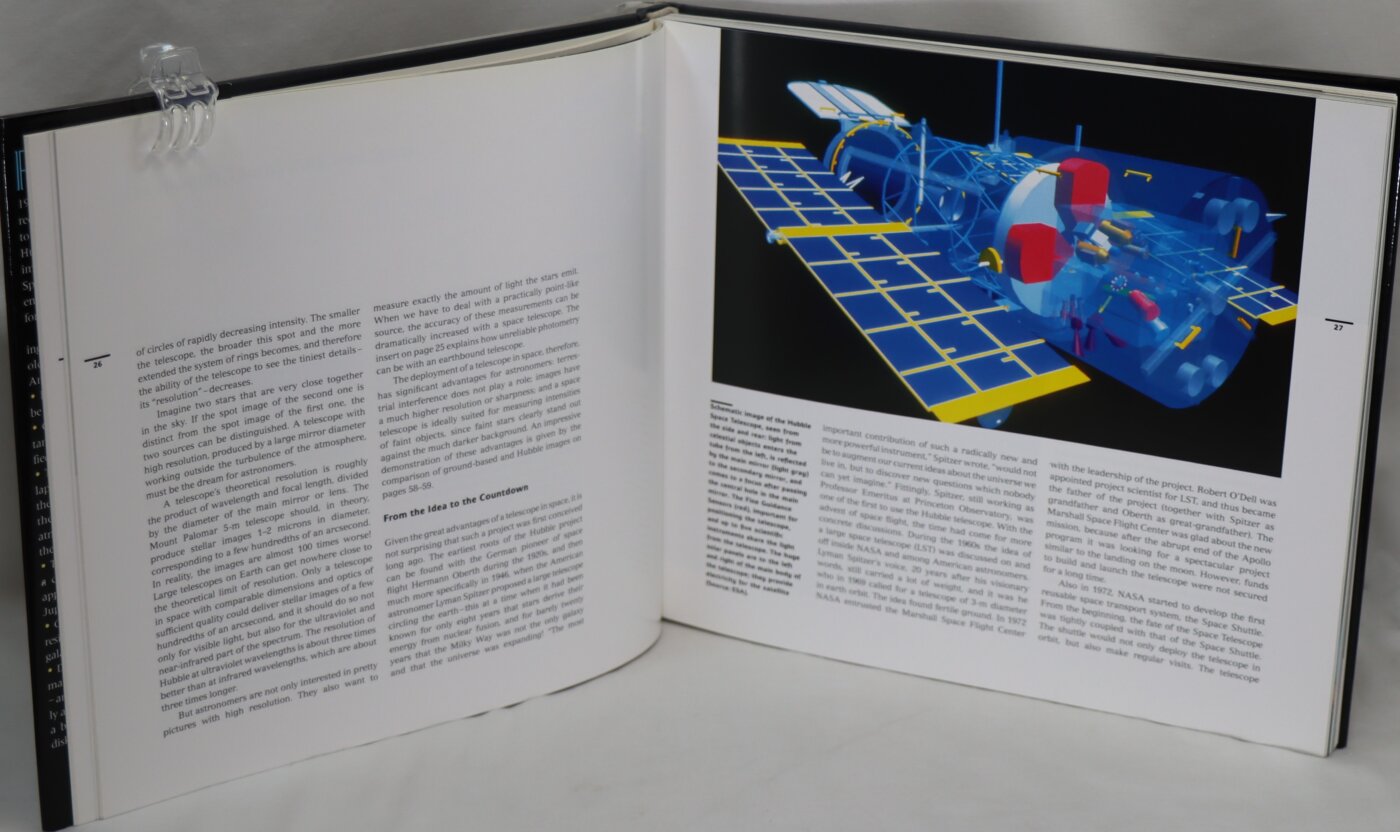
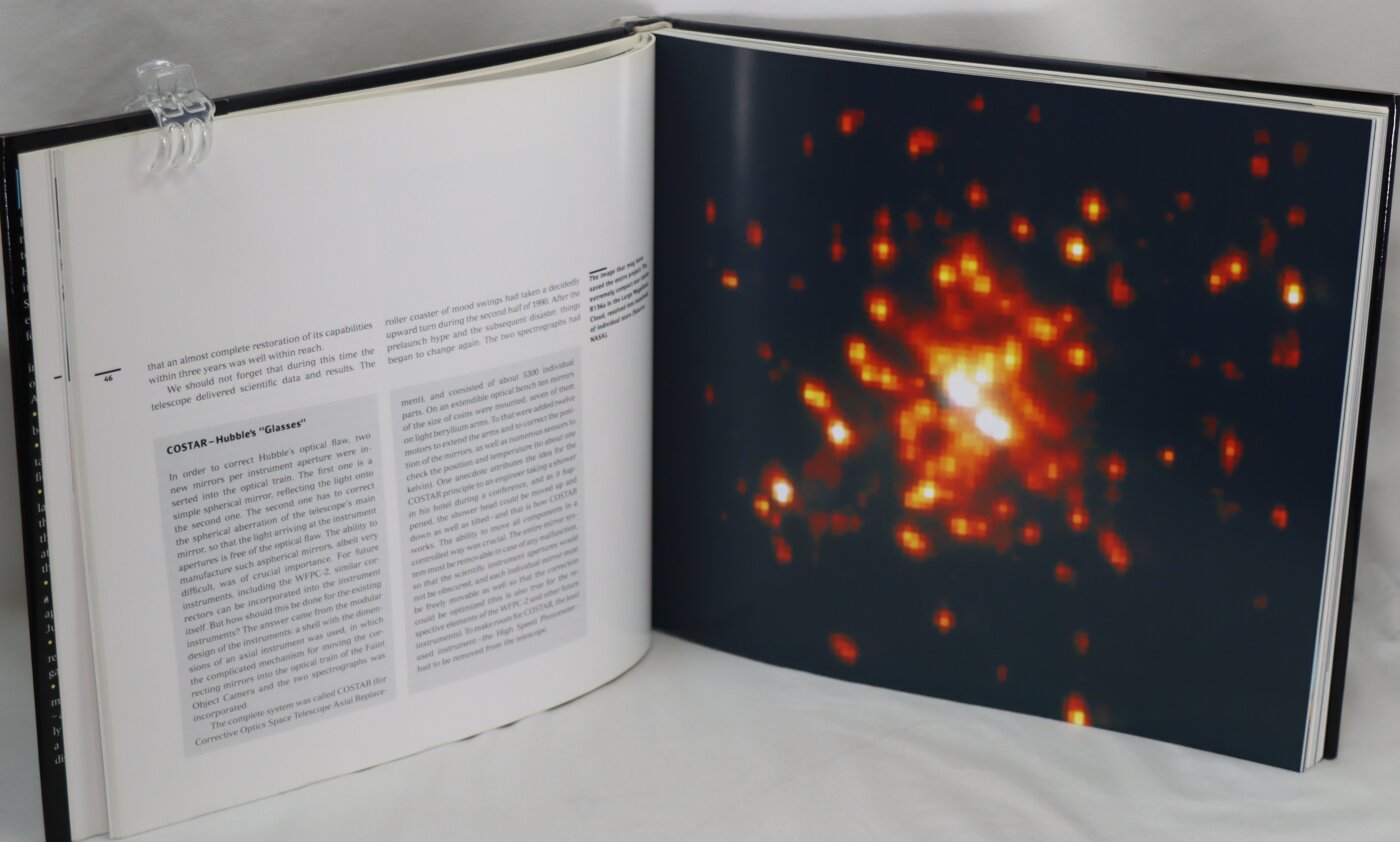
A good quality book with no Flaws or Blemishes and minimal shelf handling.The text contains a large number of spectacular images, as well as self-contained portraits of astronomers and explanations of astronomical topics and instruments. Written in a lively style, this compendium serves as a testament to the significant role the Hubble has played in astronomical accomplishment and discovery.
Review: At last, a book presenting the fantastic scientific results of the first five years of Hubble Space Telescope observations! While a number of books for the general public emphasize the technological accomplishments of this multi-billion dollar project or deal with the well-publicized flaw in the telescope’s optics, Hubble: A New Window to the Universe concentrates on its astronomical achievements. The authors use new and ground-breaking Hubble results to illustrate a wide range of astronomical topics, from the great questions about the universe as a whole to quasars and black holes, and from the life and death of stars to our planetary neighbors in the solar system.
The Hubble Space Telescope (often referred to as HST or Hubble) is a space telescope that was launched into low Earth orbit in 1990 and remains in operation. It was not the first space telescope, but it is one of the largest and most versatile, renowned as a vital research tool and as a public relations boon for astronomy. The Hubble telescope is named after astronomer Edwin Hubble and is one of NASA’s Great Observatories. The Space Telescope Science Institute (STScI) selects Hubble’s targets and processes the resulting data, while the Goddard Space Flight Center (GSFC) controls the spacecraft.
Hubble features a 2.4 m (7 ft 10 in) mirror, and its five main instruments observe in the ultraviolet, visible, and near-infrared regions of the electromagnetic spectrum. Hubble’s orbit outside the distortion of Earth’s atmosphere allows it to capture extremely high-resolution images with substantially lower background light than ground-based telescopes. It has recorded some of the most detailed visible light images, allowing a deep view into space. Many Hubble observations have led to breakthroughs in astrophysics, such as determining the rate of expansion of the universe.
Space telescopes were proposed as early as 1923, and the Hubble telescope was funded and built in the 1970s by the United States space agency NASA with contributions from the European Space Agency. Its intended launch was in 1983, but the project was beset by technical delays, budget problems, and the 1986 Challenger disaster. Hubble was finally launched in 1990, but its main mirror had been ground incorrectly, resulting in spherical aberration that compromised the telescope’s capabilities. The optics were corrected to their intended quality by a servicing mission in 1993.
Hubble is the only telescope designed to be maintained in space by astronauts. Five Space Shuttle missions have repaired, upgraded, and replaced systems on the telescope, including all five of the main instruments. The fifth mission was initially canceled on safety grounds following the Columbia disaster (2003), but after NASA administrator Michael D. Griffin approved it, the servicing mission was completed in 2009. Hubble completed 30 years of operation in April 2020 and is predicted to last until 2030 to 2040.
Hubble is the visible light telescope in NASA’s Great Observatories program; other parts of the spectrum are covered by the Compton Gamma Ray Observatory, the Chandra X-ray Observatory, and the Spitzer Space Telescope (which covers the infrared bands).The mid-IR-to-visible band successor to the Hubble telescope is the James Webb Space Telescope (JWST), which was launched on December 25, 2021, with the Nancy Grace Roman Space Telescope due to follow in 2027.
Want to know more about this item?
We are happy to answer any questions you may have about this item. In addition, it is also possible to request more photographs if there is something specific you want illustrated.
Ask a question
Related products






Share this Page with a friend
