
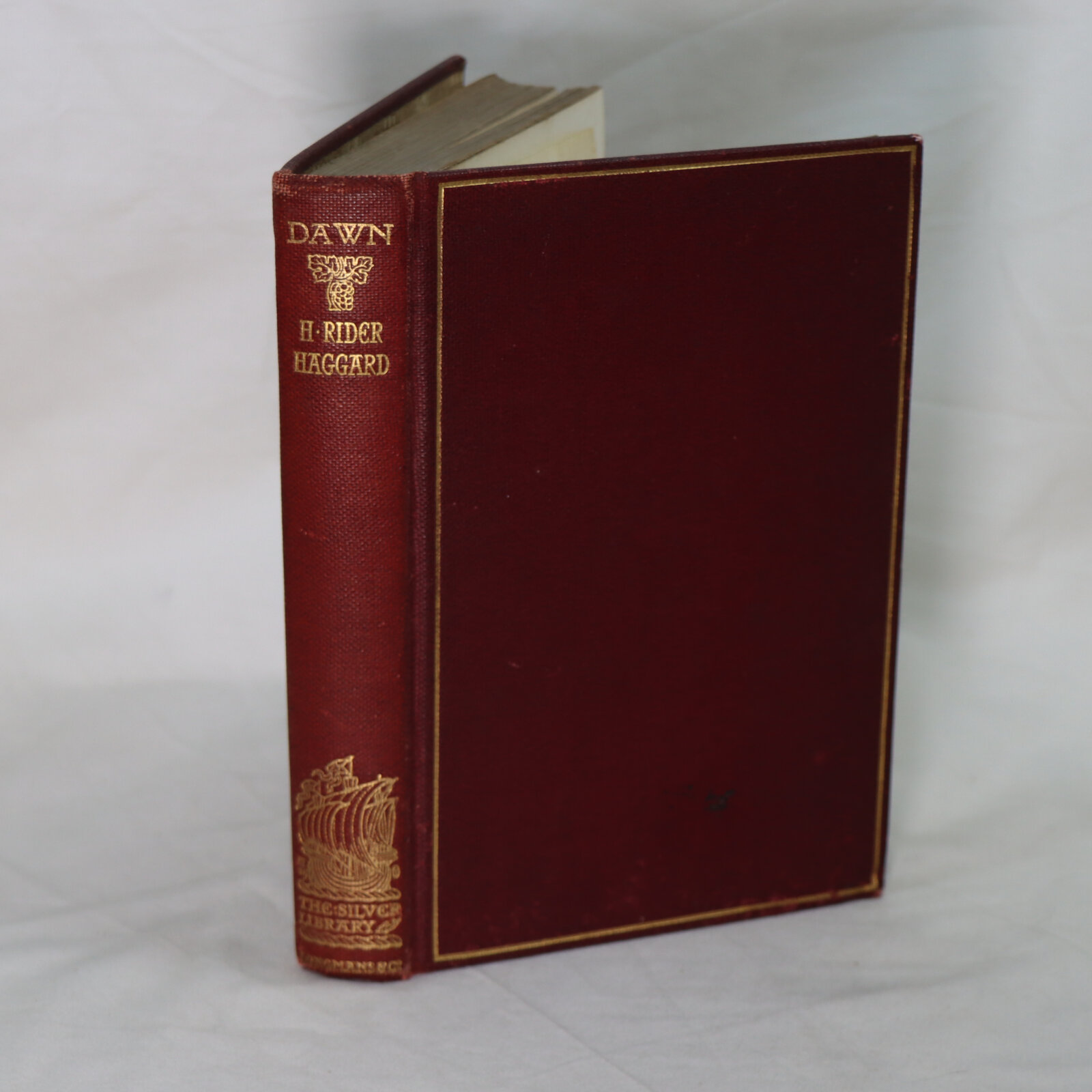
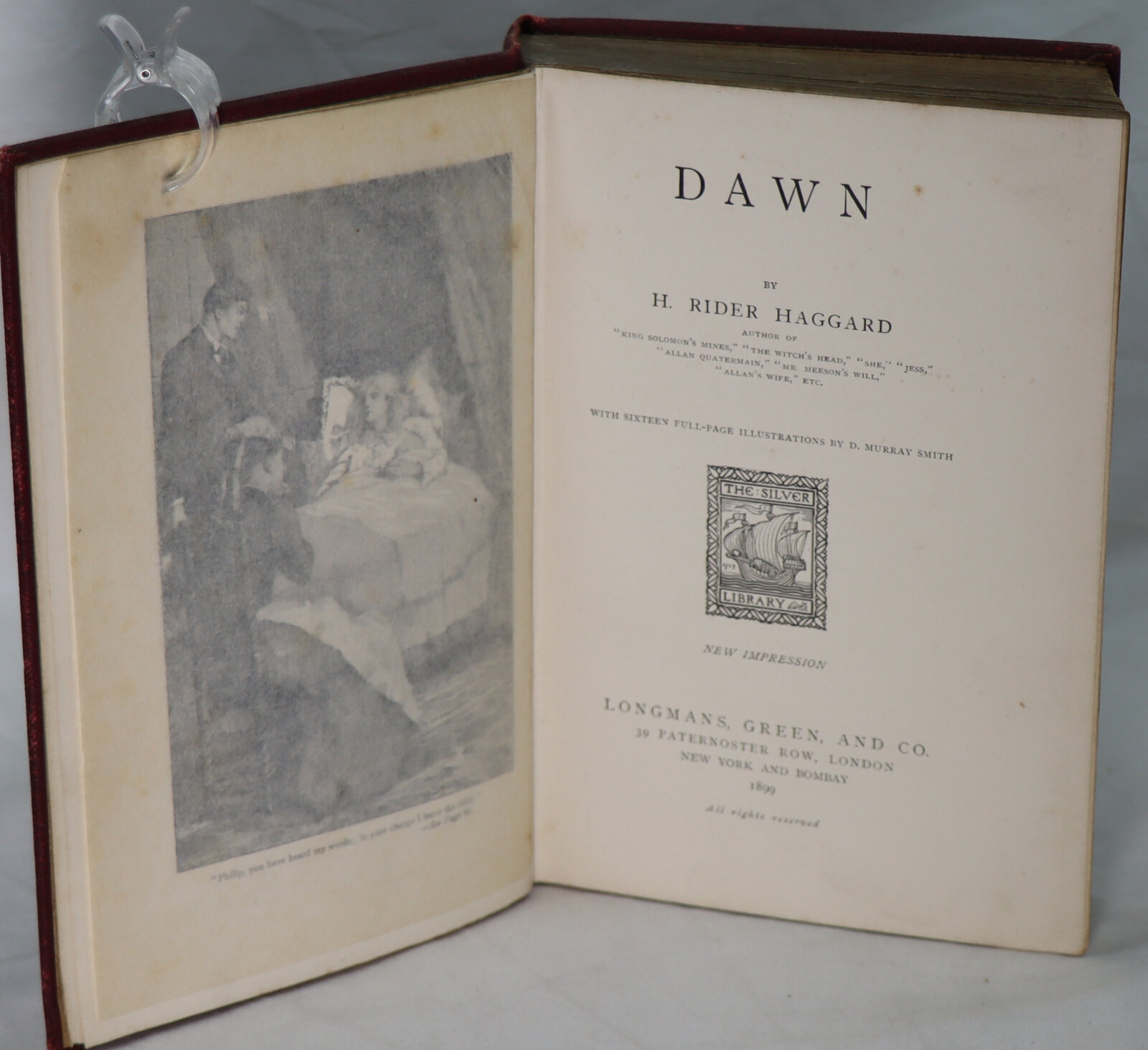
Dawn.
By H Rider Haggard
Printed: 1899
Publisher: Longman Green & Co. London
| Dimensions | 14 × 20 × 3 cm |
|---|---|
| Language |
Language: English
Size (cminches): 14 x 20 x 3
Condition: Fine (See explanation of ratings)
£27.00
Buy Now
Your items

Item information
Description
Maroon cloth binding with gilt title and decoration on the spine.
-
F.B.A. provides an in-depth photographic presentation of this item to stimulate your feeling and touch. More traditional book descriptions are immediately available.
-
Note: This book carries the £5.00 discount to those that subscribe to the F.B.A. mailing list.
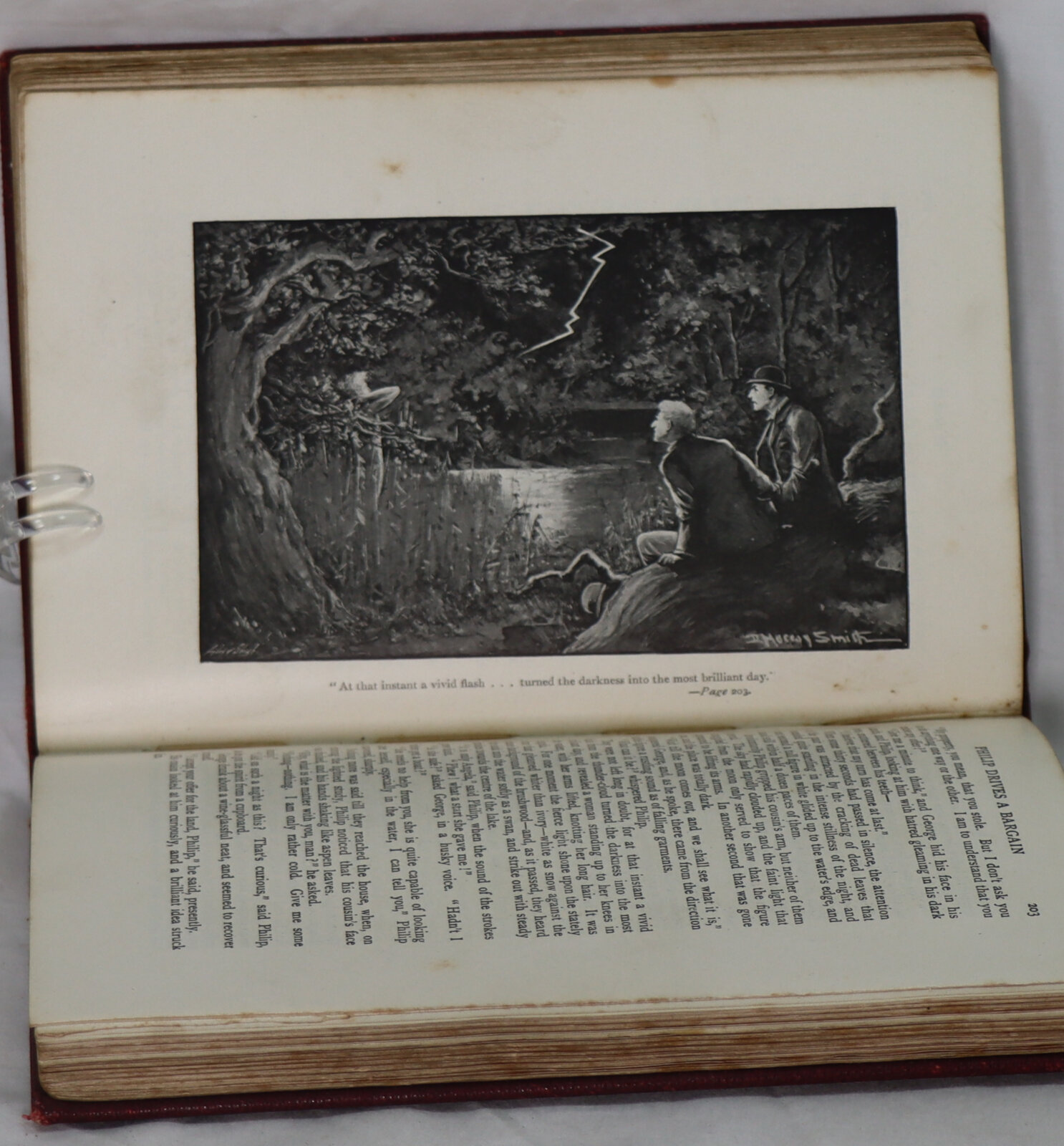
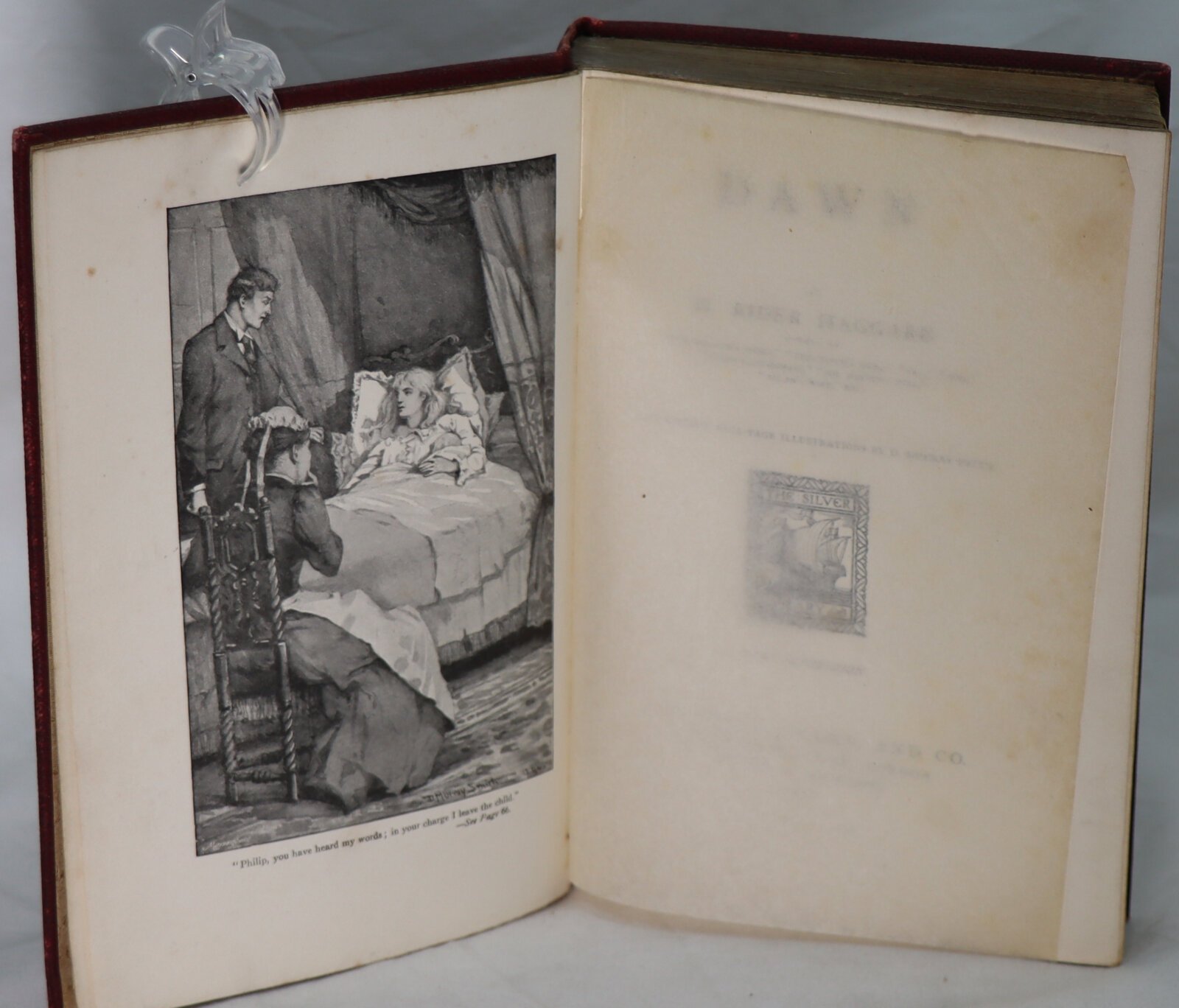
A book in fine, near new condition. Reprinted, originally published 1884. The author’s debut novel was adapted into a film in 1917. The story of Philip Caresfoot, a young man who is manipulated by his cousin George Caresfoot, following his journey as he navigates the complexities of love and family relationships.
Dawn (1884) is the debut novel by British writer H. Rider Haggard. Haggard later said he was inspired to write the book while living in Norwood. He and his wife were attending a church service when they saw sitting near them “a singularly beautiful and pure-faced young lady” Afterwards we agreed that this semi-divine creature — on whom to the best of my knowledge I have never set eyes again from that day to this — ought to become the heroine of a novel. So then and there we took paper, and each of us began to write the said novel. I think that after she had completed two or three folio sheets my wife ceased from her fictional labours. But, growing interested, I continued mine, which resulted in the story called “Dawn.” Haggard never found out who the girl was but was sufficiently inspired to write the first draft at Norwood in 1882, while studying for the Bar. The novel was originally called Angela, which was the first name of the heroine of the story; Angela was also the name of Haggard’s eldest daughter. Haggard later redrafted the novel several times, one version being called There Remaineth a Rest. He sent it out to several publishers but it was rejected. He rewrote it again and eventually it was accepted by a publisher. Haggard later said the thought the novel “ought to have been cut up into several stories” and was too full of “amateur villains”. He says the novel “was more or less of a failure — of course I mean at that time, for after years it became extraordinarily successful.” It initially earned Haggard profits of ten pounds. The novel was filmed in 1917.

Sir Henry Rider Haggard KBE (22 June 1856 – 14 May 1925) was an English writer of adventure fiction romances set in exotic locations, predominantly Africa, and a pioneer of the lost world literary genre. He was also involved in land reform throughout the British Empire. His stories, situated at the lighter end of Victorian literature, continue to be popular and influential.
Want to know more about this item?
We are happy to answer any questions you may have about this item. In addition, it is also possible to request more photographs if there is something specific you want illustrated.
Ask a question
Related products

Share this Page with a friend
