
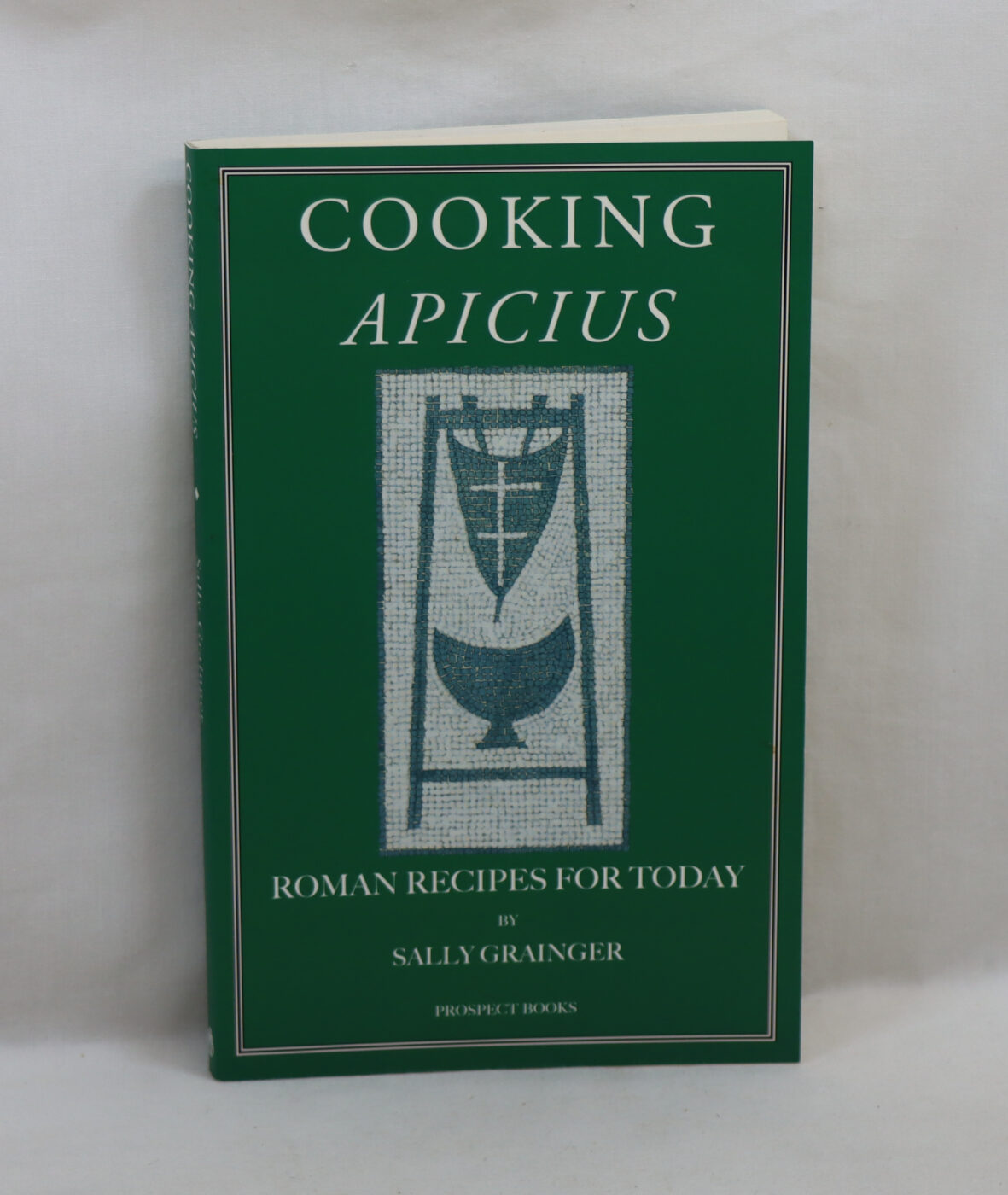
Cooking Apicus.
By Sally Grainger
ISBN: 9781903018446
Printed: 2006
Publisher: Prospect Books. Totnes
| Dimensions | 14 × 22 × 1 cm |
|---|---|
| Language |
Language: English
Size (cminches): 14 x 22 x 1
Condition: Fine (See explanation of ratings)
£10.00
Buy Now

Item information
Description
Paperback. Green cover with white title.
We provide an in-depth photographic presentation of this item to stimulate your feeling and touch. More traditional book descriptions are immediately available
-
A FROST PAPERBACK is a loved book which a member of the Frost family has checked for condition, cleanliness, completeness and readability. When the buyer collects their book, the delivery charge of £3.00 is not made.
For conditions, please view our photographs. A nice clean original book from the library gathered by the famous Cambridge Don, computer scientist, food and wine connoisseur, Jack Arnold LANG.
Jack founded the Michelin Guide ‘Midsummer House’- Cambridge’s paramount restaurant. This dining experience is hidden amongst the grassy pastures and grazing cattle of Midsummer Common and perched on the banks of the River Cam.
Sally Grainger has gathered, in one convenient volume, her modern interpretations of 64 of the recipes in the original text. This is not recipes inspired by the old Romans’ but rather a serious effort to convert the extremely gnomic instructions in the Latin into something that can be reproduced in the modern kitchen which actually gives some idea of what the Romans might have eaten. Sally Grainger, therefore, has taken great pains to suggest means of replicating the particular Roman taste for fermented fish sauce. It may sound unpleasant, but actually is not too far removed from the fish sauces of the Far East and any reproduction of Roman cookery must depend on getting this particular aspect right.
Review: Cooking Apicius is not a translation of the Roman recipe book, Grainger does this elsewhere. Rather, Grainger has assembled some of the best and most readily accessible recipes from that volume, omitting the overly lavish and the downright complicated. Roman recipes are often very vague and include neither measurements nor timings; here the author has, through experimentation, arrived at what she considers to be the quantities and methods most likely to work. Some of these recipes require rather unusual ingredients, but Grainger provides excellent information on procuring or making these ingredients for yourself. Beyond the recipes, Grainger’s introduction is fascinating for historians and cooks alike, providing some great context. For anybody with even the slightest interest in the Romans, food, or indeed Roman food, this is the book I would go to first.
Want to know more about this item?
We are happy to answer any questions you may have about this item. In addition, it is also possible to request more photographs if there is something specific you want illustrated.
Ask a question
Related products
Share this Page with a friend
