
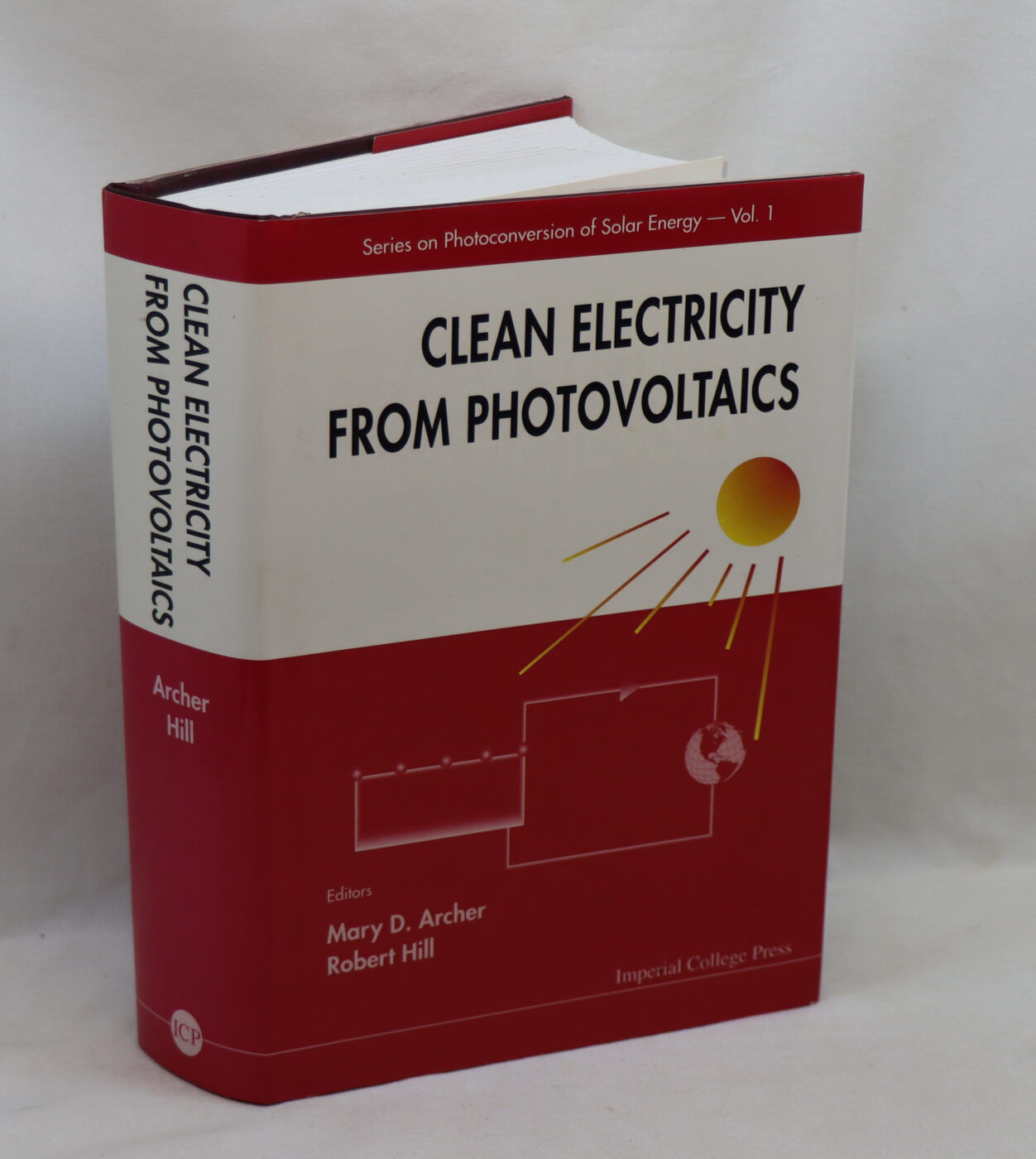
Clean Electricity from Photovoltaics.
Printed: 2001
Publisher: Imperial College Press. London
| Dimensions | 17 × 23 × 5 cm |
|---|---|
| Language |
Language: English
Size (cminches): 17 x 23 x 5
Condition: Very good (See explanation of ratings)
£78.00
Buy Now

Item information
Description
In the original dust cover. Maroon board binding with silver title on the spine and front board.
- We provide an in-depth photographic presentation of this item to stimulate your feeling and touch. More traditional book descriptions are immediately available
- Note: This book carries a £5.00 discount to those that subscribe to the F.B.A. mailing list
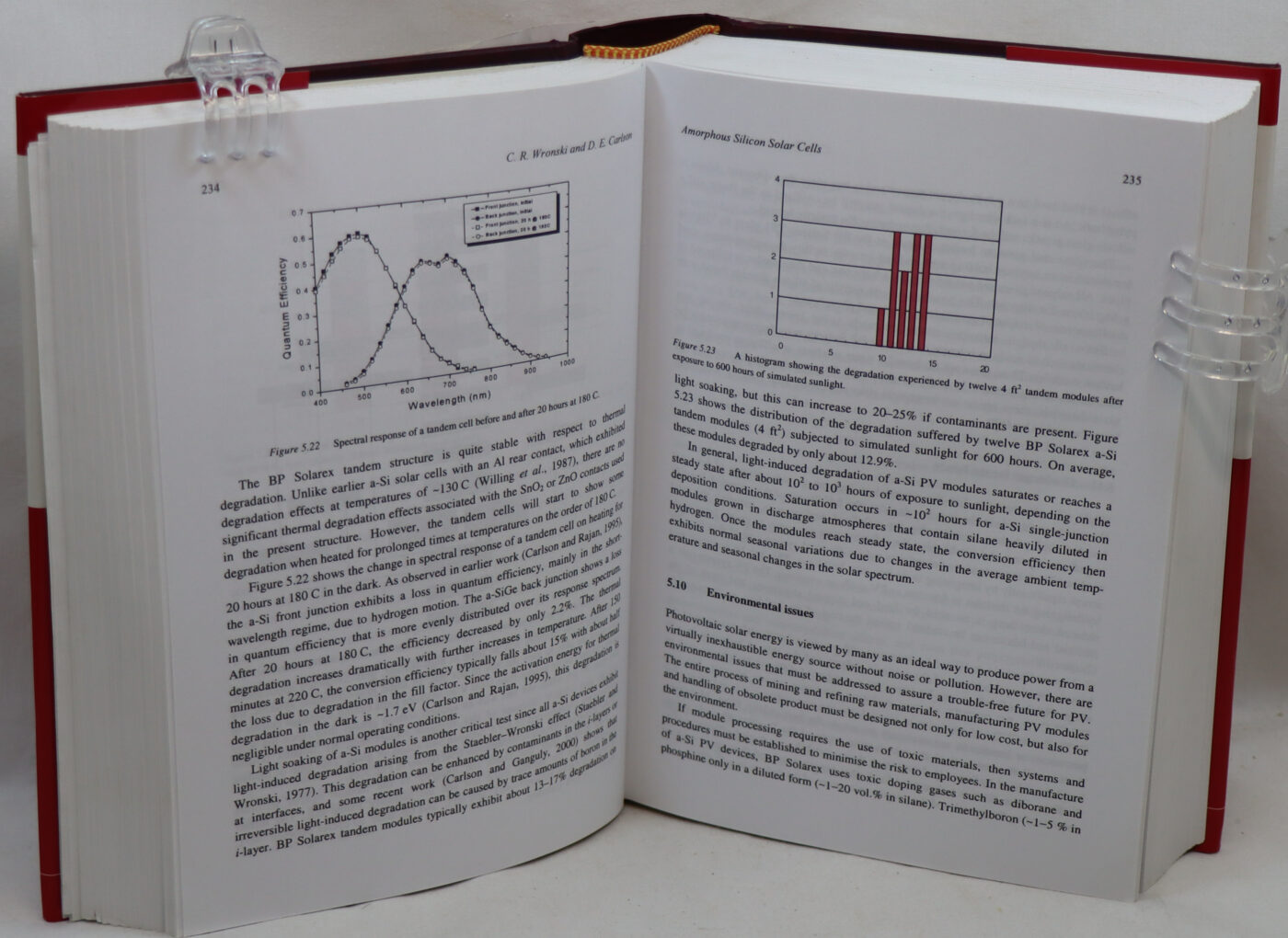
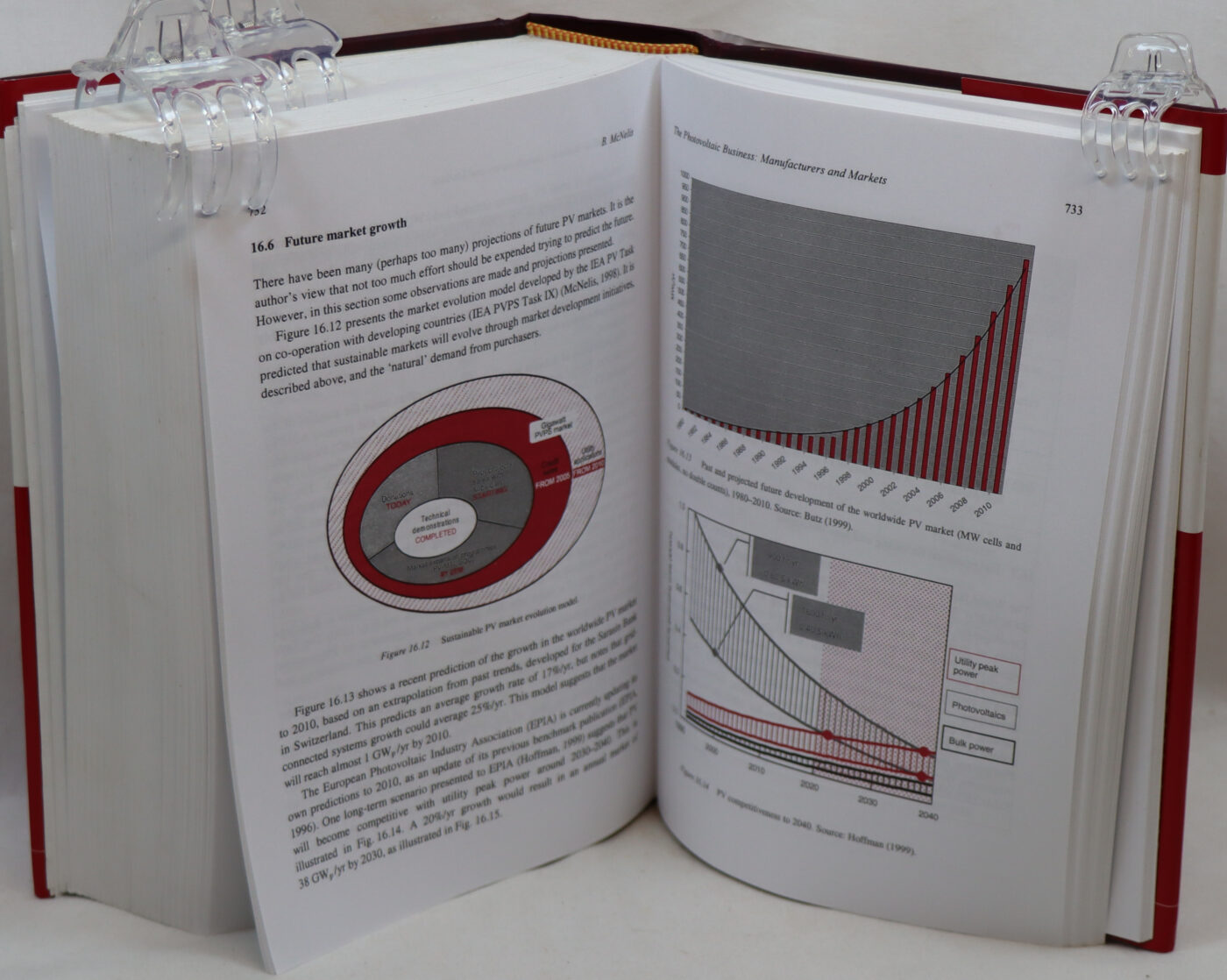
Photovoltaic cells provide clean, reversible electrical power from the sun. Made from semiconductors, they are durable, silent in operation and free of polluting emissions. In this book, experts from all sectors of the PV community ― materials scientists, physicists, production engineers, economists and environmentalists ― give their critical appraisals of where the technology is now and what its prospects are.
Review”… is an excellent resource for its intended readership of students, scientists and technologists working in the area … it is well indexed, and includes a handy list of useful web and library references. At the very least, the book deserves a place in the library of every research institution and company working on renewable energy.” Nature “With a broad range of coverage, many references in each chapter, and an appendix listing useful quantities, factors and symbols, this book would be an excellent reference source for any one working in the field of photovoltaics.” IEEE Electrical Insulation Magazine “It is timely, up-to-date and a very comprehensive work. The chapters are written by leading experts in their field who are able to communicate the technology and their enthusiasm … Photovoltaic R&D is a multi-disciplinary activity, and most chapters should be accessible to advanced undergraduate students, postgraduates and researchers with a wide range of backgrounds. It can be recommended to those starting a PhD in the area and to existing researchers in other fields who wish to find out what all the excitement is about.” Contemporary Physics
NOTE: This is an original book from the library gathered by the famous Cambridge Don, computer scientist, food and wine connoisseur, Jack Arnold LANG. Note: Jack founded the Michelin Guide ‘Midsummer House’- Cambridge’s paramount restaurant. This dining experience is hidden amongst the grassy pastures and grazing cattle of Midsummer Common and perched on the banks of the River Cam.
In 2008, Jack was one of the co-founders of the Raspberry Pi Foundation, alongside other members of the Department, and acted as the Foundation’s Chair. The project’s original goals were modest: to build and distribute low-cost computers for prospective applicants to our Computer Science degree. Initially the project was a “success disaster”, as Jack would say, as demand far outstripped the low-scale manufacturing plans. Ultimately the Raspberry Pi became the UK’s most successful computer with more than 60 million sold to date. Jack was drawn to the educational possibilities of the Raspberry Pi, its potential uses in emerging economies and the way it could support self-directed learning.
Want to know more about this item?
We are happy to answer any questions you may have about this item. In addition, it is also possible to request more photographs if there is something specific you want illustrated.
Ask a question







Share this Page with a friend
