
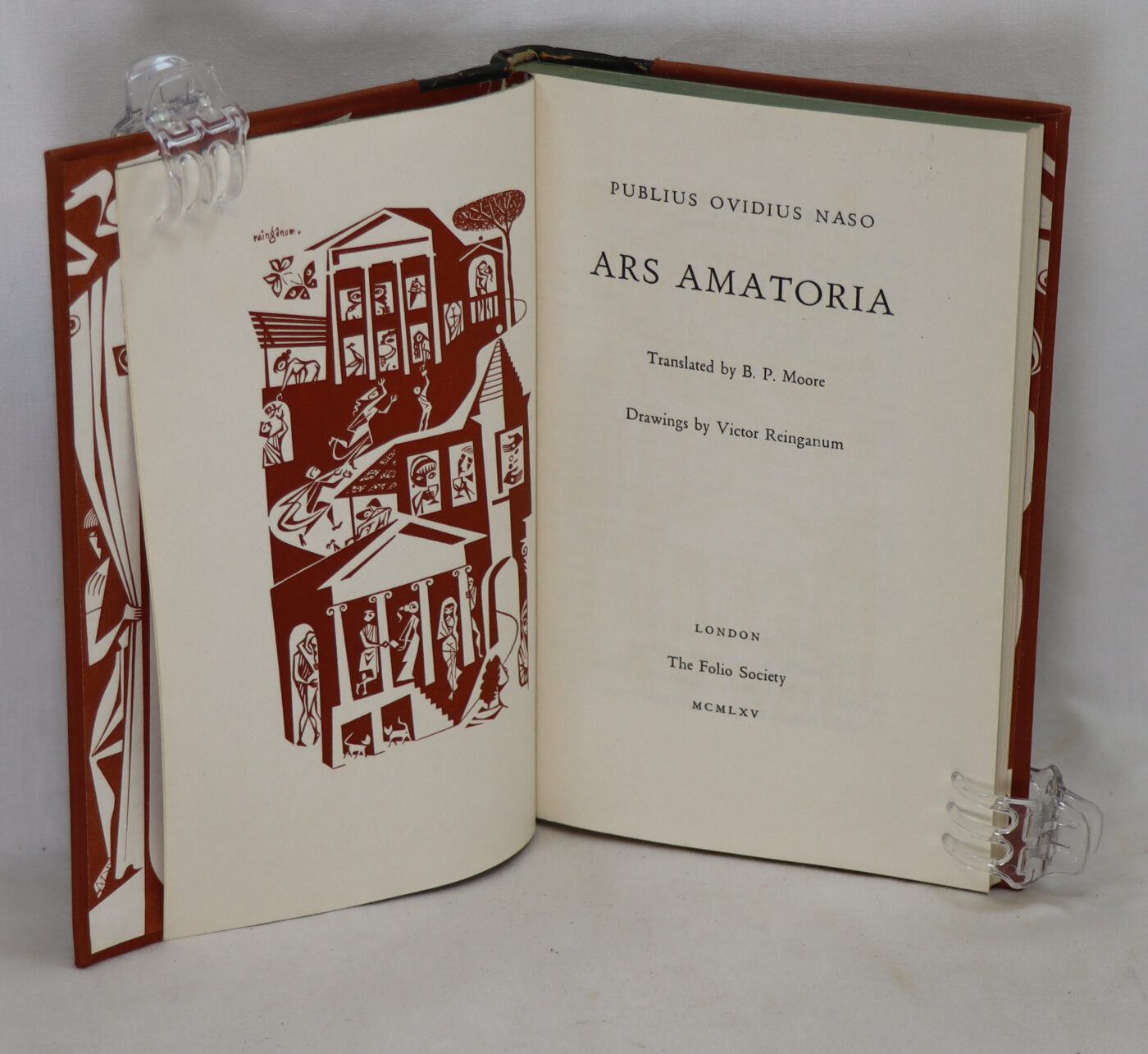
Ars Amaroria. Ovid.
By Publius Ovidus Naso
Printed: 1965
Publisher: The Folio Society. London
| Dimensions | 13 × 19 × 1.5 cm |
|---|---|
| Language |
Language: English
Size (cminches): 13 x 19 x 1.5
Condition: Good (See explanation of ratings)
£16.00
Buy Now

Item information
Description
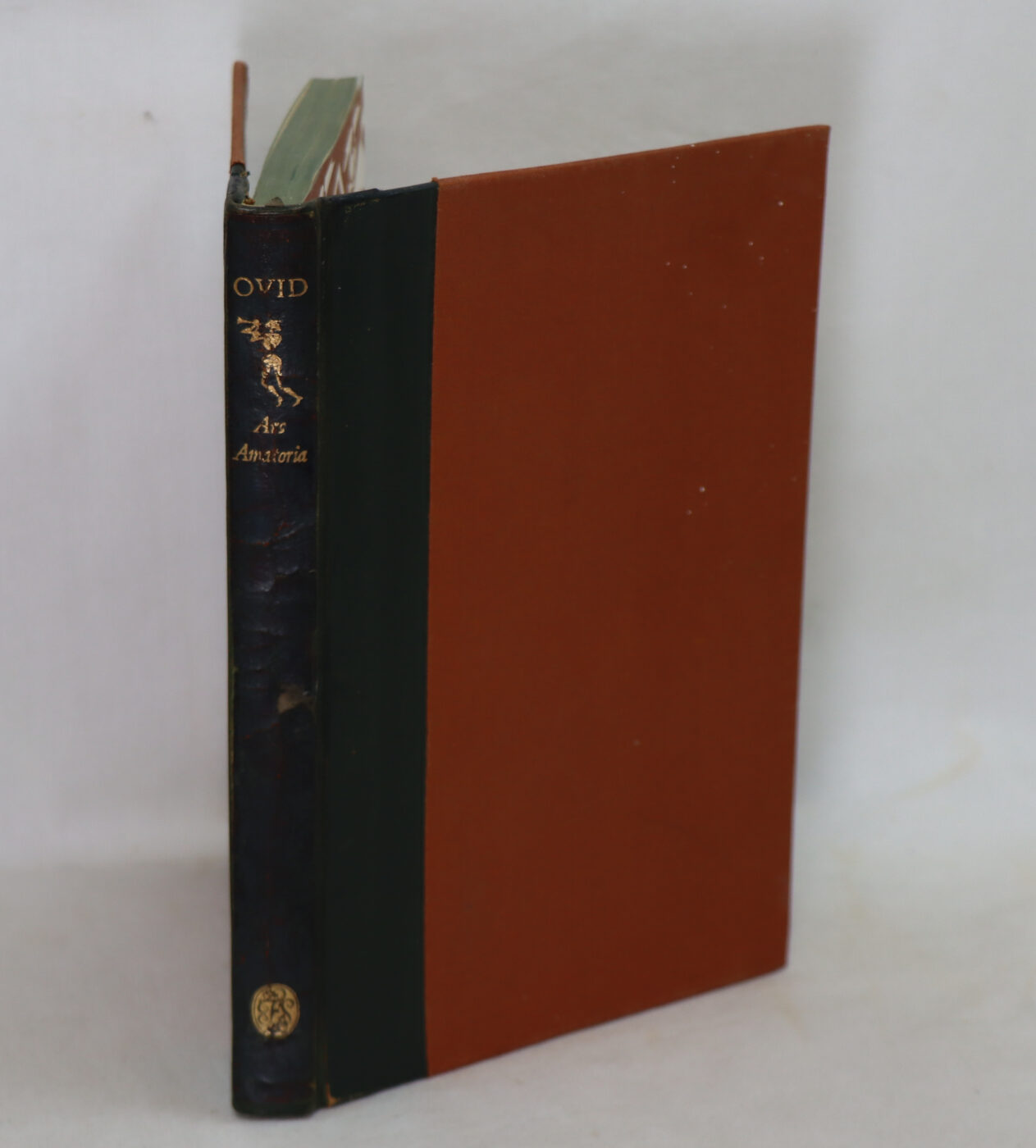
Brown calf spine with gilt title. Brown cloth boards.
Translated by B.P.Moore.
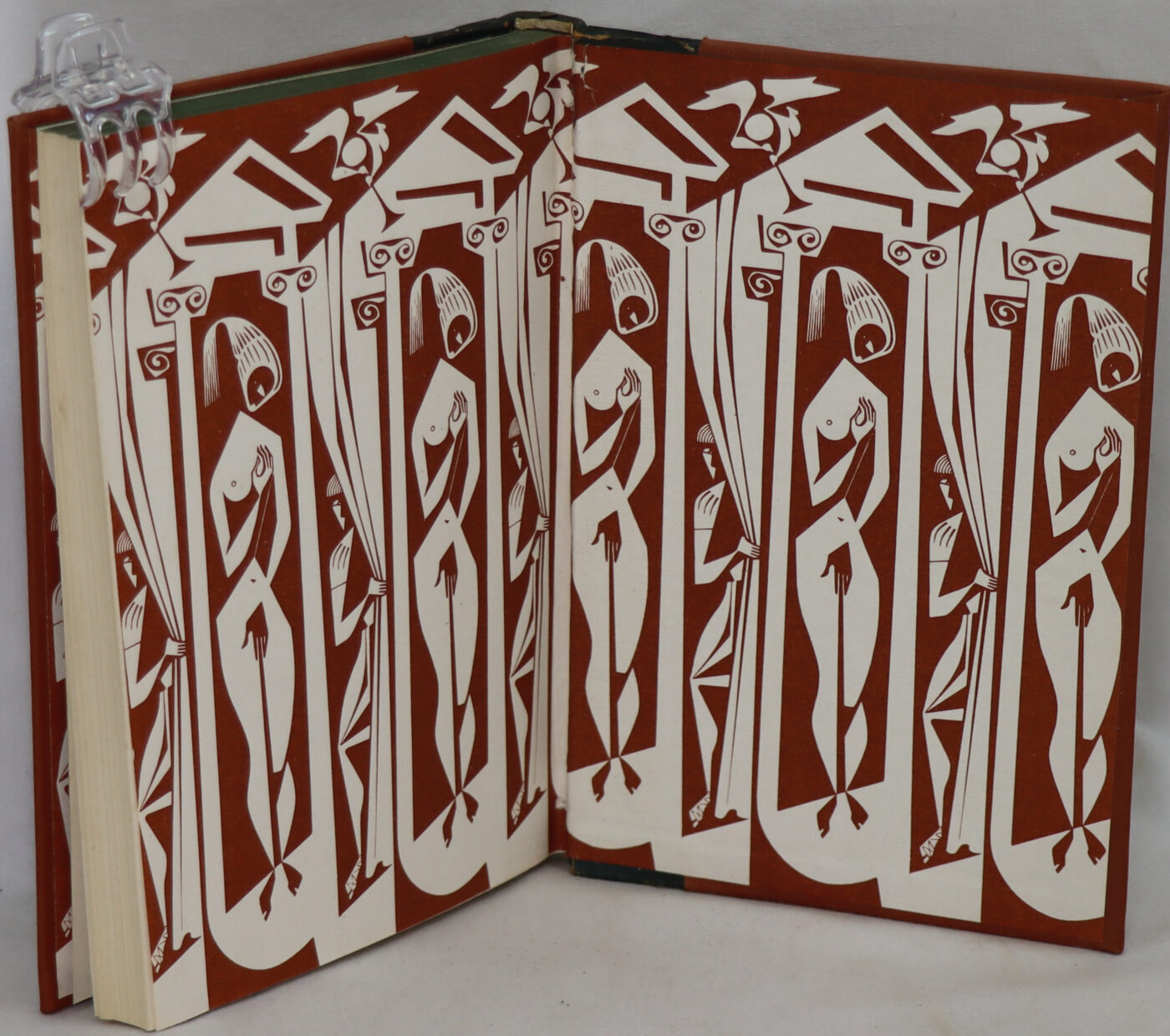
Please view the photographs
The Ars amatoria (The Art of Love) is an instructional elegy series in three books by the ancient Roman poet Ovid. It was written in 2 AD.
Content: Book one of Ars amatoria was written to show a man how to find a woman. In book two, Ovid shows how to keep her. These two books contain sections which cover such topics as “not forgetting her birthday”, “letting her miss you – but not for long”, and “not asking about her age”.
The third book, written two years after the first books were published, gives women advice on how to win and keep the love of a man (“I have just armed the Greeks against the Amazons; now, Penthesilea, it remains for me to arm thee against the Greeks…”). Sample themes of this book include: “making up, but in private”, “being wary of false lovers”, and “trying young and older lovers”.
The standard situations of finding love are presented in an entertaining way. Ovid includes details from Greek mythology, everyday Roman life and general human experience. The Ars amatoria is composed in elegiac couplets, rather than the dactylic hexameters, which are more usually associated with the didactic poem.
Publius Ovidius Naso (20 March 43 BC – AD 17/18), known in English as Ovid was a Roman poet who lived during the reign of Augustus. He was a younger contemporary of Virgil and Horace, with whom he is often ranked as one of the three canonical poets of Latin literature. The Imperial scholar Quintilian considered him the last of the Latin love elegists. Although Ovid enjoyed enormous popularity during his lifetime, the emperor Augustus exiled him to Tomis, the capital of the newly organised province of Moesia, on the Black Sea, where he remained for the last nine or ten years of his life. Ovid himself attributed his banishment to a carmen et error (“poem and a mistake”), but his reluctance to disclose specifics has resulted in much speculation among scholars.
Ovid is most famous for the Metamorphoses, a continuous mythological narrative in fifteen books written in dactylic hexameters. He is also known for works in elegiac couplets such as Ars Amatoria (“The Art of Love”) and Fasti. His poetry was much imitated during Late Antiquity and the Middle Ages, and greatly influenced Western art and literature. The Metamorphoses remains one of the most important sources of classical mythology today.
Want to know more about this item?
We are happy to answer any questions you may have about this item. In addition, it is also possible to request more photographs if there is something specific you want illustrated.
Ask a question


Share this Page with a friend
