
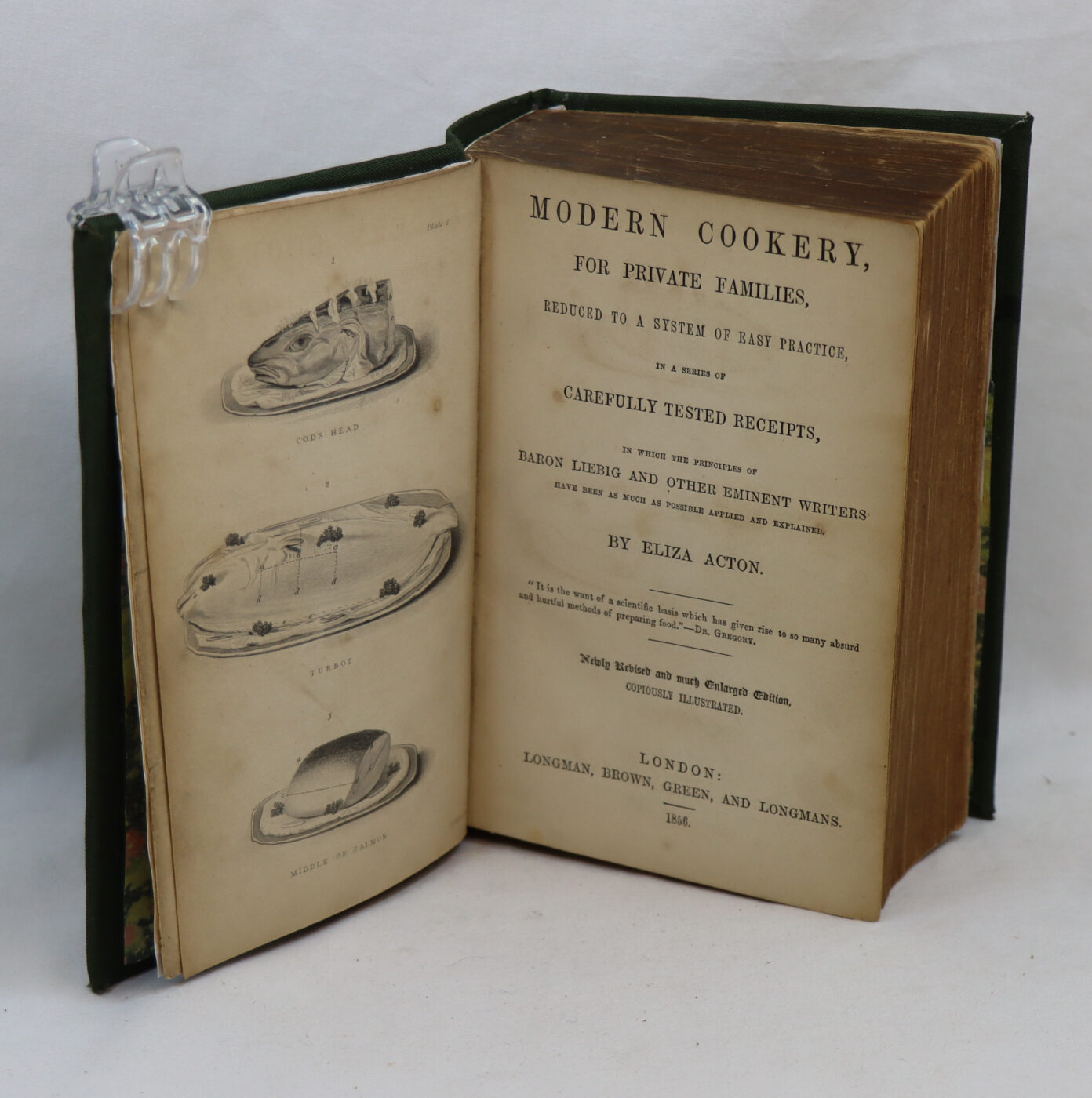
Modern Cookery for Private Families.
By Eliza Acton
Printed: 1856
Publisher: Longman Brown Green & Longmans. London
| Dimensions | 13 × 18 × 6 cm |
|---|---|
| Language |
Language: English
Size (cminches): 13 x 18 x 6
Condition: Good (See explanation of ratings)
£600.00
FREE shipping
Buy Now

Item information
Description
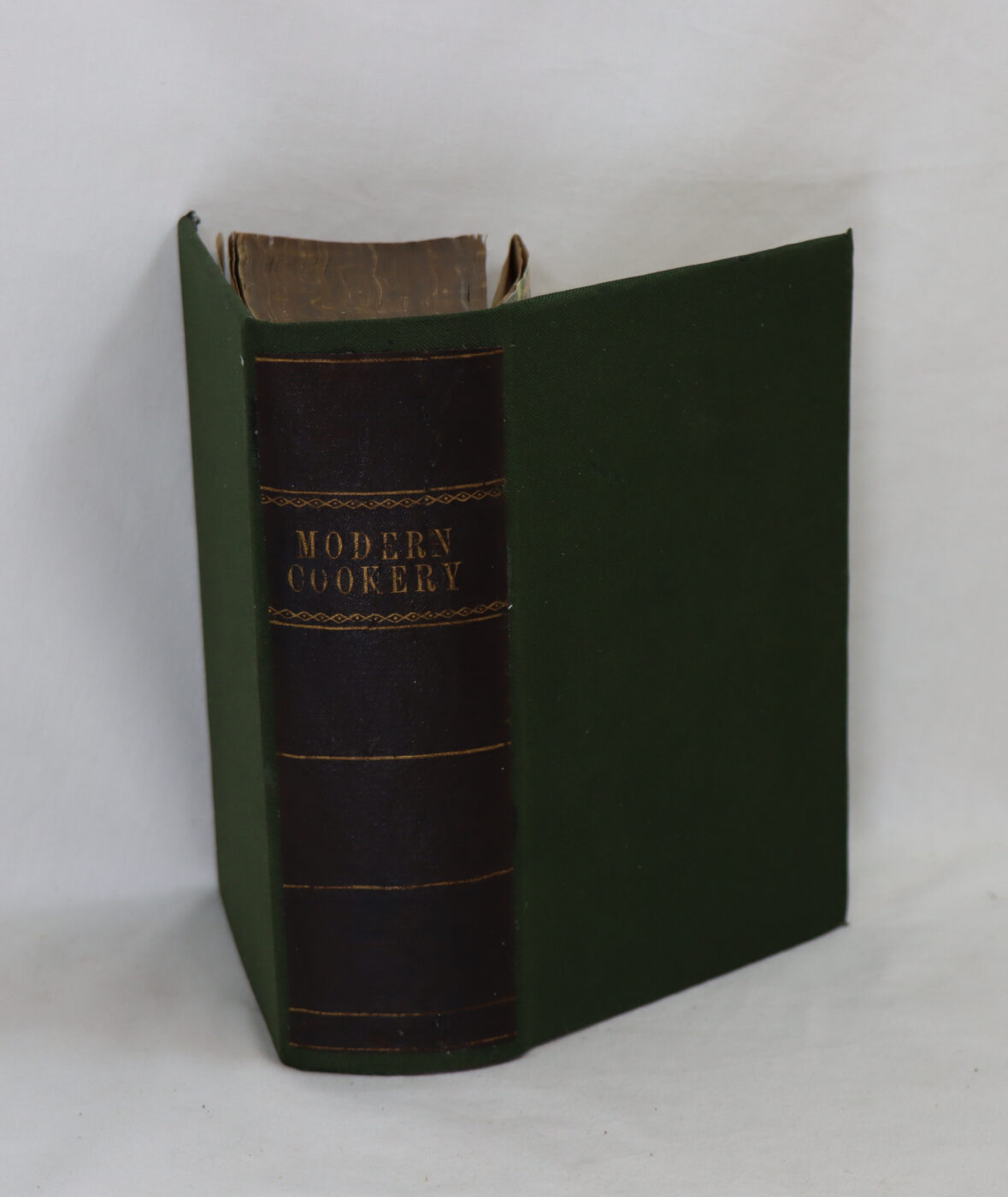
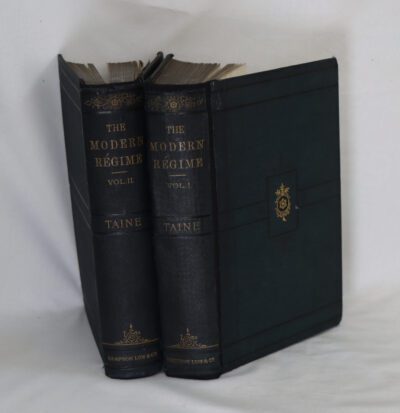
Rebound in green cloth. Original title plate on the spine.
We provide an in-depth photographic presentation of this item to stimulate your feeling and touch. More traditional book descriptions are immediately available.
-
Note: This book carries a £5.00 discount to those that subscribe to the F.B.A. mailing list
Please view our photographs. An original 1856 printing of Eliza Acton’s Modern Cookery for Private Families published by Longman, Brown, Green, & Longmans is a highly collectible piece of culinary history. Acton’s work is celebrated as the first truly modern cookbook because it pioneered the practice of systematically listing exact ingredient quantities and precise cooking times.
Given its “Good” condition and rebound cloth binding, this specific 1856 edition carries an estimated antiquarian market value of £350 + £250 for the Jack Lang Midsummer connection.
Historical Value & Significance
-
The Blueprint for Modern Recipes: Before Acton, historical cookbooks were written as vague prose paragraphs without structural ingredient lists. Acton changed how the world cooks by introducing the format we use today.
-
The 1856 Expanded Edition: The mid-1850s printings are particularly interesting to collectors because Acton significantly expanded the book ten years after its 1845 debut, adding pioneer chapters on “Eastern” curries, chutneys, and Jewish cookery.
-
Plagiarism by Mrs Beeton: Acton’s recipes were so precise and reliable that Isabella Beeton later copied many of them heavily (and without acknowledgement) for her famous Book of Household Management.
Market Value Reference
Because these mid-Victorian volumes vary based on state, similar antiquarian listings help establish its current market standing:
|
Edition / Condition |
Binding Style |
Notable Elements |
Est. Market Price |
|
1845 First Edition |
Original brown cloth |
Extremely rare first state |
£1,250 |
|
1847–1849 Early Editions |
Rebound cloth / Morocco leather |
Retains frontispiece & 7 plates |
£385 – £650 |
|
1856 Edition (This Copy) |
Standard publisher’s cloth |
Expanded text, expected minor foxing |
£150 – £350 + £250 |
|
1865 Later Edition |
Faded / loose brown cloth |
Complete text but heavily worn |
£165 |
Complete Chapter Contents
This 1856 volume is the “Newly Revised and Much Enlarged” edition. It contains an expanded layout compared to the 1845 original, spanning 34 chapters alongside introductory guides:
-
Introductory Framework: Preface, Vocabulary of Terms (principally French), Table of Contents, Trussing (poultry/game), and Carving.
-
Chapters 1–5 (Basics & Foundations): Soups, Fish, Shell-Fish, Gravies, and Sauces.
-
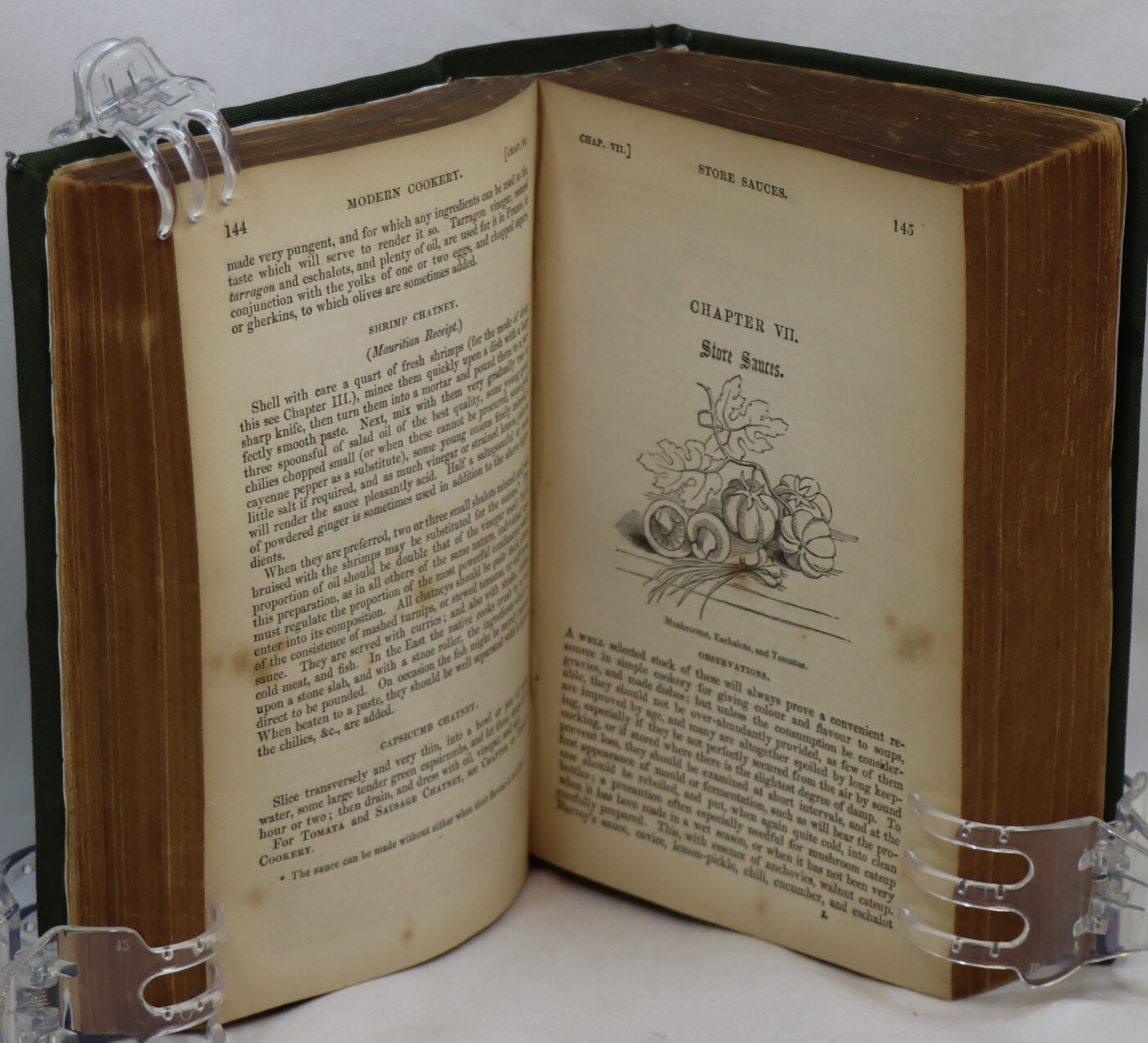
Chapters 6–9 (Accompaniments): Cold Sauces/Salads, Store Sauces, Forcemeats, and General Cooking Methods (Boiling, Roasting, etc.).
-
Chapters 10–15 (Butchery & Game): Beef, Veal, Mutton, Pork, Poultry, and Game.
-
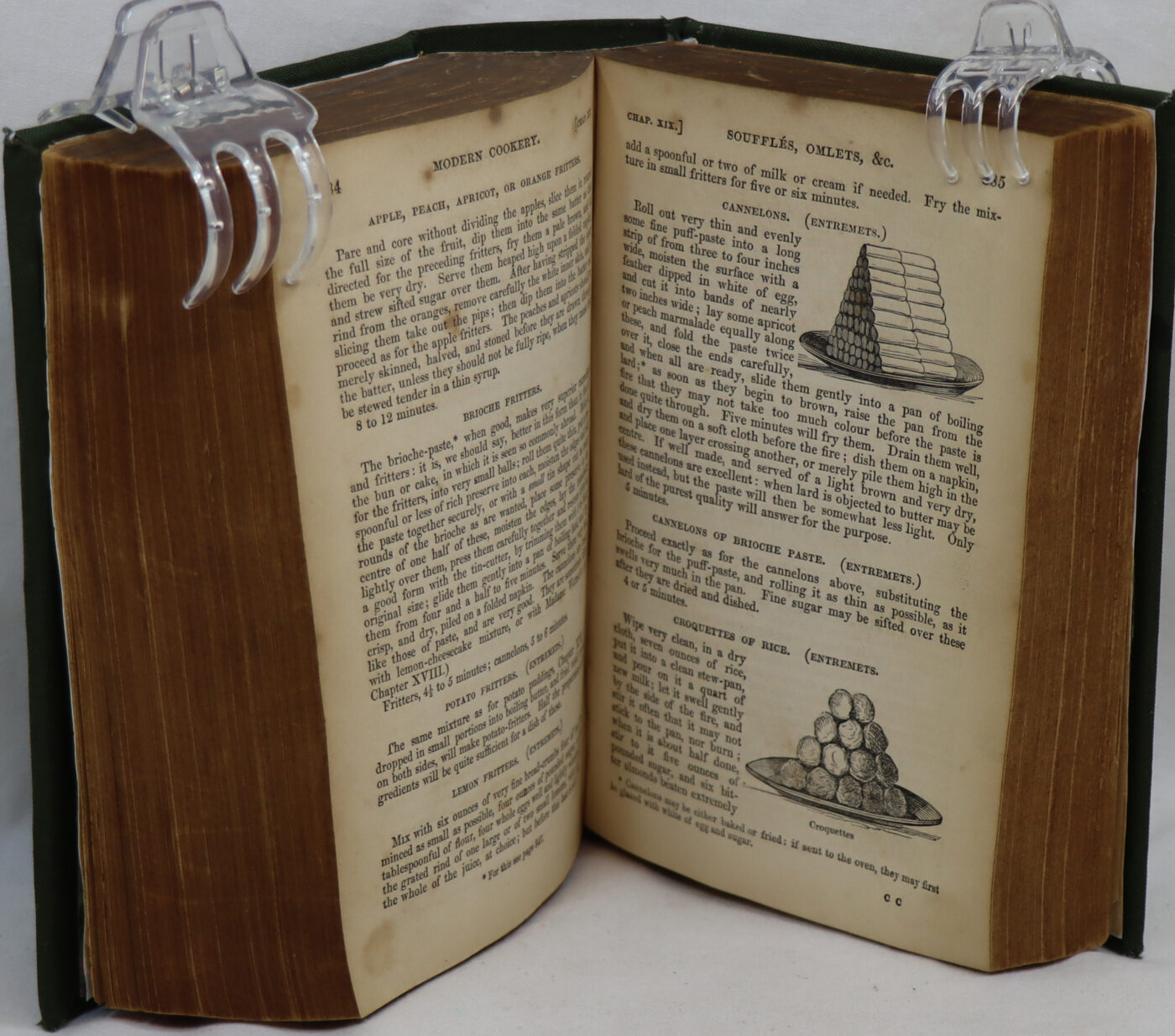
Chapters 16–20 (Sides & Pastry): Curries/Potted Meats, Vegetables, Pastry, Soufflés/Omelets, and Boiled Puddings.
-
Chapters 21–25 (Desserts & Dairy): Baked Puddings, Eggs and Milk, Sweet Dishes (Entremets), Preserves, and Pickles.
-
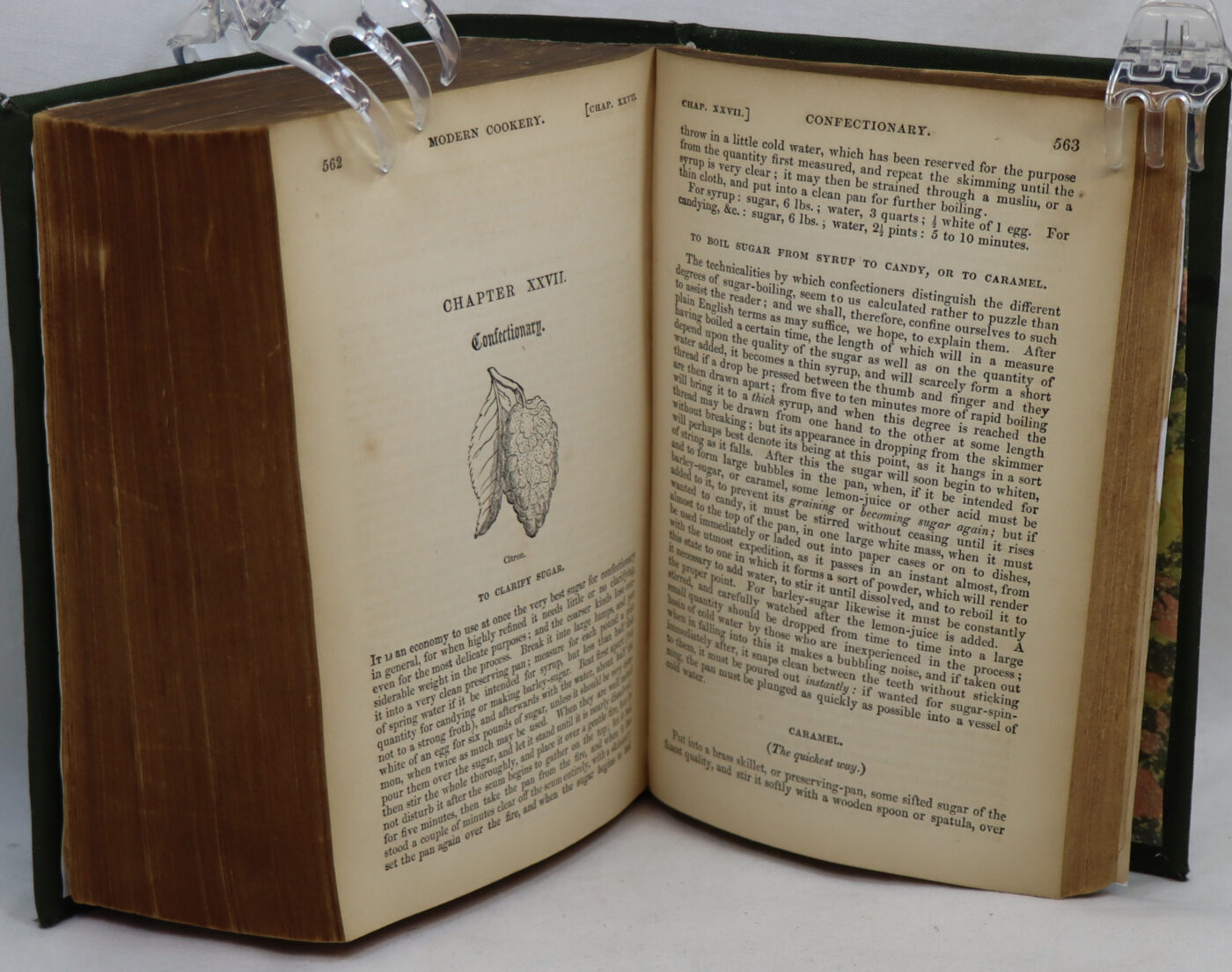
Chapters 26–30 (Baking & Confectionery): Cakes, Confectionery, Dessert Dishes, Syrups/Liqueurs, and Coffee/Chocolate.
-
Chapters 31–34 (Specialist Categories): Bread-making, Foreign and Jewish Cookery (added specifically to these mid-1850s editions).
Expected Selling Price Breakdown
-
Antiquarian Dealer Sale: If selling directly to a rare book dealer, expect to receive roughly 40% to 50% of the retail market value. Dealers buy lower to account for overhead and the time the volume sits on shelves.
-
Specialist Cookery Auction (c £350): A dedicated culinary or antiquarian auction can reach the top end of the evaluation if two collectors compete for it. Note that auction houses typically levy a 15% to 25% seller’s premium.
-
The Jack Lang & Midsummer House premium (£150 – £250).
NOTE: This is an original book from the library gathered by the famous Cambridge Don, computer scientist, food and wine connoisseur, Jack Arnold LANG. Note: Jack founded the Michelin Guide ‘Midsummer House’- Cambridge’s paramount restaurant. This dining experience is hidden amongst the grassy pastures and grazing cattle of Midsummer Common and perched on the banks of the River Cam.
In 2008, Jack was one of the co-founders of the Raspberry Pi Foundation, alongside other members of the Department, and acted as the Foundation’s Chair. The project’s original goals were modest: to build and distribute low-cost computers for prospective applicants to our Computer Science degree. Initially the project was a “success disaster”, as Jack would say, as demand far outstripped the low-scale manufacturing plans. Ultimately the Raspberry Pi became the UK’s most successful computer with more than 60 million sold to date. Jack was drawn to the educational possibilities of the Raspberry Pi, its potential uses in emerging economies and the way it could support self-directed learning.
Condition notes
Rebound
Want to know more about this item?
We are happy to answer any questions you may have about this item. In addition, it is also possible to request more photographs if there is something specific you want illustrated.
Ask a question
Related products
Share this Page with a friend
