
Jane Austen's Worthing. The Real Sanditon.
By Anthony Edmonds
Printed: 2015
Publisher: Amberley Publishing. Stroud
| Dimensions | 17 × 24 × 1 cm |
|---|---|
| Language |
Language: English
Size (cminches): 17 x 24 x 1
Condition: As new (See explanation of ratings)
£7.00
Buy Now

Item information
Description
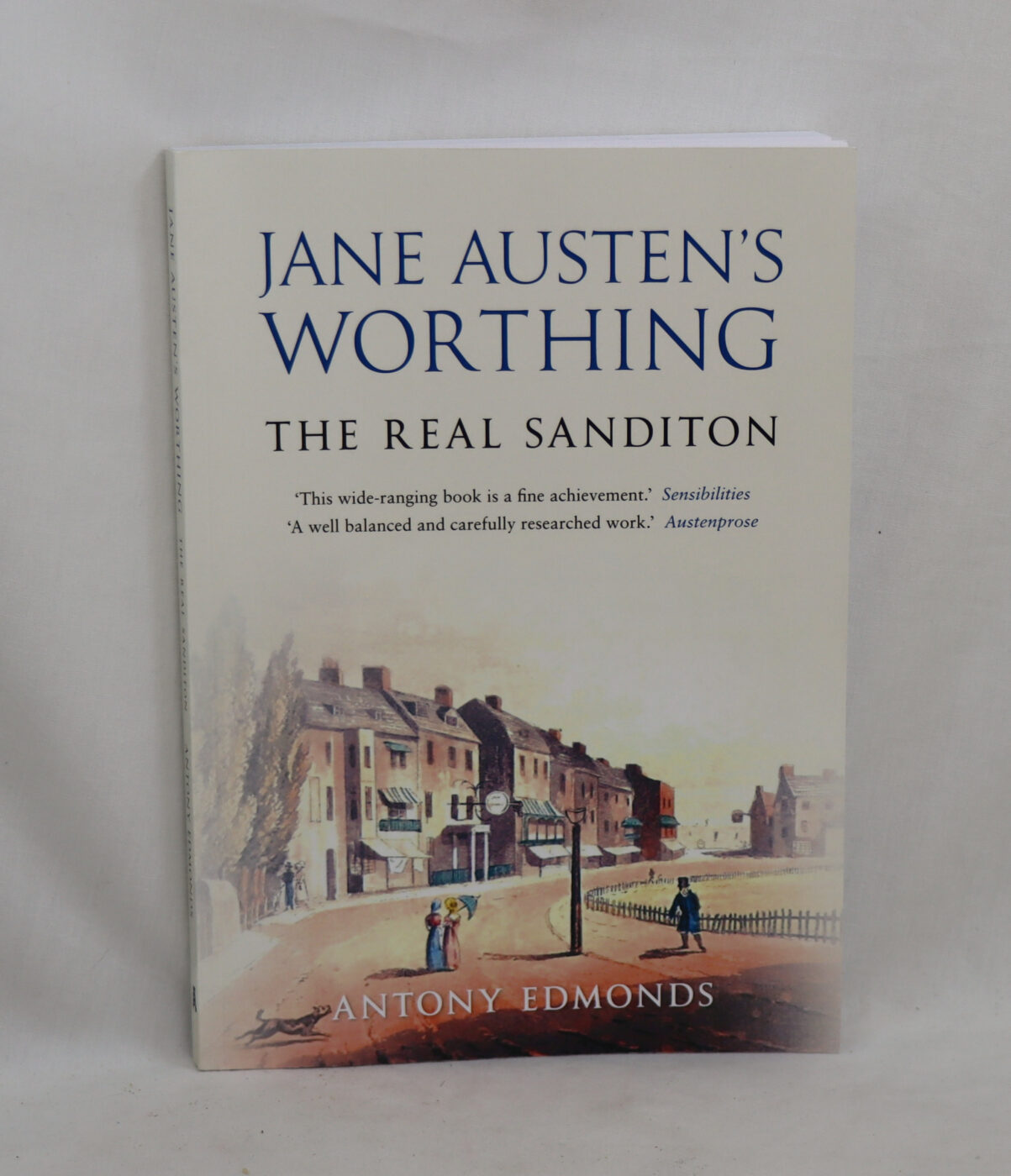
Paperback. Cream cover with black title.
We provide an in-depth photographic presentation of this item to stimulate your feeling and touch. More traditional book descriptions are immediately available.
- A £2 reduction when collected from FBA shop
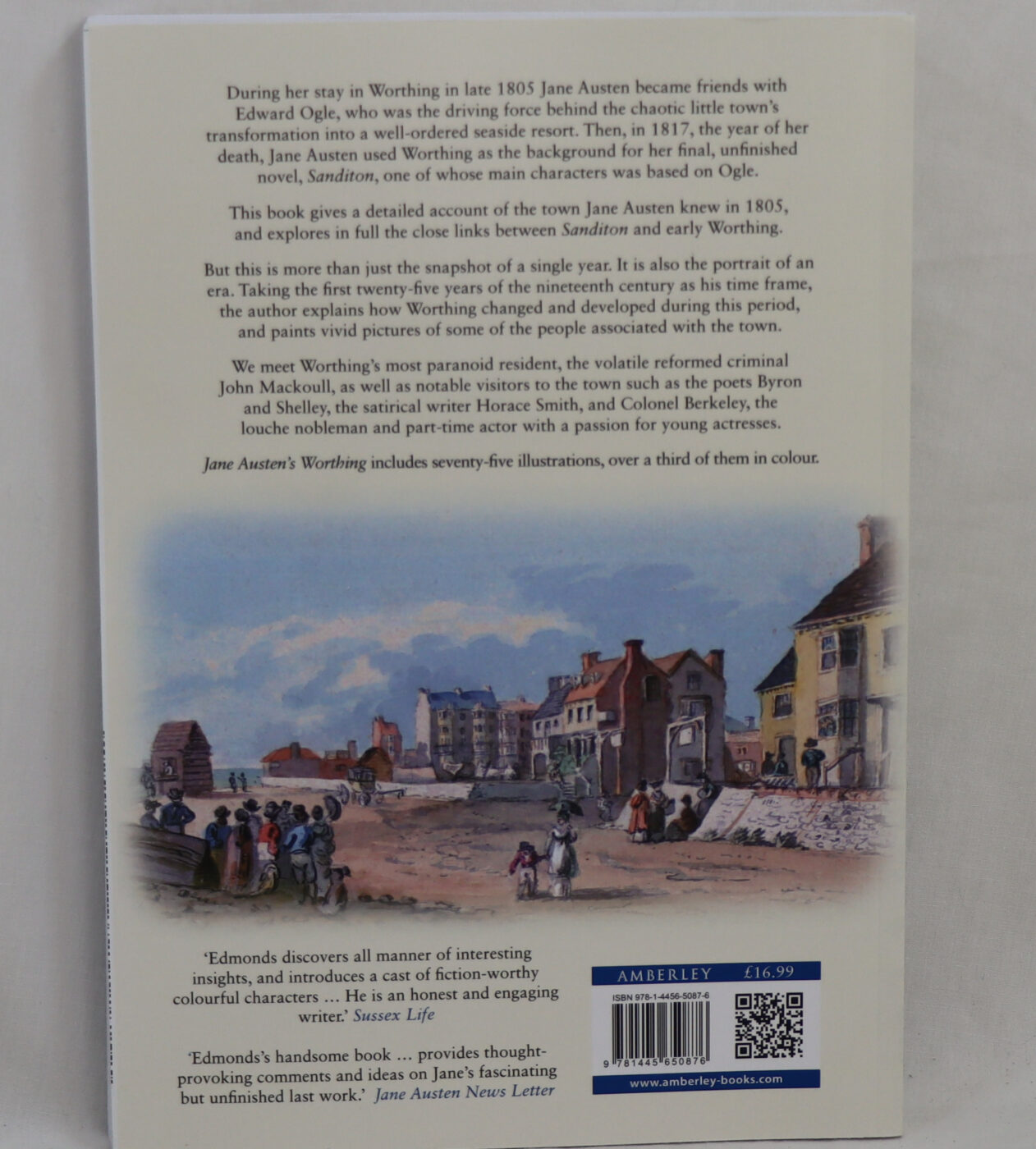
Please view our photographs. “Jane Austen’s Worthing: The Real Sanditon” by Antony Edmonds is a meticulously researched historical work published by Amberley Publishing in Stroud. The book establishes the definitive, real-world connection between early 19th-century Worthing and Sanditon, the coastal town featured in Jane Austen’s final, unfinished masterwork.
Book Details & Availability
- The Work: Explores the transformation of the Sussex seaside resort under Edward Ogle, the real-life inspiration for Austen’s fictional characters.
- Features: Includes 75 historical illustrations, maps, and color plates outlining early Worthing.
NOTE: Edward Ogle was a prominent 19th-century property developer who served as the primary real-life inspiration for Mr. Parker, the enthusiastic town speculator in Jane Austen’s final, unfinished novel, Sanditon.
The connection between the author and the developer dates back to late 1805, when Austen stayed at Stanford’s Cottage in Worthing, Sussex, for several weeks following the death of her father. At the time, Ogle was Worthing’s chief citizen and the primary driving force transforming the chaotic town into a fashionable, well-ordered seaside resort—building a theatre, a market, the Colonnade Library, and the Steyne Hotel.
Key Aspects of Their Relationship
- Personal Acquaintance: Historical letters prove that Austen and her sister, Cassandra, became friendly with Ogle during their 1805 holiday. In a November 1813 letter to her sister, Austen fondly refers to him as “Sweet Mr Ogle,” adding, “I dare say he sees all the Panoramas for nothing, has free-admittance everywhere; he is so delightful!”
- Literary Parallel (Mr. Parker): When Austen began writing Sanditon in 1817 (the year of her death), she used early Worthing as the model for her fictional commercialised resort. Ogle’s intense passion for real estate speculation and attracting “select society” perfectly mirrored the character of Mr. Parker, who aggressively promoted the health benefits and social status of his fictional town.
- Historical Documentation: This direct link and portrait of early 19th-century resort culture was brought to light and explored thoroughly by historian Antony Edmonds in his book, Jane Austen’s Worthing: The Real Sanditon.
Want to know more about this item?
We are happy to answer any questions you may have about this item. In addition, it is also possible to request more photographs if there is something specific you want illustrated.
Ask a question
Related products
Share this Page with a friend
