
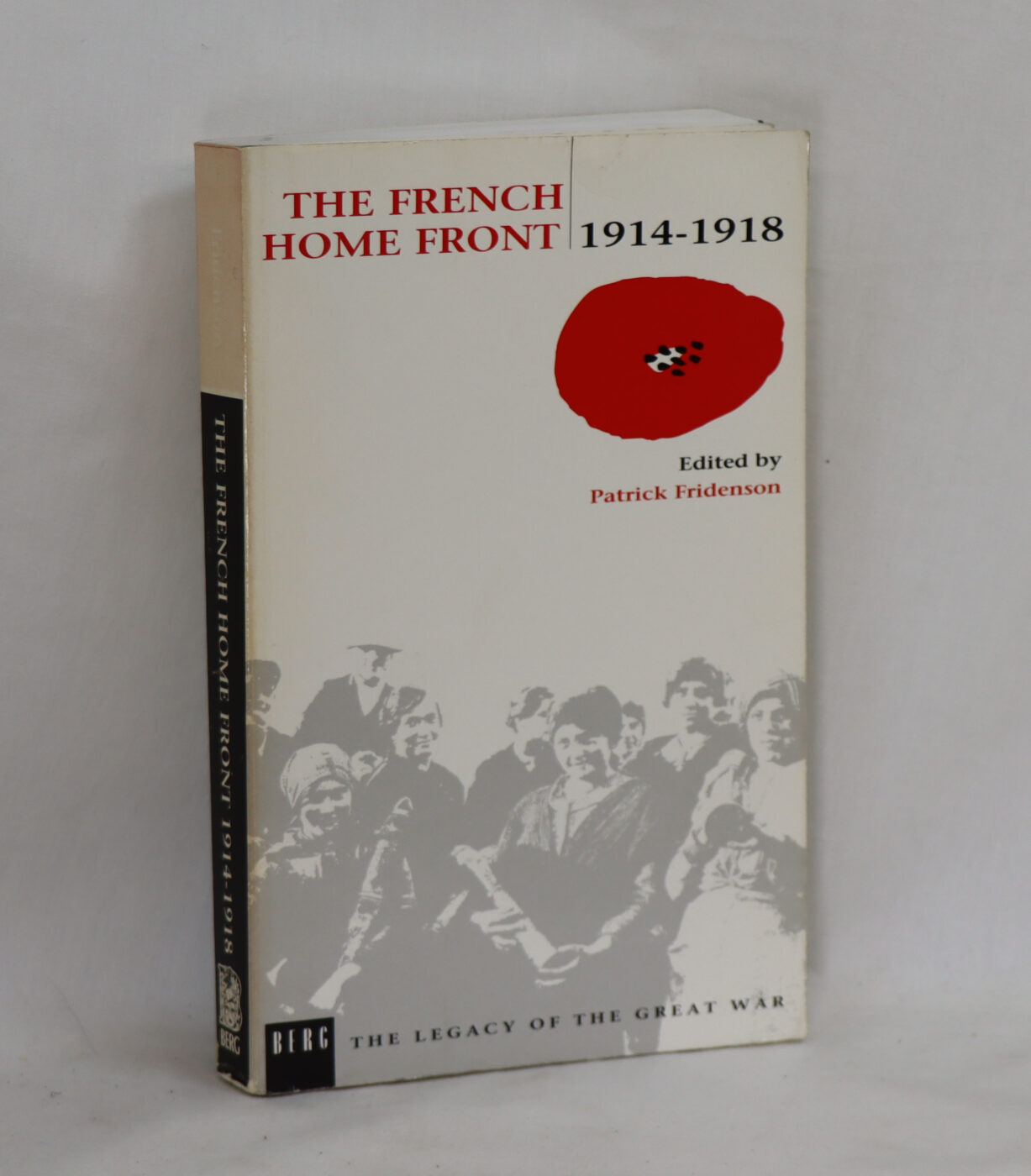
The French Home Front 1914-18.
By Patrick Fridenson
ISBN: 0854967702
Printed: 1992
Publisher: Berg. Oxford
| Dimensions | 14 × 22 × 2 cm |
|---|---|
| Language |
Language: English
Size (cminches): 14 x 22 x 2
Condition: Good (See explanation of ratings)
£47.00
Buy Now

Item information
Description
Paperback. White cover with red title.
We provide an in-depth photographic presentation of this item to stimulate your feeling and touch. More traditional book descriptions are immediately available.
- Note: This book carries a £5.00 discount to those that subscribe to the F.B.A. mailing list
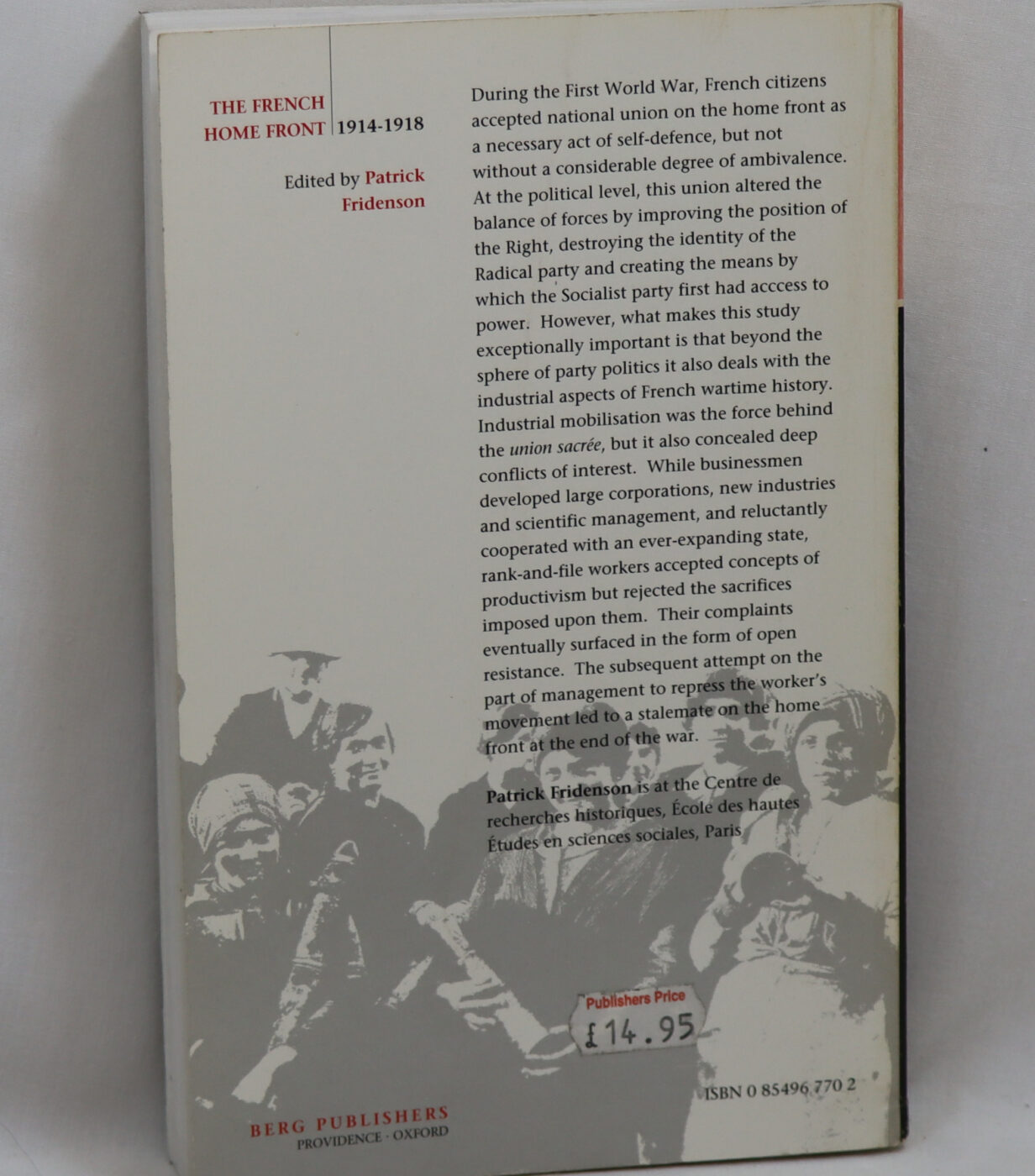
Please view our photographs and read the rubric on the rear cover. The French Home Front 1914-18 by Patrick Fridenson, published by Berg in 1992 is an academic history text that analyses how French society, politics, and economics transformed internally during World War I. It typically carries a high retail value because it is an out-of-print academic volume, with second-hand copies in “Good” condition generally valued between £35 and £65 depending on current marketplace scarcity.
Historical Content & Summary
Rather than treating the war as a complete break from the past, Fridenson’s work argues that pre-existing economic trends and social conflicts in France persisted through the war years, but were accelerated and reshaped by the unique pressures of the conflict. Key themes explored in the text include:
- The Union Sacrée (Sacred Union): How the initial political truce—where left-wing syndicalists and right-wing nationalists agreed to freeze political conflicts—eventually fractured under economic strain and war weariness.
- Economic Transformation: The dramatic shift toward state-controlled war industrialisation, which laid the foundation for modern French industrial planning and corporate management.
- Labour & Gender Shifts: The massive influx of women, colonial workers, and foreign laborers into French factories to replace mobilised male soldiers, altering traditional labor dynamics.
- Social Unrest: The rising tide of domestic strikes, food shortages, inflation, and public war fatigue that culminated in significant worker protests toward the latter half of the war (1917–1918).
Want to know more about this item?
We are happy to answer any questions you may have about this item. In addition, it is also possible to request more photographs if there is something specific you want illustrated.
Ask a question
Related products





Share this Page with a friend
