
Their Majesties' Servants.
By Dr Doran
Printed: 1897
Publisher: John C Nimmo. London
| Dimensions | 15 × 21 × 4 cm |
|---|---|
| Language |
Language: English
Size (cminches): 15 x 21 x 4
Condition: Good (See explanation of ratings)
£464.00
FREE shipping
Buy Now

Item information
Description
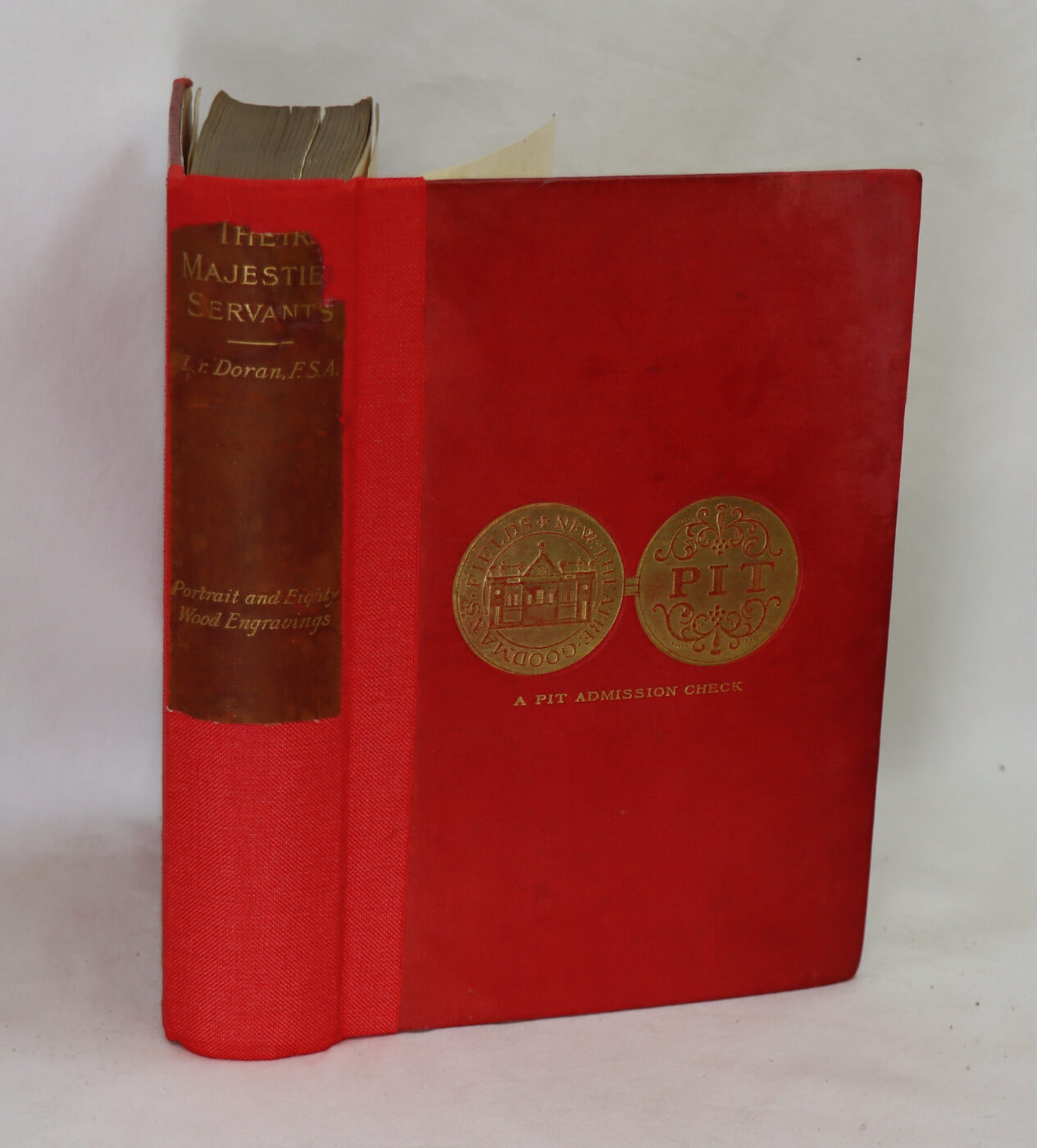
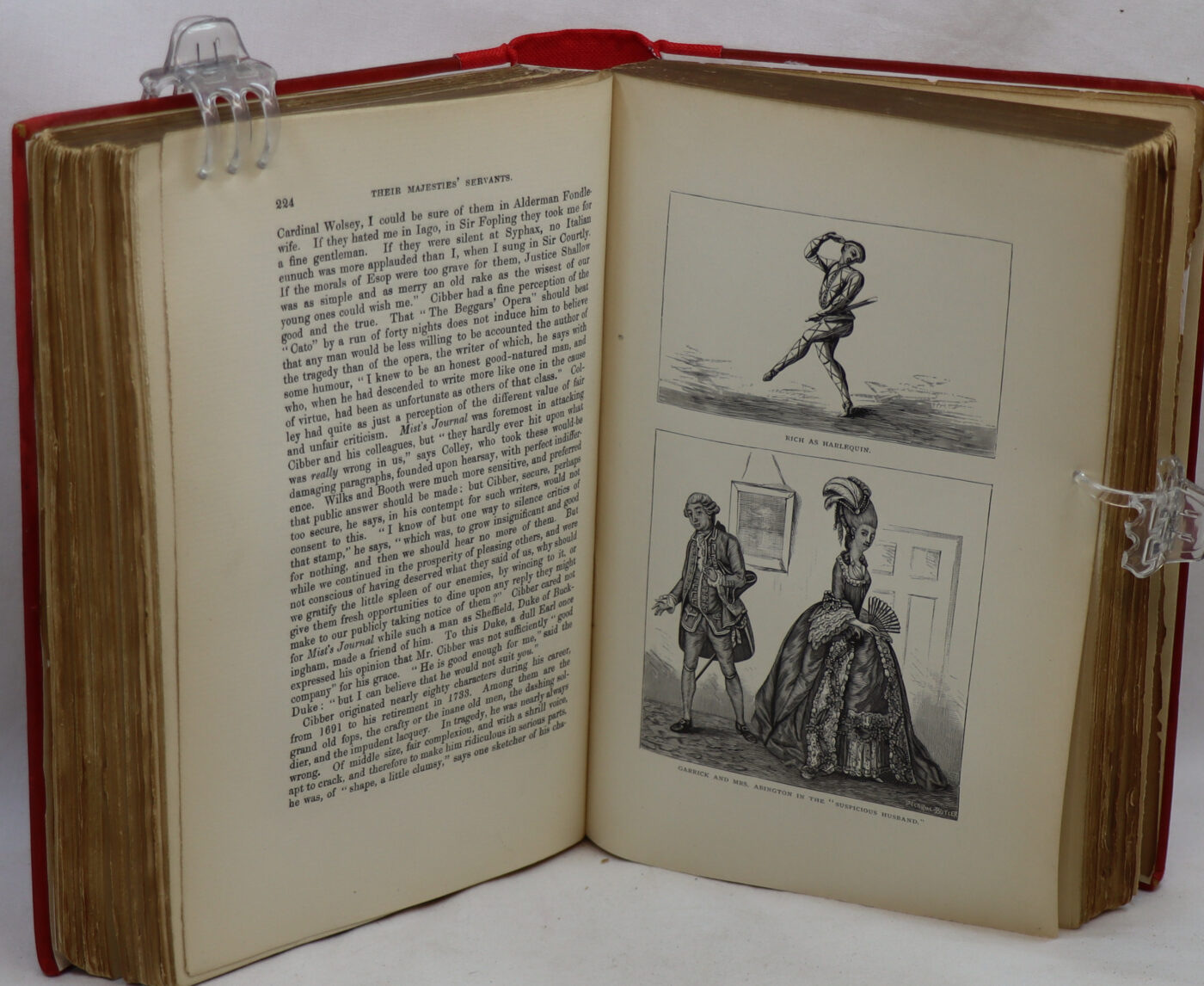
Red cloth binding with gilt title and on the rebacked spine. Gilt emblem on the front board.
We provide an in-depth photographic presentation of this item to stimulate your feeling and touch. More traditional book descriptions and interior photographs are immediately available.
-
Note: This book carries a £5.00 discount to those that subscribe to the F.B.A. mailing list
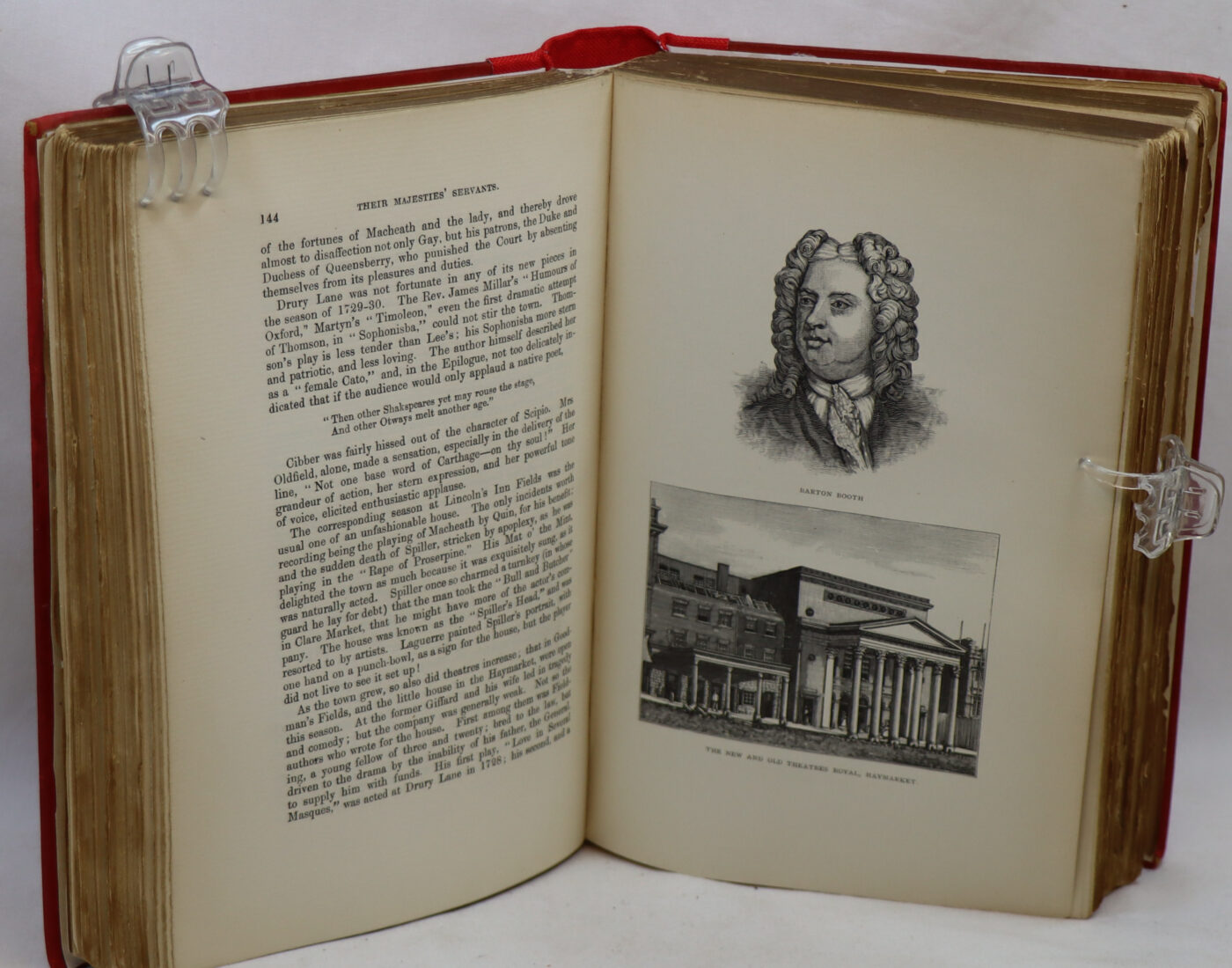
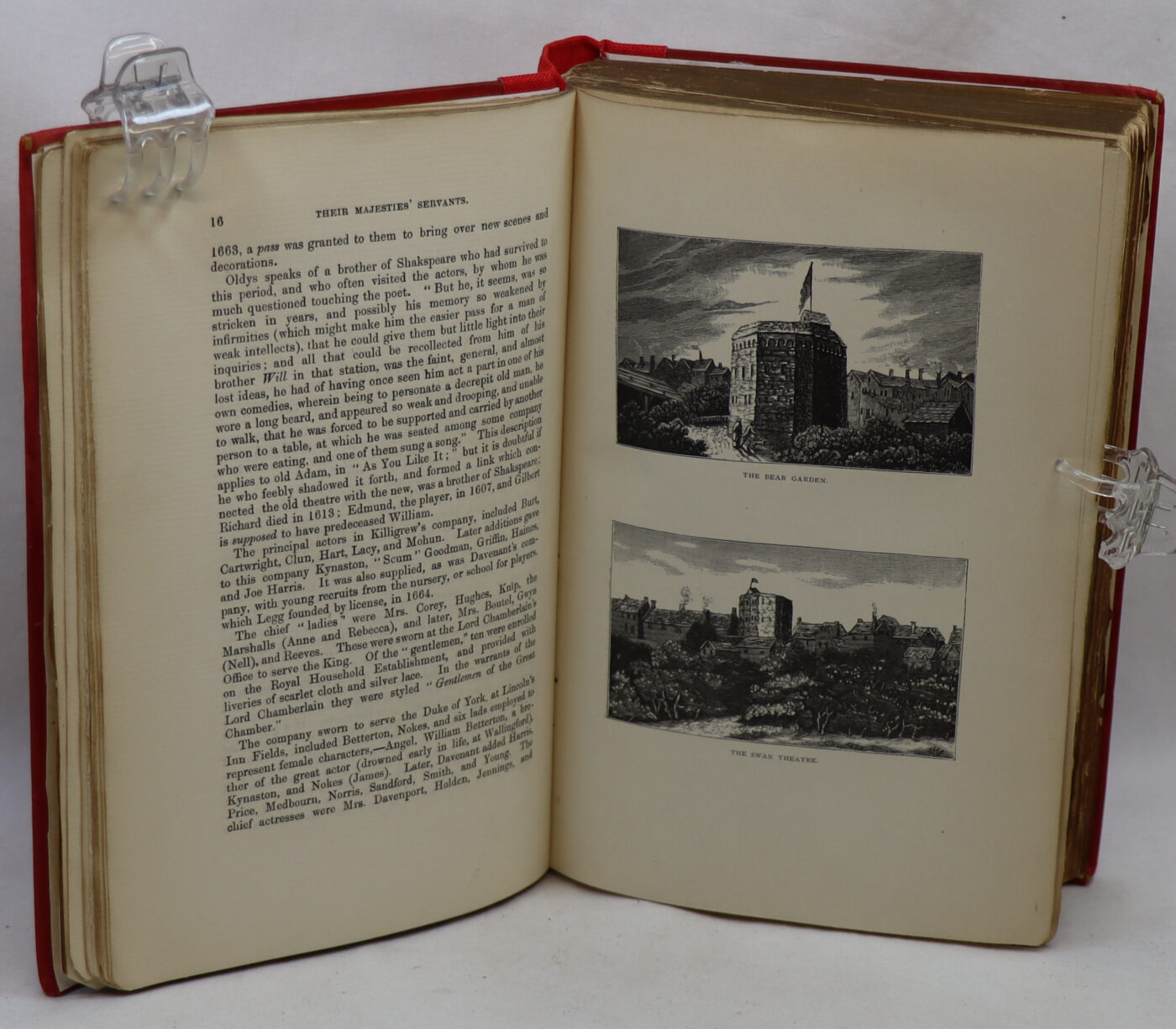
Please view our photographs. This is a very rare revamped People’s Edition with 80 superb wood engravings. Without doubt Dr Doran’s work is the landmark work of English theatre during the 19th century.
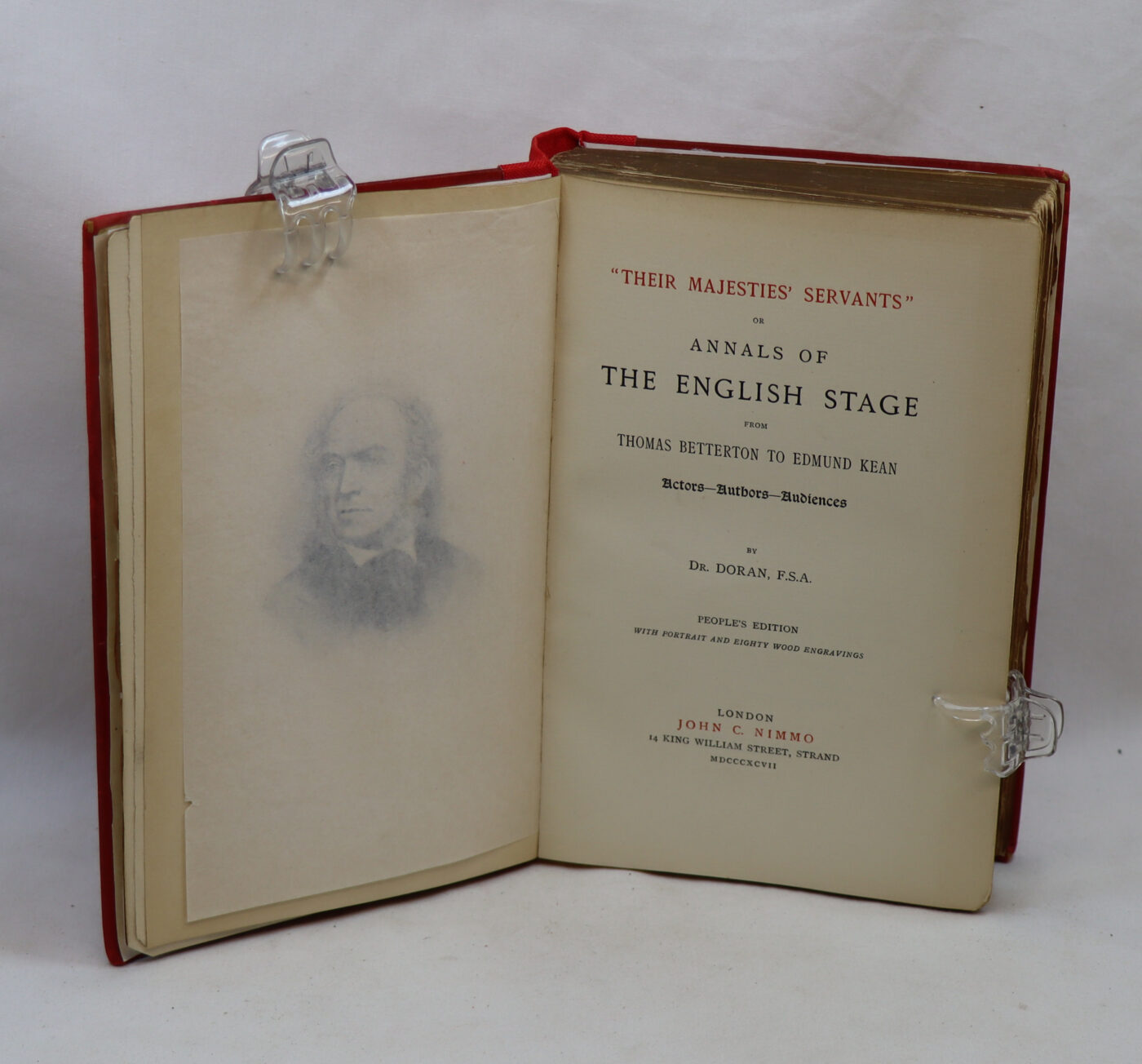
John Doran (11 March 1807 – 25 January 1878) was an English editor and miscellaneous writer of Irish parentage, wrote a number of works dealing with the lighter phases of manners, antiquities, and social history, often bearing punning titles, e.g., Table Traits with Something on Them (1854), and Knights and their Days. He edited Horace Walpole’s Journal of the Reign of George III.. Among other posts, Doran was for a short time editor of The Athenaeum. In 1860 Doran published his most elaborate work, Their Majesties’ Servants, a history of the English stage, of which a new edition was issued in 1887, revised by Robert W. Lowe, and the single volume People’s Edition in 1897.
This is an original book from the library gathered by the famous Cambridge Don, computer scientist, food and wine connoisseur, Jack Arnold LANG. This copy was obtained by Jack’s most famous grandmother. Note: Jack founded the Michelin Guide ‘Midsummer House’- Cambridge’s paramount restaurant. This dining experience is hidden amongst the grassy pastures and grazing cattle of Midsummer Common and perched on the banks of the River Cam.
In 2008, Jack was one of the co-founders of the Raspberry Pi Foundation, alongside other members of the Department, and acted as the Foundation’s Chair. The project’s original goals were modest: to build and distribute low-cost computers for prospective applicants to our Computer Science degree. Initially the project was a “success disaster”, as Jack would say, as demand far outstripped the low-scale manufacturing plans. Ultimately the Raspberry Pi became the UK’s most successful computer with more than 60 million sold to date. Jack was drawn to the educational possibilities of the Raspberry Pi, its potential uses in emerging economies and the way it could support self-directed learning.
Condition notes
rebacked
Want to know more about this item?
We are happy to answer any questions you may have about this item. In addition, it is also possible to request more photographs if there is something specific you want illustrated.
Ask a question

Share this Page with a friend
