
The History of the High Court of Parliament. Volumes 1 & 2.
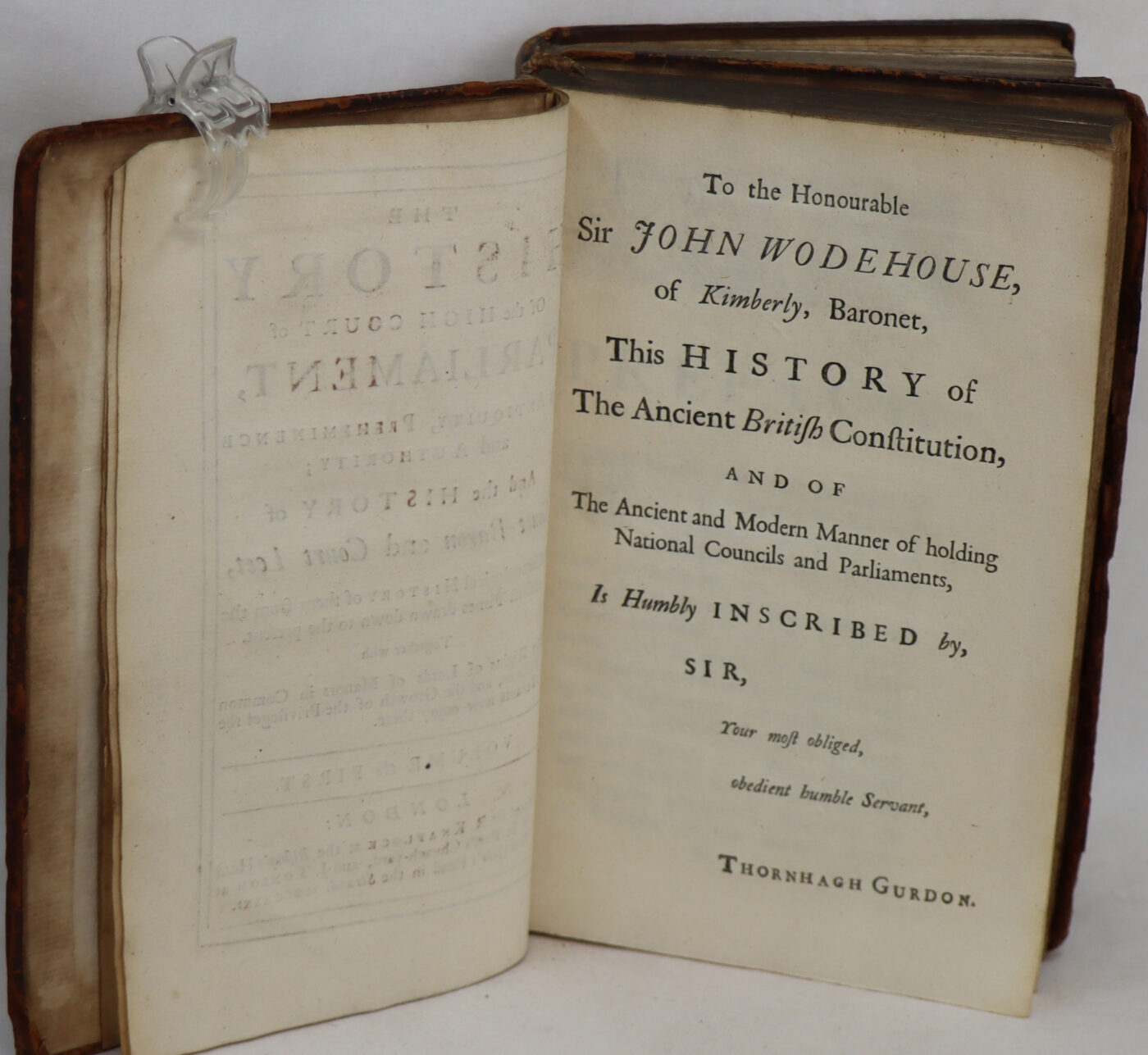
By Thornhagh Gurdon
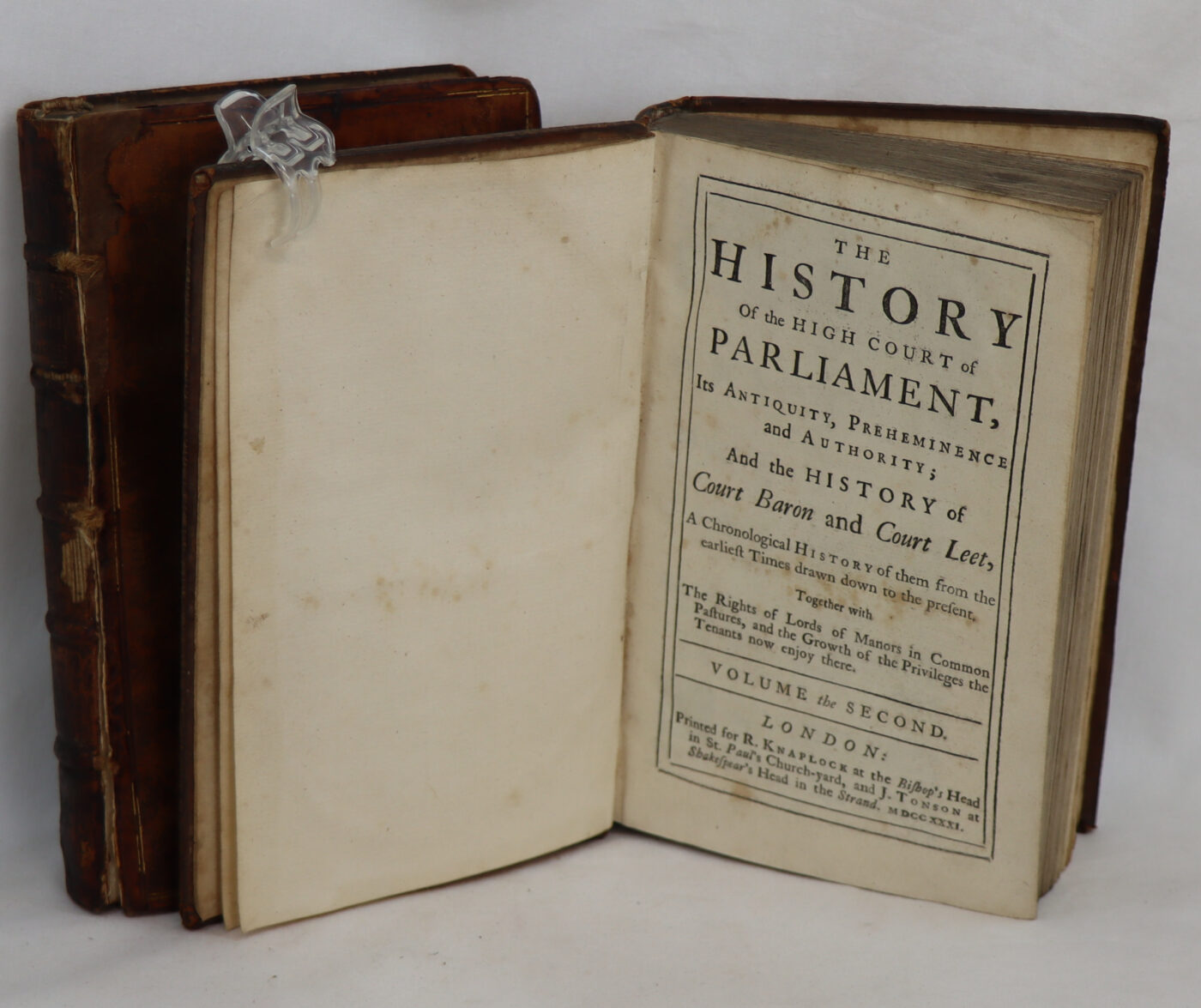
Printed: 1731
Publisher: R Knaplock. London
| Dimensions | 13 × 20 × 3 cm |
|---|---|
| Language |
Language: English
Size (cminches): 13 x 20 x 3
Condition: Fair (See explanation of ratings)
FREE shipping
SORRY, THIS ITEM HAS SOLD

Item information
Description
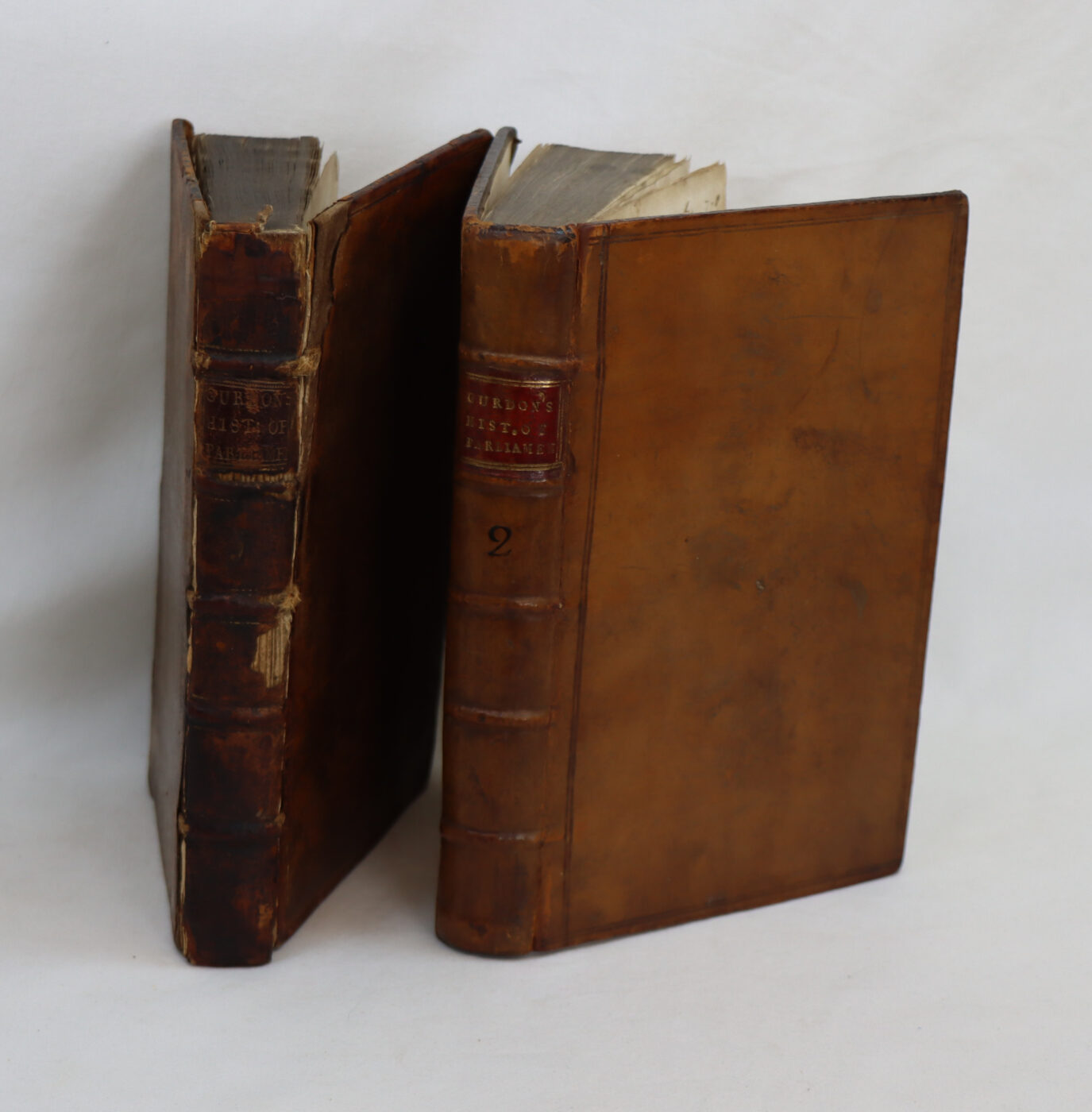
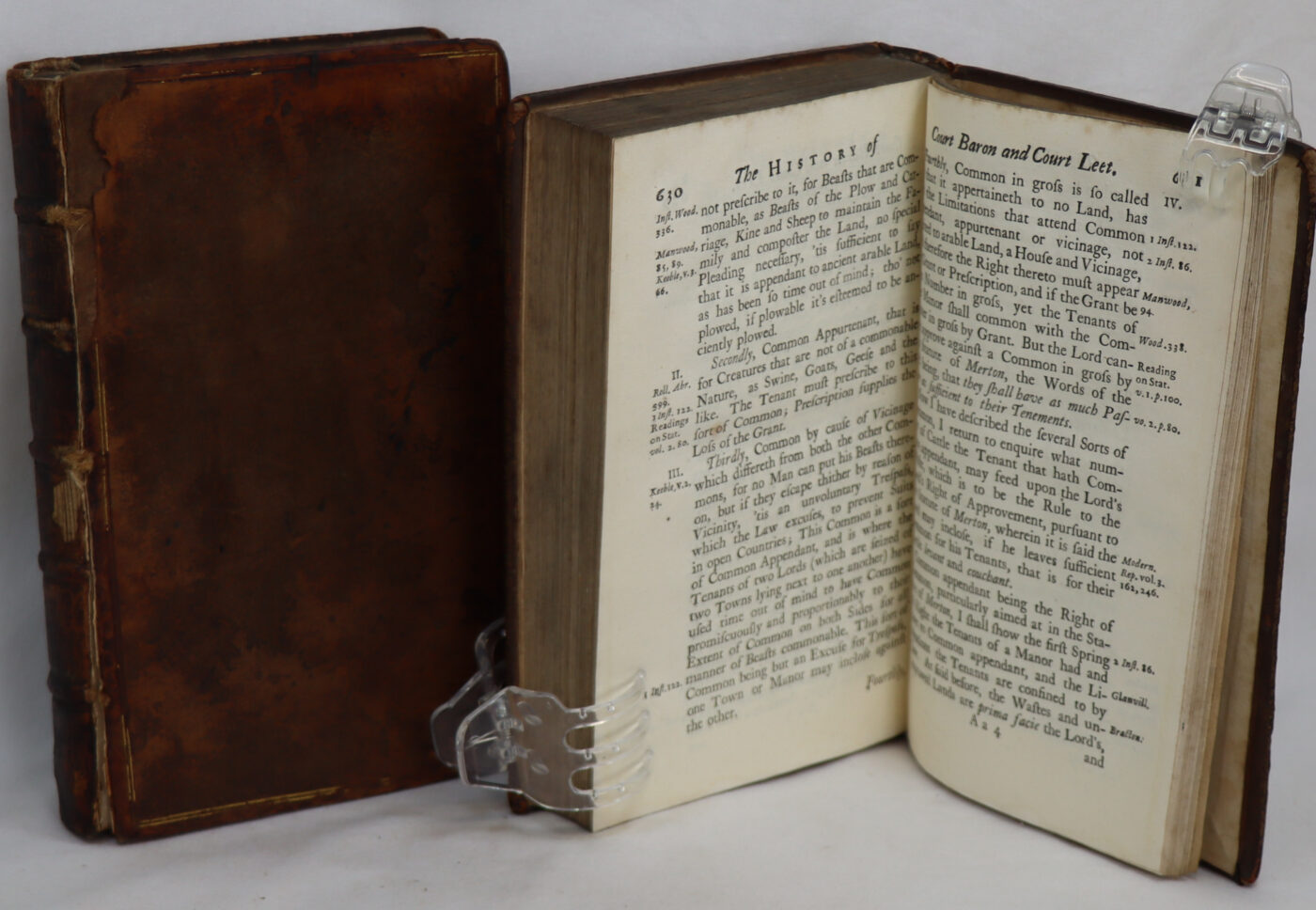
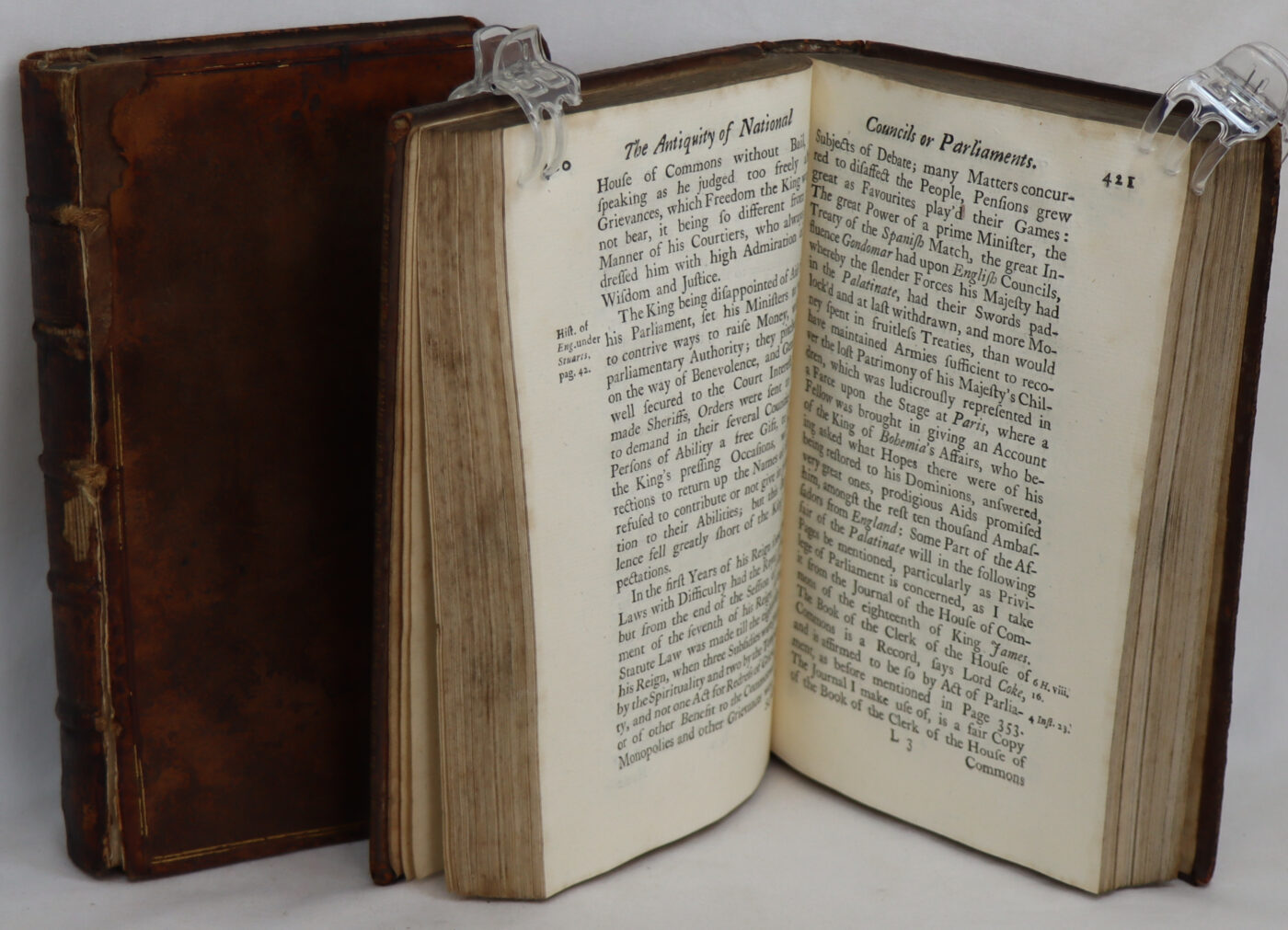
Volume 1 binding in poor condition, boards almost detached. Volume 2, good condition.
Leather bound with riased banding, red title plate and gilt title. Dimensions are for one volume.
We provide an in-depth photographic presentation of this item to stimulate your feeling and touch. More traditional book descriptions are immediately available.
-
Note: This book carries a £5.00 discount to those that subscribe to the F.B.A. mailing list
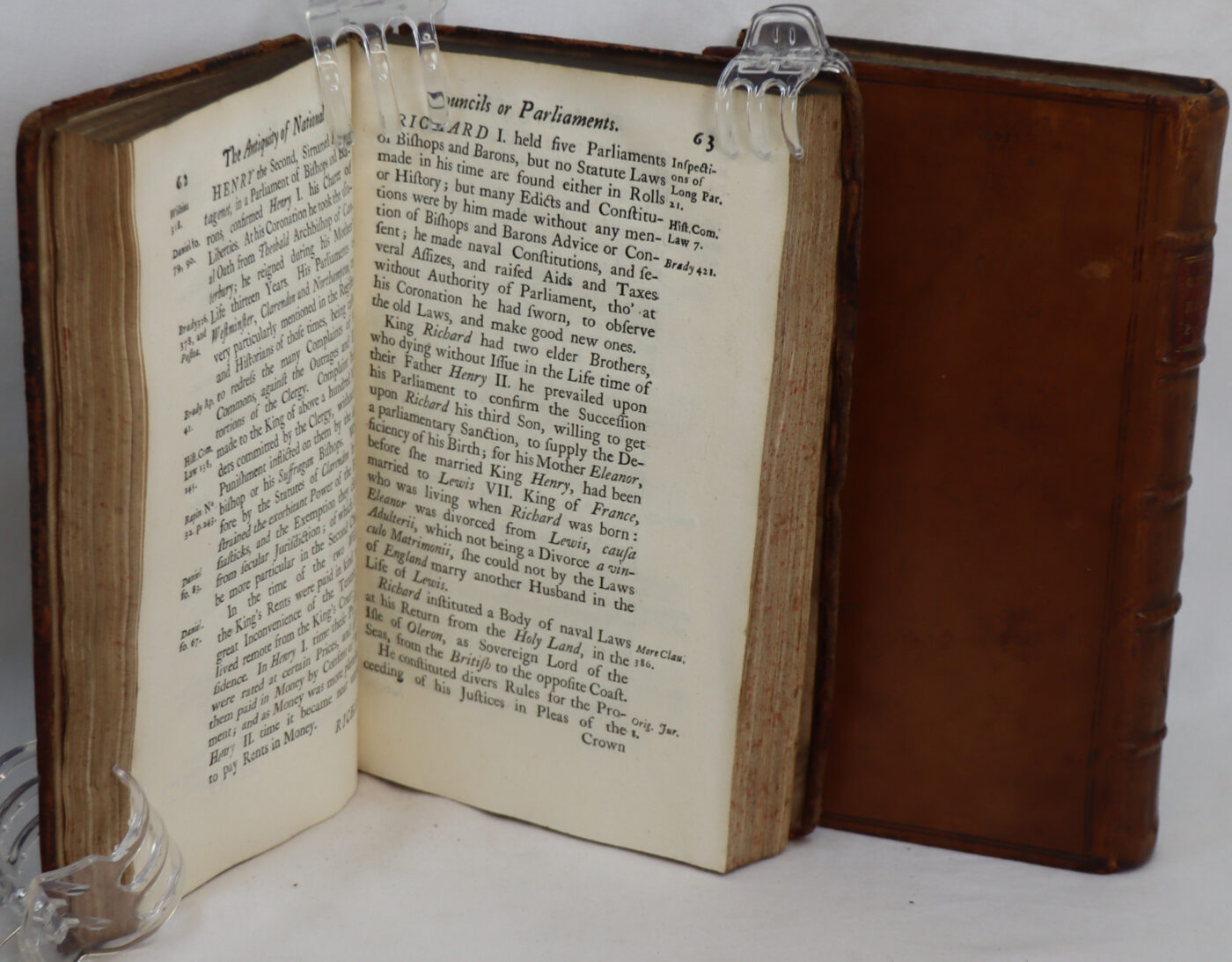
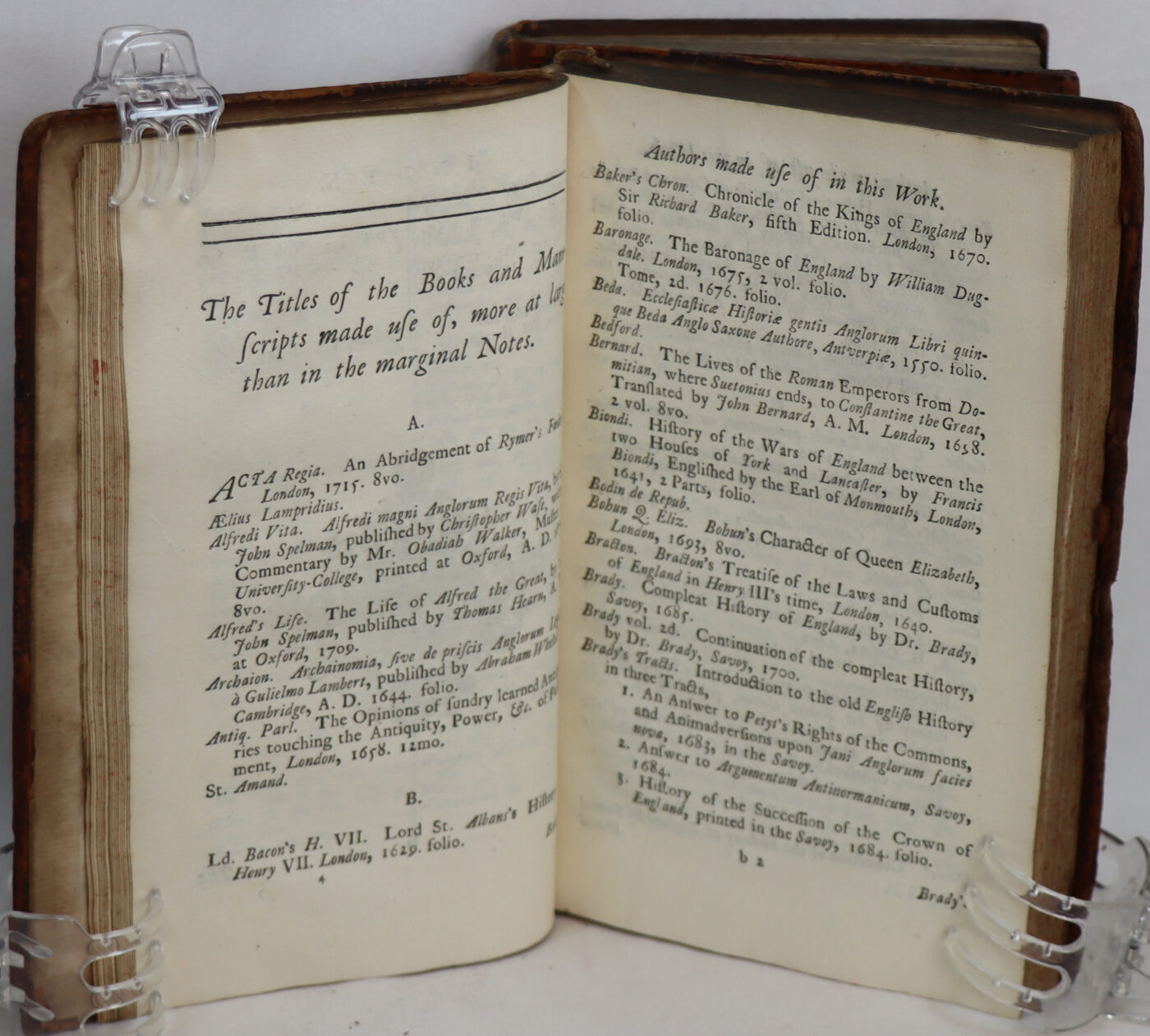
Please view our photographs. A first edition with obvious age signs on its binding. That said, the covers and integrity are good, but more importantly the legibility of the contents are excellent.
The History of the High Court of Parliament: Its Antiquity, Preheminence and Authority is a two-volume constitutional history written by Thornhagh Gurdon and published in London in 1731 by R. Knaplock and J. Tonson. It traces English parliamentary and legal institutions from early times.
Book Overview
-
Author: Thornhagh Gurdon (died 1733), an antiquarian and writer on English legal history.
-
Publishers: Printed for R. Knaplock (at the Bishop’s Head in St. Paul’s Church-yard) and J. Tonson (in the Strand).
-
Full Scope: Beyond Parliament, the volumes also contain histories of the Court Baron and Court Leet, alongside examinations of manorial rights and tenant privileges.
Historical Significance
-
Concept of Parliament: The title reflects the historic legal concept of Parliament not merely as a legislature, but as the highest court of judicature in the realm.
-
Context: Published during the early 18th-century print expansion following the 1710 Copyright Act, works like Gurdon’s served to document and debate the ancient constitution and the balance of power between Crown, Lords, and Commons.
Thornhagh Gurdon, F.S.A. (1663 – November 1733) was an English antiquarian. Gurdon, born in 1663, was the son of Brampton Gurdon of Letton, Norfolk, and his wife Elizabeth, and the elder brother of Brampton Gurdon (c. 1672 – 20 November 1741). As a member of Caius College, Cambridge, he received the degree of M.A. comitiis regiis in 1682, and in the reign of Queen Anne was appointed receiver-general of Norfolk. He resided mostly at Norwich, where in 1728 he published anonymously a valuable Essay on the Antiquity of the Castel of Norwich, its Founders and Governors from the Kings of the East Angles down to modern Times (octavo). Another work of great merit was his History of the High Court of Parliament, its Antiquity, Preheminence, and Authority; and the History of Court Baron and Court Leet, … Together with the Rights of Lords of Manors in Common Pastures, and the Growth of the Privileges the Tenants Now Enjoy There (2 vols., octavo, 1731). Gurdon was elected a Fellow of the Society of Antiquaries of London in March 1718.
Gurdon died in November 1733 aged 70, and was buried in the church of Cranworth with Letton, Norfolk. By his wife Elizabeth, one of the daughters and coheirs of Sir William Cooke, Baronet of Brome, Suffolk, he had two sons, Brampton, who died before him, and Thornhagh; and three daughters, Jane, Elizabeth, and Letitia. Mrs. Gurdon survived until 1745.
Want to know more about this item?
We are happy to answer any questions you may have about this item. In addition, it is also possible to request more photographs if there is something specific you want illustrated.
Ask a question
Related products
Share this Page with a friend
