
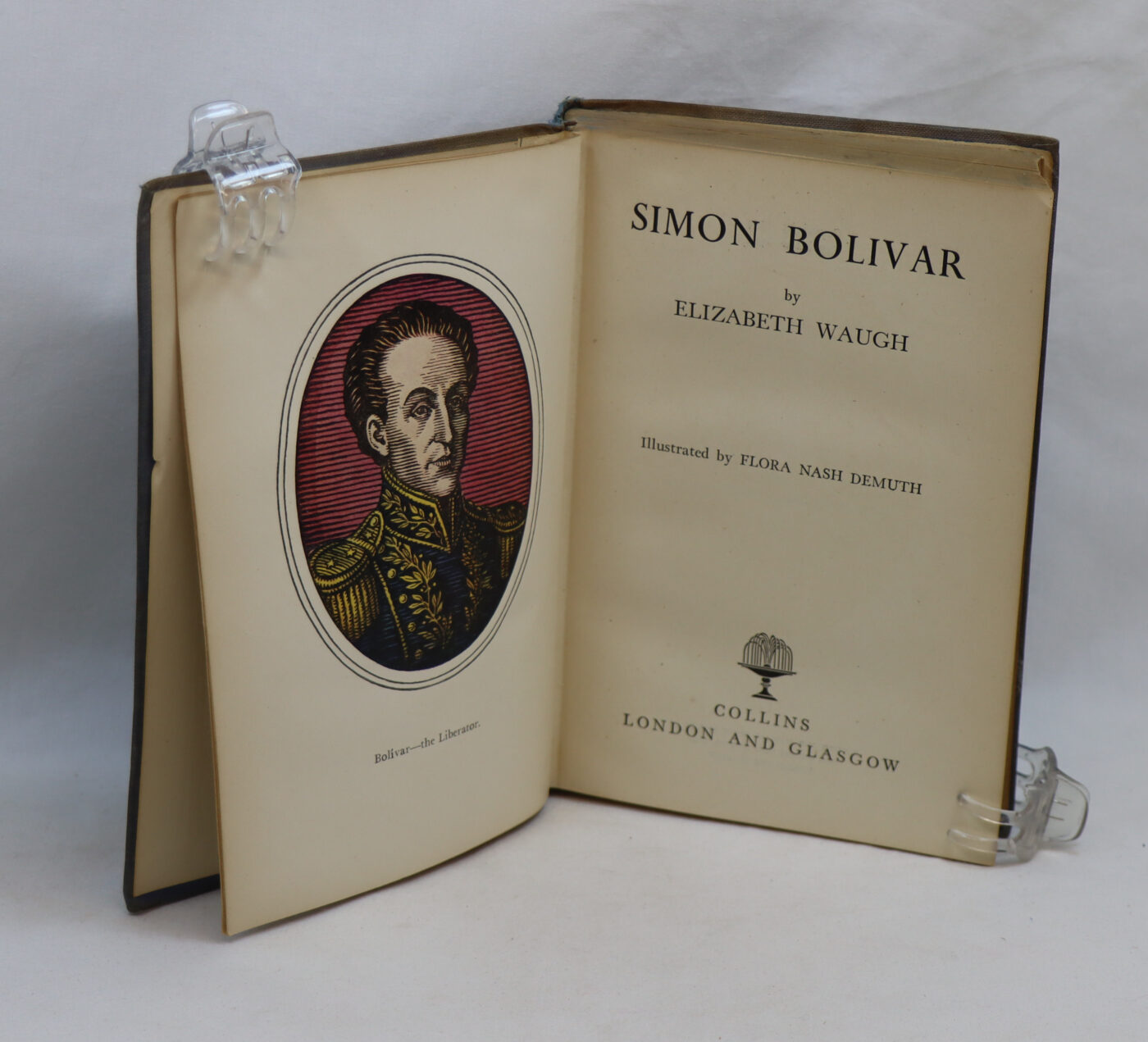
Simon Bolivar.
By Elizabeth Waugh
Printed: 1945
Publisher: Collins. London
| Dimensions | 13 × 19 × 2 cm |
|---|---|
| Language |
Language: English
Size (cminches): 13 x 19 x 2
Condition: Fair (See explanation of ratings)
£21.00
Buy Now

Item information
Description
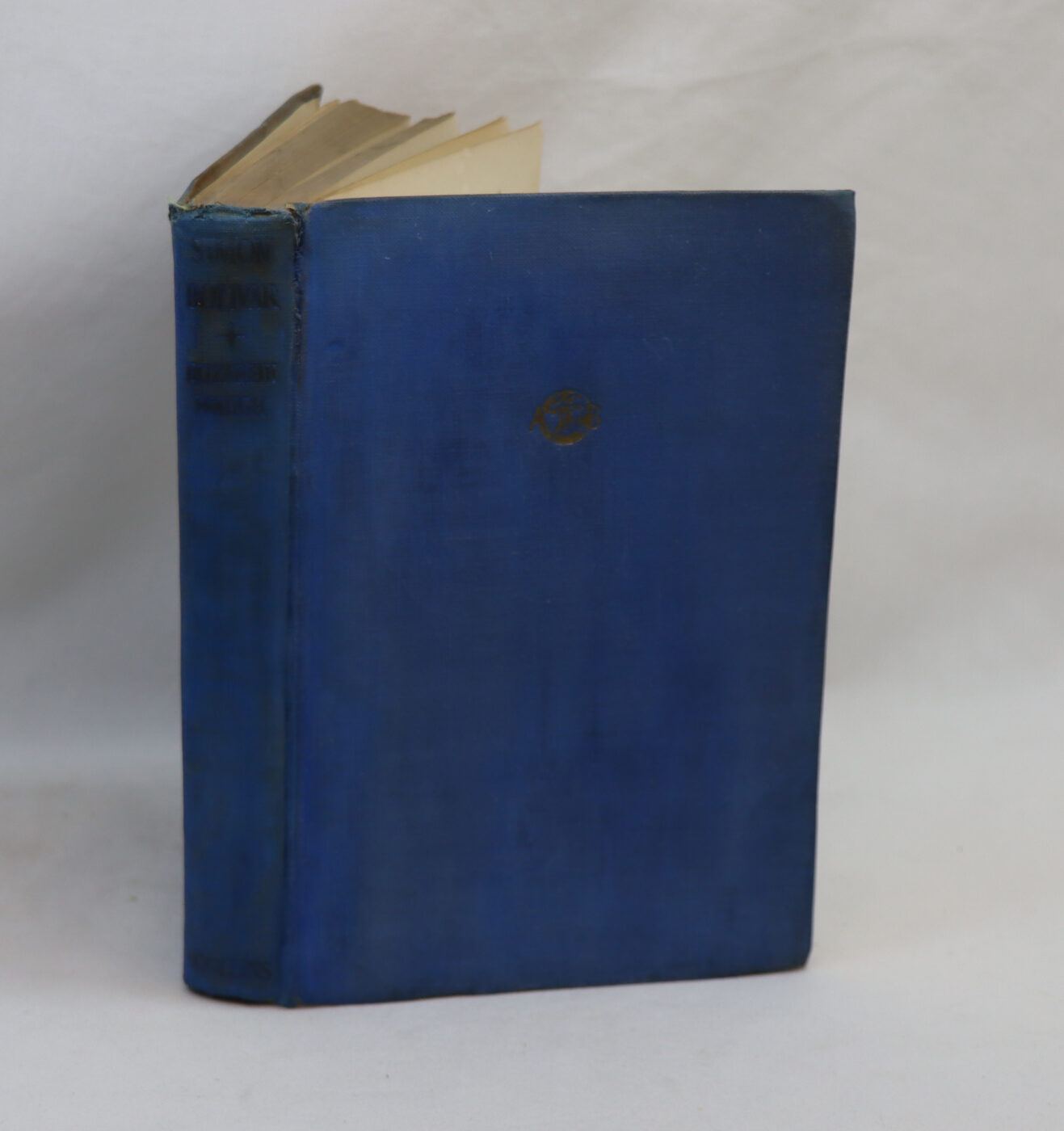
Navy (faded) cloth binding with black title on the spine.
We provide an in-depth photographic presentation of this item to stimulate your feeling and touch. More traditional book descriptions are immediately available.
-
Note: This book carries a £5.00 discount to those that subscribe to the F.B.A. mailing list
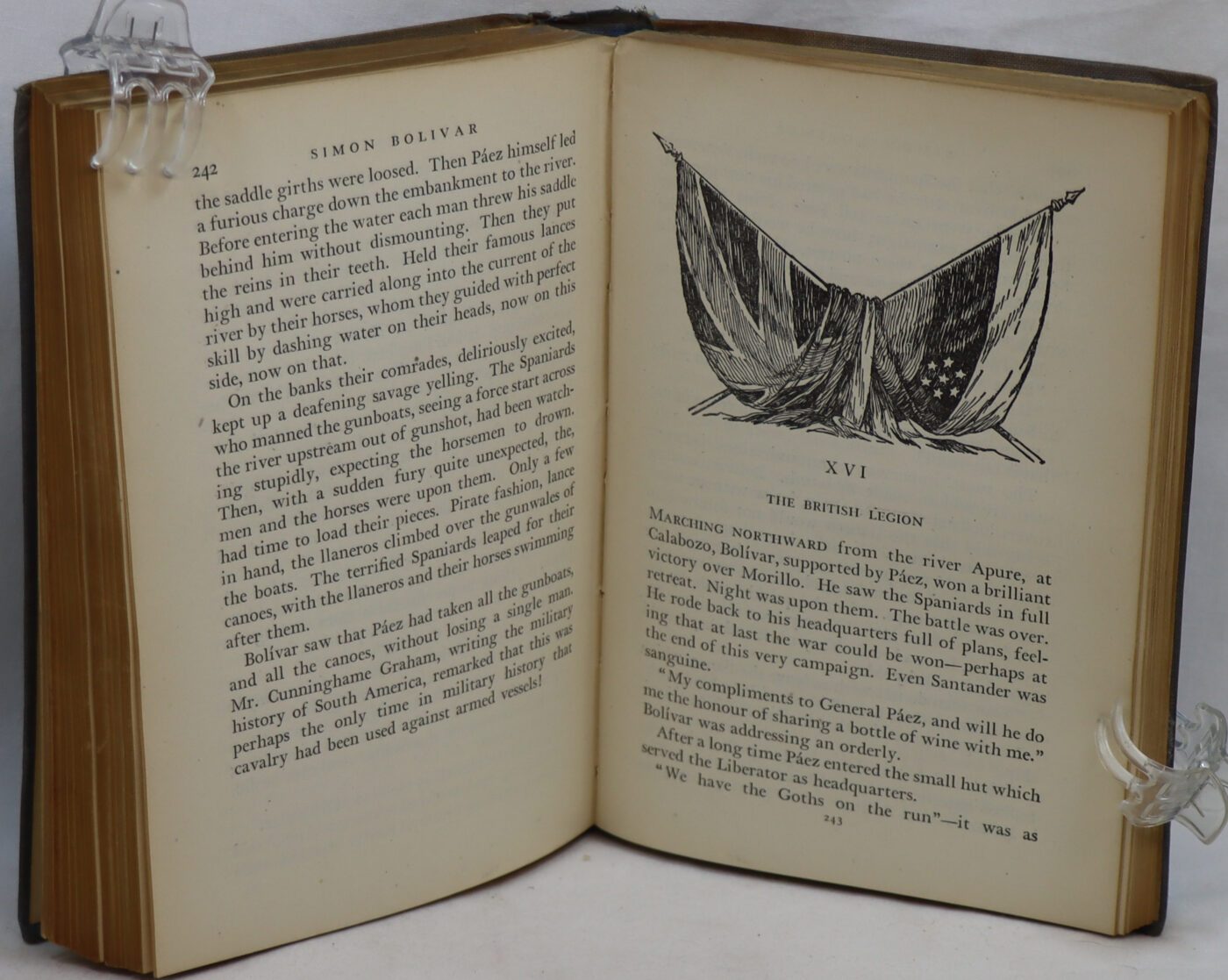
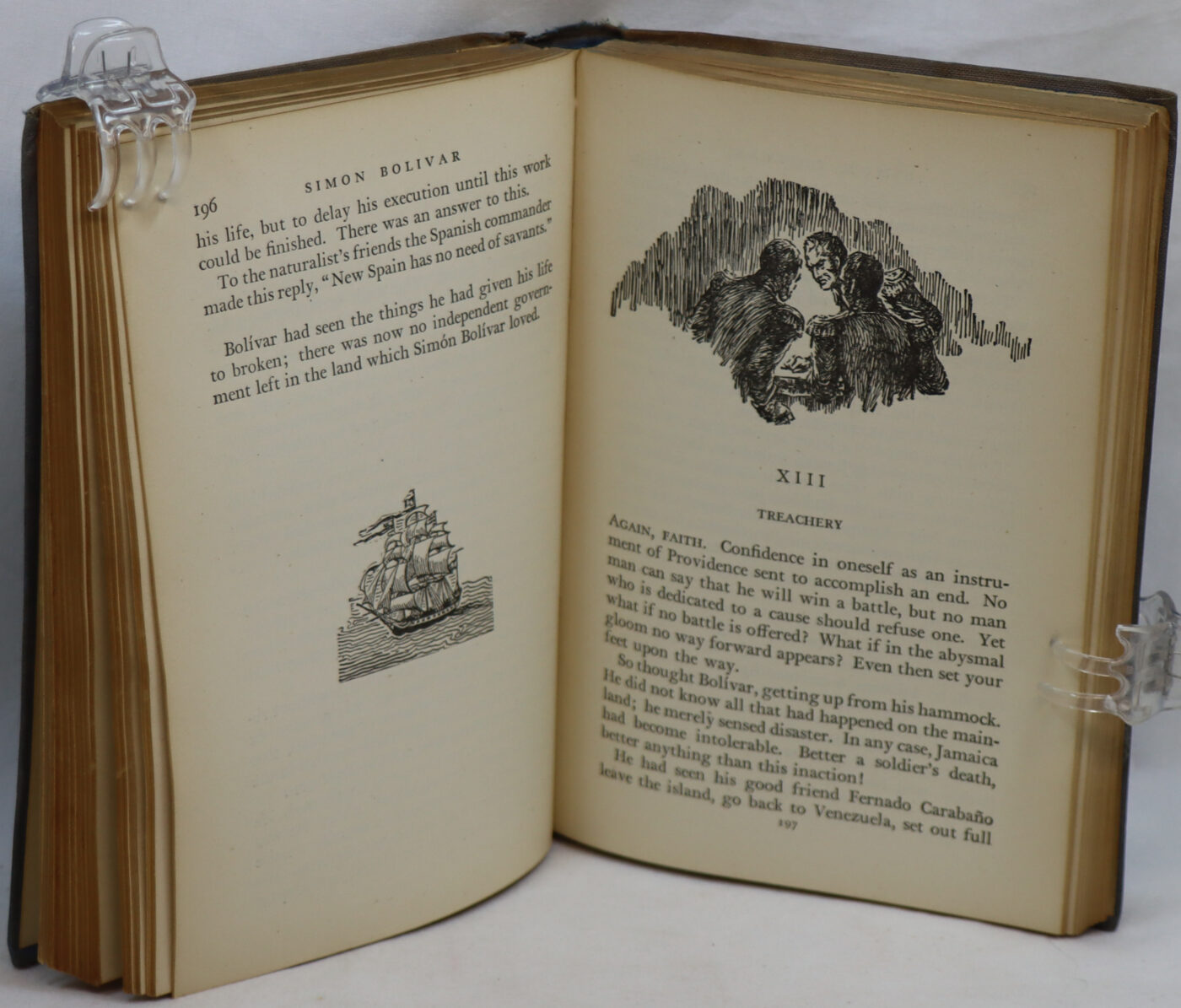
Please view our photographs. An excellent and well read book.
Simón José Antonio de la Santísima Trinidad Bolívar Palacios Ponte y Blanco (24 July 1783 – 17 December 1830) was a Venezuelan military officer and statesman who led what are currently the countries of Bolivia, Colombia, Ecuador, Panama, Peru, and Venezuela to independence from the Spanish Empire. He is known colloquially as El Libertador, “the Liberator,” of America.
Bolívar was born in Caracas in the Captaincy General of Venezuela into a wealthy family of South American-born Spaniards (criollo) but lost both parents as a child. He was educated abroad and lived in Spain, as was common for men of upper-class families in his day. While living in Madrid from 1800 to 1802, he was introduced to Enlightenment philosophy and married María Teresa Rodríguez del Toro y Alaysa, who died in Venezuela from yellow fever in 1803. From 1803 to 1805, Bolívar embarked on a Grand Tour that ended in Rome, where he swore to end Spanish rule in the Americas. In 1807, Bolívar returned to Venezuela and promoted Venezuelan independence to other wealthy creoles. When Napoleon’s Peninsular War weakened Spanish authority, Bolívar became a zealous combatant and politician in the Spanish American wars of independence.
Bolívar began his military career in 1810 as a militia officer in the Venezuelan War of Independence, fighting Royalist forces for the first and second Venezuelan republics and the United Provinces of New Granada. After Spanish forces subdued New Granada in 1815, Bolívar was forced into exile in Jamaica. In Haiti, Bolívar met and befriended Haitian revolutionary leader Alexandre Pétion. After promising to abolish slavery in Spanish America, Bolívar received military support from Pétion and returned to Venezuela. He established a third republic in 1817, and crossed the Andes to liberate New Granada in 1819. Bolívar and his allies defeated the Spanish in New Granada in 1819, Venezuela and Panama in 1821, Ecuador in 1822, Peru in 1824, and Bolivia in 1825. Venezuela, New Granada, Ecuador, and Panama were merged into the Republic of Colombia (Gran Colombia), with Bolívar as president there and in Peru and Bolivia.
In his final years, Bolívar became increasingly disillusioned with the South American republics. He was successively removed from his offices until he resigned the presidency of Colombia and died of tuberculosis in 1830. His legacy is diverse and far-reaching within Latin America and beyond. He is regarded as a hero and national and cultural icon throughout Latin America. The nations of Bolivia and Venezuela (as the Bolivarian Republic of Venezuela) are named after him, and he has been memorialized all over the world in the form of public art or street names and in popular culture.
NOTE: This is an original book from the library gathered by the famous Cambridge Don, computer scientist, food and wine connoisseur, Jack Arnold LANG. Note: Jack founded the Michelin Guide ‘Midsummer House’- Cambridge’s paramount restaurant. This dining experience is hidden amongst the grassy pastures and grazing cattle of Midsummer Common and perched on the banks of the River Cam. The Midsummer House experience is imaginatively curated to delight and amaze, so the surprise set menu changes regularly and is ‘Midsummer’s’ playground to showcase.
In 2008, Jack was one of the co-founders of the Raspberry Pi Foundation, alongside other members of the Department, and acted as the Foundation’s Chair. The project’s original goals were modest: to build and distribute low-cost computers for prospective applicants to our Computer Science degree. Initially the project was a “success disaster”, as Jack would say, as demand far outstripped the low-scale manufacturing plans. Ultimately the Raspberry Pi became the UK’s most successful computer with more than 60 million sold to date. Jack was drawn to the educational possibilities of the Raspberry Pi, its potential uses in emerging economies and the way it could support self-directed learning.
Want to know more about this item?
We are happy to answer any questions you may have about this item. In addition, it is also possible to request more photographs if there is something specific you want illustrated.
Ask a question

Share this Page with a friend
