
The History of Joseph Andrews.
By Henry Fielding
Printed: 1953
Publisher: The Folio Society. London
| Dimensions | 15 × 23 × 3 cm |
|---|---|
| Language |
Language: English
Size (cminches): 15 x 23 x 3
Condition: Very good (See explanation of ratings)
£26.00
Buy Now

Item information
Description
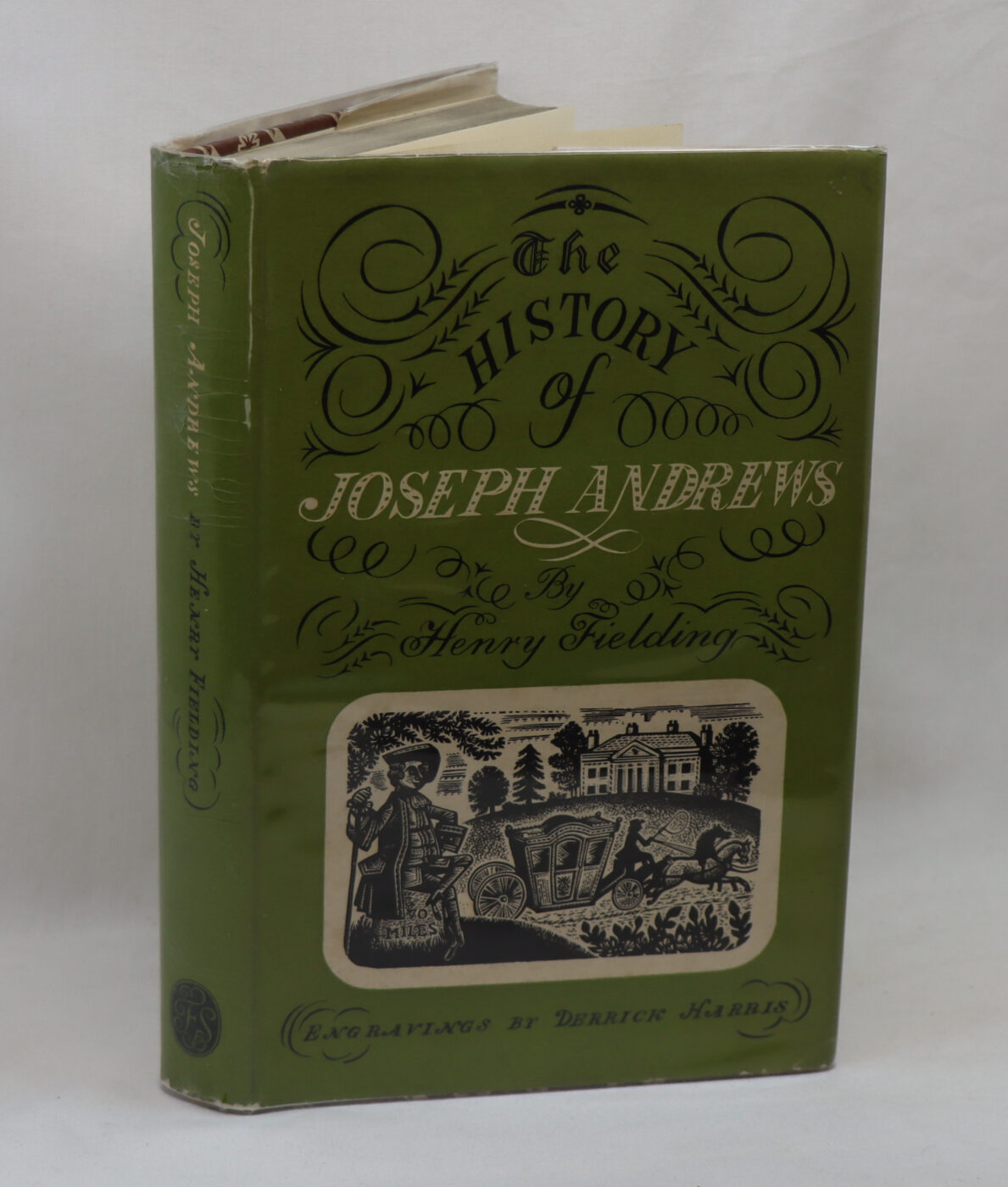
In the original dust jacket. Brown and cream patterned cloth binding with gilt title on the spine.
We provide an in-depth photographic presentation of this item to stimulate your feeling and touch. More traditional book descriptions are immediately available.
- Note: This book carries a £5.00 discount to those that subscribe to the F.B.A. mailing list
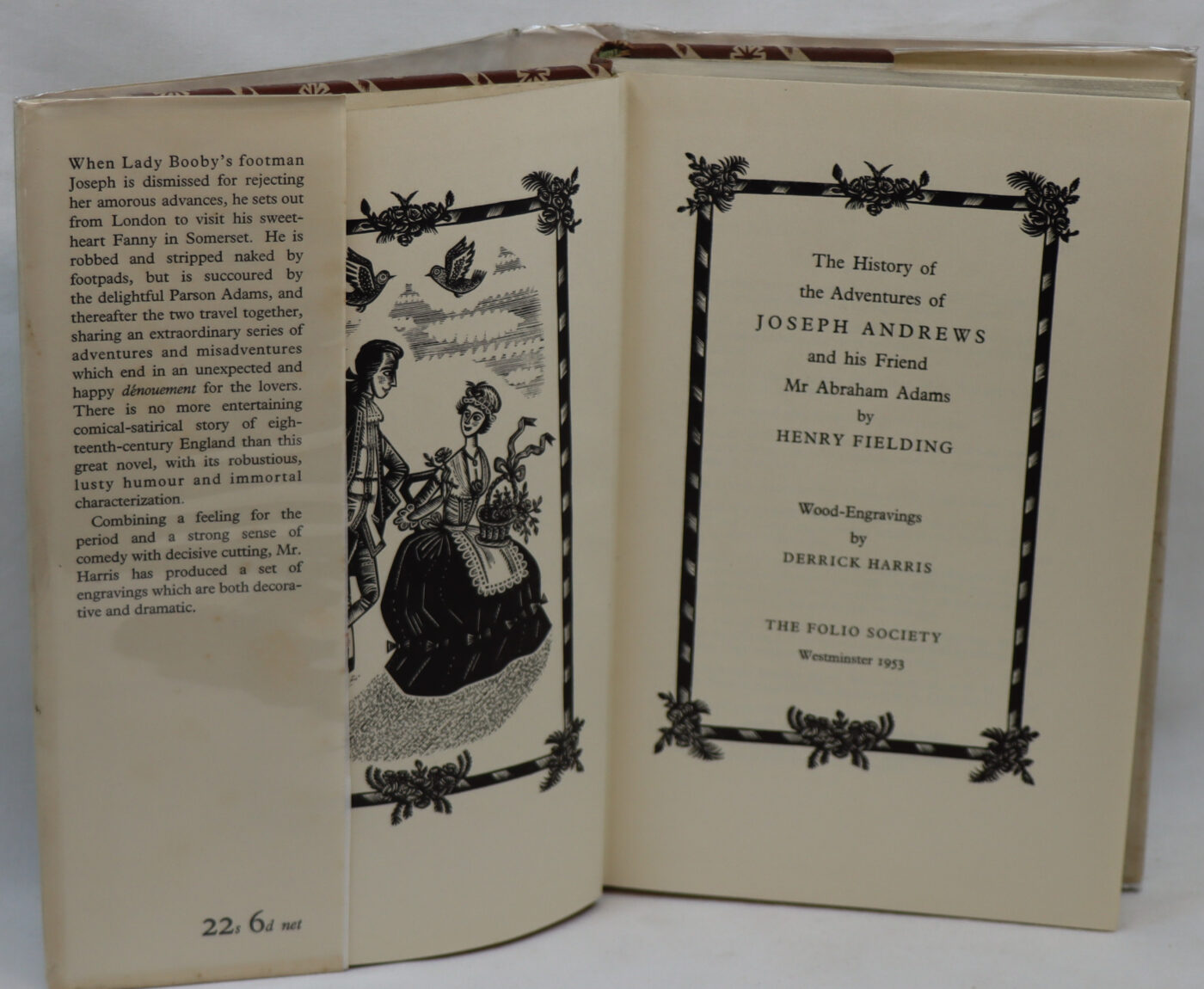
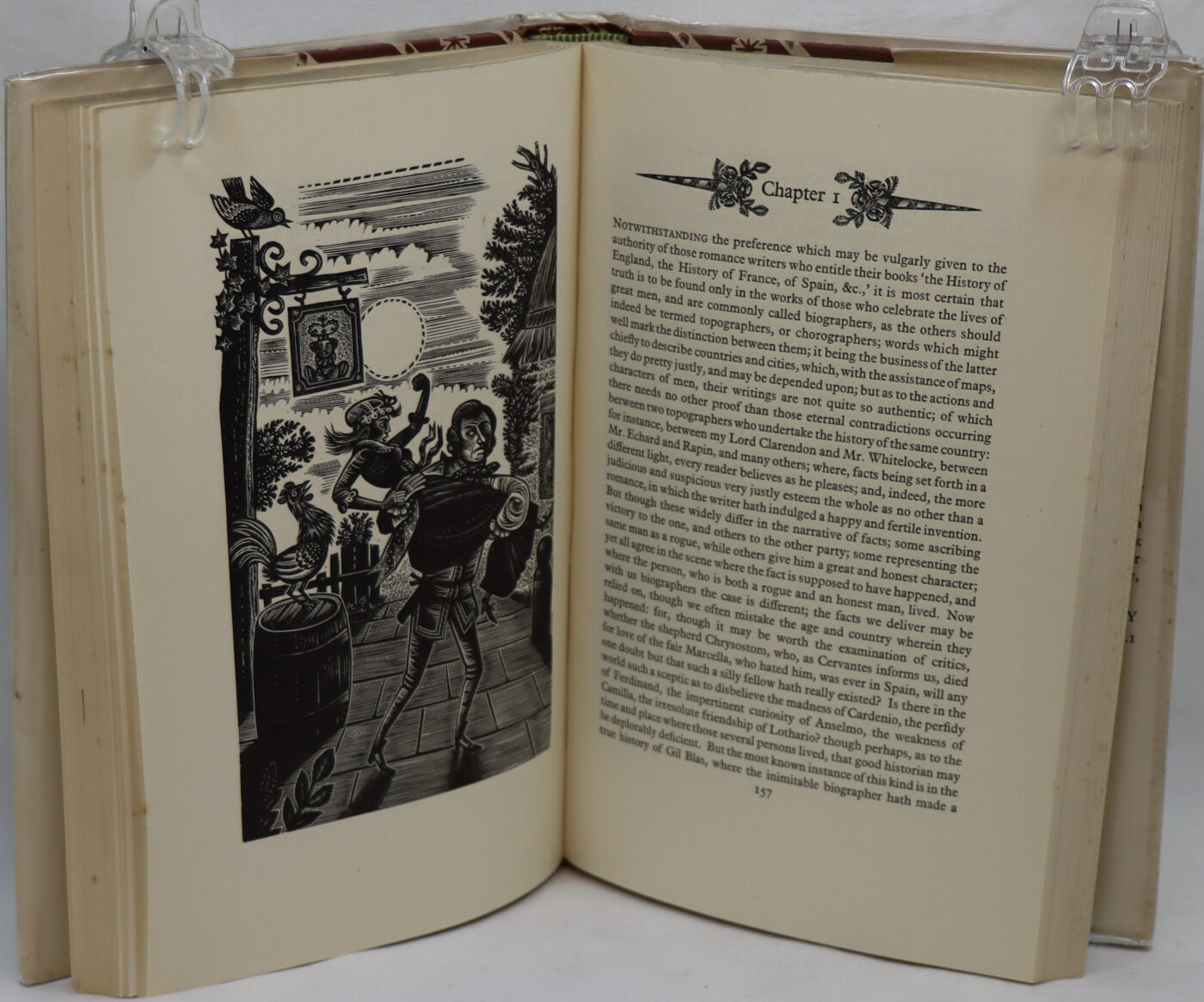
The 1953 Folio Society edition of The History of Joseph Andrews (first published in 1742) is a highly collectible 2nd Edition. Bound in decorated brown cloth, it features distinct wood engravings by Derrick Harris. In fine or very good condition, it generally trades between £15 to £30 on the secondary book market. As the photographs illustrate this volume has a dust cover but not an encompassing box. Please also read the useful blurb on the inside cover of the dust sheet.
First published in 1742, The History of the Adventures of Joseph Andrews by Henry Fielding is a foundational English novel originally written as a satirical parody of Samuel Richardson’s highly sentimental and moralistic bestseller, Pamela. It follows the misadventures of a virtuous young footman as he navigates 18th-century English society.
The Premise: Fielding conceptualized the book as a “comic epic poem in prose,” setting out to poke fun at the hypocrisy of 18th-century upper-class morality. Instead of a pious woman defending her virtue, the protagonist is Joseph Andrews—the supposed brother of Richardson’s Pamela. Joseph serves as a footman to the wealthy, amorous Lady Booby. When he steadfastly refuses her seductive advances to preserve his pre-marital chastity, he is dismissed without money or resources..
The Journey: Left to his own devices, Joseph sets out on a journey from London back to his home in the country to reunite with his true love, the beautiful and virtuous Fanny Goodwill. Along the way, he is joined by his friend and mentor, the absent-minded, fiercely kind-hearted clergyman Parson Abraham Adams. The trio travels the English countryside, encountering a chaotic mix of highwaymen, innkeepers, hypocritical aristocrats, and bawdy situations.
The Key Characters:
- Joseph Andrews: A handsome, morally upright footman who embodies male chastity and genuine goodness amidst a corrupt society.
- Parson Abraham Adams: Perhaps the most beloved character in the book; he is a deeply religious, learned, and a naïve man whose physical clumsiness is often matched only by his profound moral integrity.
- Lady Booby: A wealthy widow driven by her desires and vanity, representing the shallow nature of the aristocracy.
- Fanny Goodwill: Joseph’s devoted and pure-hearted sweetheart whose kidnapping and rescue drive much of the novel’s climactic drama.
Themes and Significance: Beyond its hilarious plot and slapstick comedy, the novel tackles profound social commentary. Fielding highlights how true virtue comes from genuine charity, humility, and inner goodness, rather than superficial wealth or social status.
Henry Fielding (22 April 1707 – 8 October 1754) was an English writer and judge known for the use of humour and satire in his works. His famous novels include Shamela (1741), Joseph Andrews (1742), The History of Tom Jones, a Foundling (1749) and Amelia (1751). Along with Samuel Richardson, Fielding is seen as the founder of the traditional English novel. As well as being a novelist, Fielding was also a playwright, known for his satirical comedies The Author’s Farce (1730), Tom Thumb (1730), The Letter Writers (1731) and The Tragedy of Tragedies (1731). He also played an important role in the history of law enforcement in the United Kingdom, using his authority as a magistrate to found the Bow Street Runners, London’s first professional police force.
Want to know more about this item?
We are happy to answer any questions you may have about this item. In addition, it is also possible to request more photographs if there is something specific you want illustrated.
Ask a question
Related products
Share this Page with a friend
