
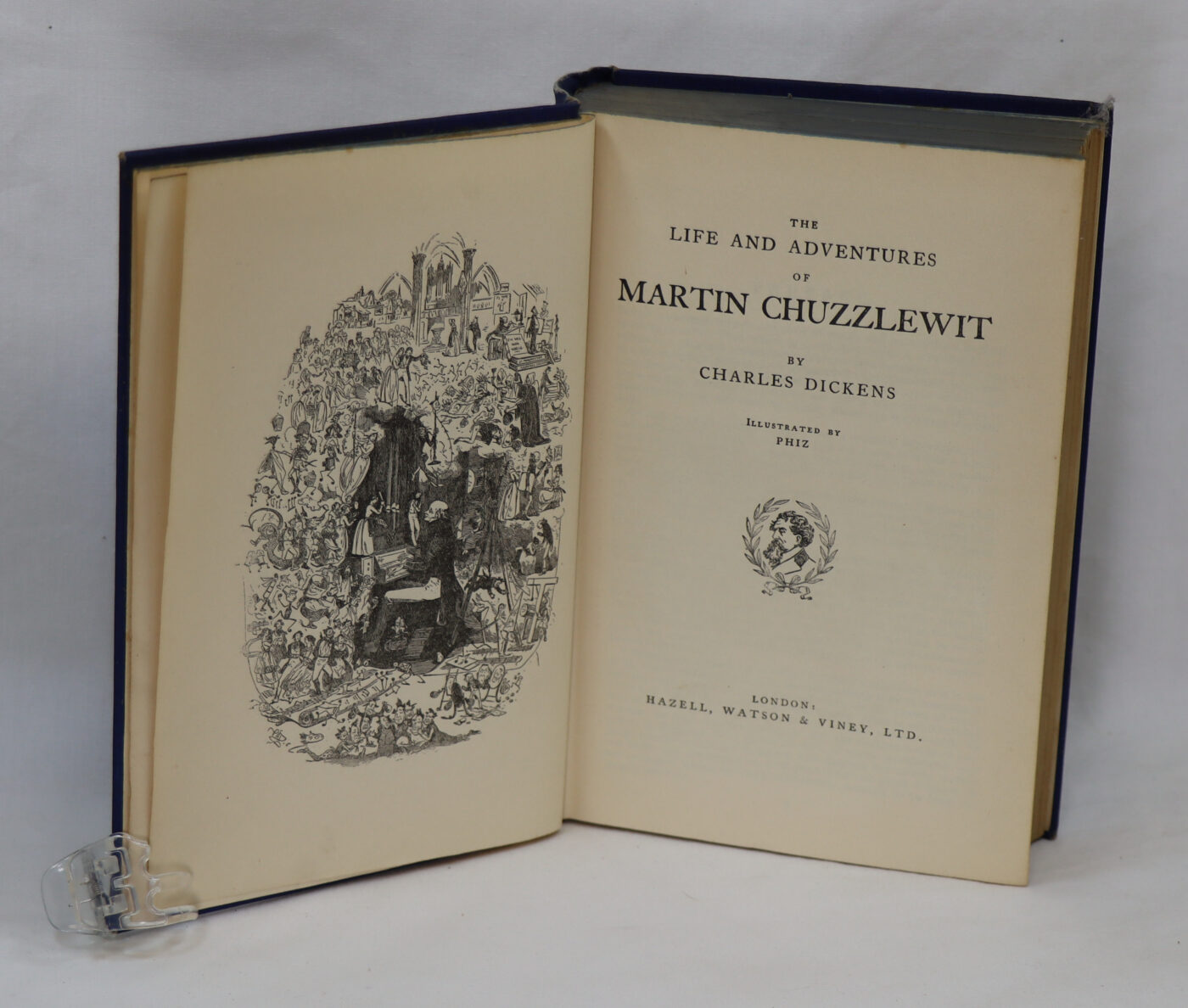
Martin Chuzzlewit.
By Charles Dickens
Printed: Circa 1930
Publisher: Hazell Watson & Viney. London
| Dimensions | 14 × 19 × 3 cm |
|---|---|
| Language |
Language: English
Size (cminches): 14 x 19 x 3
Condition: Good (See explanation of ratings)
£20.00
Buy Now

Item information
Description
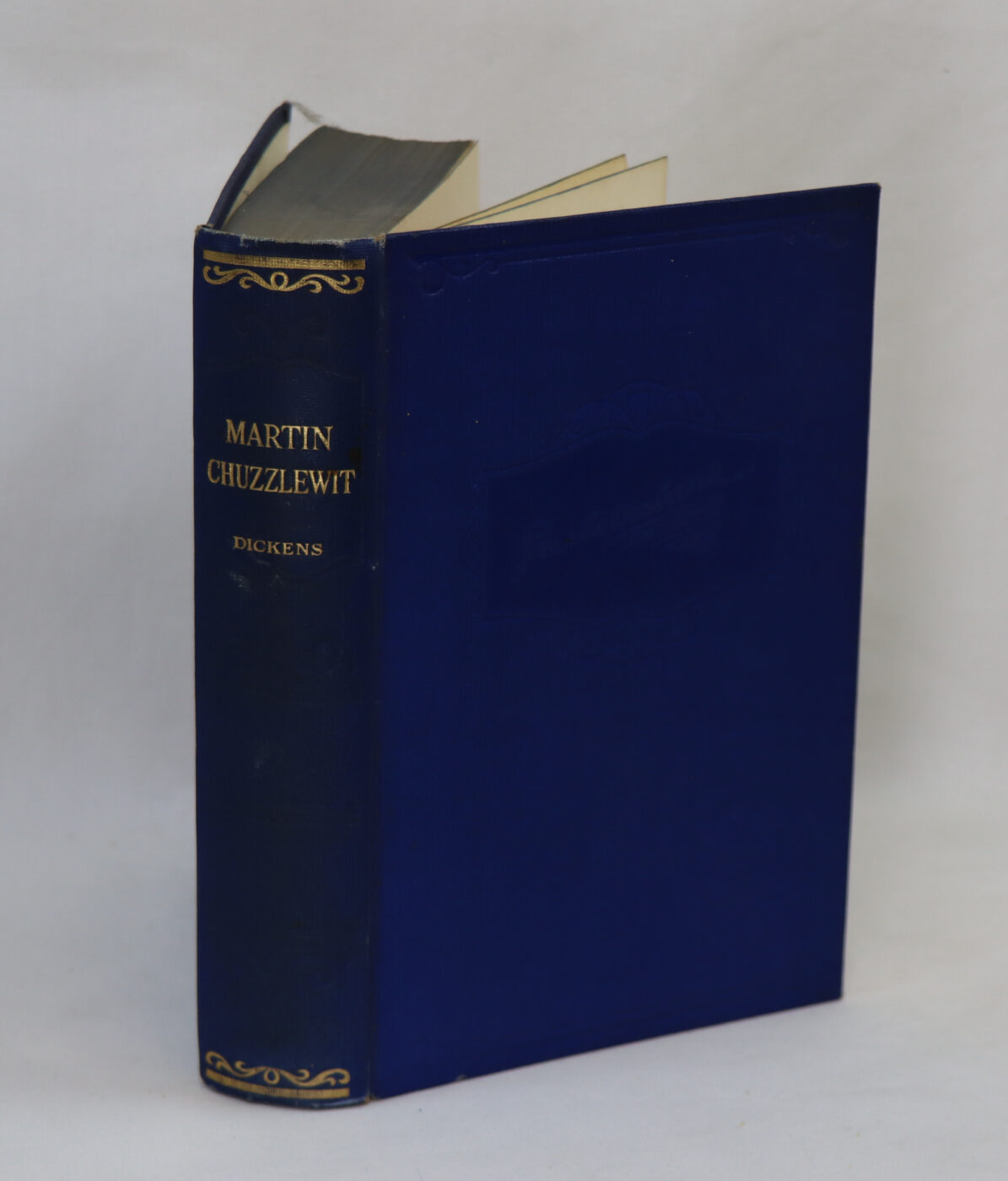
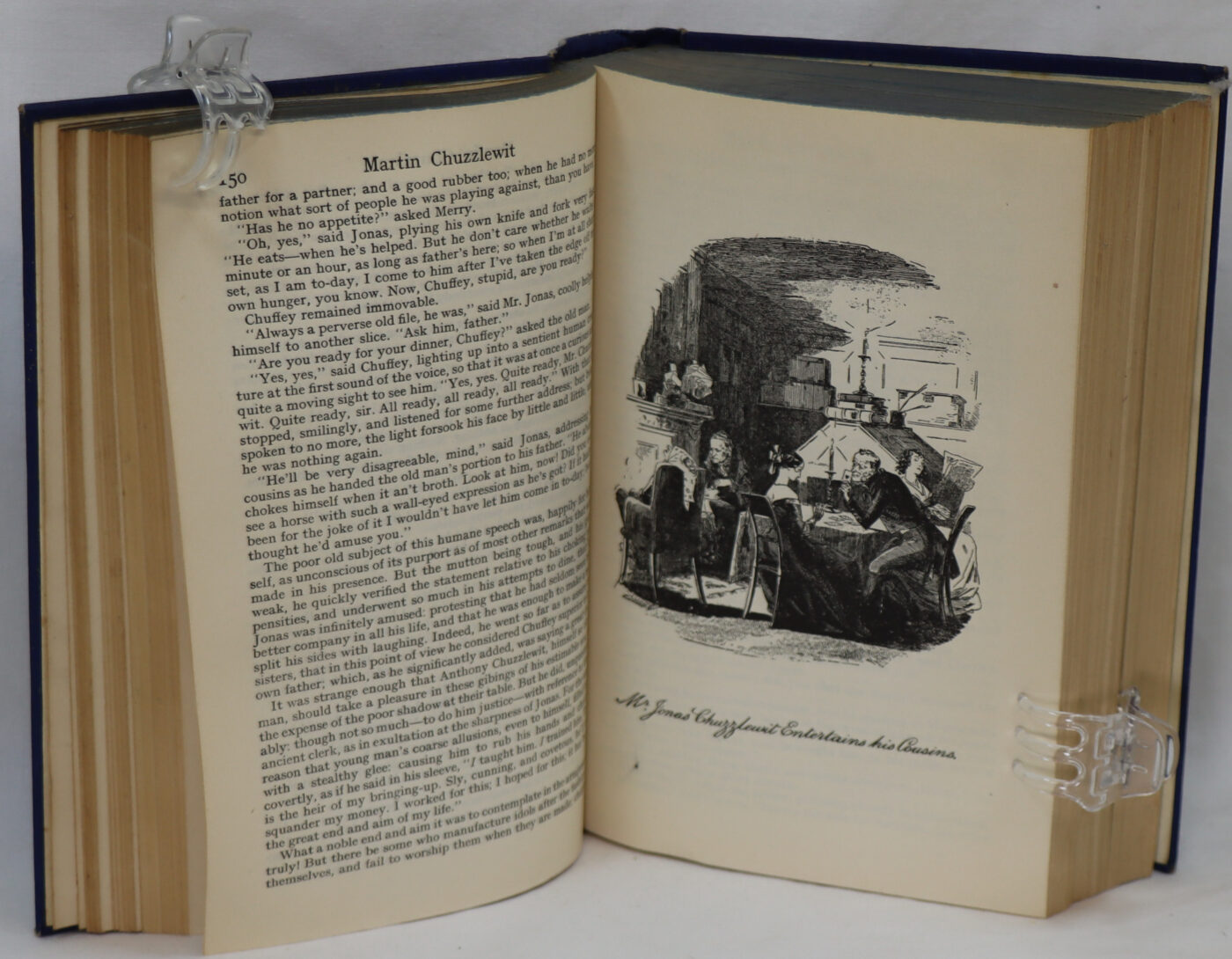
Navy cloth binding with gilt title on the spine. Illustrated by Phiz.
We provide an in-depth photographic presentation of this item to stimulate your feeling and touch. More traditional book descriptions are immediately available.
- Note: This book carries a £5.00 discount to those that subscribe to the F.B.A. mailing list
A very nice copy with illustrations by Phiz
The Life and Adventures of Martin Chuzzlewit (commonly known as Martin Chuzzlewit) is a novel by English author Charles Dickens, considered the last of his picaresque novels. It was originally serialised between January 1843 and July 1844. While he was writing it, Dickens told a friend that he thought it was his best work thus far, but it was one of his least popular novels, judged by sales of the monthly installments. Characters in this novel gained fame, including Pecksniff and Mrs Gamp.
Like nearly all of Dickens’s novels, Martin Chuzzlewit was first published in monthly installments. Early sales of the monthly parts were lower than those of previous works, so Dickens changed the plot to send the title character to the United States. Dickens had visited America in 1842 in part as a failed attempt to get the US publishers to honour international copyright laws. He satirized the country as a place filled with self-promoting hucksters, eager to sell land sight unseen. He also unfavourably highlighted slavery and featured characters with racist attitudes and a propensity to violence. In later editions, and in his second visit 24 years later to a much-changed US, he made clear in a speech that it was satire and not a balanced image of the nation and then included that speech in all future editions.
The main theme of the novel, according to Dickens’s preface, is selfishness, portrayed in a satirical fashion using all the members of the Chuzzlewit family. The novel is also notable for two of Dickens’s great villains, Seth Pecksniff and Jonas Chuzzlewit. Dickens introduced one of the first literary private detective characters, Mr Nadgett, in this novel. It is dedicated to Angela Georgina Burdett-Coutts, a friend of Dickens.
Charles John Huffam Dickens ( 7 February 1812 – 9 June 1870) was an English writer and journalist. He created some of literature’s best-known fictional characters, and is regarded by many as the greatest novelist of the Victorian era. His works enjoyed unprecedented popularity during his lifetime and, by the 20th century, critics and scholars had recognised him as a literary genius. His novels and short stories are widely read today.
- Born in Portsmouth, Dickens left school at age 12 to work in a boot-blacking factory when his father John was incarcerated in a debtors’ prison. After three years, he returned to school before beginning his literary career as a journalist. Dickens edited a weekly journal for 20 years; wrote 15 novels, 5 novellas, hundreds of short stories and nonfiction articles; lectured and performed readings extensively; was a tireless letter writer; and campaigned vigorously for children’s rights, education and other social reforms.
- Dickens’s literary success began with the 1836 serial publication of The Pickwick Papers, a publishing phenomenon—thanks largely to the introduction of the character Sam Weller in the fourth episode—that sparked Pickwick merchandise and spin-offs. Within a few years, Dickens had become an international literary celebrity, famous for his humour, satire and keen observation of character and society. His novels, most of them published in monthly or weekly installments, pioneered the serial publication of narrative fiction, which became the dominant Victorian mode for novel publication. Cliffhanger endings in his serial publications kept readers in suspense. The installment format allowed Dickens to evaluate his audience’s reaction, and he often modified his plot and character development based on such feedback. For example, when his wife’s podiatrist expressed distress at the way Miss Mowcher in David Copperfield seemed to reflect her own disabilities, Dickens improved the character with positive features. His plots were carefully constructed and he often wove elements from topical events into his narratives. Masses of the illiterate poor would individually pay a halfpenny to have each new monthly episode read to them, opening up and inspiring a new class of readers.
- His 1843 novella A Christmas Carol remains especially popular and continues to inspire adaptations in every creative medium. Oliver Twist and Great Expectations are also frequently adapted and, like many of his novels, evoke images of early Victorian London. His 1853 novel Bleak House, a satire on the judicial system, helped support a reformist movement that culminated in the 1870s legal reform in England. A Tale of Two Cities (1859; set in London and Paris) is regarded as his best-known work of historical fiction. The most famous celebrity of his era, he undertook, in response to public demand, a series of public reading tours in the later part of his career. The term Dickensian is used to describe something that is reminiscent of Dickens and his writings, such as poor social or working conditions, or comically repulsive characters.
Want to know more about this item?
We are happy to answer any questions you may have about this item. In addition, it is also possible to request more photographs if there is something specific you want illustrated.
Ask a question
Related products
Share this Page with a friend
