
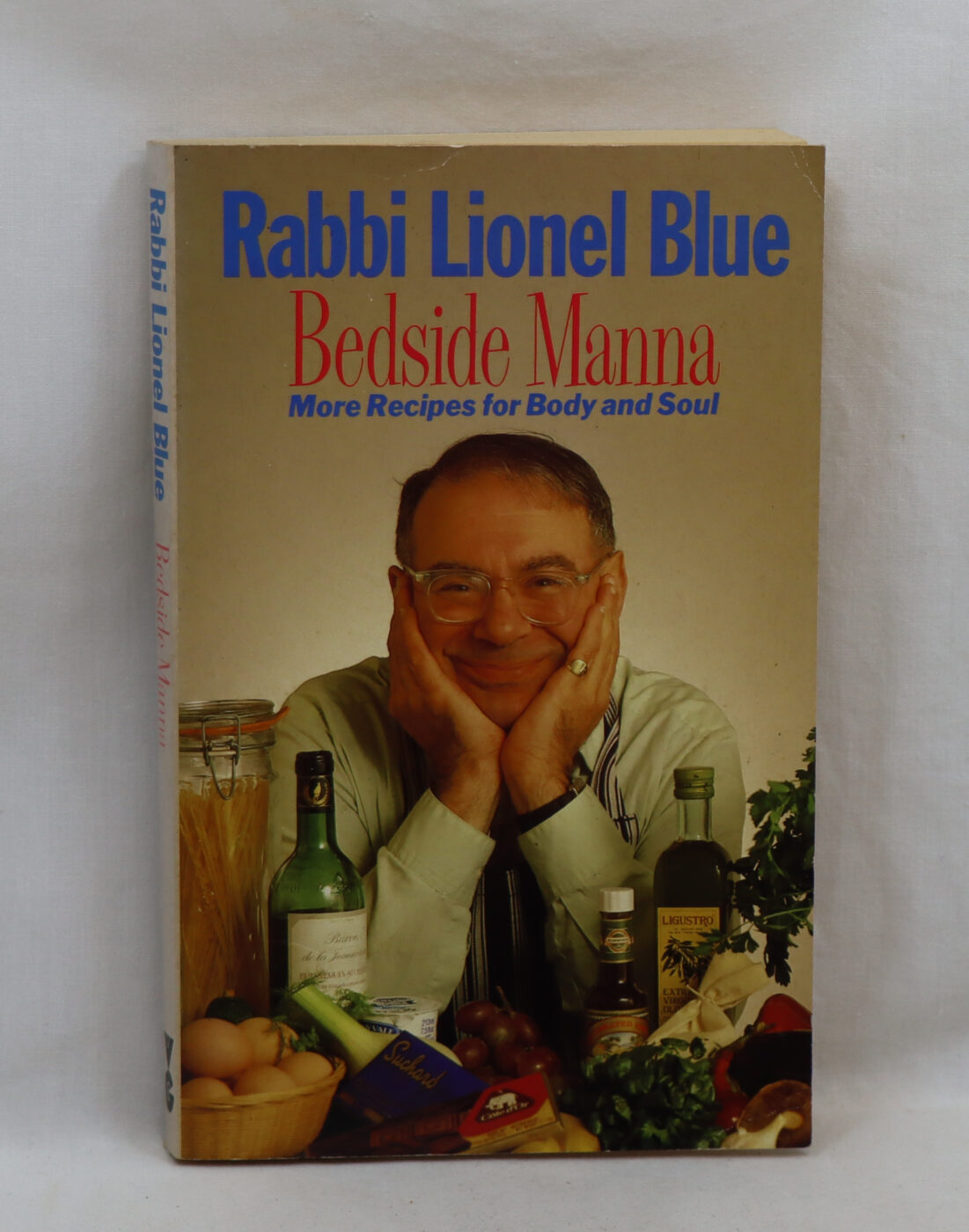
Bedside Manna.
By Rabbi Lionel Blue
Printed: 1992
Publisher: Victor Gollancz. London
| Dimensions | 13 × 20 × 1.5 cm |
|---|---|
| Language |
Language: English
Size (cminches): 13 x 20 x 1.5
Condition: Good (See explanation of ratings)
£8.00
Buy Now
Item information
Description
Paperback. Cream cover with blue title.
We provide an in-depth photographic presentation of this item to stimulate your feeling and touch. More traditional book descriptions are immediately available
Note: This book carries a £5.00 discount to those that subscribe to the F.B.A. mailing list
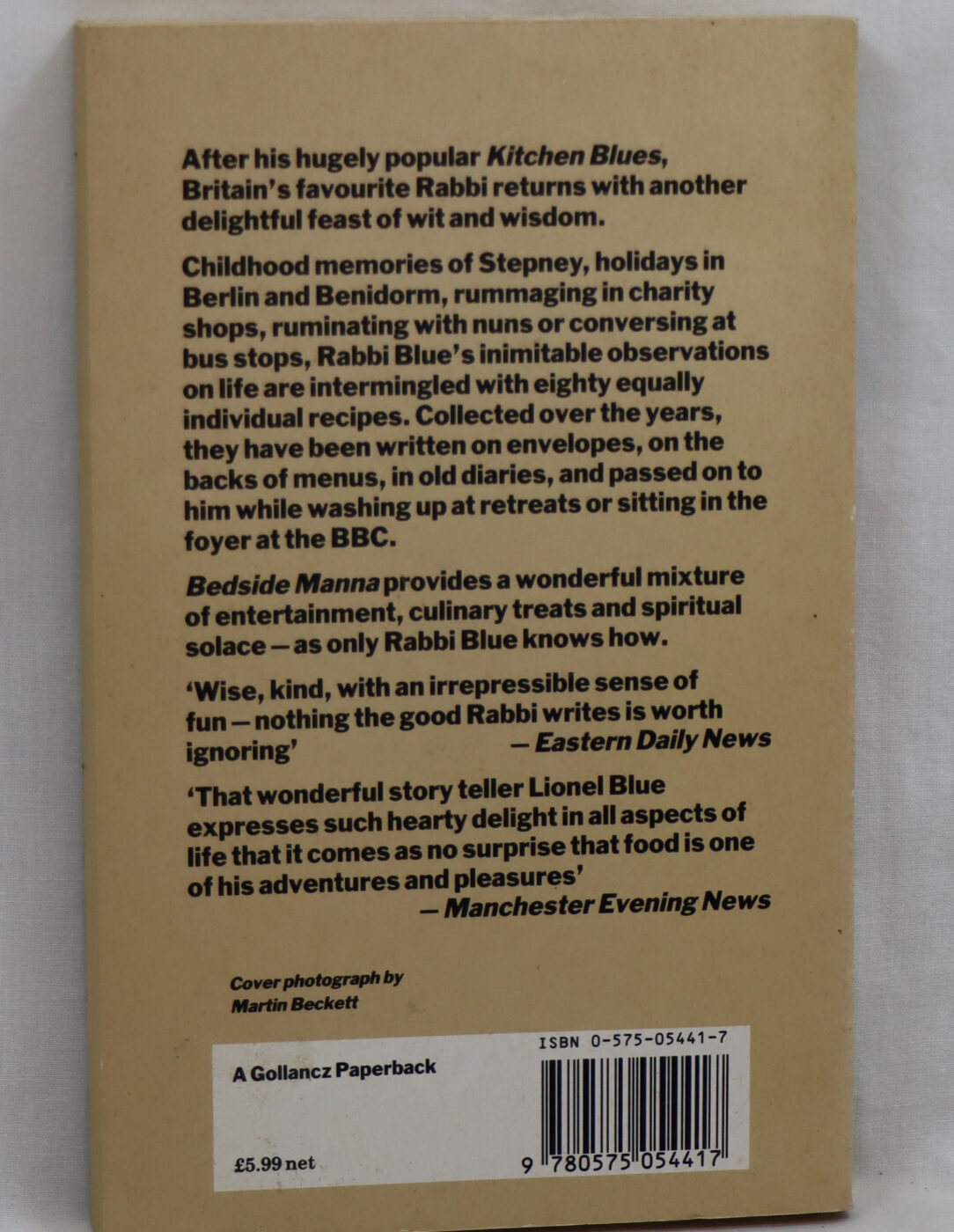
Rabbi Blue, master of “Comfort Food”, includes 80 easy-to-follow recipes in this book, ranging from the plain to the exotic. He does however offer healthier alternative ingredients (which taste just as good) to what might have been cholesterol-laden dishes and he has included more vegetarian recipes. The book is a companion volume to the author’s “Kitchen Blues”. Amongst the recipes included are Iced Avocado Soup, Chilled Consomme Jelly with Mock Caviare, Sister Lucy’s Haddock, Mexican Bean Balls, Pasta with Nuts and Mozarella, Honeyed Welsh Lamb, Heirloom Supper with Smoked Sausage, quick snacks, exotic sandwiches and salads, Fennel Fried with Anchovies, Crunchy Creamy Apple Pudding, Brown Bread, Ice-cream, Irish Soda Bread and OOmph Cake.
Bedside Manna: More Recipes for Body and Soul by Rabbi Lionel Blue is a 192-page cookbook published by Victor Gollancz in London on October 8, 1992. It features 80 easy-to-follow recipes, serving as a companion to his previous book Kitchen Blues and focusing on healthier comfort food, including vegetarian options.
Key Details:
- Author: Rabbi Lionel Blue
- Publisher: Victor Gollancz (London)
- Publication Date: October 8, 1992
- ISBN-10: 0575054417
- ISBN-13: 978-0575054417
- Genre: Cookbook / Culinary / Inspirational
- Amazon UK +1
Content Highlights:
The book includes a mix of recipes ranging from plain to exotic, featuring items such as Iced Avocado Soup, Sister Lucy’s Haddock, Mexican Bean Balls, and OOmph Cake. Blue includes healthier alternatives to traditional, high-cholesterol comfort foods.
NOTE: This is an original book from the library gathered by the famous Cambridge Don, computer scientist, food and wine connoisseur, Jack Arnold LANG. Note: Jack founded the Michelin Guide ‘Midsummer House’- Cambridge’s paramount restaurant. This dining experience is hidden amongst the grassy pastures and grazing cattle of Midsummer Common and perched on the banks of the River Cam.
In 2008, Jack was one of the co-founders of the Raspberry Pi Foundation, alongside other members of the Department, and acted as the Foundation’s Chair. The project’s original goals were modest: to build and distribute low-cost computers for prospective applicants to our Computer Science degree. Initially the project was a “success disaster”, as Jack would say, as demand far outstripped the low-scale manufacturing plans. Ultimately the Raspberry Pi became the UK’s most successful computer with more than 60 million sold to date. Jack was drawn to the educational possibilities of the Raspberry Pi, its potential uses in emerging economies and the way it could support self-directed learning.
Want to know more about this item?
We are happy to answer any questions you may have about this item. In addition, it is also possible to request more photographs if there is something specific you want illustrated.
Ask a question
Related products








Share this Page with a friend
