
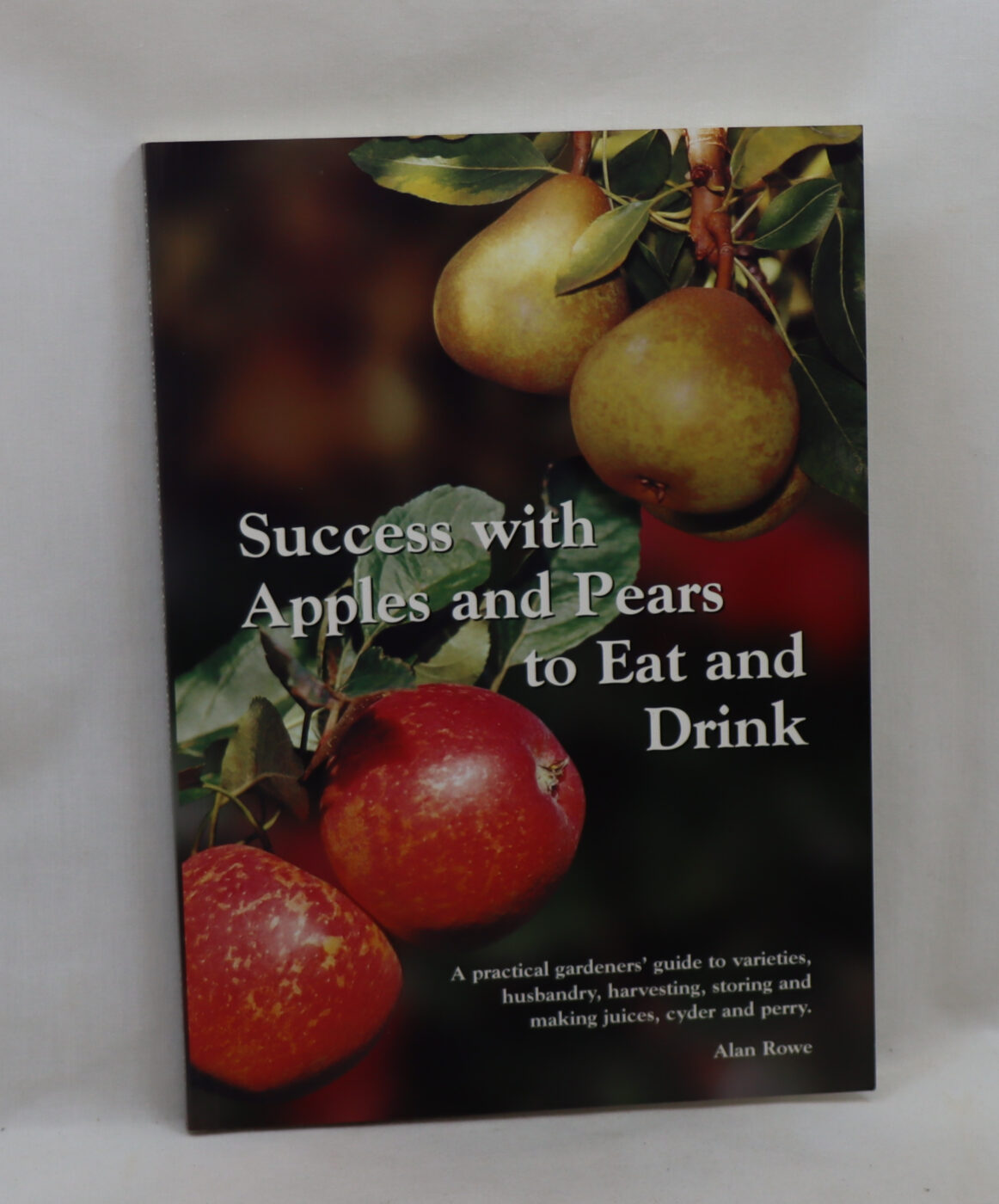
Success with Apples and Pears to Eat and Drink.
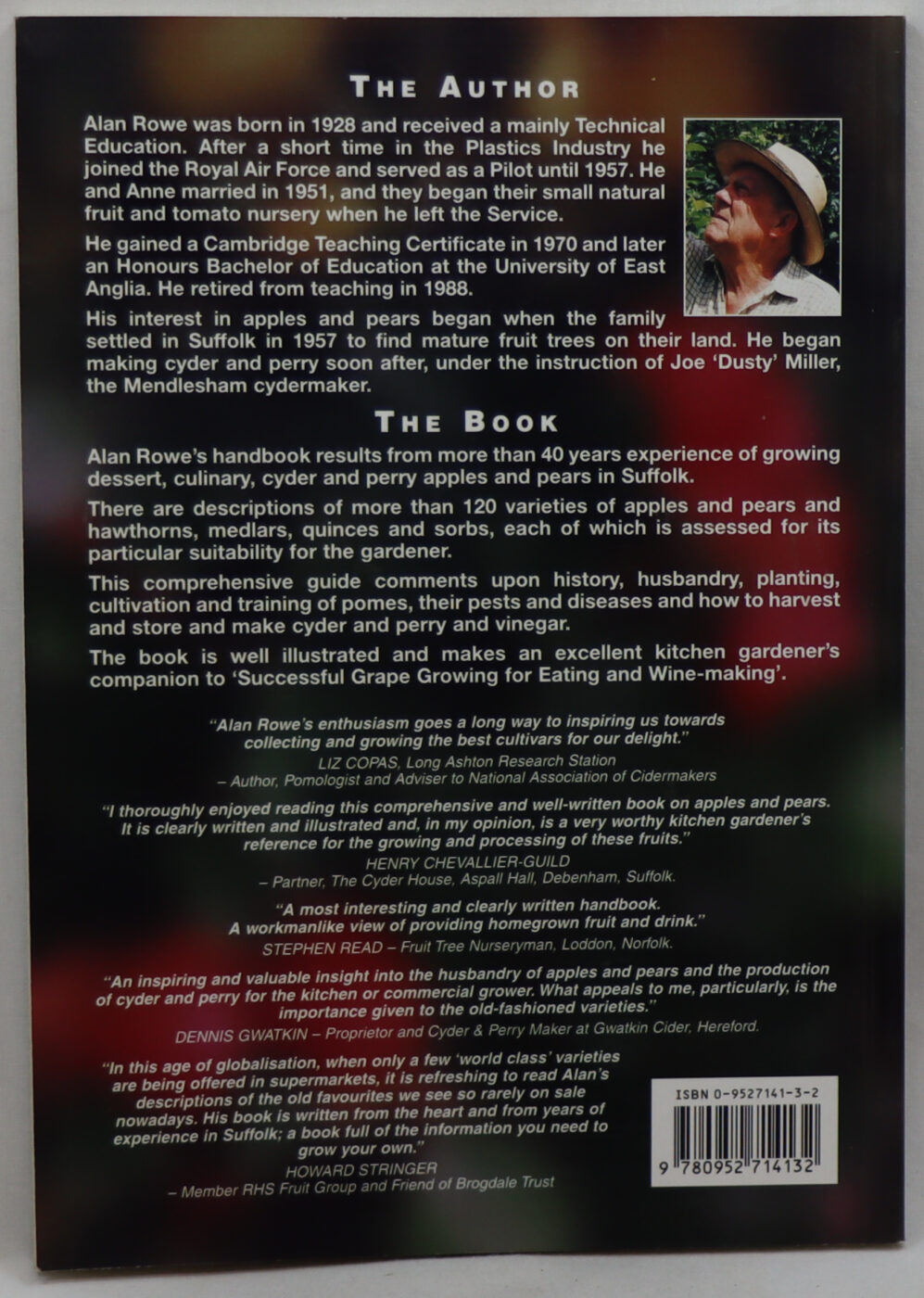
By Alan Rowe
ISBN: 9780952714132
Printed: 2002
Publisher: Groundnut Publishing. Norfolk
| Dimensions | 17 × 24 × 1 cm |
|---|---|
| Language |
Language: English
Size (cminches): 17 x 24 x 1
Condition: Very good (See explanation of ratings)
SORRY, THIS ITEM HAS SOLD
Item information
Description
Paperback. Green fruit image cover with white title.
We provide an in-depth photographic presentation of this item to stimulate your feeling and touch. More traditional book descriptions are immediately available
- A £2 reduction when collected from FBA shop
Like most people who follow a hobby, I like to absorb as much knowledge as I can, from a variety of sources. Alan Rowe’s book is full of useful information for people who are growing apples or pears for use as food, or drink – alcoholic or otherwise. For my purposes it is best described as an accompanying book to ‘fill in the gaps’ in my knowledge through the passing on of Alan’s many years of experience in growing and pressing these fruit, and looking after the land on which his trees grow. It is aimed mainly at those with a kitchen garden, allotment or smallholding, whether there are existing fruit trees or space to plant new trees. The focus is primarily homegrown fruit and from it making a range of homemade drinks.
The book details a wide range of apple and pear varieties, but appears to favour those which grow well in the east of the UK (Alan lives in Suffolk) and so many well know cider varieties, popular in the midlands and the west, are absent. But then, at least we can be sure that Alan is only describing those varieties he is familiar with and has had experience of.
The book contains an interesting history of apples and pears along with many of Alan’s thoughts on modern agriculture and man’s impact on the environment. Alan also includes instructions on making your own press and ‘scratter’, along with a number of his ‘recipes’ for ‘cyder’ (Suffolk cider) as well as recipes for cooking with apples. Everything is written in a concise, easy-to-understand manner and thankfully he does not assume any prior knowledge (unlike many writers…). This is very helpful when Alan discusses the chemistry of fermentation and the control of pests and diseases.
I particularly like the way that Alan steers the reader towards working with the land and nature, rather than taking an austere organic or chemical approach to ferilisers, pests and diseases. Again, it’s all down-to-earth and common sense stuff.
If you fancy a go at growing apples or pears, or have inherited a tree or two and can only afford to buy one book, you won’t go far wrong if you buy this one.
NOTE: This is an original book from the library gathered by the famous Cambridge Don, computer scientist, food and wine connoisseur, Jack Arnold LANG. Note: Jack founded the Michelin Guide ‘Midsummer House’- Cambridge’s paramount restaurant. This dining experience is hidden amongst the grassy pastures and grazing cattle of Midsummer Common and perched on the banks of the River Cam.
In 2008, Jack was one of the co-founders of the Raspberry Pi Foundation, alongside other members of the Department, and acted as the Foundation’s Chair. The project’s original goals were modest: to build and distribute low-cost computers for prospective applicants to our Computer Science degree. Initially the project was a “success disaster”, as Jack would say, as demand far outstripped the low-scale manufacturing plans. Ultimately the Raspberry Pi became the UK’s most successful computer with more than 60 million sold to date. Jack was drawn to the educational possibilities of the Raspberry Pi, its potential uses in emerging economies and the way it could support self-directed learning.
Want to know more about this item?
We are happy to answer any questions you may have about this item. In addition, it is also possible to request more photographs if there is something specific you want illustrated.
Ask a question
Related products
Share this Page with a friend
