
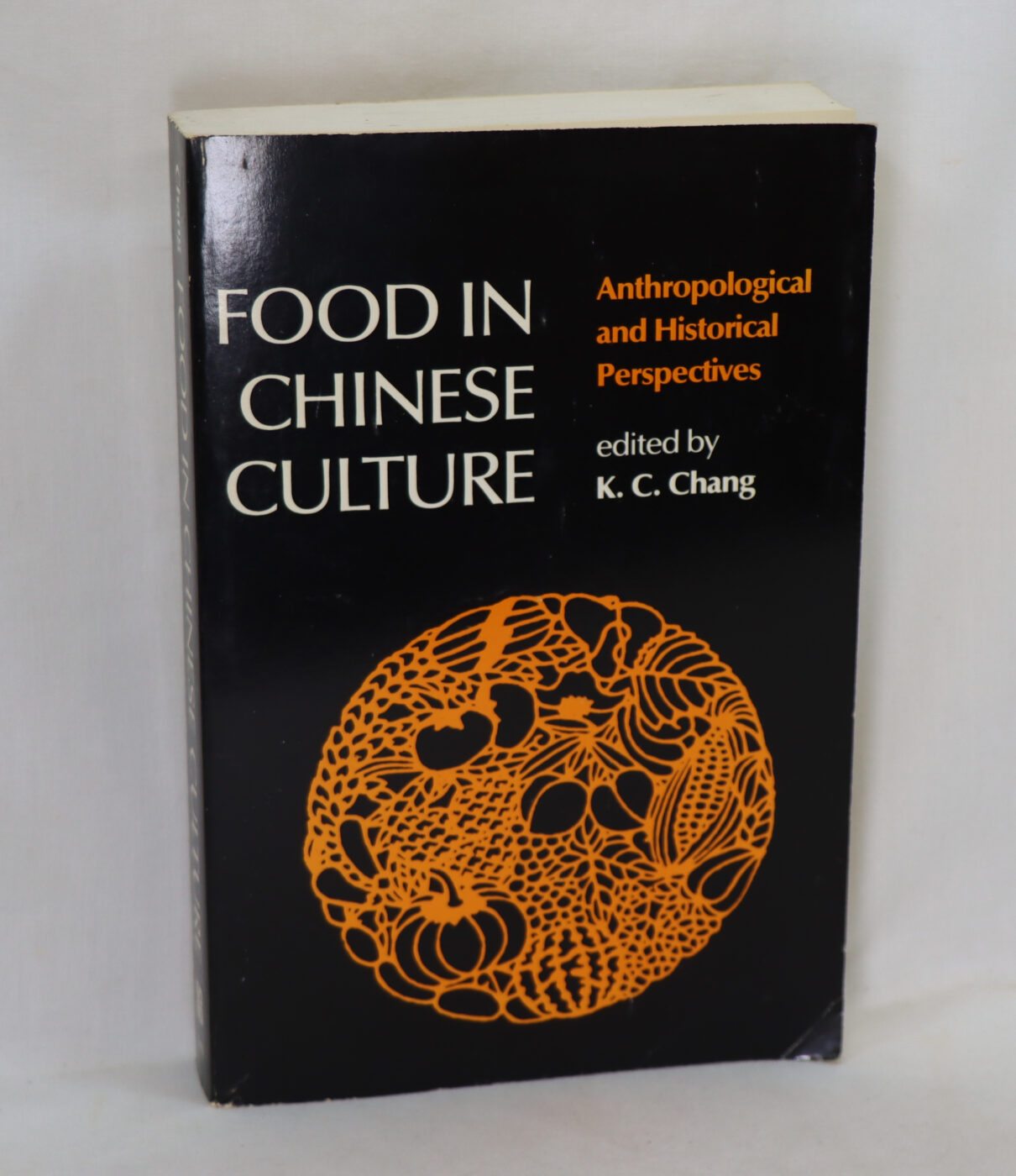
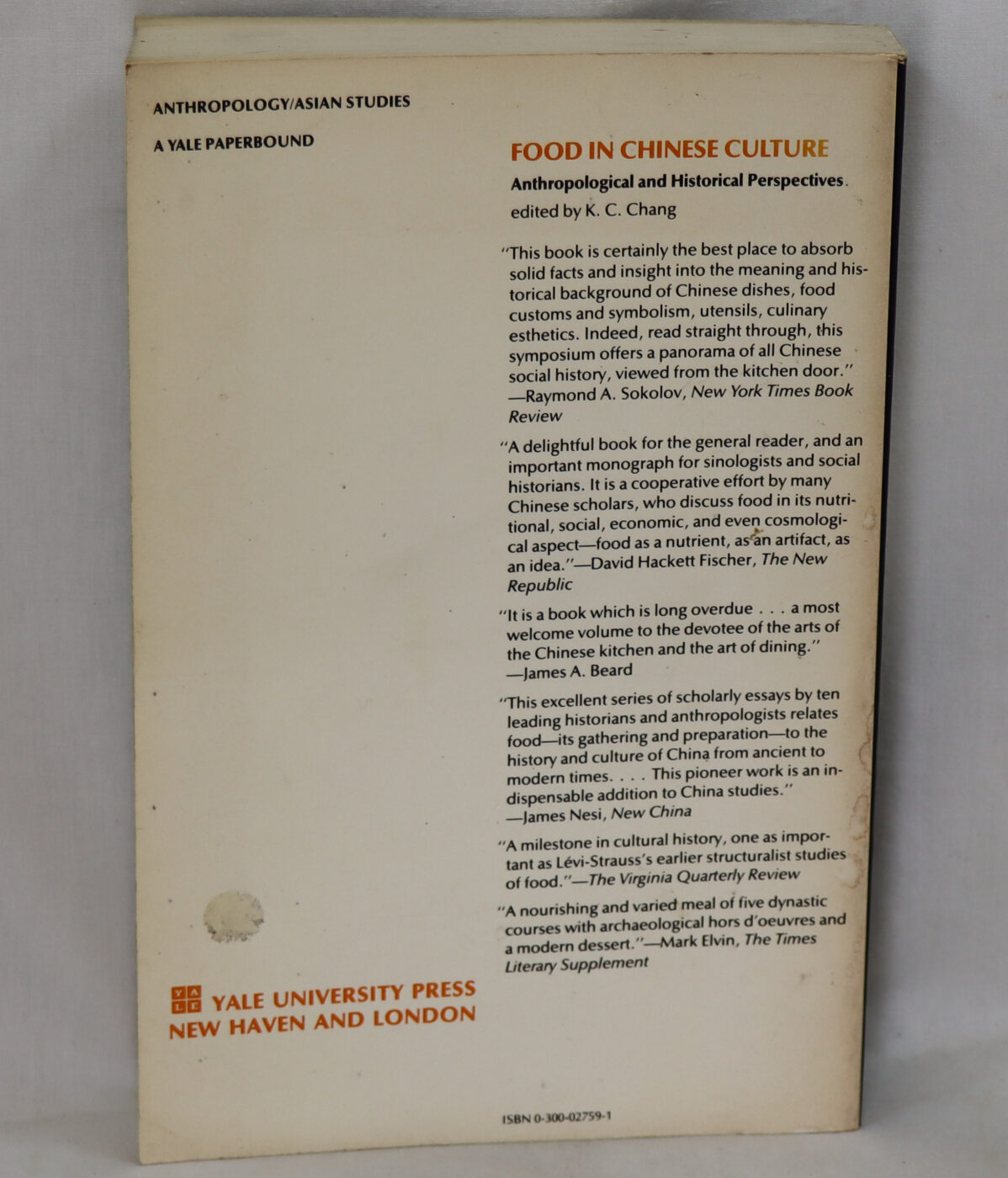
Food in Chinese Culture.
By K C Chang
ISBN: 9789810515379
Printed: 1977
Publisher: Yale University Press. London
| Dimensions | 14 × 23 × 4 cm |
|---|---|
| Language |
Language: English
Size (cminches): 14 x 23 x 4
Condition: Good (See explanation of ratings)
£11.00
Buy Now
Item information
Description
Paperback. Black cover with white title.
We provide an in-depth photographic presentation of this item to stimulate your feeling and touch. More traditional book descriptions are immediately available
- A £3 reduction when collected from FBA shop
China’s natural resources and distinctive methods of producing, preparing, and serving food have played an essential role throughout history in shaping Chinese culture. This wide-ranging anthropological study of the Chinese food tradition presents a unique analysis of a culture through its eating habits. “This is so far, in English, no such comprehensive treatment of the subject of food in China. The rich information provided by the authors opens a new direction of research, analysis, and interpretation in both sinological studies and comparative studies on various cultures.” – Cho-yun Hsu
Review: A very interesting and entertaining book tracing back Chinese history through food. It does not only show you the information about the subject but also picture us the way Chinese people ate in the old days. My favorite part is about food in the Han dynasty when the author vividly described the way Han people prepared their food through the Han Dynasty carved stone plaques.
NOTE: This is an original book from the library gathered by the famous Cambridge Don, computer scientist, food and wine connoisseur, Jack Arnold LANG. Note: Jack founded the Michelin Guide ‘Midsummer House’- Cambridge’s paramount restaurant. This dining experience is hidden amongst the grassy pastures and grazing cattle of Midsummer Common and perched on the banks of the River Cam. The Midsummer House experience is imaginatively curated to delight and amaze, so the surprise set menu changes regularly and is ‘Midsummer’s’ playground to showcase.
In 2008, Jack was one of the co-founders of the Raspberry Pi Foundation, alongside other members of the Department, and acted as the Foundation’s Chair. The project’s original goals were modest: to build and distribute low-cost computers for prospective applicants to our Computer Science degree. Initially the project was a “success disaster”, as Jack would say, as demand far outstripped the low-scale manufacturing plans. Ultimately the Raspberry Pi became the UK’s most successful computer with more than 60 million sold to date. Jack was drawn to the educational possibilities of the Raspberry Pi, its potential uses in emerging economies and the way it could support self-directed learning.
Want to know more about this item?
We are happy to answer any questions you may have about this item. In addition, it is also possible to request more photographs if there is something specific you want illustrated.
Ask a question
Related products




Share this Page with a friend
