
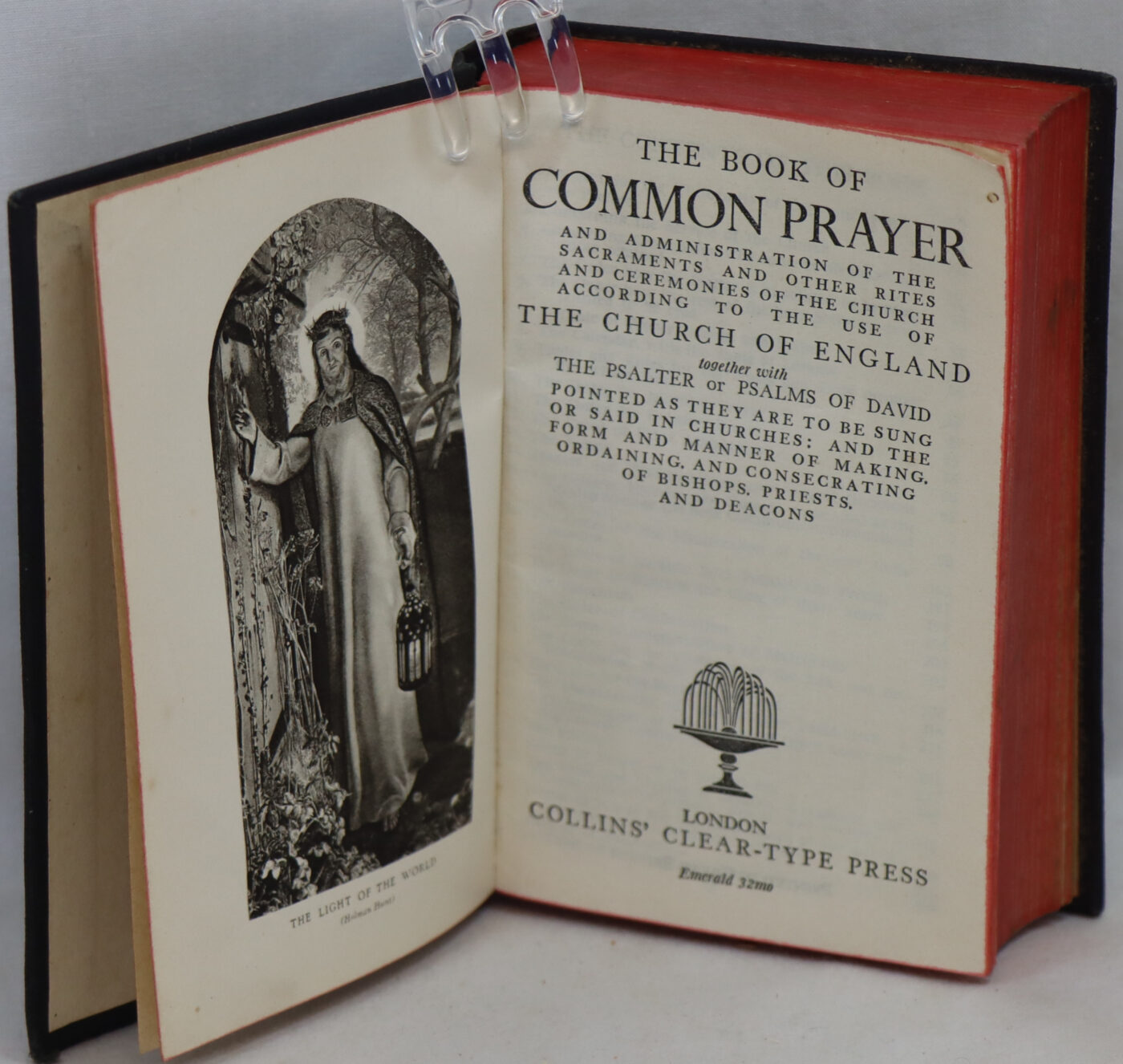
Common Prayer and Hymns.
Printed: 1937
Publisher: Church of England.
| Dimensions | 8 × 12 × 2 cm |
|---|---|
| Language |
Language: English
Size (cminches): 8 x 12 x 2
Condition: Good (See explanation of ratings)
£9.00
Buy Now

Item information
Description
Black cloth binding with silver title on the spine and front board.
Please view the photographs
This prayer book is a snapshot of great social change.
In the 1930s, the Church of England navigated significant social and theological challenges, marked by high-profile pacifism, the initial approval of contraception at the 1930 Lambeth Conference, and efforts to address mass unemployment. It was a period of decline in church attendance but continued social influence, characterized by the peak of Anglican pacifism, debates over moral issues like gambling, and, by 1940, early discussions regarding homosexuality.
Social & Political Impact: The Church played a key role in social welfare during the Depression and held strong, often pacifist, stances as war approached.
Theological Shifts: The 1930 Lambeth Conference was a turning point, allowing contraception for married couples.
Pacifism: 1937 marked a high point for Anglican pacifism, with leaders like Dick Sheppard and the formation of the Anglican Pacifist Fellowship.
Declining Influence: Despite continued national importance, the 1930s saw a, “gradual decline in church attendance” and a growing secularization.
Moral Concerns: The church remained deeply concerned with traditional morality, focusing on gambling and the perceived dangers of new media like film.
Ecumenism: There was continued, albeit often covert, engagement regarding potential unity with the Roman Catholic Church.
Liturgical Practice: Debates continued over ritualistic practices such as the use of incense and vestments.
Want to know more about this item?
We are happy to answer any questions you may have about this item. In addition, it is also possible to request more photographs if there is something specific you want illustrated.
Ask a question
Related products







Share this Page with a friend
