
A Widow for One Year.
By John Irving
ISBN: 9780307362018
Printed: 1998
Publisher: Bloomsbury Publishing. London
Edition: 1st edition
| Dimensions | 17 × 24 × 5 cm |
|---|---|
| Language |
Language: English
Size (cminches): 17 x 24 x 5
Condition: Very good (See explanation of ratings)
£21.00
Buy Now

Item information
Description
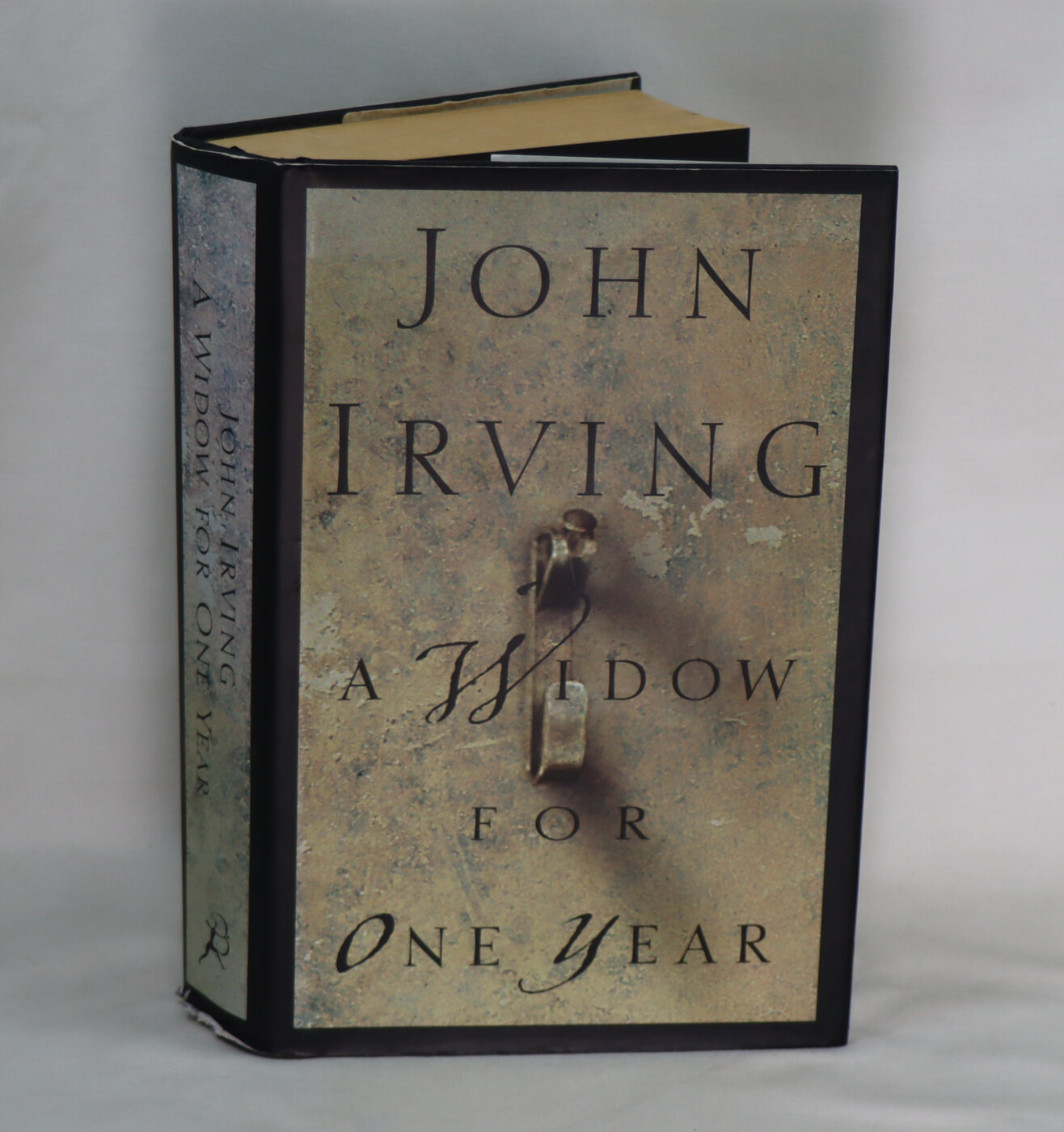
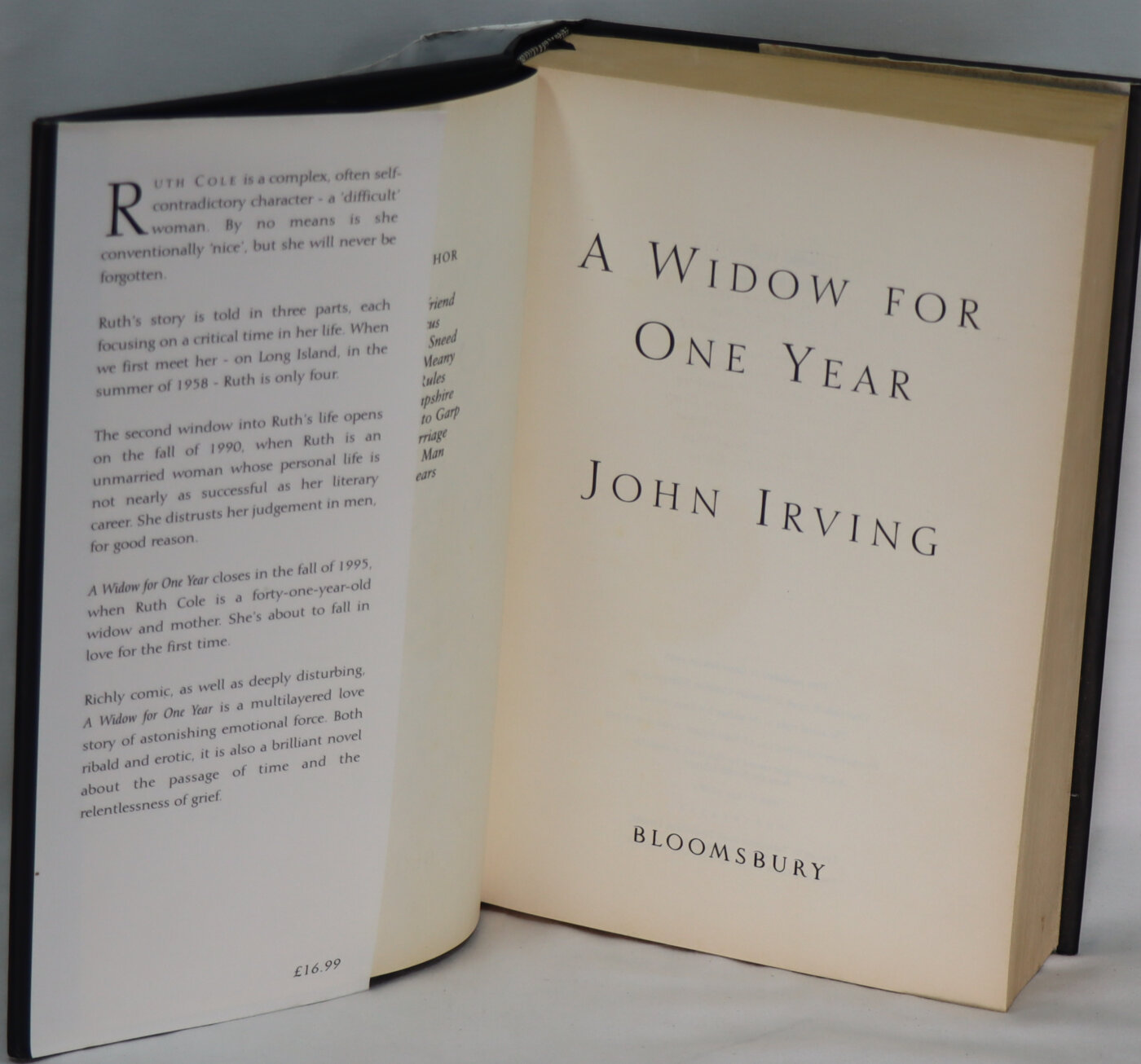
In the original dust cover. Black cloth binding with gilt title on the spine.
- We provide an in-depth photographic presentation of this item to stimulate your feeling and touch. More traditional book descriptions are immediately available
- £21.00
- Note: These books carry the £5.00 discount to those that subscribe to the F.B.A. mailing list.
A Widow For One Year by John Irving.
Simply dedicated `For Janet, a love story’ this thumping great fat book covers the lives and loves of the Cole family, their friends and lovers over a period spanning nearly four decades. Satisfying in length and depth with delightful pointers as to what is to come, it is a properly absorbing grown up read. There is some deliciously dicey subject matter that takes you to the edge and beyond of what may be considered decent.
John Irving writes his tale in three sections, Summer 1598, Fall 1990 and Fall 1995, neatly setting out his wares in 51 usefully and aptly named chapters, using a traditional rather child’s book like format. Confidently moving from The Hampton’s to Europe, we are safe in the hands of the most accomplished story teller. This writer treats his readers with respect, he certainly gives us our money’s worth.
Exploring the role and craft of writer, novelist, illustrator; we are parachuted into the complicated, post-disaster, fractured Cole family. Two sons have died in a dreadful accident. `The grief over lost children never dies; it is a grief that relents only a little. And then only a long while.’ What a wise author. He successfully pulls off the unusual and intricate device of allowing his characters to speak to each other through their own published works – fleshing out the book with `warts and all’ understanding descriptions of their humanly flawed and utterly credible personalities. This family are growing their shells over a tragedy to awful to bear without armour. They each have to rewrite their family history, building their litany of detail through constant repetition, always in their own personal way. They go ‘missing’ from each other and each grows differently, as you can immediately understand they must do.
Eddie travels alongside this family through 37 years of loyal love, absences, growth and challenges. He is intensely believable – especially when he weakens and wavers he is wonderfully credible – you really feel you know him inside out. We meet him as a green teenager briefly escaping from his overbearing but loving parents. We leave him, in his mid fifties, in the perfectly written conclusion, experiencing a resolution that is as good as it gets.
I loved the part when we are told about Harry, a later arrival, a policeman, and his reading life; `He read novels because he found in them the best descriptions of human nature. The novelists Harry favoured never suggested that even the worst human behaviour was alterable. They might morally disapprove of this or that character, but novelists were not world changers; they were just storytellers with better-than-average stories to tell, and the good ones told stories about believable characters’. If you too are like Harry you will enjoy this book.
The style and breadth of writing reminded me of Any Human Heart by William Boyd, which grows a similar feeling of intimacy and care for the central individual. This book has more true love in it though.
Having read `A Prayer for Owen Meany’ previously, I was happy to read this book on the recommendation of a friend. Now I am pleased to see that there are several more John Irving works for me to enjoy in the future.
Want to know more about this item?
We are happy to answer any questions you may have about this item. In addition, it is also possible to request more photographs if there is something specific you want illustrated.
Ask a question
Related products

Share this Page with a friend
