
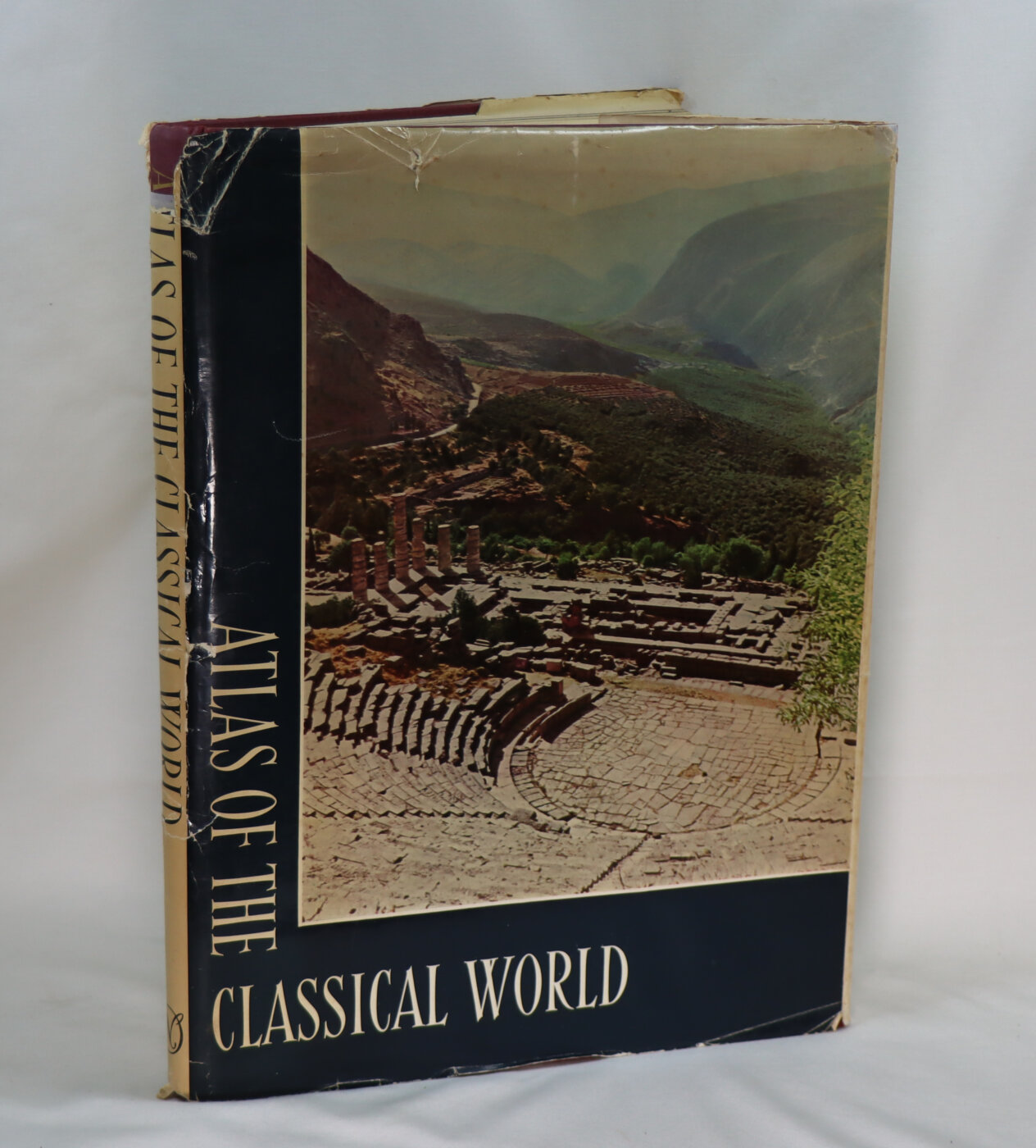
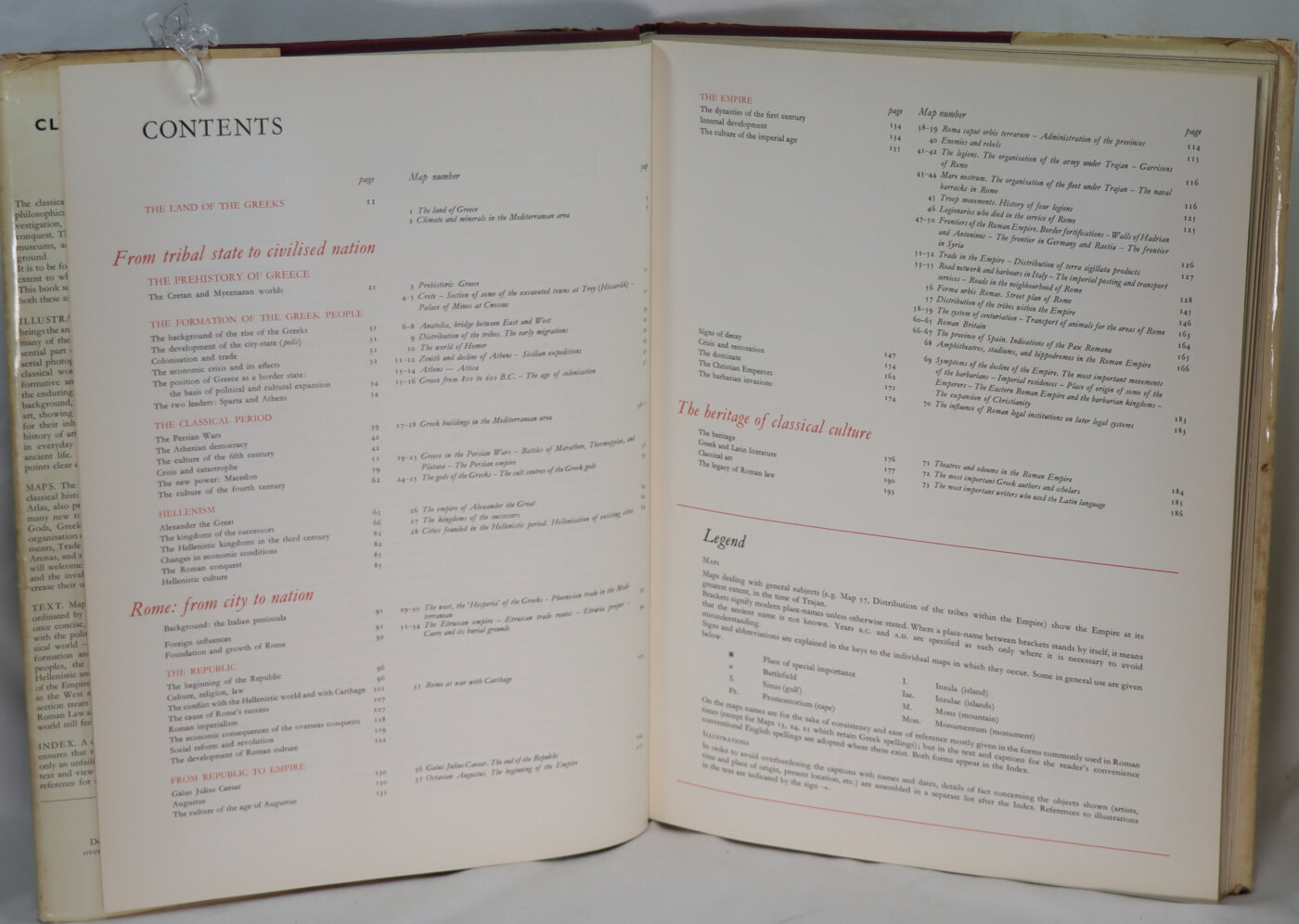
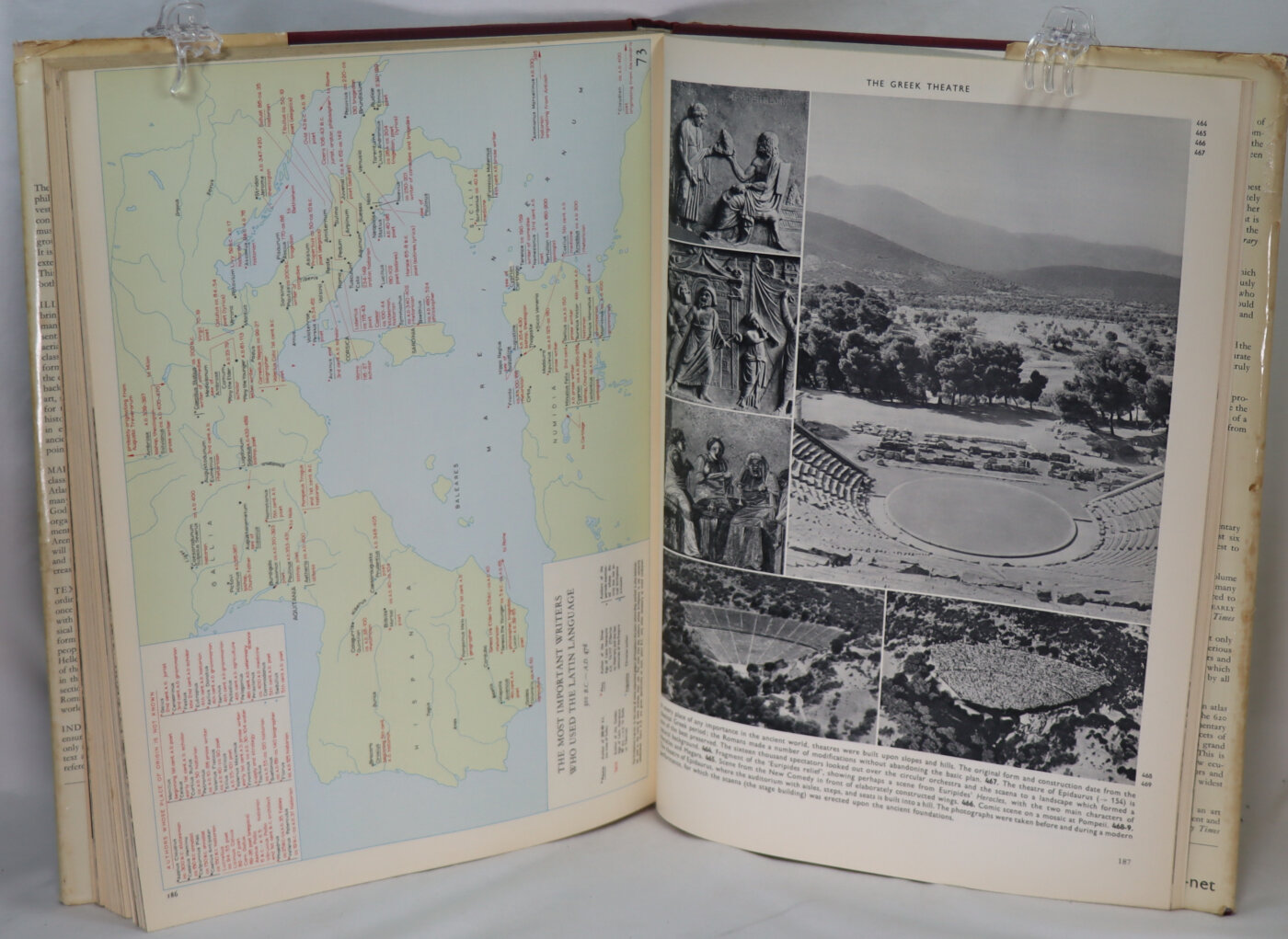
Atlas of the Classical World.
By A A M Van der Heyden & H H Scullard
Printed: 1959
Publisher: Thomas Nelson & Sons. London
| Dimensions | 17 × 36 × 3 cm |
|---|---|
| Language |
Language: English
Size (cminches): 17 x 36 x 3
Condition: Very good (See explanation of ratings)
£43.00
Buy Now


Item information
Description
In the original dust jacket. Maroon cloth binding with gilt titl on the spine.
-
We provide an in-depth photographic presentation of this item to stimulate your feeling and touch. More traditional book descriptions are immediately available.
-
Note: This book carries a £5.00 discount to those that subscribe to the F.B.A. mailing list.
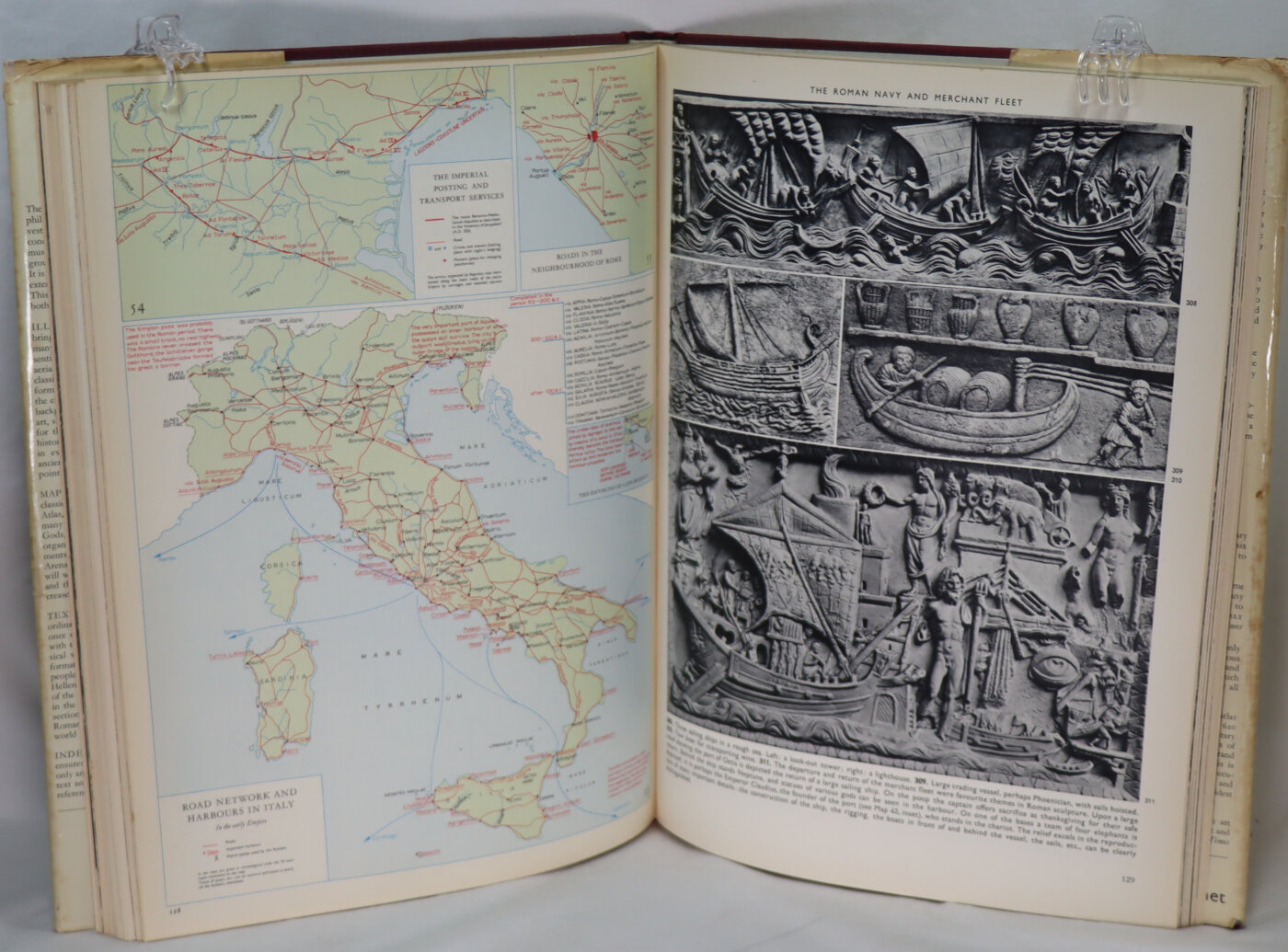
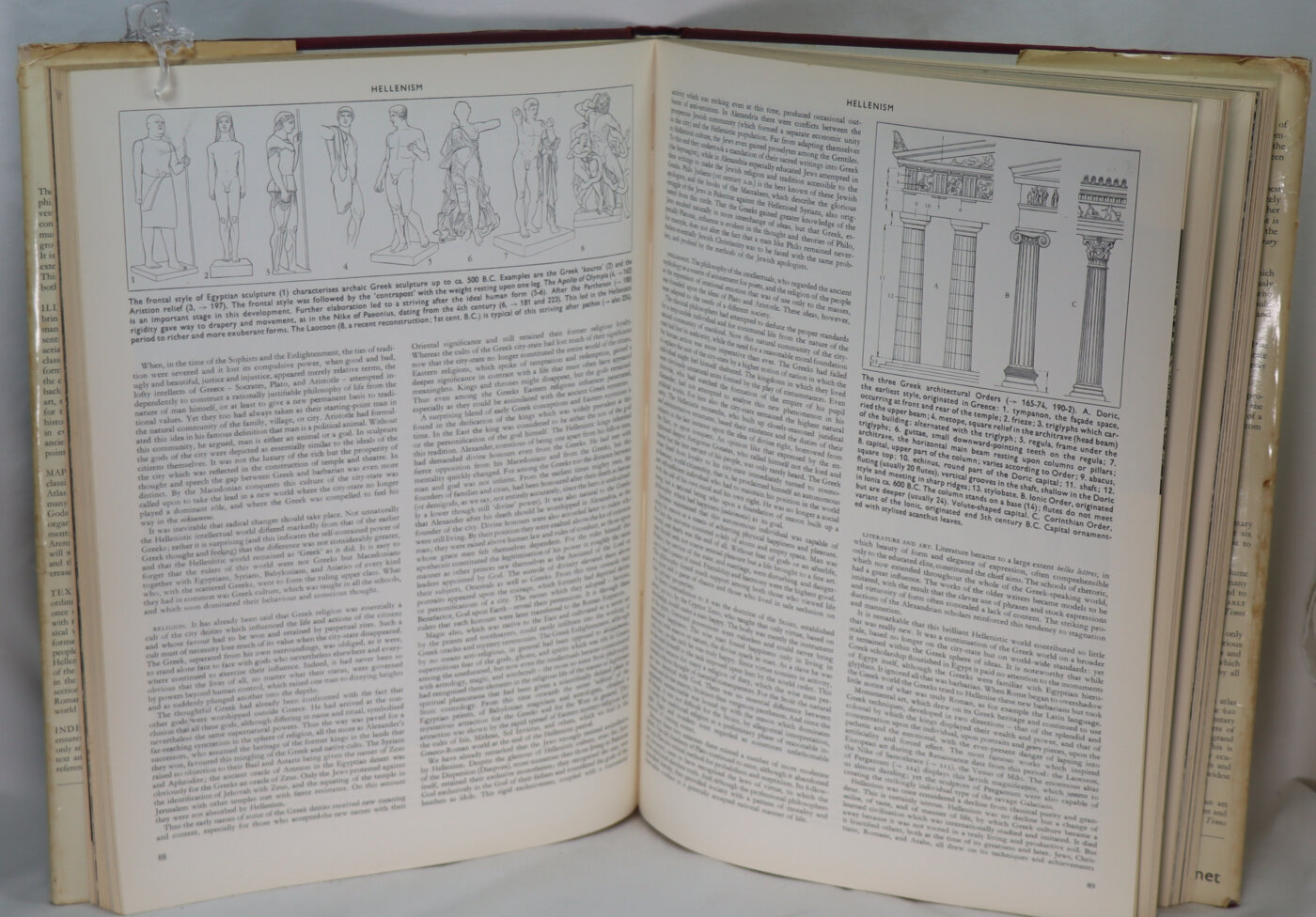
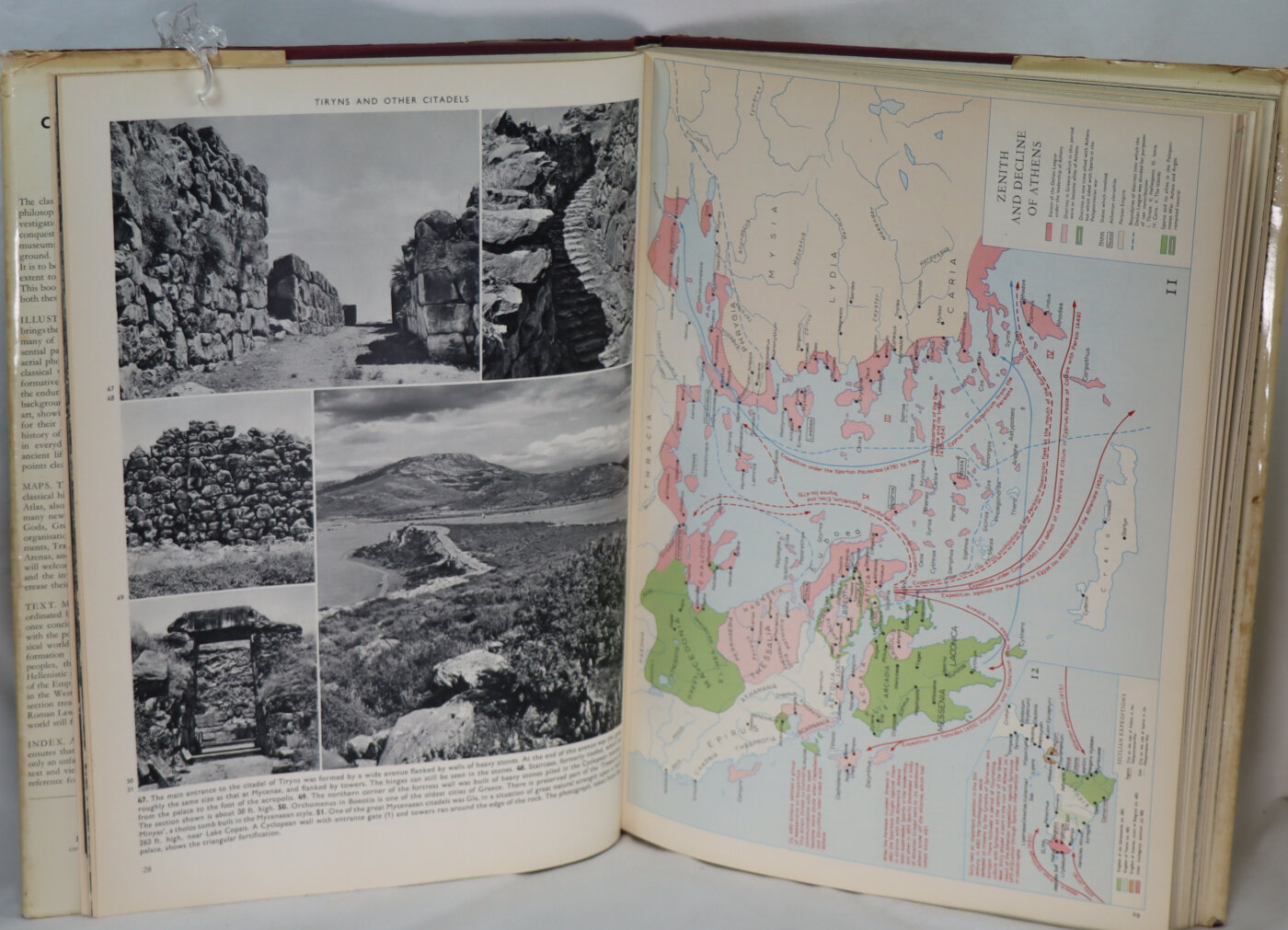
First Edition. Hardcover. Condition: Very Good. 221 pages chiefly b&w illustrations, color maps. Dust Jacket worn. Classical geography — Maps. Very mild wear to spine head and foot, faint soiling to boards and fore-edges, bright pages in tight binding.
Classical World or Antiquity, also known as the classical era, classical period, classical age, or simply antiquity, is the period of cultural European history between the 8th century BC and the 5th century AD comprising the interwoven civilizations of ancient Greece and ancient Rome known together as the Greco-Roman world, centered on the Mediterranean Basin. It is the period during which ancient Greece and ancient Rome flourished and had major influence throughout much of Europe, North Africa, and West Asia.
Conventionally, it is often considered to begin with the earliest-recorded Epic Greek poetry of Homer (8th–7th-century BC) and ends with the end of the Western Roman Empire in 476 AD. Such a wide span of history and territory covers many disparate cultures and periods. Classical antiquity may also refer to an idealized vision among later people of what was, in Edgar Allan Poe’s words, “the glory that was Greece, and the grandeur that was Rome”.
The culture of the ancient Greeks, together with some influences from the ancient Near East, was the basis of art, philosophy, society, and education in the Mediterranean and Near East until the Roman imperial period. The Romans preserved, imitated, and spread this culture throughout Europe, until they were able to compete with it. This Greco-Roman cultural foundation has been immensely influential on the language, politics, law, educational systems, philosophy, science, warfare, literature, historiography, ethics, rhetoric, art and architecture of both the Western, and through it, the modern world.
Surviving fragments of classical culture helped produce a revival beginning during the 14th century which later came to be known as the Renaissance, and various neo-classical revivals occurred during the 18th and 19th centuries.
Condition notes
Dust cover poor condition
Want to know more about this item?
We are happy to answer any questions you may have about this item. In addition, it is also possible to request more photographs if there is something specific you want illustrated.
Ask a question


Share this Page with a friend
